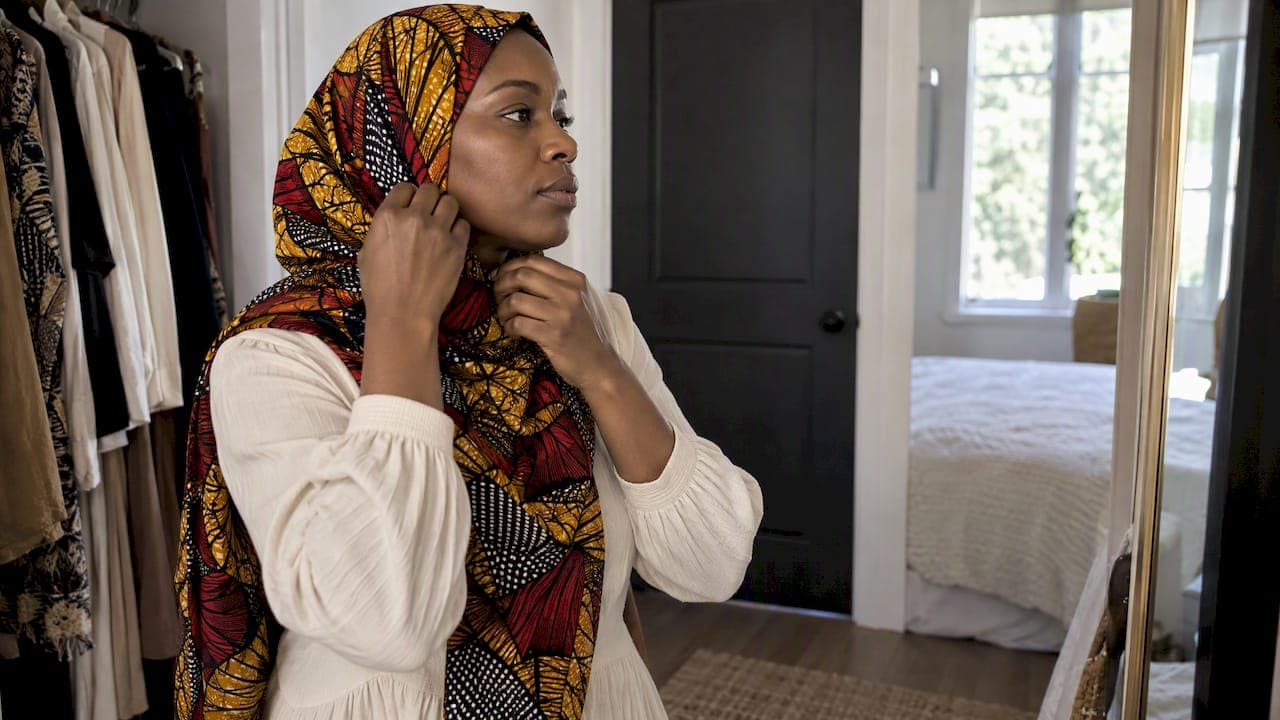
A hijab in African print is a simple idea with a lot of room in it: a scarf or wrap cut from Ankara, wax print or another printed cotton, worn with modest dress to bring color, pattern and heritage to your face. The best results come from three decisions: the fabric (breathable cotton or a soft chiffon), the tie (one that suits the weight of the cloth), and the outfit (one bold print at a time, balanced by solids). This guide walks through each, and through the questions people ask about who can wear these prints and where they come from.
TL;DR
- Choose breathable fabric first: cotton wax print gives crisp, sculpted ties, while light chiffon drapes and stays comfortable for a long day.
- Let one element carry the print. Pair a printed hijab with a solid or tone-on-tone outfit, or a printed dress with a solid hijab in one of its colors.
- Pre-washed or softened cotton, a jersey underscarf and secure pins make heavier prints easier to wear and tie.
- African prints have a layered history, so buy from African and diaspora makers when you can, and learn the names and stories behind the cloth.
- Hijab styles across Africa are diverse, so treat a printed wrap as your own expression, not a single costume.
Table of Contents
- Why African prints and hijab belong together
- What African print actually is
- Choosing the right fabric for a printed hijab
- Ways to wear a hijab with African print
- Pairing the hijab with the rest of your outfit
- Looks for different moments
- Caring for printed hijabs
- Our perspective: wear the cloth with its story
- Pair your hijab with pieces made with intention
- Wearing African print respectfully
- Building a wardrobe you will keep
- FAQ
- Sources
Why African prints and hijab belong together
Printed cloth and head coverings meet naturally. Across West Africa, a head tie is part of how people dress for ceremonies, church, mosque, weddings and market days, and our guide to the role of headwear in African ceremonies goes deeper into that tradition. For Muslim women, the hijab adds a personal layer: a way to honor faith while keeping your own sense of style.
It helps to know that veiling in Africa is not one tradition. A historical study of veiling and Muslim women in Africa describes a practice that is deeply embedded in local culture and expressed through textiles and art. Styles differ by region and community, so a printed hijab is not a replica of a single "African hijab." It is a modern, personal combination of faith, place and taste.
That is also why the idea resonates in the United States. Many women here live between several identities at once: American, African or African American, Muslim, professional, mother, bride, guest. Research by the scholar Hibah Hendricks, which looks at Muslim women in Cape Town, describes dress as a way of shaping identity rather than simply following a trend. A printed hijab does something similar. It says where you are from, what you value and how you want to be seen, all before you say a word.

What African print actually is
Before you buy, it is worth knowing what you are holding. African print, also called Ankara or Dutch wax print, is a global hybrid textile. According to a scholarly article on the contested origins of wax print, its roots go back to Javanese batik methods adapted by Dutch manufacturers, later made for West African markets, where it was adopted and reshaped into local dress by the early twentieth century.
The cloth carries different names in different places. The same article notes chitenge in Zambia, kitenge in Kenya, aso ebi or Ankara in Nigeria, le wax in Senegal and Mali, and ntoma or ntama in Ghana. A Zambian study of chitenge in dress practices shows how much class, style and meaning one printed fabric can hold.
The point is not that the fabric is less African because of its journey. Scholars such as Amah Melissa Edoh argue that African designers and wearers transformed a foreign-made product into a localized expression of pride and contemporary identity, one that keeps evolving. If you want the longer story, start with our explainer on what Ankara fabric is, its origins, meaning and quality.
Choosing the right fabric for a printed hijab
The print gets the attention, but the cloth decides whether you will want to wear the hijab for eight hours. Here is how the main options behave.
| Fabric | How it feels | Best for | Watch out for |
|---|---|---|---|
| 100% cotton wax print | Crisp when new, softer with washing | Structured wraps, turban-style ties, pinned styles | Can feel stiff at first and slip less forgiving on tight folds |
| Cotton blend Ankara | Slightly lighter, a little more drape | Everyday scarves | Blends can hold more heat |
| Light chiffon with African-inspired print | Airy, fluid, translucent | Draped hijabs, layering over an underscarf | Slips easily, needs pins and a grippy underscarf |
| Gauze or cotton voile | Soft and breathable | Warm weather, long events | Can be sheer, so check opacity |
| Jersey underscarf in a solid | Stretchy and secure | Under any printed wrap | Pick a shade close to your skin tone or the main print color |
A few buying notes from a guide to choosing Ankara and Kitenge garments apply neatly to scarves too. Look for cotton, because it breathes and softens over time, and be wary of synthetic blends that can trap heat. New wax print often feels stiff, then relaxes after a few washes, so a crisp first impression is not a flaw.
Quality shows in the print itself. Sharp, aligned motifs suggest careful registration, while blurry edges can point to a cheaper ink application. On a large wrap you can also check how the pattern falls across the fold, since a motif cut awkwardly through the middle of a drape looks accidental rather than designed.

Authentic wax print or inspired print?
Many sellers offer prints inspired by African patterns rather than fabric produced by a wax-print manufacturer. That is not automatically a problem, and an inspired print can make a lovely, affordable hijab. What matters is honesty: ask where the fabric was produced and who designed the pattern, and be a little cautious when a listing is vague. Our post on provenance tests for Ankara fabric gives you four practical checks.
Ways to wear a hijab with African print
There is no single correct style. These four work well with printed cloth and suit different occasions.
1. The simple drape for everyday
Use a rectangular scarf in lightweight cotton or chiffon. Put on a jersey underscarf, drape the printed scarf so one side is a little longer, and pin under the chin. Bring the long side over the opposite shoulder. Because the print runs down the front, this style is a good way to show off a bold pattern without overwhelming your outfit.
2. The wrapped turban hijab
Here the head covering and the head tie meet. Take a long, structured cotton wrap, place the center at the nape, cross the ends at the crown, and tuck or knot them at the front or side. The stiffness of fresh wax print is an advantage because it holds shape. Add a small pin at the temples if you want a clean line around the face and neck.
3. The statement knot
For weddings, naming ceremonies and Eid gatherings, a sculptural bow or twist at the side adds height. It works best when your clothing is calm: a solid abaya, a monochrome kaftan or a plain long dress. You can look at how others do it in video tutorials, since the tie is much easier to learn by watching than by reading.
4. Print as an accent
If you are not ready to wear a fully printed hijab, try a solid scarf with a printed band at the front, or tuck a small printed square into a pocket. It gives you the connection to the cloth with less pattern to manage.
Pairing the hijab with the rest of your outfit
The most common mistake is competing prints. Pick a hero, and let everything else support it.
- Printed hijab, solid outfit. Pull one color from the print and match your dress or abaya to it. Deep indigo, rust, forest green and cream all read as polished.
- Solid hijab, printed outfit. Choose the quietest color in your dress, such as the background shade, for the scarf. It frames the face without fighting the print.
- Two prints, one family. If you want to mix, keep the colors in the same palette and vary the scale: a small geometric on the scarf against a large floral on the dress.
- Layer for modesty and shape. A long open jacket or kaftan over a plain base gives you coverage with movement, and it lets the printed hijab sit at the top of the look.
If you want ideas for coordinating pieces, our guide to limited run Ankara matching sets shows styling recipes you can adapt, and our overview of West African motifs helps you read what the patterns are saying before you combine them.
If you are exploring faith-led dressing more broadly, this piece on modest clothing with courage shows how modest style can carry conviction, and many of those same principles of coverage, layering and confident simplicity apply to printed hijab looks.
Looks for different moments
The workday. A cotton scarf in a small, tonal print, paired with a tailored solid dress or blazer, signals polish. Keep the tie simple and secure so you are not adjusting it in meetings.
Weddings and celebrations. This is where a statement knot and a matching set shine. A printed hijab picked from the same cloth as a groomsman or bridesmaid look makes a group read as one family. Plan it early, since printed cloth from one bolt is limited and you want everyone's pieces to come from the same run.
Eid and family gatherings. Choose a lighter chiffon or voile that survives hugging, cooking and long hours. Bright color is welcome. A warm gold or deep green print against a cream abaya is a classic.
Warm weather. Go with gauze or fine cotton, a thin underscarf, and fewer layers around the neck. Breathability matters more than structure.
Caring for printed hijabs
Wax print holds color well when treated gently, but a few habits keep it vivid. Wash a new piece separately in cool water at first, because strong dyes can release a little. Dry flat or in the shade, and press on the reverse side. Pre-washing a stiff cotton scarf once or twice also makes it easier to fold and pin.
For spills, especially on a pale background, act quickly. We cover the details in our guide to wax print stain care.
Our perspective: wear the cloth with its story
At Sena Nukunu, we believe clothing should carry meaning as well as beauty. Our work is rooted in West African heritage, ethical production and artisan empowerment, and we make our pieces in limited quantities so each one is crafted with care and purpose. A printed hijab, in that spirit, is more than an accessory. It is a small piece of legacy you place at the most visible point of your look.
We see three things that make the difference between wearing a print and wearing it well. First, know what you have chosen: its name, its pattern language and the people who made it. Second, build the outfit around comfort and confidence, because a garment you can move in is a garment you will wear again. Third, choose makers who share the value you are expressing. When you buy from African and diaspora creators, your purchase supports the people who keep the tradition alive and moving forward.
That last point is not only our view. In reporting on enterprising immigrant designers, designers describe a growing ecosystem around modern Ankara apparel in the United States and stress that true appreciation means supporting the entrepreneurs who create the designs and understanding that these fabrics are symbols of community and heritage, not simply trends. We would add one thing: wear it joyfully. Pride and pleasure are not opposites.
— Sena
Pair your hijab with pieces made with intention
Our collections focus on ready-to-wear dresses, kaftans, jackets and matching statement sets inspired by West African heritage, with men's agbada ensembles and heritage pieces as well. They are designed to be the calm, confident backdrop or the bold centerpiece of a look, depending on how you style them. Explore the Women's Collections for dresses and sets, or browse our full collections, including Woven Stride: Queen In Comfort and Woven Crowns: Radiant Rise, to find the piece that fits the print you love. For more ideas, read our guide to authentic West African cultural fashion statements for women.
Wearing African print respectfully
The question of who can wear African prints comes up often, and it deserves an honest answer. Concerns about cultural appropriation generally center on power dynamics, lack of acknowledgement and treating the cloth as an African costume instead of a textile with a history. Ajoke Brown Media's discussion of appreciation versus appropriation notes that appreciation involves giving credit to the creators, buying from African designers and understanding the history of the garment.
The same discussion reports that designers often welcome affinity for the culture and the beauty of the design, while mocking or misusing traditional garments is seen negatively. In practice, a few habits keep you on the right side:
- Learn the name and origin of your print, and use the right word for it.
- Buy from African or diaspora makers and credit them when you post.
- Wear it as clothing you love, not a costume for one day or one theme.
- Do not treat it as a discovery. People have worn it, designed it and argued about it for generations.
If you want to understand why these prints feel so alive to so many people, our piece on why African prints are popular explores the cultural meaning and style behind them.
Building a wardrobe you will keep
A printed hijab is often the entry point to a wider wardrobe. Start with one or two scarves in colors you already wear. Add a solid abaya or long dress that lets the print speak. Then, when you are ready, bring in a statement jacket or a matching set for special occasions. Our writing on modern West African style and on fashion empowerment for US women can help you plan a collection that grows with you.
A good rule is to buy fewer, better pieces. Limited-quantity, carefully made clothing tends to last longer, and it means you are not following every passing trend. Over time, the cloth softens, the colors settle, and the pieces become yours.
FAQ
Is it okay for a white person to wear African prints?
There is no single rule, but the guidance from African designers is consistent: appreciation is welcome when it comes with understanding. Learn the history, credit the makers and buy from African or diaspora creators rather than treating the cloth as a costume or a trend you discovered.
What part of Africa wears hijab?
Muslim women across Africa cover their hair in many ways, from North and West Africa to the East and the South. A study of veiling in African history shows that veiling has been part of the continent for a very long time and has been shaped by local customs. Styles and names differ by region, so it is more accurate to talk about many traditions than one.
What does African print mean?
African print usually refers to bold printed cotton, often wax print, that became central to dress across West and Central Africa and beyond. Patterns can carry names, proverbs and social meaning, and the cloth itself has a layered history that includes Javanese batik, Dutch manufacturing and African markets. Its meaning today is shaped by the people who wear and design with it.
What is another name for African print?
Common names include Ankara, Dutch wax print, wax Hollandais, kitenge, chitenge and le wax, depending on the country. Different places use different terms, so you may see several names for very similar cloth.
What fabric is best for an African print hijab?
Lightweight 100% cotton is a reliable choice, since it breathes and softens with washing, while chiffon with a printed design gives a fluid drape. Wear a jersey underscarf beneath either one to keep the hijab secure.
Sources
- Not African? Contested Origins of Wax Print and Its High-Fashion Appropriation
- Veiling and Muslim Women in African History since the Ottoman Empire
- Chitenge (African print fabric), class and culture in Zambia
- How to Choose African Ankara & Kitenge Dresses
- Enterprising Immigrants Fuel Apparel Market With Contemporary African Ankara Print Styles
- Cultural Appropriation vs. Appreciation: Who Owns African Style?