TL;DR:
- Contemporary West African motifs are symbolic designs rooted in tradition but adapted for modern uses. These patterns encode proverbs, social status, protection, and history, and are seen in textiles, fashion, and decor. Respectful use requires understanding each motif's cultural meaning and origin to preserve their significance.
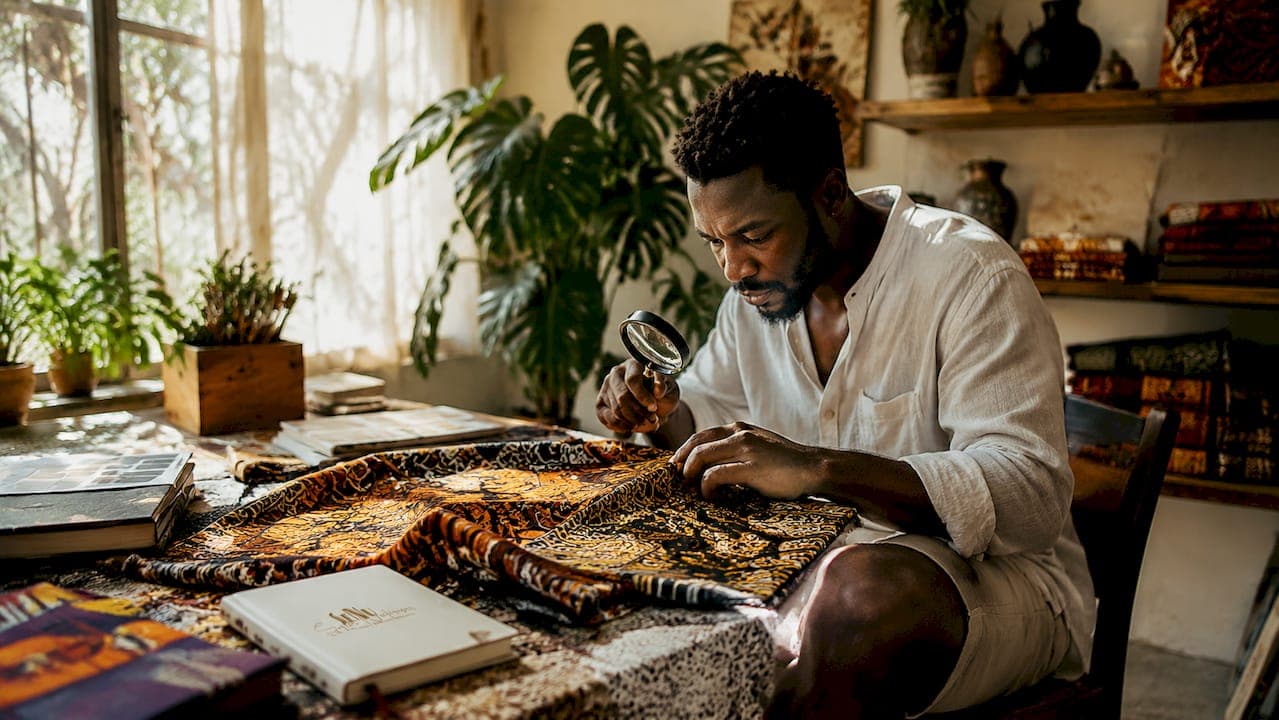
Contemporary West African motifs are distinct symbolic designs that fuse ancestral visual languages with modern aesthetics, appearing across textiles, fashion, jewelry, and home decor. These patterns are not decorative accidents. Every stitch and brushstroke carries the spirit of a legacy, encoding proverbs, social rank, protection, and history into cloth and craft. Whether you are drawn to the geometric brilliance of Kente, the earthy storytelling of Bogolanfini, or the bold color of Ankara prints, understanding the types of contemporary West African motifs gives you a richer, more respectful relationship with the designs you wear and display.
1. Kente cloth motifs from Ghana
Kente is the most globally recognized West African textile, originating among the Asante and Ewe peoples of Ghana. Its motifs are built from interlocking geometric blocks, each strip woven separately and sewn together to create a larger composition. What makes Kente extraordinary is that the cloth's name carries meaning itself. Named cloths like "Fathia fata Nkrumah" or "Sika fre mogya" communicate heritage and social messages far beyond color or pattern.
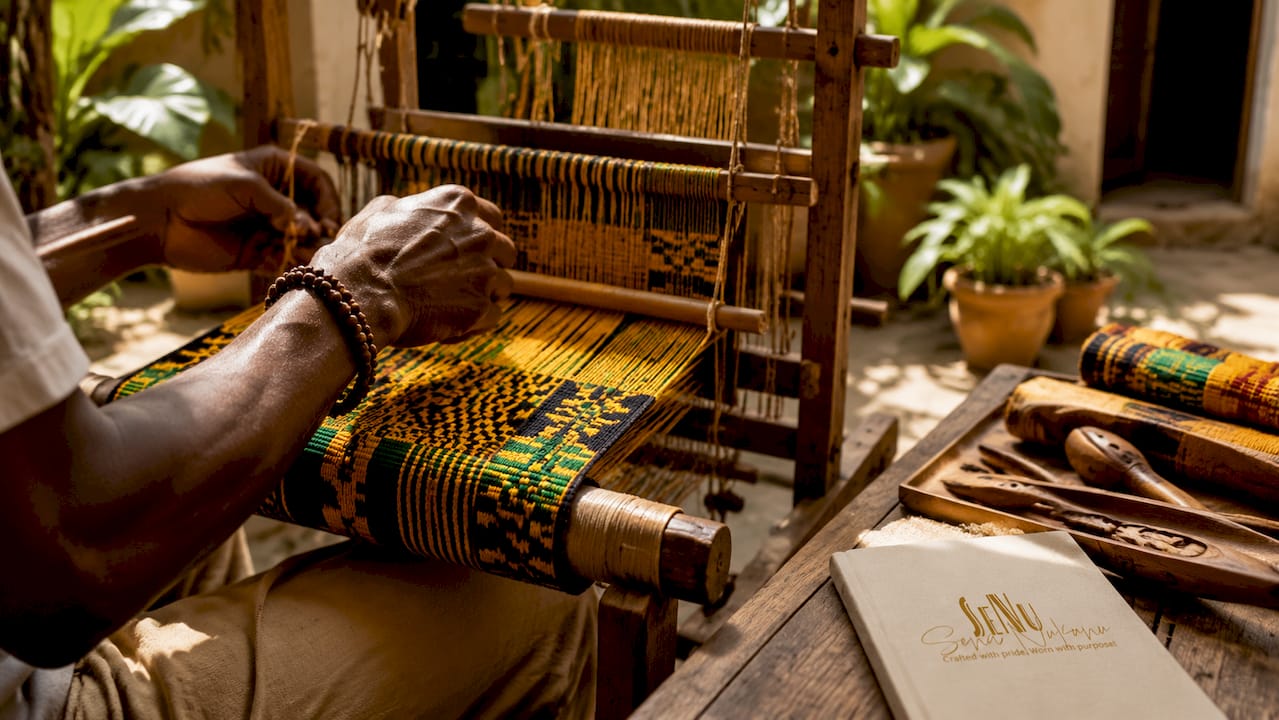
Contemporary designers use Kente motifs in everything from tailored blazers to upholstered chairs. The geometric blocks translate well into modern silhouettes without losing their cultural weight. Kente also has a political history governing who wears which patterns and when, so understanding that context is vital to avoid cultural misappropriation in contemporary fashion.
Pro Tip: When shopping for Kente-inspired pieces, ask about the specific cloth name. The name tells you the story the weaver intended to tell.
2. Bogolanfini (Mudcloth) motifs from Mali
Bogolanfini, widely known as Mudcloth, originates from Mali and is created by applying fermented mud to hand-woven cotton in precise geometric and symbolic patterns. The result is a rich, earthy palette of deep browns, blacks, and creams. West African textiles function as a visual language encoding proverbs, social rank, protection, and history, and Mudcloth is one of the clearest examples of this principle.
Each Mudcloth motif references battles, myths, or social identity. A single cloth can document a community's history in ways a written record cannot. Contemporary designers like Awa Meité have elevated Mudcloth into global fashion collections, proving that these motifs lose none of their power when placed on a modern runway or living room wall.
3. Adire resist-dye patterns from Nigeria
Adire is a Yoruba textile tradition from Nigeria, created through resist-dyeing techniques using indigo. The patterns range from simple geometric repeats to intricate hand-painted designs. Major West African textile traditions like Adire, Kente, and Bogolanfini each operate as distinct symbolic grammars, not interchangeable decoration.
Adire motifs often reference natural forms, proverbs, and community life. The "Olokun" pattern, named after the Yoruba deity of the sea, is one of the most recognized. Modern Nigerian designers have brought Adire into contemporary ready-to-wear, using the patterns on dresses, jumpsuits, and accessories that honor the original craft while speaking to a global audience.
4. Ankara (wax print) motifs and their modern evolution
Ankara, also called African wax print, is the most widely worn contemporary African textile across West Africa and the diaspora. Its motifs blend historical symbols with references to modern life. Modern wax print patterns evolved to include 20th-century technology references, such as telephone and rocket designs, which now sit alongside ancient proverbs as established decorative motifs.
This evolution makes Ankara one of the most dynamic African design patterns available today. A single bolt of fabric might feature a motif celebrating a political election, a new technology, or a traditional proverb. That layering of meaning is exactly what makes Ankara prints so compelling for fashion-conscious consumers who want their clothing to say something real.
5. Adinkra symbols and their contemporary applications
Adinkra symbols originate from the Akan people of Ghana and Côte d'Ivoire. Each symbol is a compact visual proverb. "Gye Nyame," meaning "except God," is the most widely recognized, representing the supremacy of a higher power. "Sankofa," depicted as a bird looking backward, teaches that wisdom comes from learning the past.
These symbols appear on everything from stamped funeral cloth to gold jewelry to modern graphic tees. Their clean, geometric forms make them ideal for contemporary applications in home decor, wall art, and fashion accessories. Senanukunu draws on this visual tradition to create pieces that carry genuine cultural meaning, not just surface pattern.
6. Animal motifs and their symbolic weight
Animal symbolism is one of the most powerful design elements of West Africa. Animal motifs carry deep associations like rulership, spiritual power, memory, and freedom. The leopard represents power and stealth, the elephant signifies wisdom and memory, and bird patterns evoke freedom and beauty.
These motifs appear in printed textiles, woven cloth, carved jewelry, and embroidered accessories. A leopard print in West African design is not a fashion trend borrowed from the animal kingdom. It is a deliberate statement of authority and strength rooted in centuries of cultural practice. Understanding that distinction changes how you wear and display these patterns.
7. Nsibidi symbols in jewelry and accessories
Nsibidi is an ancient system of symbols used by the Ejagham and Igbo peoples of Nigeria and Cameroon. These symbols communicate ideas about love, justice, community, and secrecy. Traditional Igbo weavers know over 100 distinct patterns, using three to four motifs per piece to convey layered narratives in fashion and accessories.
Contemporary jewelry designers have incorporated Nsibidi symbols into pendants, rings, and earrings, creating pieces that function as wearable communication. The "Ikaki" motif, depicting a tortoise, symbolizes wisdom and royalty. Wearing Nsibidi-inspired jewelry is a way of carrying an entire philosophical tradition on your body. You can explore how to accessorize with these symbols in ways that honor their origins.
8. Geometric and abstract motifs in home decor
West African geometric motifs translate powerfully into home decor. Repeating diamond shapes, interlocking triangles, and bold chevron patterns appear on cushions, upholstery, wall art, and rugs. These patterns draw from traditions across Ghana, Mali, Nigeria, and Senegal, each with its own regional grammar.
Styling African wall art in modern interiors is one of the fastest-growing applications of these motifs. A Mudcloth-inspired throw pillow or a Kente-patterned wall panel brings cultural depth to a space without requiring a complete redesign. The key is choosing pieces where the motif is named and its origin is acknowledged, not just a generic "tribal" pattern.
9. Motifs referencing technology and modern life
One of the most surprising aspects of popular West African patterns is how quickly they absorbed modern life into their visual vocabulary. Telephone motifs, airplane patterns, and even rocket designs entered Ankara print production during the 20th century. These motifs celebrated communication, ambition, and progress in the same breath as ancient proverbs.
This quality makes West African design patterns uniquely alive. They do not freeze tradition in amber. They absorb the present and make it part of the visual record. Contemporary designers who understand this lineage create work that feels both rooted and current, which is exactly the balance that resonates with today's fashion-conscious consumers.
10. Ethical design and cultural literacy in motif use
Effective contemporary collections embed traditional craft within modern silhouettes rather than merely printing traditional motifs generically. Traditions like Ndebele, Kente, and Mudcloth have distinct histories, and treating them as interchangeable "African patterns" erases that specificity. Cultural literacy means knowing which tradition a motif comes from and what it communicates.
African design integrates utility and art without extraction, embedding sustainability and longevity into every object. This philosophy extends to how motifs should be used. Ethical fashion and decor brands name their motifs, credit their origins, and support the artisans who carry these traditions forward. That commitment is what separates meaningful design from surface-level borrowing.
Pro Tip: Before purchasing a West African motif-inspired piece, look for brands that name the specific textile tradition and explain the motif's meaning. That transparency signals genuine cultural respect.
Comparison of major contemporary West African motifs
Understanding the differences between major motif traditions helps you make more intentional choices in fashion and decor.
| Motif tradition | Origin | Core symbolism | Visual style | Typical use |
|---|---|---|---|---|
| Kente | Ghana (Asante, Ewe) | Proverbs, status, political identity | Interlocking geometric color blocks | Ceremonial wear, formal fashion, accessories |
| Bogolanfini (Mudcloth) | Mali | History, protection, social identity | Earthy geometric and abstract forms | Casual wear, home decor, wall art |
| Adire | Nigeria (Yoruba) | Nature, community, spiritual life | Indigo resist-dye patterns, organic forms | Dresses, wraps, contemporary ready-to-wear |
| Ankara (wax print) | Pan-West African | Proverbs, modern life, celebration | Bold color, figurative and geometric repeats | Everyday fashion, accessories, home textiles |
| Adinkra | Ghana, Côte d'Ivoire | Philosophical proverbs, spiritual values | Compact, clean geometric symbols | Jewelry, graphic fashion, wall art, stamped cloth |
Contemporary designers increasingly blend these traditions within a single piece. That blending works best when the designer understands each tradition's distinct grammar rather than treating them as interchangeable.
Key takeaways
Contemporary West African motifs are living symbolic languages that require cultural literacy to use with integrity, whether in fashion, jewelry, or home decor.
| Point | Details |
|---|---|
| Motifs carry meaning | Every pattern encodes proverbs, status, or history, not just visual decoration. |
| Traditions are distinct | Kente, Mudcloth, Adire, and Ankara each have separate origins and symbolic grammars. |
| Names matter | Learning a motif's name reveals its cultural message and intended context. |
| Modern motifs evolve | Ankara prints absorbed technology references, proving West African design stays current. |
| Ethical use is non-negotiable | Responsible designers name motifs, credit origins, and support artisan communities. |
Why these motifs are living languages, not decorations
I have spent years immersed in West African fashion and design, and the single biggest mistake I see is treating these motifs as interchangeable decoration. A Kente strip is not just a colorful geometric pattern. It is a political and philosophical statement with a name, a history, and a specific community behind it. When you wear it without that knowledge, you miss the entire point.
What changed my perspective was learning that motif names are organic and regionally variable. There is no single standardized definition for many of these symbols. That variability is not a flaw. It reflects the living, community-driven nature of these traditions. A motif means something slightly different in one village than it does in the next, and that richness deserves respect.
The brands doing this right, including Senanukunu, are the ones who treat cultural storytelling as a responsibility, not a marketing angle. They name the tradition, explain the symbol, and connect the purchase to the artisan who made it possible. That is the standard worth holding every brand to, including the ones you already love. Explore more about modern West African style and what ethical craftsmanship actually looks like in practice.
— Sena
Discover authentic West African motifs at Senanukunu
Every piece in the Senanukunu collection is designed to carry a story, not just a pattern. From Ankara-inspired dresses to statement sets rooted in Adinkra symbolism, each garment reflects a commitment to cultural pride, artisan craftsmanship, and ethical production. These are not generic prints. They are wearable expressions of a living heritage.
Senanukunu curates limited-quantity pieces that honor the traditions behind the motifs, so you wear something with genuine meaning. Whether you are building a wardrobe that reflects your roots or discovering West African design for the first time, you will find pieces that speak to both. Visit Senanukunu's collection to explore vibrant styles grounded in cultural integrity and craftsmanship. Learn more about why African prints resonate with people around the world.
FAQ
What are the most common types of contemporary West African motifs?
The most common types include Kente geometric blocks, Bogolanfini mud-dyed patterns, Adire resist-dye designs, Ankara wax print figurative and geometric repeats, and Adinkra philosophical symbols. Each tradition comes from a specific region and carries distinct cultural meaning.
What is the difference between Kente and Ankara motifs?
Kente is a woven textile from Ghana with geometric color blocks that reference proverbs and political identity, while Ankara is a printed wax fabric used across West Africa that blends historical symbols with modern life references like telephones and rockets.
How are West African motifs used in home decor?
West African motifs appear on wall art, cushions, upholstery, and rugs, with Mudcloth geometric patterns and Adinkra symbols being especially popular. Choosing pieces where the motif's origin is named and explained ensures the design carries genuine cultural meaning.
Why is cultural literacy important when using West African motifs?
West African textiles function as visual languages encoding proverbs, status, and history, so using them without understanding their context reduces meaningful symbols to generic decoration. Ethical use requires knowing which tradition a motif comes from and what it communicates.
What does the Sankofa symbol mean in contemporary design?
Sankofa is an Adinkra symbol from the Akan people of Ghana, depicted as a bird looking backward, teaching that wisdom comes from understanding the past. Contemporary designers use it in jewelry, fashion, and wall art to represent reflection, heritage, and cultural pride.