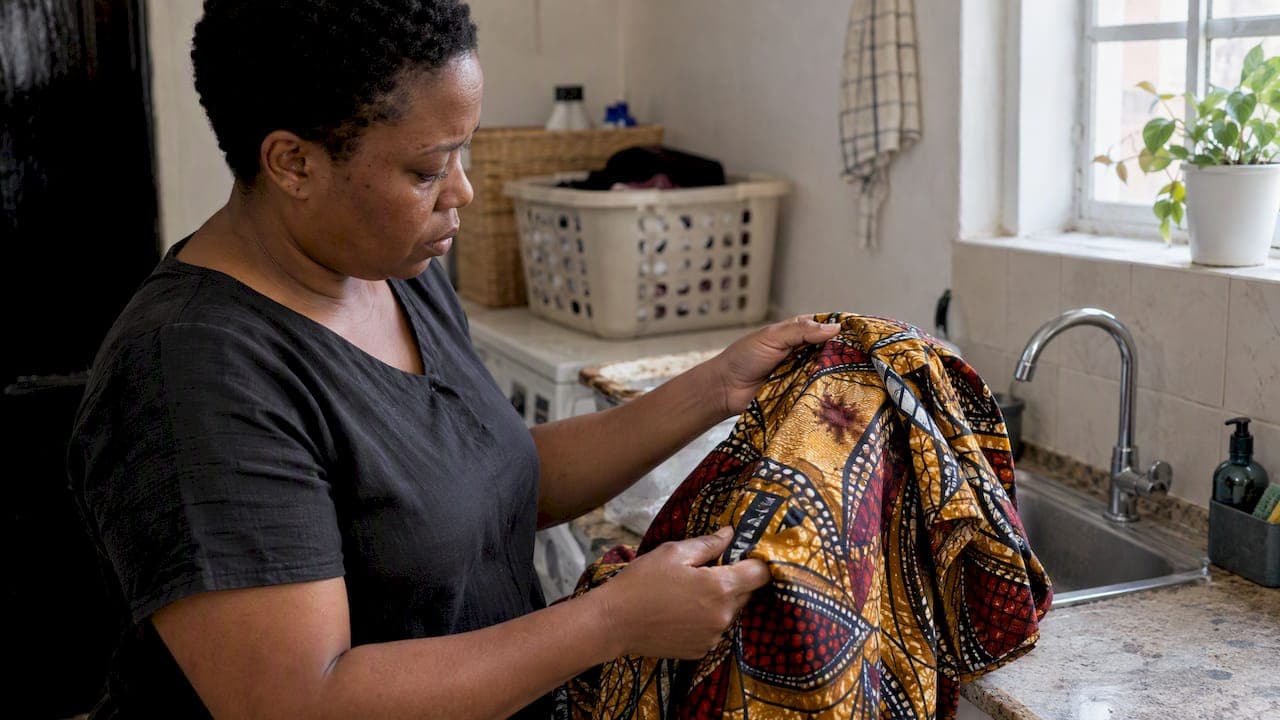
For most wax print stains, a staged approach works best: remove the solid wax, warm-iron it through paper to lift what remains, pretreat the leftover residue, then launder. Before any of that, test colorfastness on a hidden seam, and never tumble-dry or iron the garment normally until the mark is fully gone. Wax leaves two different problems behind, solid wax and an oily or colored residue, and each one needs its own step.
TL;DR:
- Test each treatment on a hidden seam for 5 to 10 minutes, then blot with white cloth; transferred color means the product is unsafe.
- Use dish soap for greasy residue; blot colored transfer with rubbing alcohol from the fabric’s reverse side, rinsing between applications.
- Colored candle pigment can transfer during ironing, especially on polyester cotton blends, so use a lower setting and avoid hot water while treating the mark.
- Take garments labeled for dry cleaning, vintage pieces, or embellished items to a professional; stop home treatment after two unsuccessful rounds to limit fiber damage.
Table of Contents
- The staged method: scrape, iron, pretreat, launder
- Reading the residue: oily film versus dye or ink
- Test colorfastness before you reach for any solvent
- When to stop and call in a professional
- Preventing wax and dye stains before they happen
- Our experience with wax print care and provenance
- What matters most when you are staring at a wax stain
- FAQ
- Sources
The staged method: scrape, iron, pretreat, launder
Wax print fabric, often called Ankara, carries deep color and a wax-finished hand that makes it beautiful and also a little particular to clean. The good news is that the sequence conservators and cleaning scientists recommend is the same one that protects your garment at every stage, so you are never guessing.
Start by hardening the wax. If it has already cooled onto the fabric, leave it alone. If it is still soft, press an ice cube wrapped in a cloth against it for a minute or two until it turns brittle and dull.
- Scrape off as much hardened wax as you can with a blunt edge, a butter knife or the back of a spoon works well, working gently so you lift the wax without pulling at the fibers.
- Lay the stained section between two layers of plain white paper towel or unprinted paper, then press a dry iron set to warm, never hot, over the area for a few seconds at a time.
- Check the paper after each pass and slide in a fresh, dry section as soon as the old one looks waxy, since a saturated towel just pushes the wax back into the cloth instead of lifting it.
- Once the iron transfer stops pulling up new wax, apply a prewash stain remover or a small amount of liquid detergent directly to whatever residue remains and let it sit as the product label directs.
- Launder the garment according to its care label, using the gentlest cycle and temperature the fabric allows.
This scrape, iron, pretreat, launder order is the same sequence recommended in extension guidance on candle wax and paraffin stains, and it mirrors what the American Cleaning Institute's stain removal guide outlines for wax and candle stains more generally: scrape, iron through absorbent paper, sponge the rest, then wash.
The step people skip, and shouldn't, is checking the fabric before it goes into the dryer. Heat sets stains permanently, so a mark that survives the wash cycle will likely be there for good once it meets a hot dryer. If any shadow remains, repeat the pretreat-and-launder cycle rather than reaching for a hotter iron or a longer dryer run.
Pro Tip: Keep a stack of plain white paper towels or a few sheets of brown paper bag on hand specifically for this, printed paper towels can transfer ink onto your fabric under heat.
Reading the residue: oily film versus dye or ink
Once the solid wax is gone, what is left tells you what to do next. A dull, slightly greasy patch that darkens the fabric and feels waxy to the touch is almost always oily residue, the carrier base that held the wax's pigment. A sharper, more defined mark with real color saturation, especially if it looks like it has soaked into the weave rather than sitting on top of it, is more likely dye or ink transfer from a colored candle.
- Oily residue: dab a small amount of dish soap directly onto the mark, work it in gently with your fingers or a soft brush, let it sit for several minutes, then rinse and launder as usual.
- Dye or ink transfer: apply rubbing alcohol to a cotton pad and blot from the back of the fabric so the stain moves away from the fibers rather than deeper into them, rinsing and repeating until no more color lifts.
- Stubborn color: an oxygen-based, color-safe bleach can help if the care label allows bleach at all, diluted according to the product's instructions rather than applied full strength.
- Chlorine bleach: use only if the garment's care label explicitly permits it, since it is far more likely to strip or alter the dye on a wax print than an oxygen-based alternative.
Dish soap is genuinely effective at breaking down the oily base of a wax stain, which is why the American Cleaning Institute recommends it for that kind of residue, but it is not built to lift ink or dye. For that, the same guidance points to alcohol or a cleaning fluid applied carefully from the back of the stain, always with a rinse afterward. Vinegar has a narrower role here too: it can help with certain blue stains left behind by detergent itself, according to ACI, but it is not a dependable ink or dye remover on its own.
Be honest with yourself about what you are seeing. Some dyes bond to fiber in a way that no home treatment undoes, particularly once heat has touched them. If repeated alcohol treatments and a color-safe bleach soak have not budged a dye mark after a couple of attempts, further scrubbing is more likely to wear the fabric than lift the stain.
Test colorfastness before you reach for any solvent
Every treatment above carries some risk to color, and wax print's saturated dyes make that risk worth taking seriously before you start. Pick a hidden seam allowance or an inside hem, dampen a cotton swab with whatever product you plan to use, dab it onto that spot, and wait 5 to 10 minutes. Blot with a clean white cloth: if color transfers onto the cloth, that product is not safe for the rest of the garment.

The Smithsonian's Museum Conservation Institute notes that wax stains involve two distinct chemistries, the solid wax and an oily or colored residue, and that solvents, bleach, and heat can all damage fibers or set dyes if used without testing first. That single fact is the reason every step in this guide starts with the gentlest option and tests before escalating.
Heat deserves particular caution with colored candle wax specifically. The same Smithsonian guidance warns that colored wax can transfer its pigment onto fabric during a heated paper transfer, meaning the iron step that lifts plain wax cleanly can, with a dyed candle, leave new color behind on synthetic-cotton blends. Hot water carries a similar risk of setting a stain before you have finished treating it, which is part of why every step above calls for warm, not hot. Polyester-cotton blends and fabrics with synthetic finishes are especially prone to picking up transferred color under heat, so treat those blends with extra caution and lower iron settings.
When to stop and call in a professional
Home treatment has real limits, and wax print garments, especially ones with embroidery, beading, or sentimental or ceremonial value, are not always the place to keep experimenting.
- A dry-clean-only care label means a professional has already determined the fabric needs specialized handling, so start there instead of at home.
- Vintage, embellished, or one-of-a-kind pieces are worth protecting from repeated solvent exposure, which can weaken fibers even when each individual treatment seems mild.
- If you have tried the staged method and a safe pretreatment twice without progress, further attempts are unlikely to help and more likely to damage the cloth.
When you do hand a garment to a cleaner, tell them exactly what you have already tried, including any solvents or bleach, and share what you know about the fabric's origin if it is a wax print with sentimental or ceremonial significance. Extension and conservation guidance consistently favors restraint over aggressive home chemistry for valuable textiles, and a textile conservator or professional cleaner can test and apply controlled treatments that go beyond what is safe to try at home.
Preventing wax and dye stains before they happen
The easiest stain to remove is the one that never sets in. A little awareness around candles and a gentler laundry routine go a long way toward keeping wax print's color and pattern intact for years.
- Keep candles at a distance from where you sit or move in wax print clothing, and cover tabletop candles or use enclosed holders at gatherings where fabric brushes past easily.
- Wash wax print garments in cooler water with a mild detergent on a gentle cycle, since heat and harsh agitation both accelerate color fading over time.
- Air-dry when the care label allows it rather than defaulting to the dryer, which exposes dye to sustained heat even on stain-free garments.
- Iron on a low-to-medium setting with a press cloth between the iron and the fabric, and repeat a quick colorfastness check anytime you try a new detergent or stain treatment on a piece you care about.
A few minutes of prevention protects the vibrancy that makes wax print worth wearing in the first place.
Our experience with wax print care and provenance
Wax print fabric carries pattern, color, and meaning that go back generations, and every piece deserves care that respects where it came from, not just what stain is on it today. We have spent our work with West African textiles paying close attention to how these fabrics behave in real wear and real laundry, from the depth of the dye to the particular finish that gives wax print its signature hand.
That attention shapes the guidance we share beyond this piece. A how to care for African fabrics guide covers daily maintenance for pieces like these, and a wax print fabric guide goes deeper into washing habits and how authentic wax print dye behaves differently from screen-printed imitations. Fabric preservation, to us, is really cultural preservation: a well-cared-for garment keeps carrying its story for years instead of fading into the back of a closet.
What matters most when you are staring at a wax stain
The advice that circulates most widely treats stain removal like a single trick: blot with this, spray with that, done. What the staged method actually shows is that patience matters more than any single product. Scraping and ironing solve the wax itself with no chemicals at all, and that alone resolves a large share of the damage before you touch a bottle.

Where conventional advice falls short is in treating dye the same way it treats grease. Dye transfer, especially from a colored candle, behaves nothing like an oily stain, and reaching for dish soap when you actually have ink on your hands wastes time and risks working the mark in deeper. Test first, match the treatment to what you are actually looking at, and accept that a small number of set dye stains may simply outlast your patience.
If you take one thing from all of this, let it be restraint: treat gently, check before you dry, and stop before you have scrubbed the color out along with the stain.
— Sena
FAQ
How do I get wax stains out of clothes?
Scrape off hardened wax, sandwich the fabric between paper towels, and press with a warm iron to lift the remaining wax into the paper, replacing towels as they absorb it. Pretreat any leftover oily residue with dish soap or a prewash stain remover, then launder according to the care label before drying.
Does vinegar remove ink stains?
Vinegar is mainly useful for certain blue stains left behind by detergent itself, not for ink or dye in general. For ink, rubbing alcohol applied from the back of the fabric and blotted repeatedly tends to work better.
Does candle wax leave a stain?
Candle wax can leave two kinds of marks: the solid wax itself, which lifts away with scraping and a warm iron, and an oily or colored residue that needs a separate pretreatment step. Colored candles carry a higher risk of leaving a lasting dye mark than plain white wax.
Will Dawn dish soap get ink out of clothes?
Dish soap is effective at breaking down the oily residue that wax leaves behind, but it is not built to lift ink or dye. For ink marks, alcohol or a cleaning fluid applied from the back of the stain works more reliably.
Sources
- Stain removal (Museum Conservation Institute, Smithsonian)
- Stain removal guide (American Cleaning Institute)
- Remove stains from candle wax, paraffin (UGA FACS Extension)