TL;DR:
- Authentic West African fashion emphasizes meaningful textiles like Ankara and Kente, rooted in cultural heritage.
- Building a wardrobe involves selecting key garments, layering, and accessorizing with intentionality and cultural awareness.
- Ethical shopping supports artisans and communities, ensuring genuine craftsmanship and a deeper connection to tradition.
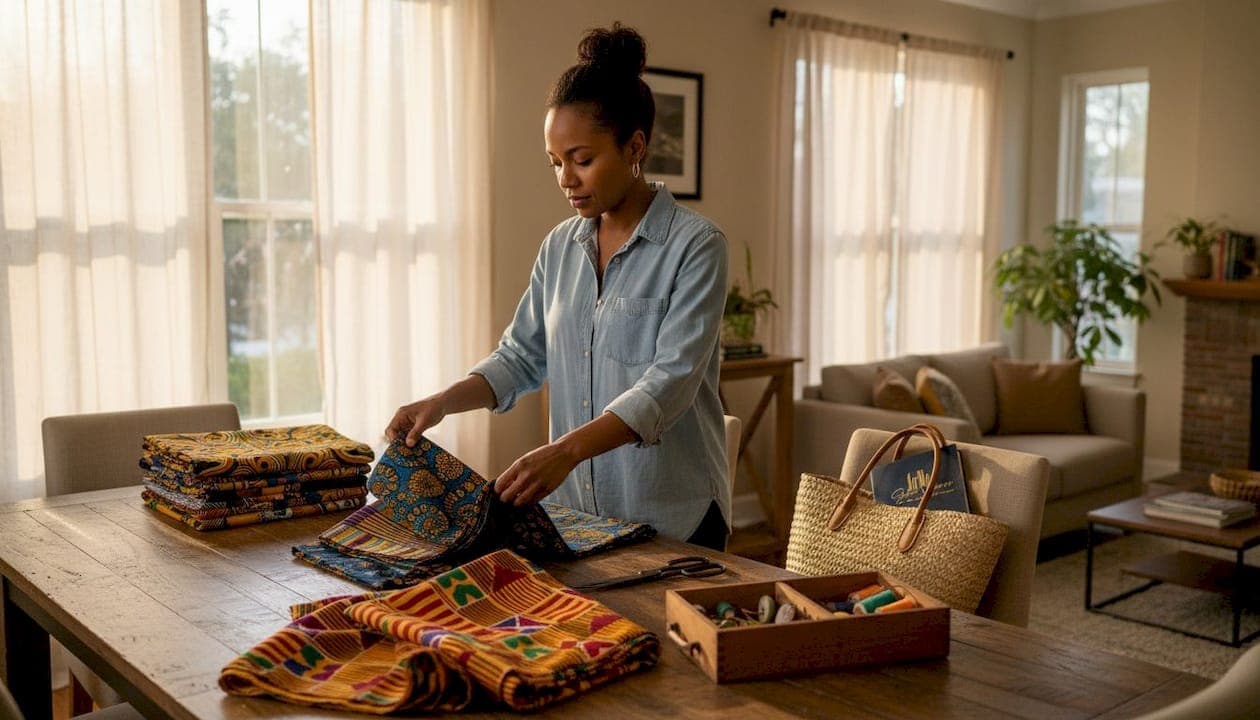
Picture this: you walk into a room wearing something that tells a story, something that carries the warmth of a legacy, the boldness of a culture, and the confidence of someone who knows exactly who they are. For many fashion-conscious individuals in the U.S., finding authentic West African attire that blends cultural pride with modern style can feel like searching for something rare and precious. Generic, mass-produced "African-inspired" pieces flood the market, leaving you wanting more. This guide walks you through every step of selecting, assembling, and styling a West African-inspired outfit that feels genuinely yours, for everyday moments and special occasions alike, honoring both tradition and your personal aesthetic.
Table of Contents
- What you need: Tools, fabrics, and key pieces
- Step-by-step: Creating your African-inspired look
- Choosing the right accessories: Elevate and personalize
- Ethical and sustainable fashion: Where to shop with confidence
- Why authentic expression matters more than trends
- Where to find your next statement piece
- Frequently asked questions
Key Takeaways
| Point | Details |
|---|---|
| Start with signature textiles | Choose authentic fabrics like Ankara or Kente for vibrant, meaningful outfits. |
| Layer with intent | Mix traditional and modern pieces to balance cultural heritage and personal style. |
| Use accessories wisely | Select statement jewelry and head wraps to personalize your look without overwhelming it. |
| Shop ethically | Support artisan brands and sustainable practices for authentic and positive impact fashion. |
What you need: Tools, fabrics, and key pieces
Now that you know why authentic African style matters, let's break down exactly what you'll need to get started. Building a meaningful West African-inspired wardrobe begins with understanding the textiles and garments that form its foundation. These are not just fabrics. They are living archives of culture, identity, and artistry.
Heritage textiles like Ankara and Kente are central to West African fashion and are experiencing a powerful revival rooted in ethical, sustainable values. Each fabric carries its own history and visual language, making your choice of textile the first meaningful decision in your styling journey.
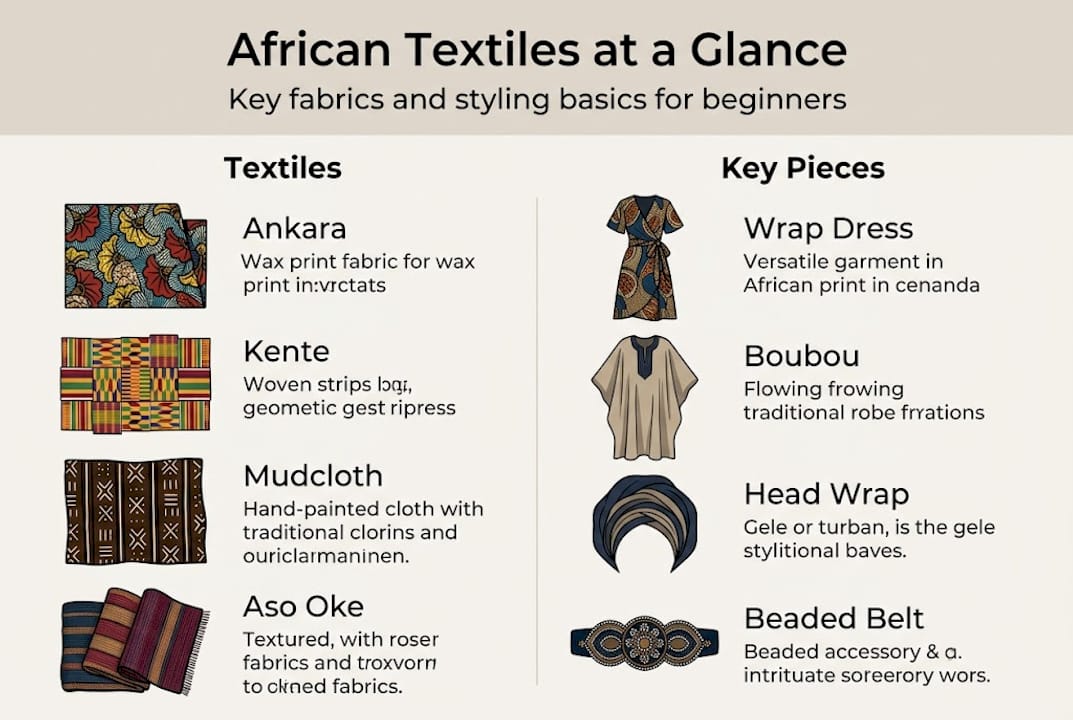
Iconic West African textiles at a glance
| Textile | Origin | Key characteristics |
|---|---|---|
| Ankara | West Africa (widespread) | Bold prints, vibrant colors, cotton-based |
| Kente | Ghana (Ashanti & Ewe) | Woven strips, gold and green symbolism |
| Mudcloth (Bogolanfini) | Mali | Earth tones, hand-painted geometric patterns |
| Aso Oke | Nigeria (Yoruba) | Handwoven, ceremonial, rich texture |
Once you understand your textiles, you can begin selecting your core garments. Here are the essential pieces to consider:
- Dashiki: A loose, colorful shirt with intricate embroidery around the neckline, perfect for casual and semi-formal occasions
- Kaftan: A flowing, full-length garment that works beautifully for both relaxed and elevated looks
- Boubou: A wide, elegant robe worn across West Africa, known for its regal silhouette
- Palazzo pants: Wide-leg trousers in Ankara or Mudcloth prints that pair effortlessly with fitted tops
- Tailored dresses: Structured silhouettes in heritage fabrics that bridge tradition and contemporary fashion
Explore must-have African-inspired pieces to build a wardrobe that speaks with intention. For accessories, start simple: beaded jewelry, a head wrap in a complementary print, and leather or woven sandals ground the look without overwhelming it.
Pro Tip: When sourcing your pieces, prioritize brands that name their artisans and explain their production process. Transparency is the hallmark of truly ethical fashion. Supporting sustainable fashion trends means your wardrobe becomes a force for good.
Step-by-step: Creating your African-inspired look
With all your essentials ready, it's time to create your standout ensemble. The process is less about following rigid rules and more about honoring the spirit of the textiles while letting your personality shine through.
- Choose your centerpiece. Start with one hero garment, whether that's a flowing Ankara dress, a structured Kente kaftan, or a tailored Mudcloth shirt. This piece sets the tone for everything else.
- Select your supporting fabric or garment. If your centerpiece is a bold printed dress, keep the rest understated. If you're building around a neutral Mudcloth top, introduce color through your bottoms or accessories.
- Layer for occasion and weather. A lightweight linen jacket over an Ankara set works beautifully for transitional weather. For warmer days, let the fabric breathe and skip the extra layer.
- Balance tradition with trend. Mixing heritage prints with contemporary styles creates a vibrant, modern look that feels fresh without losing cultural depth.
- Finalize with accessories. Add beaded jewelry, a head wrap, or a printed bag as finishing touches that tie the look together.
Outfit combination comparison
| Look | Centerpiece | Pairing | Occasion |
|---|---|---|---|
| Bold and festive | Ankara wrap dress | Beaded belt, gold earrings | Celebration or event |
| Relaxed and cultural | Mudcloth palazzo pants | White fitted top, sandals | Casual everyday |
| Elevated and regal | Kente kaftan | Statement necklace, heels | Formal gathering |
| Modern fusion | Ankara blazer | Neutral trousers, loafers | Professional setting |
Your Afrocentric fashion wardrobe guide can help you map out combinations that feel cohesive and intentional. And if you want to go deeper, the lessons from West African fashion offer rich context for understanding why certain pairings carry such emotional weight.
Pro Tip: When mixing patterns, stick to a shared color family. An Ankara print with orange, green, and gold will pair naturally with a solid piece in any of those three tones.
Choosing the right accessories: Elevate and personalize
Once your base outfit is set, it's time to make your look unmistakably you with carefully chosen accessories. In West African fashion, accessories are never an afterthought. They are declarations. Every bead, every wrap, every ring carries meaning and memory.
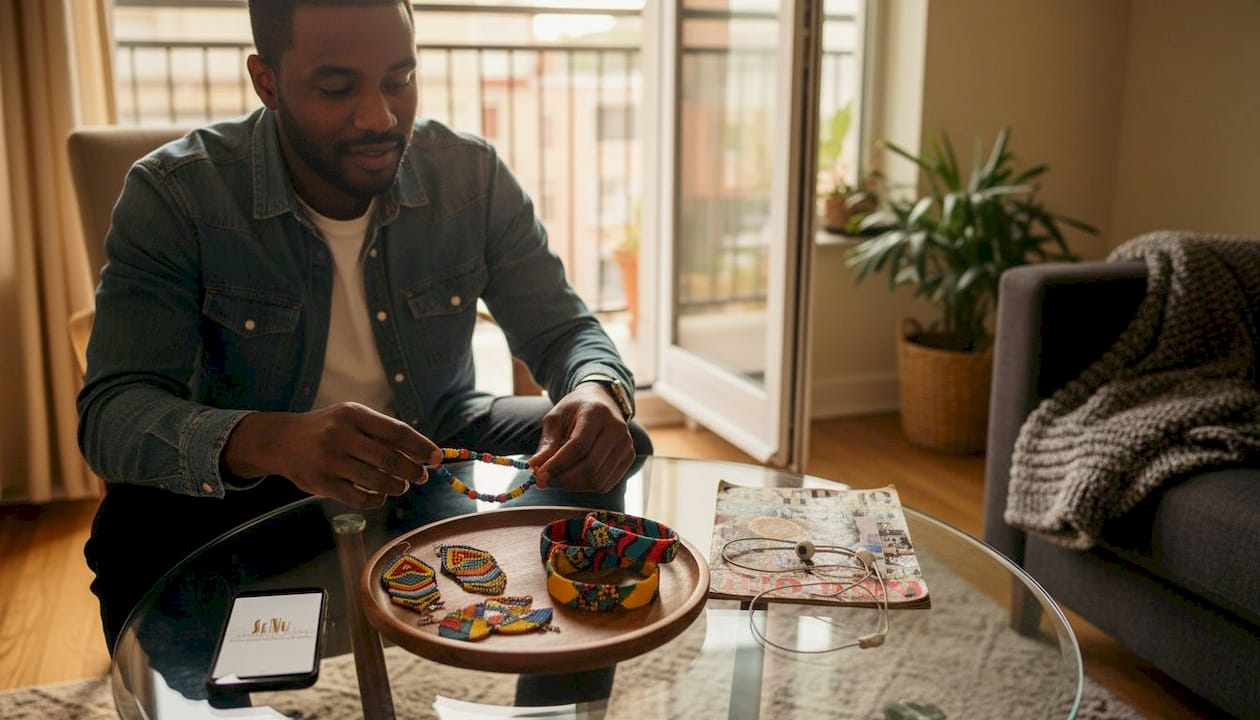
Accessories are key for a complete African-inspired look, from beaded jewelry to head wraps that frame your face with intention and grace.
Head wraps
The gele (a structured Nigerian head wrap) and the turban-style wrap are both stunning options. To tie a basic turban, fold a long rectangular fabric lengthwise, place the center at your forehead, cross the ends at the back of your head, and bring them forward to tie at the front or tuck neatly. Practice makes the process feel natural and joyful.
Jewelry
- Statement necklaces: Choose chunky beaded pieces in warm tones like amber, coral, or gold for maximum visual impact
- Beaded bracelets: Stack them for a layered, abundant feel that honors West African adornment traditions
- Rings: Bold geometric or nature-inspired rings add personality without competing with your outfit
Footwear
- Woven or leather sandals for casual and outdoor looks
- Embellished flats for semi-formal occasions
- Heeled mules or block heels when you want a modern, elevated finish
"The right accessory does not complete a look. It reveals the person wearing it."
Pro Tip: If your outfit is already rich in pattern and color, choose accessories in a single metallic tone, gold or copper, to add warmth without visual noise. Explore cultural fashion statements for inspiration on how to wear accessories with intention.
Always consider ethical sourcing when selecting your accessories. Handcrafted beaded jewelry made by West African artisans carries a story that mass-produced pieces simply cannot replicate.
Ethical and sustainable fashion: Where to shop with confidence
The finishing touch is knowing that your carefully curated look supports the communities who inspired it. Here's how to shop wisely and with purpose.
Purchasing from artisan-led brands helps revive traditional techniques and supports local economies, creating a ripple effect of empowerment that reaches far beyond the garment itself.
Hallmarks of a truly ethical brand
- Named artisans or cooperatives in product descriptions
- Transparent supply chain information on the website
- Limited production quantities that reflect handmade craftsmanship
- Fair wages and community investment mentioned explicitly
- Fabrics sourced directly from West African weavers and dyers
How to spot artisan-made versus mass-produced
Artisan-made garments often feature slight variations in pattern alignment, hand-stitched details, and natural fabric irregularities. These are not flaws. They are proof of human hands and lived skill. Mass-produced imitations tend to be perfectly uniform, printed on synthetic blends, and priced suspiciously low.
Anti-greenwashing tip: If a brand calls its clothing "African-inspired" but cannot name a single artisan, community, or sourcing region, that is a red flag. Authentic brands are proud to share that information because it is central to their identity.
For deeper reading on what ethical production truly means, the sustainable fashion meaning resource breaks down the principles that separate genuine ethical brands from performative ones. When you invest in empowering West African artisans, you are not just buying a garment. You are sustaining a craft, a community, and a cultural legacy.
Why authentic expression matters more than trends
With your ethical, personalized ensemble complete, it's worth pausing to reflect on the deeper reasons style matters. We live in a world that moves fast, where trends cycle through social media in days and the pressure to keep up can feel relentless. But West African fashion has never been about keeping up. It has always been about standing in your truth.
West African fashion's revival intertwines cultural heritage, sustainability, and modern style in a way that no passing trend can replicate. When you wear a piece rooted in this tradition, you are not following a moment. You are honoring a movement.
Copying surface aesthetics without understanding the story behind them misses the entire point. The real power of African-inspired fashion lies in its connection to resilience, community, and identity. Explore craftsmanship and culture in West African style to understand how these values translate into every stitch and silhouette. When you dress with intention, you are not just making a style choice. You are making a statement about what you value and who you choose to support.
Where to find your next statement piece
Ready to translate culture and style into your wardrobe? Here's where you can start.
At Sena Nukunu, every piece in our collection is crafted with care, cultural pride, and a deep commitment to ethical production. Whether you are looking for a show-stopping dress for a celebration or a beautifully tailored set for everyday wear, you will find it here. Shop West African dresses that carry the spirit of a legacy into your everyday life. If you have a vision in mind, explore our custom design services to bring it to life with artisan expertise. And for fresh arrivals and seasonal inspiration, discover our latest styles and let the collection speak to you.
Frequently asked questions
What are the most popular fabrics in West African fashion?
Ankara, Kente, Mudcloth, and Aso Oke are the most popular, each bringing unique colors and symbolism to every outfit. Choosing the right textile is the first step toward a look that feels authentic and intentional.
How can I tell if an African outfit is ethically made?
Look for brands that highlight artisan involvement, transparent sourcing, and support for local communities. Artisan-led brands are typically proud to share exactly who made your garment and where.
Can I mix contemporary fashion with traditional African prints?
Yes, blending modern cuts with vibrant heritage textiles is a hallmark of today's authentic African-inspired outfits. Mixing heritage prints with contemporary styles creates a look that feels both timeless and refreshingly current.
What accessories should I choose for an African-inspired outfit?
Start with bold beaded jewelry, a head wrap, or a printed bag, and keep the balance so your look feels natural rather than layered. Accessories are key for completing an African-inspired ensemble with grace and intention.