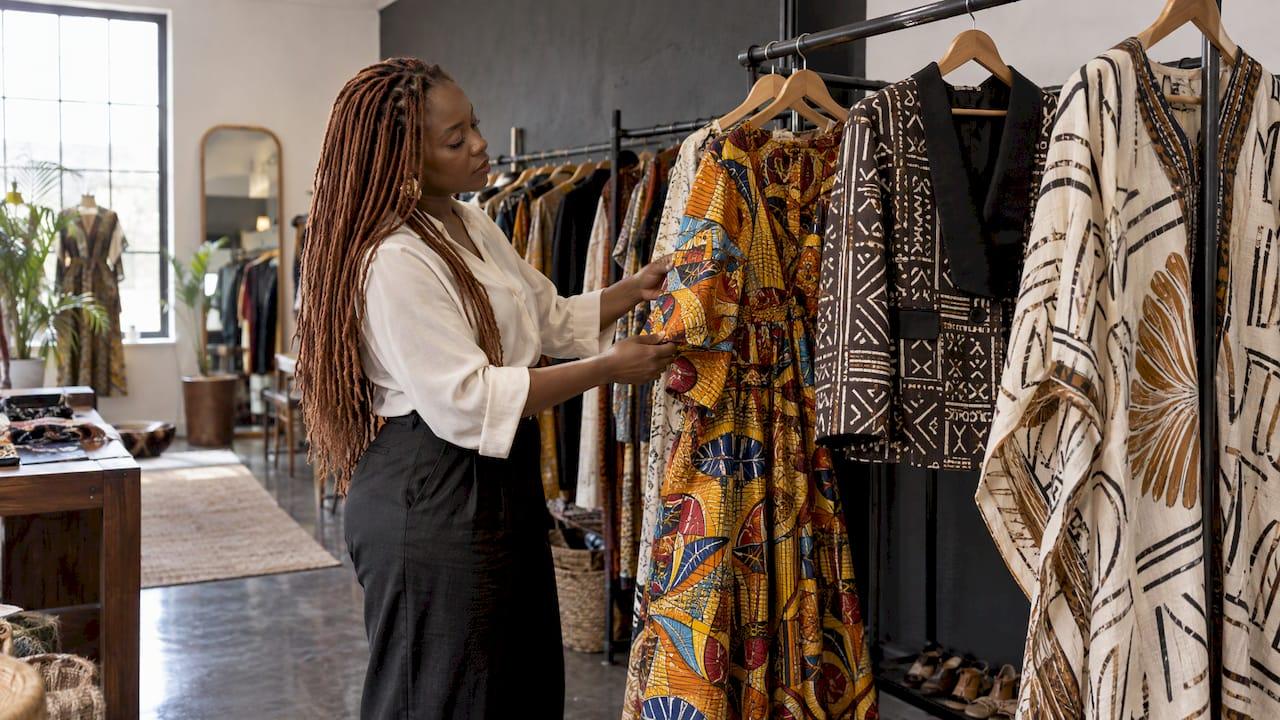
If you love Raydarten for its African print dresses and want to see what else is out there, you have four kinds of options: other African print dress labels, West African ready-to-wear houses, made-to-order tailors, and heritage-inspired ethical brands that sell limited runs. The right one depends on what you are dressing for, how much craftsmanship you want in the details, and how much you want to know about who made your clothes.
This guide walks through each type, what to compare, and how to read a brand's story with a clear eye. We describe the types rather than rank named shops, so you can apply the same checklist to any label you meet.
TL;DR
- Raydarten is known for African print dresses and outfits, so the closest alternatives are other print-focused labels and West African ready-to-wear brands.
- Choose by occasion first: everyday dresses, wedding and celebration sets, or menswear such as agbada and kaftans.
- Judge every brand on fabric quality, construction, size range, shipping to the U.S. and how openly it explains who makes its pieces.
- Limited-quantity, artisan-made pieces trade the lowest price for distinct design and clearer production stories.
- Sena Nukunu, based in Florida, offers ready-to-ship West African dresses, sets, jackets and agbada ensembles for women and men.
Table of Contents
- What shoppers want when they look for a Raydarten alternative
- Four types of alternatives
- How to compare alternatives side by side
- How to judge craftsmanship
- How to read ethical and cultural claims
- Matching the type to your occasion
- Questions to ask before you check out
- Our perspective
- Explore Sena Nukunu
- FAQ
- Sources
What shoppers want when they look for a Raydarten alternative
People who search this way usually want the same few things: bold African print, flattering dresses that move between work and celebration, and a sense that the clothing carries a story. Some want a different size range or a different fit. Others simply want more choice, a new silhouette, or a piece that nobody else at the event will be wearing.
Before you compare shops, write down your own short list. A useful one has four lines:
- The occasion: workday, wedding guest, family reunion, graduation, church, travel, a milestone birthday.
- The silhouette: wrap dress, maxi, peplum, matching set, kaftan, jacket, agbada.
- Your timeline: do you need it in days, or can you wait for a made-to-order piece?
- Your values: is price the first filter, or do craftsmanship and ethical production matter just as much?
Your answers point to one of the four types below.
Four types of alternatives
African print dress labels
These are the nearest match. They work with wax print and similar printed cotton, and they focus on dresses, jumpsuits, skirts and separates in vivid patterns. Expect a wide range of cuts, frequent new drops and approachable pricing. The trade-off is that large drops can mean less distinctive pieces, so look closely at pattern placement, seam finishing and lining.
This type suits you if you want colorful, versatile everyday and event dresses and you are comfortable choosing from a broad catalog.

West African ready-to-wear brands
These labels go beyond print and draw on the wider vocabulary of West African dress: woven strip cloth, structured jackets, kaftans, flowing robes and coordinated sets. The design leans more toward statement pieces, and many produce in smaller quantities.
This type suits you if you want occasionwear that looks tailored and regal, for a wedding, a gala, a cultural celebration or a professional event where you want to stand out with intention.
Made-to-order and custom tailors
Custom makers cut to your measurements. You get the fit you want, but you wait longer, and you need to be precise with measurements and clear about timelines. Ask how many fittings or revisions are included, and what happens if the garment arrives wrong.

This type suits you if standard sizing has never fit well or you are dressing a whole wedding party in coordinated looks.
Heritage-inspired ethical brands
A growing group of labels pairs West African design with transparent, artisan-focused production in limited quantities. You may pay more per piece than at a high-volume print shop, but you also get a clearer story, a smaller run and often better finishing.
This type suits you if you want your wardrobe to reflect your values as well as your heritage.
How to compare alternatives side by side
A simple grid keeps you honest when every product page looks beautiful. Fill it in for each brand you are considering.
| What to check | Why it matters | What a good answer looks like |
|---|---|---|
| Fabric and fiber content | Affects comfort, drape and how the garment ages | Fiber listed clearly on the product page |
| Construction | Shows whether the piece will last | Finished seams, lining where needed, neat pattern matching |
| Size range and measurements | Prevents returns | Full size chart with garment measurements, not just labels |
| U.S. shipping and returns | Affects total cost | Clear shipping times, returns policy stated before checkout |
| Production story | Tells you who made it | Names the workshop, region or artisan group in plain terms |
| Quantity | Tells you how unique it is | Limited runs or small batches stated openly |
| Total price | Sets real value | Price, shipping and any custom fees all visible |
Check current prices and size ranges on each brand's own page. They change often, and a table copied today can be wrong next month.
How to judge craftsmanship
Good handwork shows up in small places. Turn the garment inside out, or study the close-up photos if you are buying online.
- Seams: Look for even stitching and finished edges that will not fray.
- Pattern matching: On a printed dress, the print should line up at the center front and at the side seams.
- Fabric weight: The cloth should hang the way the photos suggest. Thin fabric can cling, and stiff fabric can feel heavy.
- Lining and structure: Jackets, agbada and occasion dresses should have structure that holds their shape.
- Closures: Zippers, buttons and ties should feel secure and sit flat.
If you want a deeper walkthrough, our guides on how to recognize real craftsmanship, the qualities of handcrafted dresses and a handcrafted fashion checklist go through each detail.
How to read ethical and cultural claims
Words like "authentic," "ethical" and "artisan-made" are easy to print and harder to back up. A fair test is the one fashion media use when they curate good clothing: Highsnobiety's Good Clothes Index says it looks at durable goods, quality materials, humane processes, intelligent design, utility and garments worth their cost. Borrow those six lenses for any brand.
Then add a few questions of your own, specific to African-inspired fashion:
- Who designed it, and who made it? A brand should be able to say where the garments are produced and by whom, in specific terms.
- Is the cultural reference explained? Strong brands name the tradition behind a pattern, cloth or garment, such as the agbada, instead of using "tribal" as a catch-all.
- Is the scale honest? Limited quantities and small batches are easier to verify than sweeping promises.
- Does the brand talk about people or only about the product? Real artisan relationships show up in the storytelling.
Our guides on signs of responsibly made fashion and what ethical manufacturing means explain these signals in more detail, and our list of responsible fashion brands is a good next stop if you want a wider view beyond African-inspired design.
Matching the type to your occasion
Everyday and workwear
A structured dress or a coordinated set in a bold but balanced print carries you from a meeting to dinner. Print labels and ready-to-wear houses both do this well. Prioritize fabric that does not wrinkle badly and a hem and neckline you feel confident in.
Weddings and celebrations
Here, the quality of construction and the sense of occasion matter most. West African ready-to-wear and heritage-inspired brands tend to offer richer cloth, coordinated sets for couples and families, and statement jackets. If you need coordinated outfits for several people, ask about timing early.
Menswear
Many print-focused shops cater mostly to women. If you are dressing a partner, groom or father, look for a brand that treats menswear as a full collection, with kaftans, jackets and agbada ensembles, not an afterthought.
Gifts
Choose a piece that is easy to fit, such as a flowing kaftan or a wrap style, and check the returns policy before you buy.
Questions to ask before you check out
- Is the item ready to ship, or made to order, and what is the timeline?
- Does the size chart give garment measurements?
- What is the returns policy for sale items and custom pieces?
- Are product photos real, or only mockups?
- Can you contact the brand directly if something goes wrong?
If a brand answers these clearly, it is usually a sign of a business that values its customers. Our related guides on other Senewear-style options for ethical buyers, alternatives to a popular styling site and how to test claims across five styles apply the same approach to other shopping searches.
Our perspective
We began Sena Nukunu because West African fashion deserves to be worn with pride, not treated as a passing trend. When you reach for a dress or an agbada, you are choosing a story, and we believe that story should be honest from the first thread.
That is why we focus on limited-quantity pieces, crafted with care and purpose. Small runs let us honor the artisans behind each garment, and they let you wear something that feels like it was made with you in mind.
We design for people of every background who want clothing that evokes confidence, comfort and a sense of regal style: women seeking statement dresses, men who want a robe worthy of the occasion, families dressing for a celebration. Every stitch is meant to carry the spirit of a legacy and bridge cultures.
So as you compare, ask what we ask of ourselves: who made this, what does it honor, and will it still feel like yours years from now?
Sena
Explore Sena Nukunu
If you want West African ready-to-wear with an ethical, artisan-focused story, start with our collection. We are based in Florida and offer ready-to-ship dresses, matching sets, jackets and statement pieces, plus agbada ensembles and heritage looks for men.
Browse our full collections, including Woven Nobility: Kings' Robe for men and Woven Radiance: Queens in Bloom for women, or go straight to our dresses. For a striking celebration look, see the Spirit of Ancestry three-piece agbada set or the Ivory Covenant ensemble. If you have something custom in mind, our services page shows the designs we offer.
FAQ
What is a good alternative to Raydarten for African print dresses?
The closest match is another African print dress label with a similar range of cuts and colors. If you want more tailored occasionwear, look at West African ready-to-wear brands, which add structured jackets, sets and kaftans. Compare fabric, fit and shipping details before you commit.
Are there alternatives that offer menswear as well?
Yes. Some West African ready-to-wear brands treat menswear as a complete collection, with kaftans, jackets and agbada ensembles. We offer men's agbada ensembles and heritage pieces alongside our women's collections.
How can I tell if a brand's ethical claims are real?
Look for specifics: where the garments are made, by whom, in what quantities, and with what materials. Vague words without detail are a signal to read more closely. Quality, durable construction and humane production are the lenses fashion media use to judge good clothing.
Is handmade African-inspired clothing worth a higher price?
Often it is, when the price reflects better fabric, finishing and fair production. Judge value by cost per wear: a well-made piece you wear to many events costs less over time than a cheaper one you wear once.