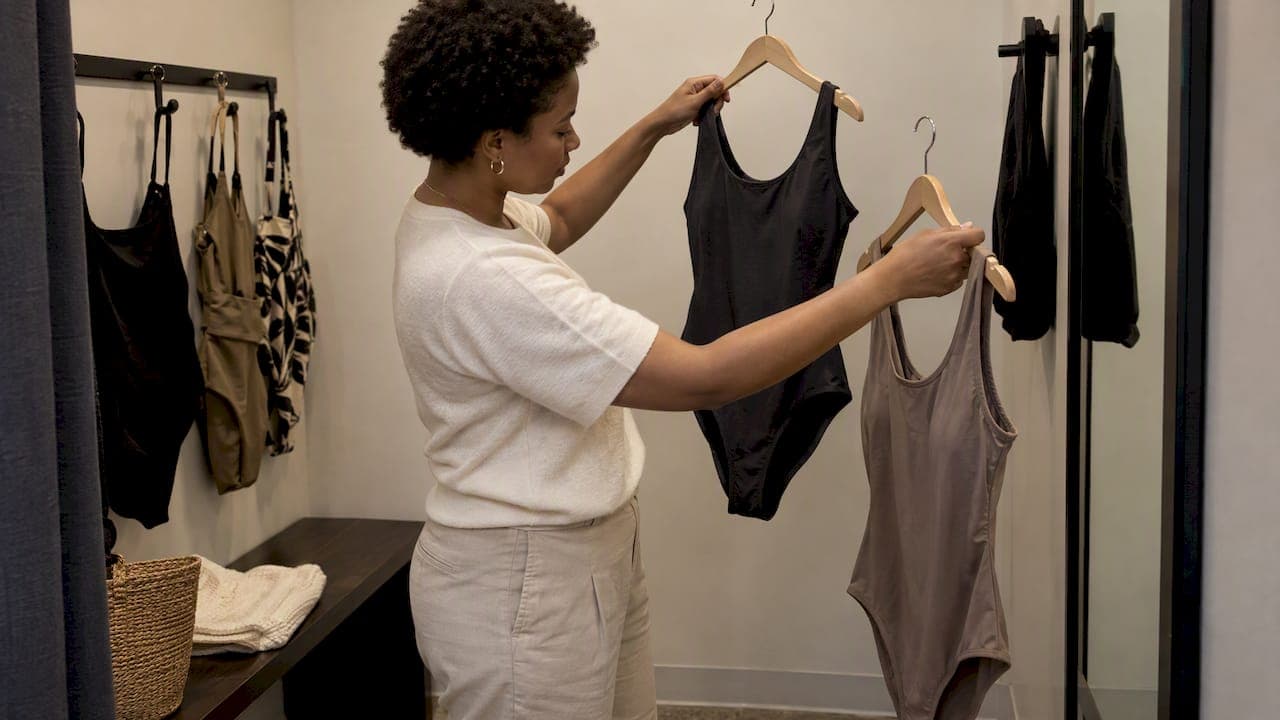
If you want a sustainable, modest-coverage alternative to Senimoto, look for longline two-piece sets, modest one-pieces, and small-batch artisan pieces built on recycled fabrics and honest construction. We built collections around those same values: ethical production, artisan partnerships, and limited-quantity craftsmanship. Below, we walk through the categories, the fit checklist, and how to verify the claims behind any swimsuit you consider.
TL;DR:
- Modest one pieces, longline tops, swim dresses, and rashguards offer different coverage; lining, higher necklines, lower cut legs, and skirt length determine how they wear.
- Check lined cups, an underbust band, and adjustable straps for support, then compare measurements in inches and confirm the return policy before ordering.
- Recycled nylon typically holds stretch and color, while recycled polyester resists chlorine; check exact fiber percentages and named certifications rather than trusting broad claims.
- Small batch pieces may sell out without predictable restocks, and handcrafted prints or trims can vary between units; check waitlists and size availability promptly.
- Sena Nukunu’s current collections focus on dresses, kaftans, and statement sets, not swimwear, so verify product categories before shopping for a swimsuit.
Table of Contents
- Which styles match Senimoto's coverage and aesthetic?
- What should you check before you buy: a fit and fabric checklist
- How to verify sustainability claims and avoid greenwashing
- Why Sena Nukunu fits this search for a values-aligned alternative
- Sustainable swimwear materials worth knowing
- A note on craftsmanship and why we keep our runs small
- Shop the collections built on these same values
- FAQ
- Sources
Which styles match Senimoto's coverage and aesthetic?
Shoppers drawn to Senimoto tend to want more coverage without sacrificing shape or color, so the closest matches fall into a few clear families.
- Modest one-pieces offer full torso coverage with higher necklines and lower-cut legs, often with a lining layer for opacity in the water.
- Longline two-piece sets extend the top past the natural waist, giving tummy coverage while keeping the visual lightness of a bikini silhouette.
- Swim dresses add a skirted bottom over briefs, a popular choice for beach days or religious and cultural settings where more coverage is expected.
- Rashguards pair a fitted, long-sleeve top with bottoms or a skirt, prioritizing sun protection and movement over a traditional swimsuit cut.
- Handcrafted, small-batch swims bring artisanal detail, crochet trims, or custom prints that larger factory lines rarely replicate.
Fabric choice shapes how each category wears. Lined suits hold their shape better and resist show-through, while unlined pieces feel lighter but need a denser knit to stay opaque wet. Look for four-way stretch with strong recovery, since swimwear that sags after a few wears loses both support and coverage. Interest in modest swimwear is not a niche concern either, as organizations like Mormon publish modesty guidance that reflects ongoing demand for coverage-first swim options across faith and cultural communities.
Handcrafted and limited-run pieces come with a tradeoff worth knowing upfront: because artisans work in small batches, popular sizes and colorways sell out and may not restock on a predictable schedule. That scarcity is part of what makes a piece feel special, but it means acting when you see a size available rather than waiting. Our guide on launch-ready limited edition production breaks down why small batches behave this way and what to expect as a buyer.
What should you check before you buy: a fit and fabric checklist
Replacing a swimsuit you already trust means checking the details that a product photo alone won't tell you.
- Confirm the support construction. Look for lined cups, an underbust band, or adjustable straps if you need more structure than a shelf bra provides.
- Read the coverage markers in the listing. Scoop back versus high neck, longline measurements in inches, and skirt length all affect how modest the final fit feels.
- Check the fabric content line. Recycled nylon, recycled polyester, or organic blends each perform differently, and the listing should state the percentage, not just the general claim.
- Look for a lining note. A suit without a lining layer may need a double layer of the main fabric to stay opaque when wet.
- Verify UV or chlorine-resistance claims against the care instructions, since a suit that claims both should also list how to wash it without breaking down the fabric.
- Read the sizing chart in inches, not just letter sizes, and check the return policy before buying, since swimwear fit varies more than almost any other garment category.
Pro Tip: Measure yourself in the same bra or bralette you plan to wear under the suit, since bust support changes with every half inch of band difference.
Support construction matters more than most shoppers expect. A 2024 review from Yachting World tested a swimsuit built from recycled fabric and found strong durability and inclusive sizing, but limited bust support and straps that slipped for some wearers during active use. A sustainability claim on the label says nothing about how the suit holds up once you're actually swimming, so check the construction details separately from the fabric story.
How to verify sustainability claims and avoid greenwashing
A recycled-fabric label is a starting point, not proof. Genuine third-party certification, when a brand has it, should be named specifically rather than implied through vague green language on the product page.
- Ask what "recycled" means on the label. Recycled nylon (often branded Econyl) and recycled polyester come from different waste streams and perform differently in chlorine and saltwater.
- Look for batch or production notes. Brands that name their artisans, describe production locations, or disclose batch sizes are giving you something to verify, unlike generic "ethically made" claims.
- Expect some variation in handcrafted pieces. Crochet trims, hand-dyed fabrics, and small-batch prints will show natural differences between units, which is part of buying artisan work rather than a flaw.
- Check for a waitlist or restock notice. Small-batch brands often use waitlists instead of constant inventory, so patience is part of the process.
Editorial roundups covering sustainable swimwear brands consistently point to recycled fabrics and small-batch production as the recurring markers shoppers should look for, alongside lining and construction details that determine whether the suit actually fits well once worn. A single sustainability claim rarely tells the whole story: the Yachting World review found that even a well-reviewed, eco-conscious suit needed stronger bust support for some body types, which is exactly why the construction checklist above matters as much as the fabric label. For a broader framework on what responsible production should look like, our guide to signs of responsibly made fashion walks through the markers worth checking on any product page.
Why Sena Nukunu fits this search for a values-aligned alternative
We focus on authentic West African craftsmanship, ethical manufacturing, and limited-quantity pieces made with artisan partners rather than mass production. While current collections center on ready-to-wear dresses, kaftans, and statement sets rather than swimwear specifically, the same principles that matter in your swim search, small batches, named production values, and honest material sourcing, run through everything made.
- Check collection pages for construction notes and fabric content before adding anything to your cart.
- Look for limited-quantity notices on product listings, since pieces are made in small runs and do sell out.
- Review sizing details on each product page, as fit varies by style across women's and men's lines.
Our piece on sustainable fashion principles rooted in West African inspiration lays out how we think about ethical production beyond any single category of clothing.
Sustainable swimwear materials worth knowing
The three fabric families you'll see most often each carry different tradeoffs. Recycled nylon, often sold under the Econyl name, is regenerated from fishing nets, fabric scraps, and industrial plastic, and it tends to hold stretch and color well over repeated swims. Recycled polyester comes largely from plastic bottles and performs similarly to virgin polyester in chlorine resistance, though it can feel slightly less soft against skin. Organic cotton blends show up more in swim cover-ups and rashguard linings than in the swimsuit body itself, since cotton alone lacks the stretch recovery swimwear needs.

None of these materials are interchangeable fixes for support or coverage. A recycled-fiber suit can still fit poorly or lack structure, which is why the fabric content line on a listing answers only part of your question. Pair the material question with the construction checklist above, and read the lining note specifically, since an unlined recycled-fabric suit behaves very differently in the water than a lined one.
A note on craftsmanship and why we keep our runs small
We keep our pieces limited because every artisan partnership we build takes time, and rushing that process would cost the detail that makes each garment worth wearing. Fit matters too: modest silhouettes succeed or fail on precise measurements, not guesswork, which is why we treat sizing notes as seriously as the fabric itself.
— Sena
Shop the collections built on these same values
If you came here looking for a modest, ethically made alternative, start with our Women's Collections to browse the silhouettes closest to what you're after, or explore our full collections page for longline and two-piece sets like Woven Stride and Woven Shields.
Before adding anything to your cart, check the product page for exact measurements, fabric content, and any limited-quantity notice, since our pieces are made in small runs and don't always restock.
FAQ
What are the best swimwear brands for modest coverage?
The strongest options combine higher necklines, longline tops, or skirted bottoms with recycled or organic fabric blends, rather than any single named brand. Look for labels that disclose fabric content, lining details, and production batch size on the product page, since those details matter more than marketing language.
What are some websites similar to Oh Polly for buying clothes?
Shoppers looking for fast-moving, trend-driven fashion sites typically compare several direct-to-consumer online retailers with frequent new drops and size-inclusive ranges. The details that matter most are fabric content, return policy, and how clearly the site discloses its production process.
What are some brands similar to Omnes?
Brands in this space generally share a focus on structured silhouettes and small, curated collections rather than constant inventory turnover. When comparing options, check whether the brand names its production process and discloses batch sizes, which signals a more considered approach to manufacturing.
What should I check before buying from a small-batch swimwear label instead of a larger alternative?
Confirm the fabric content percentage, whether the suit is lined, and whether the brand discloses where and how it's made. Small-batch labels often use waitlists instead of constant stock, so expect to act quickly once your size appears.
Sources
- Batoko swimsuit review – Yachting World
- 6 Chic And Sustainable Swimwear Brands To Shop For Now – L'Officiel Singapore
- Mormon