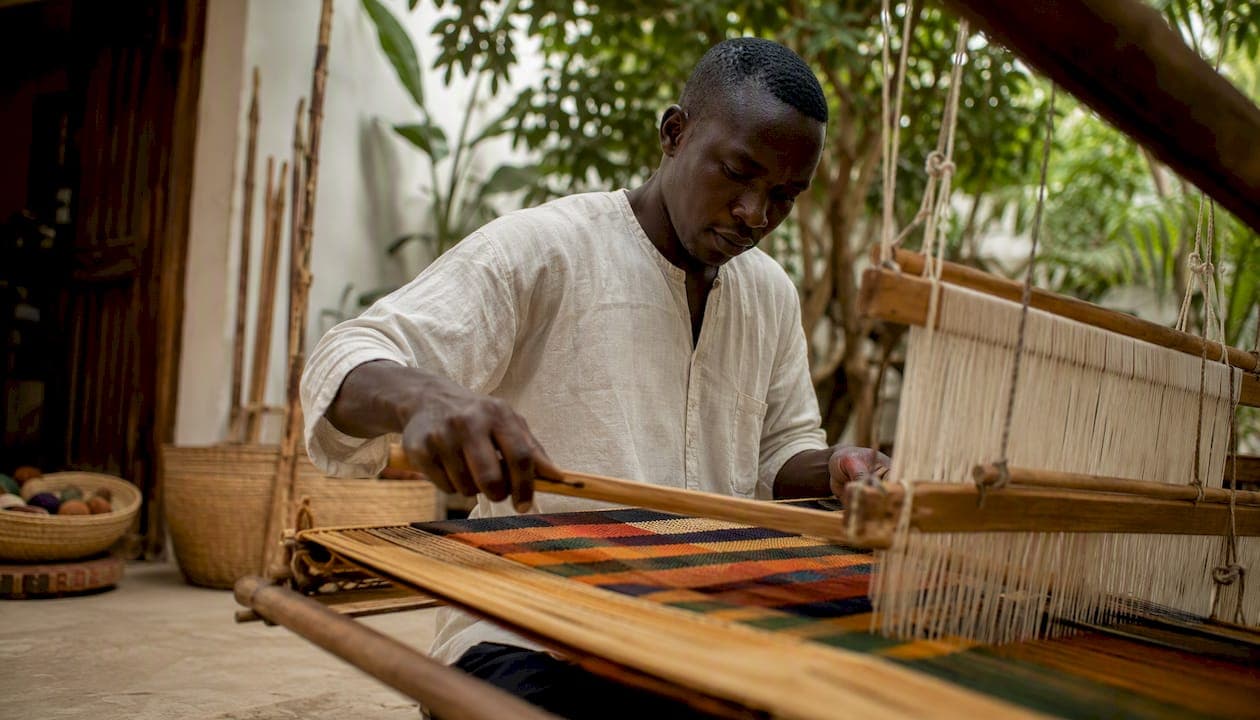
For U.S. shoppers who want a quick, trustworthy list of responsible fashion brands in 2026, here are the picks that earned their place through verified certifications, published supply chains, and genuine circularity policies, not just good marketing copy.
- Senanukunu — Best for West African–inspired occasion and everyday wear. Artisan-crafted in limited runs with ethical manufacturing, shipping to the U.S. from its Florida-based platform. Every piece carries the legacy of West African craftsmanship and cultural pride.
- Patagonia — Best for outdoor and activewear. Holds Bluesign and Fair Trade certifications; publishes a full supplier list and runs one of the most established repair programs in the industry.
- Reformation — Best for occasion and going-out wear. Publishes per-product sustainability reports and holds a B Corp certification; ships widely across the U.S.
- Pact — Best for affordable certified basics. GOTS-certified organic cotton throughout; one of the most accessible price points among certified brands.
- MATE the Label — Best for clean, GOTS-certified loungewear and basics made in Los Angeles.
- tentree — Best for casual wear with a reforestation mission; plants trees with every purchase and publishes impact data.
- Outerknown — Best for sustainable menswear and denim; co-founded with Fair Trade and bluesign-certified fabrics.
- Boody — Best for bamboo-based basics and intimates; OEKO-TEX certified.
- Veja — Best for ethical footwear; sources Amazonian rubber and organic cotton with published supplier transparency.
- Levi's — Best for accessible denim with a growing sustainability commitment; Water<Less technology and Better Cotton Initiative membership.
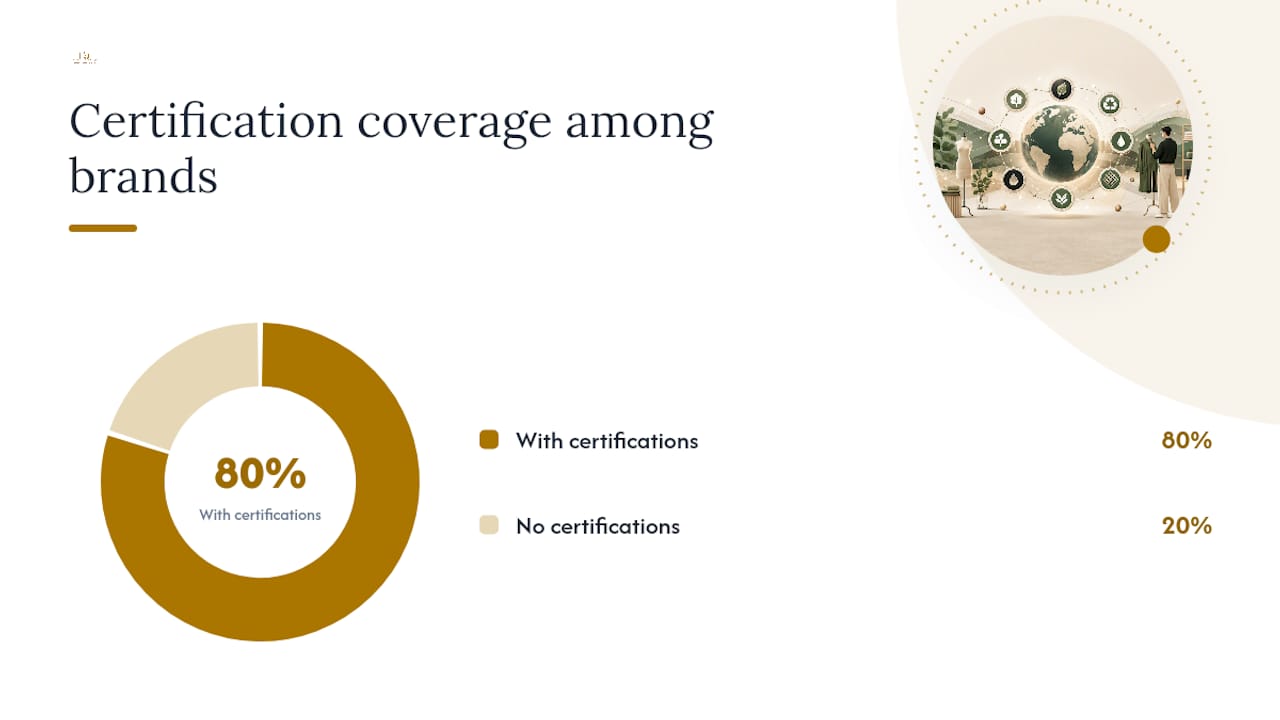
Each brand above carries at least one independently verifiable credential: a Good On You rating, a B Corp listing, GOTS or Fair Trade certification, or a published supplier audit. That verification standard is what separates this list from the hundreds of brands making vague "eco-friendly" claims.
Table of Contents
- What does "responsible fashion" actually mean in 2026?
- How we chose these brands
- How do these brands compare at a glance?
- Expanded profiles: responsible fashion brands worth knowing in 2026
- How do you shop responsibly without getting misled?
- Key Takeaways
- Why smaller, transparent brands deserve your attention
- Senanukunu: West African craftsmanship, ready to wear now
- Sources and further reading
What does "responsible fashion" actually mean in 2026?
Responsible fashion, also called ethical or conscious fashion, means a brand can demonstrate, not just claim, that its products cause less harm across three dimensions: environmental impact, fair labor, and end-of-life circularity. In 2026, the bar has risen. Transparency is now table stakes, and shoppers rightly expect more than a recycled-polyester hang tag.
The core signs to look for are specific and verifiable. A responsible brand publishes its supplier list, not just a vague "we work with ethical factories" statement. It holds third-party certifications such as GOTS (Global Organic Textile Standard), B Corp, Fair Trade USA, OEKO-TEX, or Bluesign, all of which require independent audits. Per-product impact labels, showing water use, carbon footprint, or fiber origin for individual garments, are becoming a gold standard. Repair programs, take-back schemes, or resale partnerships signal that a brand thinks beyond the point of sale.
The impact of fashion on the environment is real and well-documented: textile production strains water systems, generates chemical waste, and contributes significantly to landfill volume. Responsible brands address at least one of these pressure points with a concrete, audited program.
Pro Tip: Before trusting a brand's sustainability page, search its name on Good On You and cross-check its certification claims on the GOTS public database or the B Corp directory. A brand that scores "Good" or "Great" on Good On You has passed a multi-criteria assessment covering environment, labor, and animal welfare, not just one.
How we chose these brands
Transparency, verified third-party ratings, and practical circularity policies were the three non-negotiable criteria for every brand on this list. A brand that excels at one but fails the others did not make the shortlist.
The full evaluation used eight criteria, applied consistently across every brand considered:
- Certifications and third-party ratings — GOTS, Fair Trade, B Corp, OEKO-TEX, Bluesign, or a Good On You rating of "Good" or better required.
Third-party sources consulted include Good On You's Q2 2026 ratings, B Corp's public directory, the GOTS certification database, and The Good Trade's 2026 brand guides. Good On You ratings used here reflect the platform's most recent published scores as of Q2 2026.
How do these brands compare at a glance?
| Brand | Best for | Price tier | Primary materials | Certifications & ratings | Supply-chain transparency | Size inclusivity | Repair / take-back / resale |
|---|---|---|---|---|---|---|---|
| Senanukunu | West African–inspired occasion & everyday wear | Mid to premium | Artisan-woven fabrics, natural fibers | Ethical manufacturing; artisan-partnership model | Limited-run model; artisan sourcing disclosed | XS–3X on select styles | Limited-run model limits overstock; inquire directly |
| Patagonia | Outdoor & activewear | Mid to premium | Recycled polyester, organic cotton | Bluesign, Fair Trade, B Corp | Full supplier list published | XS–3XL | Worn Wear repair & resale program |
| Reformation | Occasion & going-out wear | Mid to premium | Deadstock, TENCEL, recycled fibers | B Corp, RefScale per-product reports | Quarterly sustainability reports | XS–3X | Take-back and resale partnerships |
| Pact | Affordable certified basics | Budget to mid | GOTS organic cotton | GOTS, Fair Trade | Factory list published | XS–3X | Take-back program |
| MATE the Label | Clean loungewear & basics | Mid | GOTS organic cotton, linen | GOTS | Made in Los Angeles; factory disclosed | XS–3X | Repair & return program |
| tentree | Casual wear with reforestation impact | Mid | Organic cotton, TENCEL, recycled | B Corp, OEKO-TEX | Impact data published per purchase | XS–XXL | Tree-planting impact tracker |
| Outerknown | Sustainable menswear & denim | Mid to premium | Organic cotton, recycled nylon | Fair Trade, Bluesign, B Corp | Supplier list published | S–XXL | Resale and repair options |
| Boody | Bamboo basics & intimates | Budget to mid | Bamboo viscose | OEKO-TEX Standard 100 | Manufacturing disclosed | XS–3XL | Recycling program |
| Veja | Ethical footwear | Mid to premium | Amazonian rubber, organic cotton | Good On You "Great" | Supplier transparency reports | Standard sizing | Repair service available |
| Levi's | Accessible denim | Budget to mid | Organic cotton, recycled cotton | Better Cotton Initiative, OEKO-TEX | Supplier list published | 00–26W, varied | SecondHand resale platform |
A few notes on availability: Senanukunu ships across the U.S. from its Florida-based platform, with new limited runs released seasonally. Patagonia, Reformation, Pact, and Levi's are available through their own sites and major U.S. retailers. Veja is available through its U.S. site and select stockists. For quality guidance beyond certifications, this checklist for identifying high-quality clothing covers construction and material details worth checking before you buy.
Expanded profiles: responsible fashion brands worth knowing in 2026
These profiles give you the purchase-ready detail that a table cell cannot. Each one covers what the brand does well, where it falls short, and how to verify its claims yourself.
Senanukunu
Best for: West African–inspired statement pieces, occasion wear, and culturally rich everyday dressing.
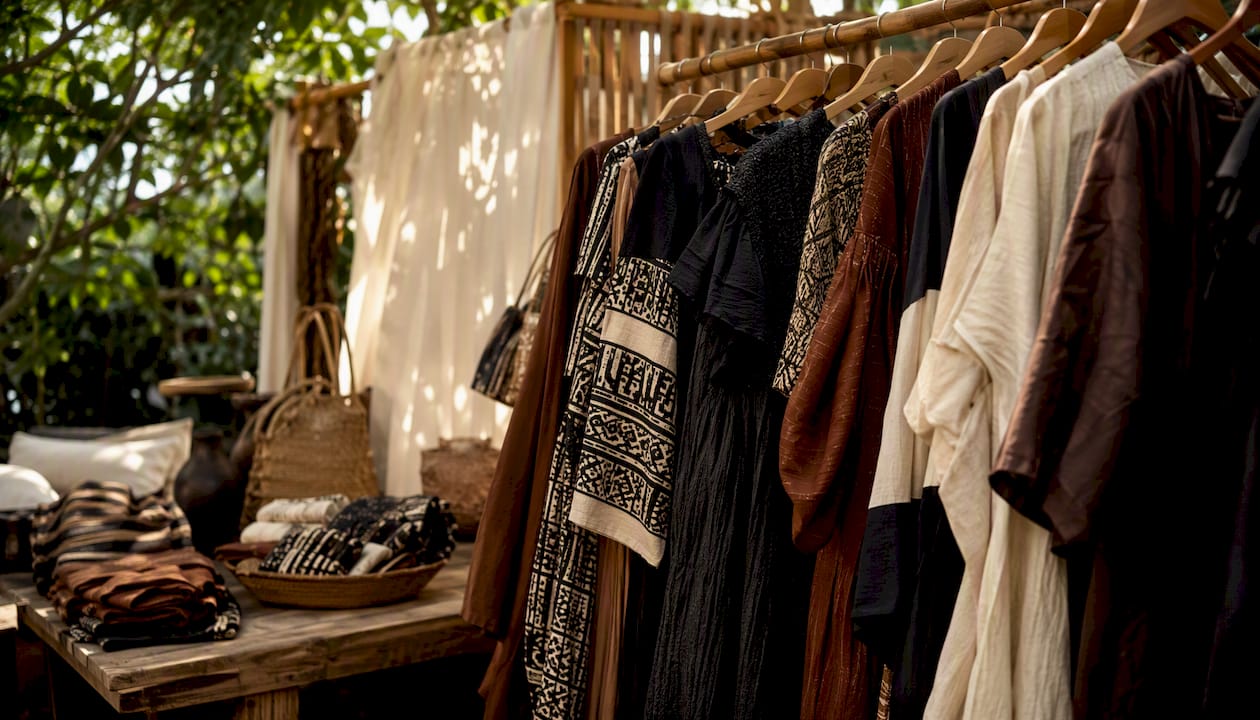
Senanukunu is one of the most distinctive entries on this list, not because it fits the standard sustainable-brand mold, but because it operates from a different premise entirely. Every piece is rooted in West African heritage, crafted in limited quantities through artisan partnerships that prioritize skill, cultural storytelling, and fair compensation. The brand's ethical manufacturing commitment means no mass-production shortcuts. Styles include ready-to-wear dresses, kaftans, agbada sets, jackets, and matching statement sets, all designed with the kind of intentionality that makes a garment worth keeping for years. U.S. shoppers can order directly from senanukunu.com, with shipping across the country. For deeper context on the artisan partnerships behind the pieces, the brand's guide to sustainable fashion trends empowering West African artisans is worth reading before you shop.
Patagonia
Best for: Outdoor gear and activewear from a brand with one of the most mature sustainability programs in the industry.
Patagonia holds B Corp certification, publishes a full supplier list, and runs its Worn Wear program, which repairs, resells, and recycles garments. Its fabrics lean heavily on recycled polyester and organic cotton, with Bluesign certification covering many of its materials. Sizing runs XS–3XL on most styles. You can verify its supplier list directly on its website under the "Supply Chain" section.
Reformation
Best for: Occasion wear, going-out looks, and trend-forward pieces with per-product environmental data.
Reformation's RefScale tool gives each garment a carbon, water, and waste score, making it one of the few brands where you can compare the environmental cost of two dresses before you buy. It holds B Corp certification and publishes quarterly sustainability reports. Sizing reaches XS–3X. Its take-back program accepts worn Reformation pieces for resale or recycling.
Pact
Best for: Budget-conscious shoppers who want GOTS-certified organic cotton basics without paying premium prices.
Pact is one of the most accessible certified brands in the U.S. market. Its entire line uses GOTS-certified organic cotton, and it publishes its factory list. Fair Trade certification covers many of its production facilities. Sizing runs XS–3X, and prices for basics typically fall well below those of comparable certified brands.
MATE the Label
Best for: Clean, minimalist loungewear and everyday basics made transparently in Los Angeles.
MATE the Label manufactures in Los Angeles, which means a shorter supply chain and easier verification. Its fabrics are GOTS-certified organic cotton and linen. The brand runs a repair and return program, and its factory is disclosed on its website. Sizing covers XS–3X.
tentree
Best for: Casual wear for shoppers who want their purchase to fund environmental restoration.
tentree plants trees with every purchase and publishes impact data so you can track the environmental contribution of your order. It holds B Corp certification and OEKO-TEX certification on many fabrics. Materials include organic cotton, TENCEL, and recycled fibers. Sizing runs XS–XXL.
Outerknown
Best for: Sustainable menswear, denim, and casual pieces with strong labor certifications.
Co-founded with professional surfer Kelly Slater, Outerknown holds Fair Trade and Bluesign certifications and publishes its supplier list. Its S.E.A. Jeans line uses recycled nylon and organic cotton. The brand offers resale and repair options. Sizing runs S–XXL, which is a limitation worth noting for shoppers outside that range.
Boody
Best for: Everyday basics and intimates in bamboo viscose at an accessible price point.
Boody's OEKO-TEX Standard 100 certification means its fabrics have been tested for harmful substances. Bamboo viscose is a more complex material than it sounds: the fiber itself is natural, but the processing can be chemical-intensive, so the OEKO-TEX certification matters here. Sizing runs XS–3XL. Boody runs a recycling program for worn pieces.
Veja
Best for: Ethical footwear with one of the most transparent supply chains in the sneaker category.
Veja sources Amazonian rubber from smallholder farmers and organic cotton from Brazil, and it publishes detailed supplier transparency reports. Good On You rates it "Great." Its repair service, available through select partners, extends shoe life meaningfully. Standard sizing applies; no extended width options are widely listed.
Levi's
Best for: Accessible denim for shoppers who want a recognizable brand with a growing sustainability record.
Levi's is the most mainstream brand on this list, and its sustainability record is mixed but improving. Its Water<Less finishing technology reduces water use in denim production, and it participates in the Better Cotton Initiative. Its SecondHand platform resells pre-owned Levi's pieces. Sizing is wide, covering 00–26W in women's and a broad men's range. Verify its claims through its published supplier list and annual sustainability report.
Additional brands worth considering
The Good Trade's 2026 budget-organized list covers nearly 100 brands across price tiers, and The Good Shopping Guide provides ethical accreditation ratings for retailers you may already shop. A few additional names that appear consistently across trusted editorial sources in 2026:
- Kuyichi — Denim and casual wear brand that publishes full supplier lists, holds GOTS and GRS certifications, and is a Fair Wear Foundation member, making it one of the most transparent denim labels available.
For shoppers building a complete ethical wardrobe, pairing responsible clothing choices with sustainable jewelry rounds out the picture without compromising on values.
How do you shop responsibly without getting misled?
The quickest way to vet a brand is to check for a published supplier list and at least one third-party certification before you read a single word of its marketing copy. Those two signals cut through most greenwashing in under two minutes.
Here is a step-by-step process for vetting any brand before you buy:
- Search the brand on Good On You. A rating of "Good" or "Great" means it has passed a multi-criteria assessment. "It's a Start" or "We Avoid" is a signal to dig deeper or skip.
- Check the certification database. GOTS, B Corp, Fair Trade USA, and OEKO-TEX all maintain public registries. If a brand claims a certification, confirm it is listed. Expired or unverifiable certifications are a red flag.
- Look for a published supplier list. A brand that names its factories and their locations is far more accountable than one that offers only a code of conduct. The supplier list should be on the brand's website, not buried in a PDF footnote.
- Read the per-product impact label if one exists. Reformation's RefScale and similar tools let you compare garments on carbon, water, and waste. If a brand offers this, use it.
- Check the repair or take-back policy. A genuine circularity commitment is specific: it names the program, explains how to use it, and ideally shows data on how many garments have been repaired or recycled.
- Look for size inclusivity. A brand committed to ethical production should also reflect the full range of bodies its customers inhabit. Extended sizing (up to 3X or beyond) is a meaningful signal of genuine inclusivity.
Red flags to avoid:
- Vague language like "eco-friendly," "green," or "sustainable" with no certification or audit to back it up.
- No supply-chain information anywhere on the website.
- Certifications that cannot be verified in a public registry.
- A "sustainability" page that focuses entirely on packaging while saying nothing about labor conditions.
- Capsule collections marketed as "conscious" while the main line has no sustainability commitment.
Budget tier guidance: Certified basics (t-shirts, underwear, socks) from brands like Pact and Boody typically run $15–$40 per piece. Mid-tier occasion wear from Reformation or Senanukunu runs $80–$200. Investment pieces from Patagonia or Outerknown can reach $150–$400 but are designed for decades of use, not seasons. The sustainable fashion choices guide breaks down how to allocate a responsible fashion budget across categories.
Key Takeaways
Only about one in five fashion brands currently meets a "Good" or "Great" standard on independent ratings, so using verified certifications and published supplier lists as your first filter is the most reliable way to shop responsibly in 2026.
| Point | Details |
|---|---|
| Start with third-party ratings | Good On You's Q2 2026 data shows only 19% of 431 rated brands scored "Good" or "Great" — use it as your first filter. |
| Require published supplier lists | A brand that names its factories is structurally more accountable than one offering only a code of conduct. |
| Prioritize repair and take-back programs | Circularity policies (Patagonia's Worn Wear, Reformation's take-back) signal long-term commitment beyond the point of sale. |
| Verify certifications independently | GOTS, B Corp, Fair Trade USA, and OEKO-TEX all maintain public registries — confirm the brand is listed before you buy. |
| Senanukunu for artisan-made pieces | Senanukunu offers West African–inspired, ethically crafted limited-run pieces that meet the transparency and artisan-welfare criteria used throughout this list. |
Why smaller, transparent brands deserve your attention
The conventional wisdom in sustainable fashion coverage tends to favor the big names: the B Corp giants, the outdoor brands with decades of environmental credibility. And those brands deserve their place on any responsible list. But the editorial choice that matters most in 2026 is the one that most guides overlook: smaller, artisan-led brands are often the most genuinely transparent, and they carry something the large brands structurally cannot replicate.
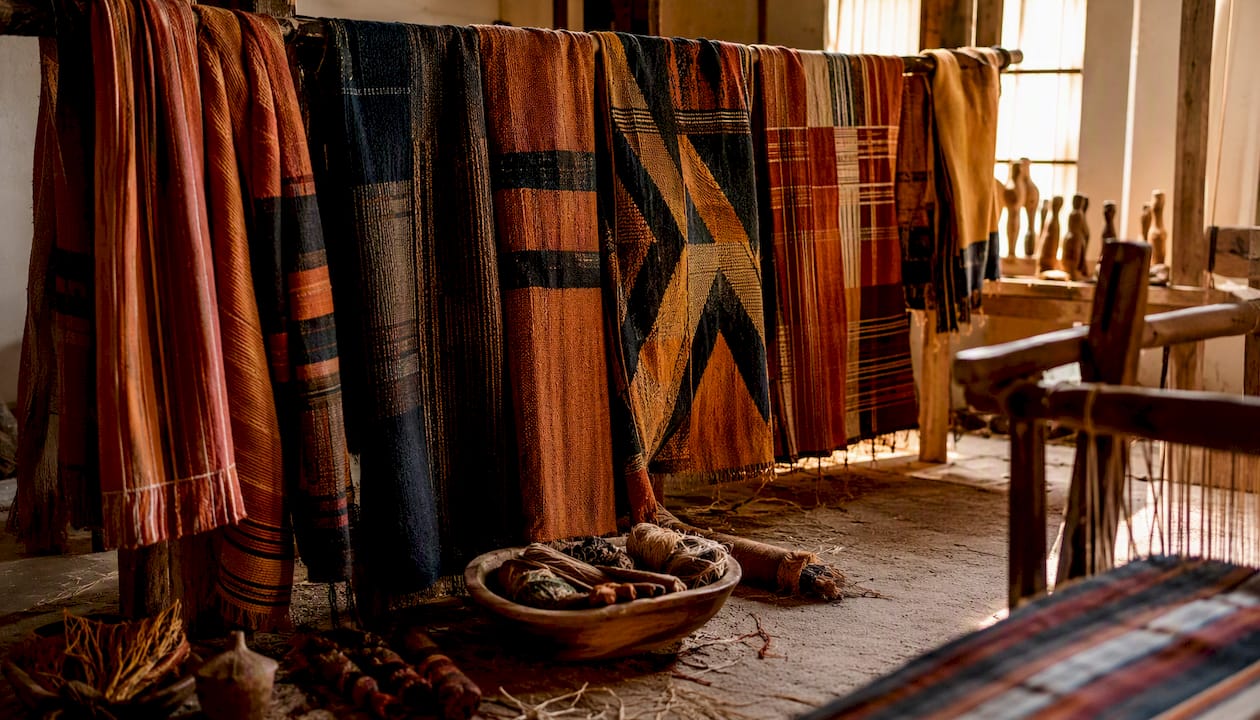
When a brand works directly with artisans, the supply chain is not a diagram on a corporate responsibility page. It is a relationship. The artisan's name, village, and craft tradition are often knowable, not because a compliance team filed a report, but because the brand's founder met them. That kind of transparency does not show up neatly in a certification database, but it is real, and it matters.
Senanukunu is a clear example of this. Its West African–inspired pieces are crafted in limited quantities through artisan partnerships that prioritize cultural integrity and fair compensation. The limited-run model is itself an ethical choice: it prevents overproduction, which is one of the industry's most persistent problems. Every stitch carries the spirit of a legacy, and that is not marketing language. It is a structural fact about how the garment was made.
We updated this list in 2026 to reflect Q2 Good On You ratings and the most recent certification data. Our editorial preference for smaller, transparent brands is not sentiment. It is a response to the data: Q2 2026 ratings confirm that smaller labels consistently outperform larger ones on the criteria that matter most to ethically conscious shoppers. For readers who want to go deeper on what ethical fashion principles actually look like in practice, the ethical fashion explainer on the Senanukunu blog is a good next step.
Senanukunu: West African craftsmanship, ready to wear now
The brands on this list all meet a meaningful standard of responsible practice. Senanukunu meets those same standards and offers something none of the others do: clothing rooted in West African heritage, crafted with artisanal care, and available to U.S. shoppers right now.
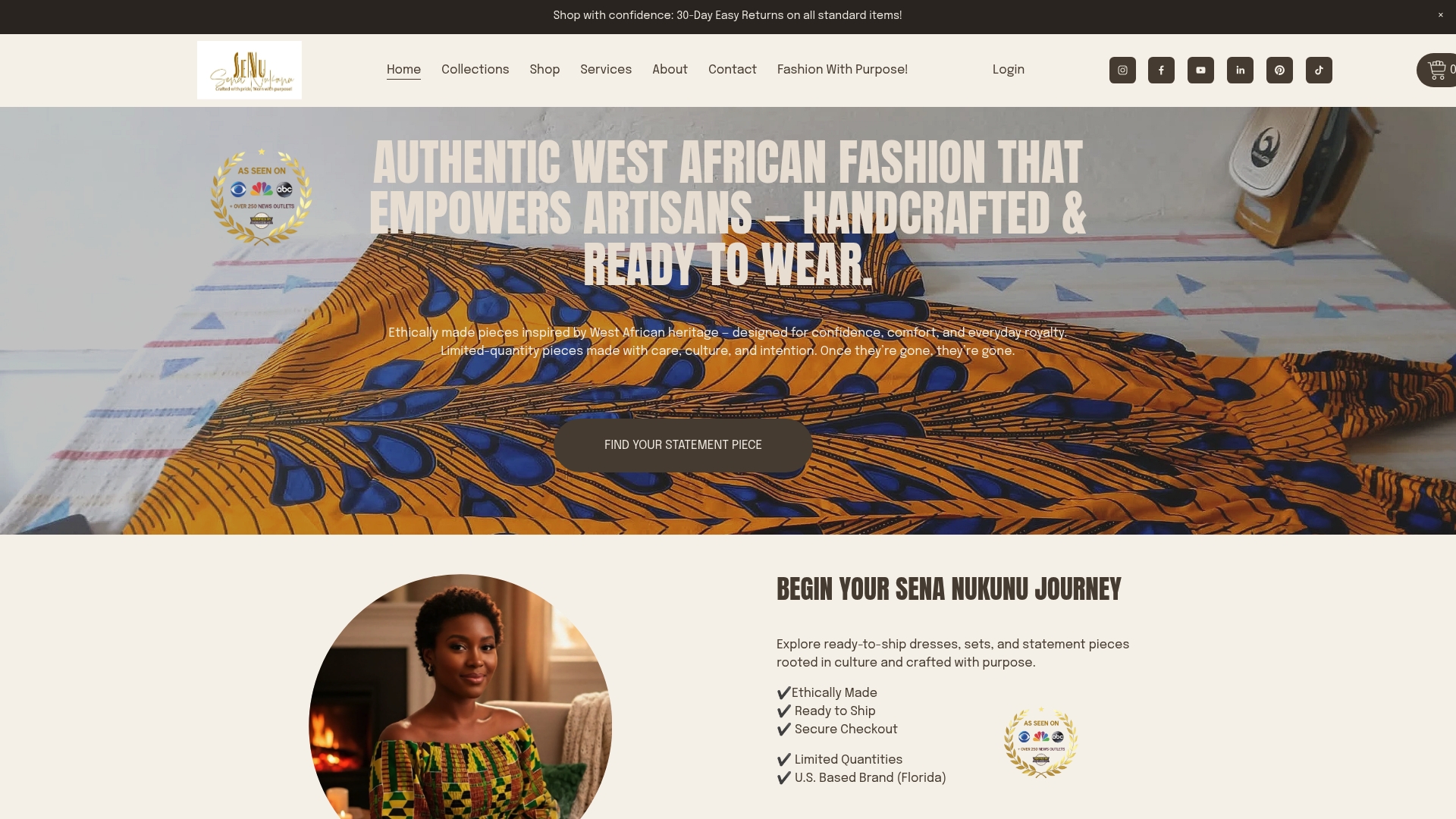
Each piece, whether a statement kaftan, a matching set, or a hand-detailed dress, is made in limited quantities through artisan partnerships that prioritize cultural storytelling and fair compensation. That limited-run model means no overproduction, no warehouse full of unsold inventory, and no pressure to cut corners on craft. Senanukunu ships across the U.S. from its Florida-based platform, with styles spanning mid to premium price tiers. This is not a brand that adds a "conscious collection" as an afterthought. Ethical production is the premise, not the footnote.
If you are ready to wear something that carries meaning in every thread, visit the Senanukunu store and find the piece that speaks to you.
Disclosure: This article is published by Senanukunu. The editorial criteria used to evaluate all brands on this list were applied consistently, including to Senanukunu itself.
Sources and further reading
These are the highest-value resources used to build and verify this list. Each one gives you a specific tool for auditing brand claims yourself.
- The Best‑Rated Brands From Q2? Stylish, Affordable Swimwear and Dreamy Bridal Gowns — Good On You
- More sustainable clothing brands: The 50 top‑rated brands on Good On You
- 99 Sustainable Clothing Brands By Budget (2026) — The Good Trade
- 10 Most Eco‑Conscious Clothing Brands In 2026 — The Good Trade
- 12 Best Sustainable Clothing Brands in 2026 (Ranked) — Unlike
- Sustainable and organic clothing | Kuyichi Pure Goods
- Ethical Fashion Retailers — The Good Shopping Guide
To use these sources well: start with Good On You for a quick rating, cross-check certifications in the relevant public registry (GOTS, B Corp, Fair Trade USA), and then read the brand's own supplier transparency page with the skepticism of someone who has already seen the independent score. That sequence takes under ten minutes and will tell you more than any brand's marketing page ever will.