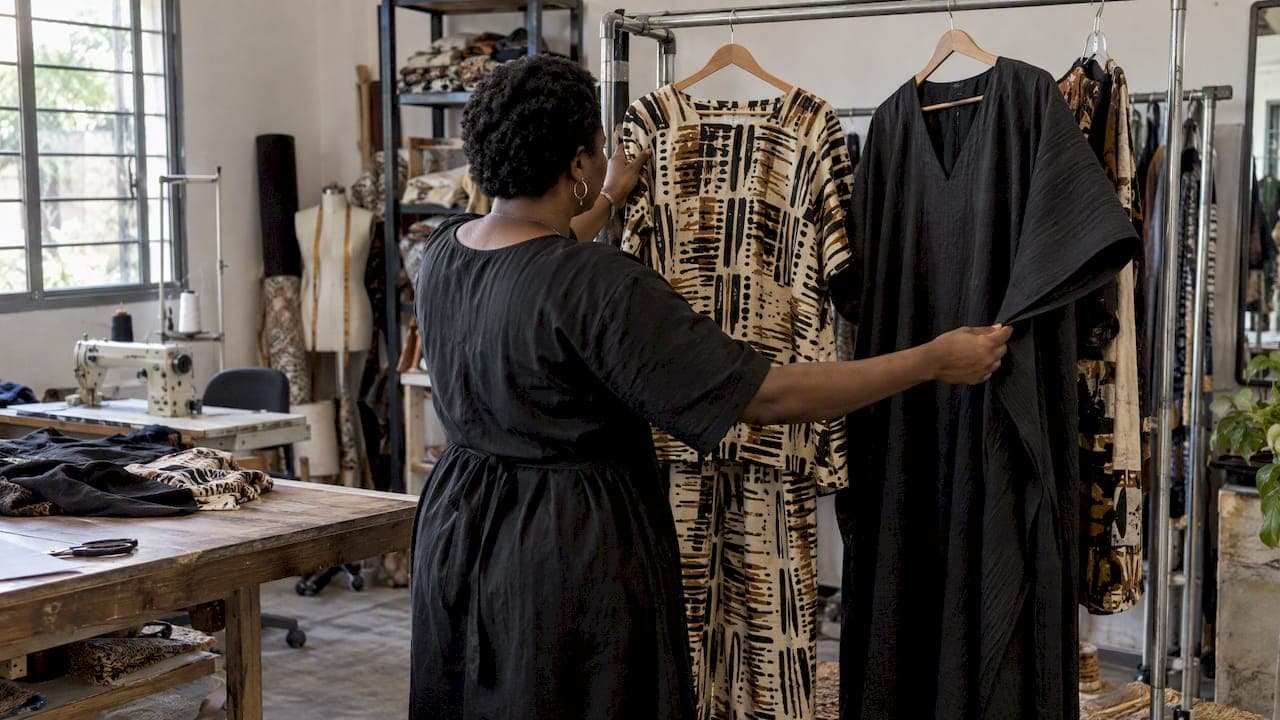
If you love Kaelakay's prints and silhouettes, start looking at boutique West African inspired labels, ethical artisan brands, curated marketplaces, and custom tailors — see this ultimate guide to supporting Black-owned fashion brands for top picks and trends. We built our platform around these same values of heritage and ethical craftsmanship, so it's a natural first stop. Before you buy anywhere, check the fabric details and size guide on the product page.
TL;DR:
- Check each listing for named fabric and weight, lining, seam finish, and measured sizing; confirm care instructions and return terms before buying.
- For an event next week, choose pieces available now from boutiques or marketplaces; bespoke tailoring often takes several weeks and costs more.
- Treat authenticity claims as verifiable only when brands name textile origins, artisans or workshops, production locations, and concrete reasons for limited runs.
- Boutique and artisan labels can answer construction questions personally, while marketplaces often handle tracking faster but provide more generic replies on sourcing.
Table of Contents
- How to judge whether a brand or product matches Kaelakay's look and quality
- Four practical categories where you'll find Kaelakay-style pieces
- One checklist to pick the best alternative for your occasion and budget
- Detailed comparison of customer service experiences across alternatives
- Specific artisan or cultural authenticity certifications to look for in alternatives
- Guidance on how to evaluate ethical production claims in alternatives
- Publisher perspective: why authenticity and artisan relationships matter
- Browse Sena Nukunu collections: find Kaelakay-style pieces on our site
- FAQ
- Sources
How to judge whether a brand or product matches Kaelakay's look and quality
Matching the Kaelakay aesthetic comes down to reading a product page the right way, not just scrolling a feed of pretty prints. The strongest pieces share a few visible traits: bold, large-scale prints with intentional color stories, silhouettes like kaftans, agbada sets, and coordinated two-piece ensembles, and a sense that the garment was designed to make a statement rather than blend in.
Once the style catches your eye, look closer at the construction. A trustworthy product page names the fabric (wax cotton, ankara, brocade, or a blend), states the weight, and mentions whether the piece is lined. Seam finishing matters too: French seams or bound edges usually signal more careful tailoring than a raw overlock stitch.
Cultural and ethical signals are just as telling as fabric specs:
- A maker story or artisan credit that names who crafted the piece or where the textile originated.
- Limited-run language, which suggests small-batch production rather than mass manufacturing.
- Clear origin statements about where the fabric was sourced and where the garment was sewn.
Before you check out anywhere, confirm the brand publishes real measurements (not just "small, medium, large"), offers custom sizing or made-to-order options, and spells out its return policy for cultural and statement pieces, which are sometimes final sale.
Pro Tip: Screenshot the size chart and measure yourself in inches and centimeters before you order. Statement pieces with structured sleeves or wraps often fit differently than everyday clothing.
Four practical categories where you'll find Kaelakay-style pieces
Shoppers hunting for Kaelakay-style pieces usually land in one of four places, and each comes with its own tradeoffs in price, speed, and craft detail.
- Boutique West African inspired labels. These brands curate their own prints, tell a direct story about where each design comes from, and typically price pieces in the mid to upper range. Expect smaller catalogs but a stronger sense of identity behind each collection.
- Ethical artisan and fair-trade labels. These sellers lean hardest into limited runs and named artisan credits. Prices tend to run higher because the craft detail, hand embroidery, hand-dyed textiles, hand-beaded trim, is harder to produce at scale.
- Curated marketplaces and specialty boutiques. Multi-brand marketplaces aggregate many designers under one roof, which makes it easy to filter by silhouette, print, or price tier and compare several options in one sitting. Use the filters for "matching sets" or "statement dresses" to narrow results fast.
- Custom or bespoke tailors. When you need an exact fit, a specific fabric, or a one-of-a-kind combination, a tailor can build it from scratch. Expect a longer timeline, often several weeks, and a higher price than ready-to-wear, but you gain full control over fit and fabric choice.
Budget and timeline should drive which category you start with. If you need something for an event next week, ready-to-ship pieces from a boutique label or marketplace make more sense than a custom order that needs lead time to produce.
One checklist to pick the best alternative for your occasion and budget
A short checklist keeps you from falling for a beautiful photo and ending up with the wrong fit or fabric. Before you add anything to your cart, run through these points:
- Occasion: Is this for a wedding, a cultural celebration, or everyday wear, and does the silhouette suit that setting?
- Fit and custom options: Does the brand offer made-to-order sizing or only standard sizes?
- Fabric and care: Is the fabric named, and does the listing explain how to wash or dry clean it?
- Price and value: Does the price reflect the craft detail (hand finishing, embroidery, lining) or just the print?
- Shipping and returns: What's the delivery window, and can you return or exchange a statement piece if it doesn't fit?
- Authenticity and story: Does the brand name its artisans or describe where the textile comes from?
When you reach out to customer service, ask direct questions: where the fabric is sourced, whether it's pre-washed, which body measurements the size chart is based on, and how long a custom order takes to produce. If you're buying for a date-specific event, lean toward ready-to-ship pieces; if the occasion is months away and you want something unique, made-to-order is worth the wait.
Pro Tip: Save your exact questions as a template and paste them into every brand's chat or email. You'll get faster, more comparable answers.
Detailed comparison of customer service experiences across alternatives
Customer service quality varies a lot across these four categories, and it often tracks with how the brand is structured. Boutique labels and independent artisan brands tend to offer more personal responses, since a small team is usually answering your questions directly and can speak to a specific piece's construction or origin.
Marketplaces and large curated platforms move faster on logistics questions like tracking and returns, but you may get templated answers about fabric or sourcing because the support team handles many brands at once. Custom tailors sit at the other extreme: communication is slower but far more detailed, since a tailor working on a single piece for you has every reason to confirm measurements and fabric choices before cutting anything.
If authenticity and craft detail matter most to you, a direct, personal response about sourcing and construction is a better signal than a quick but generic reply. Ask a specific question, how the sleeves are finished, where the print is woven, and judge the brand by how precisely they answer.

Specific artisan or cultural authenticity certifications to look for in alternatives
There's no single universal certification that guarantees a garment is authentically West African or artisan-made, so you're better off reading for specific, verifiable details rather than a badge. Look for a brand that names the country or region where the textile originates, credits the artisans or workshops involved, and describes the production process in concrete terms rather than vague claims.

Limited-run labeling is a useful signal too: a brand that states "only 20 pieces made" or similar is telling you something checkable about scale, which is harder to fake convincingly than a general ethics statement. Boutique labels and curated marketplaces often include maker stories and limited-quantity notes precisely because these details build trust with shoppers who care about where a piece came from.
When a brand's "about" page reads as generic marketing with no names, regions, or process details, treat that as a gap rather than proof of authenticity. The more specific the story, the easier it is to verify.
Guidance on how to evaluate ethical production claims in alternatives
"Ethically made" means different things to different sellers, so the claim is only as good as the detail behind it. A brand making a real ethical claim will usually tell you where garments are sewn, whether artisans are paid fairly or given credit by name, and why production runs are kept small.
Vague language like "sustainably sourced" with no further explanation is worth questioning. Compare that to a brand that explains its manufacturing location, names a workshop or artisan group, and ties limited quantities to a stated reason, like protecting craft quality or supporting a specific community. Fabric and fit matter here too: shoppers choosing West African inspired statement pieces consistently weigh these technical details alongside the ethical story, not instead of it.
A brand that's confident in its sourcing will usually answer direct questions about where materials come from without hesitation. If a seller dodges specifics when you ask, that tells you something about how much substance is behind the claim.
Publisher perspective: why authenticity and artisan relationships matter
We built Sena Nukunu around a simple belief: a statement piece should carry a real story, not just a flattering silhouette. Every ready-to-ship design in our collections reflects West African heritage, limited-quantity craftsmanship, and manufacturing we can speak to honestly because we oversee it ourselves.
For shoppers comparing Kaelakay-style pieces across many sellers, that combination, traceable story plus visible craft, is what separates a brand worth trusting from one that's only borrowing the aesthetic. Craft and story together are what make a piece feel earned rather than copied.
— Sena
Browse Sena Nukunu collections: find Kaelakay-style pieces on our site
Our collections are a direct place to start if you're drawn to Kaelakay's prints and statement silhouettes. We carry agbada ensembles and heritage pieces for men, along with matching sets and statement dresses for women, all made in limited quantities so each design stays close to its artisan roots.
Our dresses collection is the closest match if you're hunting for bold-print statement dresses, while our collections page covers kaftan and agbada silhouettes across the Woven Nobility, Woven Stride, and Woven Shields lines. If you need an exact fit or a one-of-a-kind combination, our services page covers custom work. Browse the full range at Sena Nukunu and see which piece speaks to you.
FAQ
What are the best categories of Kaelakay alternatives?
The four most reliable categories are boutique West African inspired labels, ethical artisan or fair-trade brands, curated marketplaces, and custom tailors. Each offers a different balance of price, speed, and craft detail, so the right choice depends on your occasion and timeline.
How do I know if a brand's ethical claims are real?
Look for specifics: a named production location, credited artisans or workshops, and a clear reason for limited production runs. Vague language with no verifiable detail is a weaker signal than a brand that answers direct sourcing questions confidently.
What should I check on a product page before buying a statement piece?
Confirm the fabric name and weight, whether the piece is lined, how it's finished at the seams, and whether the size chart gives real measurements rather than generic sizing. Also check the return policy, since statement pieces are sometimes final sale.
Does Sena Nukunu offer custom sizing or made-to-order pieces?
Our services page covers custom design work for shoppers who need an exact fit or a specific fabric combination. Ready-to-ship pieces are available across our collections for those who need something sooner.
Where can I compare prices across different West African inspired brands?
Curated marketplaces and specialty boutiques typically let you filter by silhouette, print, or price tier, which makes side-by-side comparison faster. Boutique labels and artisan brands are worth checking individually since their pricing often reflects hand-finishing and limited-run production.
Sources
- Fashion storytelling examples: Cultural and ethical picks
- Why African prints are popular: cultural meaning and style