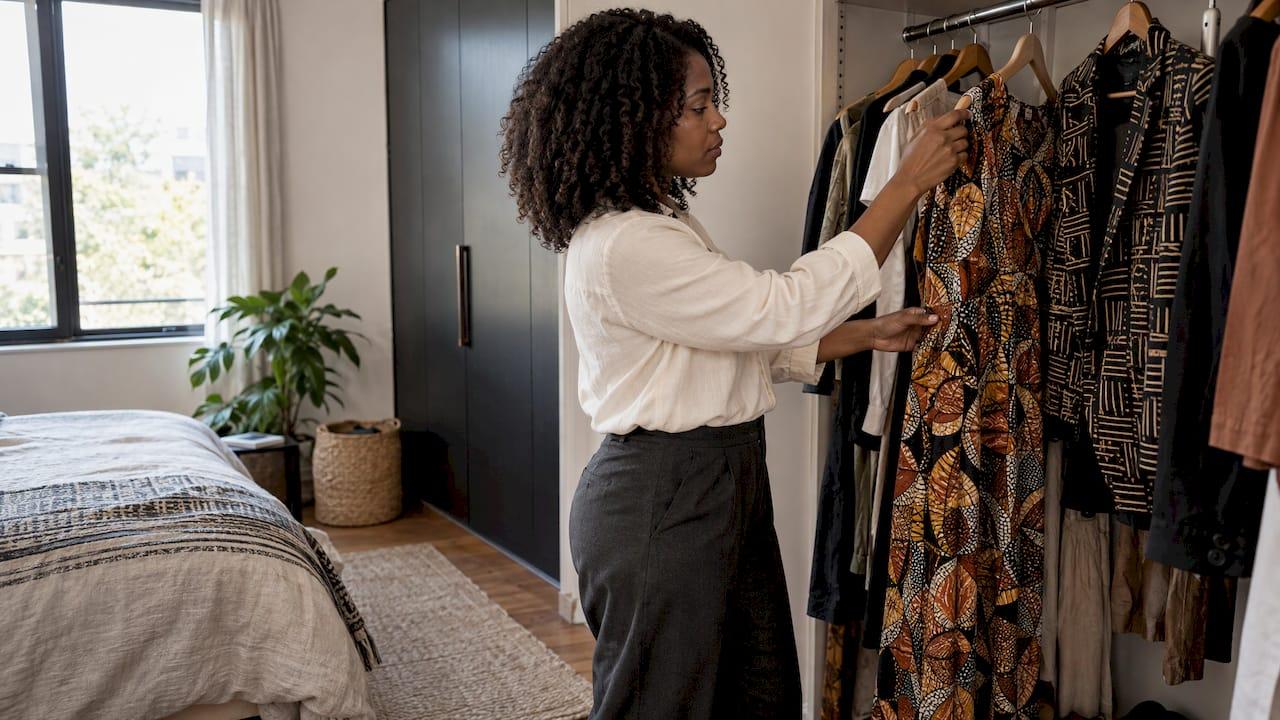
If you have worn a bold, architectural African-inspired label and want to see what else is out there, the best alternative is the one that matches how you dress, what you value and the occasions you shop for. Start with four checks: where the cloth and garment were made, how specific the brand is about its ethics, how well the piece is built, and whether the size chart fits your measurements. We wrote this guide to help you run those checks on any label, including ours.
TL;DR
- Judge a replacement label on four things: provenance of the fabric and garment, specific ethical claims, construction details, and an honest size chart.
- Ask who made it, where, how and from what. No single label or trick proves authenticity, and good brands answer these questions plainly.
- Match the silhouette to the occasion: structured dresses and jackets for work, sculpted gowns and agbada sets for weddings and ceremonies.
- Wear cultural pieces with understanding of where they come from, especially protected cloths such as kente.
- Our collections are limited-quantity, ethically made West African pieces for women and men, ready to ship from the United States.
Table of Contents
- What to look for when your favorite label no longer fits
- Check provenance before you check the price tag
- Read the construction, not just the photo
- How to tell a real ethical claim from a vague one
- Match the silhouette to the occasion
- Wear it with understanding
- Size and care: the quiet details that decide whether you love it
- Our perspective
- Explore our collections
- FAQ
- Sources
What to look for when your favorite label no longer fits
People move on from a label for ordinary reasons. The sizing did not work, the pieces sold out, the price drifted, the shipping was slow, or their taste grew toward something more rooted in tradition. Whatever the reason, the search is easier when you know what you loved about the original and what you now want more of.
Sit down with your closet first. Pull the three pieces you reach for most and name what they share. It might be a dramatic sleeve, a sculpted waist, a fabric that holds its shape, or a color you get complimented on. That list becomes your brief. Many shoppers discover that what they loved was not the logo but a silhouette, a print language or a feeling of walking into a room with confidence.
Then decide which of these three directions you want:
- A similar look from a different maker. You want the same drama and shape, and you are open to a new name.
- A more heritage-rooted option. You want pieces that carry the story of a specific place, craft or community, such as West African tailoring and woven or printed cloth.
- A more considered purchase. You want fewer, better pieces, with clear information about how they were made.
Most of the guidance below serves all three. If you are drawn to the second or third, you are the shopper we make our clothing for.
Check provenance before you check the price tag
The phrase "African print" covers a lot of ground. Many recognizable African prints are based on Indonesian batik. Dutch merchants introduced them to West Africa in the mid-1800s, and a Dutch fabric company founded in 1846 still designs many of the most popular fabrics sold in the region. That history is part of West African fashion today, and it is rich. But it means a label saying "African print" tells you very little about where a garment was cut, sewn or finished, or who benefited.
A better approach is the one textile specialists recommend. There is no single test for authenticity, and what works is asking who made it, where, how, and from what. Take those four questions to any brand's product page:
- Who made it? Look for named workshops, tailors, artisans or a clear description of the production team, not just "handmade" in general terms.
- Where was it made? A country or region is a start. A city, a studio or a community is better.
- How was it made? Hand-woven, hand-dyed, hand-tailored or cut and sewn in small batches are different things, and a good brand tells you which applies.
- What is it made of? Fiber content should be on the page. If the listing does not show the texture of the cloth, you can ask for a close-up photo or short video.
The same logic applies to protected cloth. Kente is the clearest example. Within Ghana, kente designs are used for specific occasions and are protected by law, and according to Textiles of Africa, since 2025 a Geographical Indication allows only cloth woven in designated communities to be called kente. If a brand sells something labeled kente at a very low price with no word about the weavers, that is your cue to read more carefully.
We have written several short guides on this topic if you want to go deeper: five quick provenance tests, how to identify authentic African craftsmanship, and steps to identify authentic West African garments.
Read the construction, not just the photo
Styled photos sell the mood. Construction decides whether the piece lasts. Before you buy any statement dress, jacket or matching set, look at the listing for evidence of how it was built. A trustworthy page will show more than the front of the garment.
What to look for:
- Photos of the back, the side and the fastening. Zippers, buttons, hooks and ties should look secure and well placed.
- The inside finish. Clean seams, a lining where one makes sense and tidy hems are signs of care. Africa Biso, a guide for online shoppers, suggests asking for photographs of the back, side, fastening and inside finish when a listing does not show them.
- How the print or weave behaves at seams. On a well-made piece the pattern is placed with intention, so the design lines up where the garment closes or meets at the waist.
- Structure where the design needs it. Sculpted sleeves, dramatic shoulders and wide agbada panels need support to hold their shape. Ask what supports them.
If a seller will not show you these details or answer a simple question about fabric, that tells you something about what to expect after checkout.
How to tell a real ethical claim from a vague one
Many shoppers who move toward heritage fashion do it because they want their money to do some good. That is a fair thing to want, and it also means the words "ethical," "sustainable" and "artisan-made" are used loosely.
The practical rule is to look for specifics. Scientific American advises looking on a brand's website for how it designs for garment longevity, durability and recyclability, and how it reduces waste and production impacts. The same article notes that terms such as "green" and "natural" have no specific meaning, so a word like "recycled" should come with an actual percentage.
Impakter makes the other half of the point: if a label talks about ethical sourcing without giving specific information, and you cannot find out more online, you are likely looking at a baseless claim.
So before you buy, ask whether the brand tells you:
- Where production happens.
- Whether the work is done by individual artisans, small workshops or larger factories.
- What the pieces are made from.
- How many pieces it makes, and whether it works in limited runs rather than endless restocks.
- What it says about its own impact, in plain language rather than slogans.
For more on this, see our explainers on what ethical manufacturing in fashion means and how to spot it and sustainable fashion trends empowering West African artisans.
Match the silhouette to the occasion
Most people do not buy statement clothing for no reason. They buy it for a wedding in June, a naming ceremony, a graduation, a gala, a Sunday service or a client dinner. Let the occasion guide the shape.
For work and everyday wear
Structure is your friend. Clean dresses, A-line skirts and tailored jackets organize a bold print into wearable lines. Keep the color story tight so the outfit reads sharp rather than busy. A single standout piece with quiet accessories often works better in a professional room than a head-to-toe print.
For weddings and celebrations
This is where sculpted gowns, flowing maxi dresses, matching sets and full agbada ensembles shine. If you are a guest, check the couple's color request before you choose, and remember that a traditional ceremony may have its own expectations for how guests dress. If you are in the wedding party or part of the family, matching sets let a group look unified without looking identical.
For men, an agbada set is a statement of dignity that photographs beautifully and moves well. If your celebration includes children, our guide to spotting authentic kids' African celebration wear will help you dress the whole family.
For weekends and travel
Easy two-piece sets, relaxed kaftans and comfortable dresses bring heritage fabric into daily life without much effort. Choose forgiving cuts and fabrics you are happy to sit, walk and travel in.

A useful habit: before buying anything for a ceremony, ask the host or an elder in the family what is customary. The dress code is often the clearest guide to what you should buy.
Wear it with understanding
African-inspired clothing carries history, and wearing it well includes knowing a little of it. This is not about gatekeeping. It is about respect, and respect makes the clothes feel better to wear.
Healthline offers a helpful frame. Appreciation involves having permission to use cultural elements, using them as intended, sharing what you learn and being clear that you are not an authority. Appropriation, in contrast, is adopting parts of a culture without consent.
Three habits make this practical:
- Learn what the cloth means. Kente, for example, came to wide attention among African Americans in 1958, when Ghana's first prime minister wore it to meet President Eisenhower. By the early 1970s the dashiki was the main U.S. garment featuring kente.
- Notice who benefits. Nigerian-born designer Yetunde Olukoya says that as long as African print clothing is made in Africa and puts value back into the people who made this fashion popular, she would love to see it worn everywhere.
- Respect protected designs. Designers can explain their inspiration, but according to Smithsonian's Diana Baird N'Diaye, they should not copy actual kente patterns.
Our fashion heritage checklist turns these ideas into questions you can ask before any purchase.
Size and care: the quiet details that decide whether you love it
A beautiful piece that does not fit stays in the closet. Statement clothing is often cut with drama in mind, so size with care.
- Measure yourself. Use a soft tape for bust, waist and hips. For matching sets, measure for the top and bottom separately, since you may fall in different sizes.
- Use the brand's size chart, not the size you usually wear. Sizing varies from label to label, and a chart is the only reliable guide.
- Size by the largest measurement when you fall between sizes, then adjust the fit at the waist with a belt or a tuck if the design allows.
- Read the fabric details. Stretch, weight and lining change how a cut sits on the body.
- Ask about care before checkout. Structured jackets, embellished pieces and woven fabrics may need gentler handling than a casual cotton dress. Follow the care label, and store special pieces folded or hung properly so they keep their shape for years.
If you are not sure about a measurement or fabric on our pages, contact us before ordering and we will help you choose.
Our perspective
Every shopper who comes to us arrives with a story. Some want a gown for a wedding, some want an agbada set for a milestone, and some simply want to feel regal on an ordinary Tuesday. We built Sena Nukunu for all of them.
We believe the best alternative to any label is a piece that you can trace. That is why we focus on authentic West African heritage, ethical production and limited-quantity craftsmanship. Each piece is designed to blend traditional artistry with modern fashion, so that you can wear your confidence and your culture in the same outfit.
Limited quantities matter to us. They help us honor the hands behind each garment and keep the work from becoming just another trend. When you choose a piece from our collections, you are supporting cultural storytelling and the artisans who carry it forward.
Our advice is simple. Ask questions, look closely and buy the piece that makes you stand a little taller. We would be proud to be part of that.
Sena
Explore our collections
If you want statement clothing rooted in West African heritage, start with our collections. For women, Woven Stride: Queen In Comfort, Woven Shields: Queens in Motion and Woven Radiance: Queens in Bloom bring together dresses, sets and statement pieces for everyday wear, celebrations and everything between. For men, our agbada ensembles and heritage sets, such as the Woven Nobility: Kings' Robe collection, are designed for weddings, ceremonies and moments that call for presence.
You can also browse our dresses or visit the Sena Nukunu homepage to see what is ready to ship right now. Pieces are made in limited quantities, so a style you love may not stay available for long. If you are planning an event, our curated shopping essentials can help you build the full look.
FAQ
What should I look for in a good alternative to an African-inspired fashion label?
Look for clear answers on who made the piece, where, how and from what. Then check construction photos, a real size chart and specific ethical claims rather than slogans. If a brand shares this openly, it is usually proud of its work.
How can I tell whether African fashion is authentic?
There is no single test that works for every cloth. Textile specialists recommend asking who made it, where it was made, how it was made and what it is made of. Our provenance tests walk you through these questions step by step.
Is it appropriate to wear African-inspired clothing if I am not from West Africa?
Many designers welcome it when the clothing is made with respect for its source and benefits the people behind it. Learn what the cloth and style mean, buy from makers who are transparent about their work, and be careful with protected cloths such as kente, which has specific occasions and legal protections in Ghana.
What should I wear to a wedding or celebration?
Start with the dress code and the couple's wishes. Sculpted gowns, maxi dresses, matching sets and agbada ensembles all suit celebrations. When in doubt, ask the host what is customary for guests.
How do I choose the right size for a dress or matching set?
Measure your bust, waist and hips and compare them to the brand's size chart. For matching sets, measure the top and bottom separately, and size up for your larger measurement if you fall between sizes.
Sources
- Who Can Wear African Prints? Kohan Textile Journal
- How to Recognise Authentic African Textiles, Textiles of Africa
- When Is Kente Cloth Worn and More Questions From Our Readers, Smithsonian Magazine
- Shopping for African Fashion Online: Questions Before You Buy, Africa Biso
- A Beginner's Guide to Ethical and Sustainable Fashion, Scientific American
- Greenwashing in Fashion: What to Look Out For, Impakter
- Cultural Appreciation vs. Appropriation, Healthline
- The History and Significance of Kente Cloth in the Black Diaspora, AAIHS