
TL;DR:
- Before purchasing, set a style direction, write a gap list, and verify fabric and craftsmanship details.
- Check product pages thoroughly for fiber content, seam quality, and transparent shipping and return policies.
Before you add a single piece to your cart, run through this checklist: set a clear style direction, write a gap list of missing items, check fiber content and seam construction, verify artisan provenance, apply the Three Outfit Test, confirm U.S. shipping and return terms, and account for any made-to-order lead time. Buy fewer pieces, chosen with intention, and every garment will carry both cultural meaning and real wardrobe utility. Senanukunu is a vetted starting point for U.S. shoppers who want authentic West African ready-to-wear and custom pieces built on ethical craftsmanship.
Your pre-purchase checklist at a glance:
- Style direction set (mood board, 3–5 saved looks)
- Gap list written before you open any shop
- Fiber content confirmed (natural fibers prioritized)
- Seam and construction quality checked
- Artisan provenance and origin verified
- Three Outfit Test passed
- U.S. shipping, duties, and return policy reviewed
- Lead time noted for made-to-order pieces
Table of Contents
- What should you check on a product page before buying?
- How do you verify authenticity and ethical production?
- How do you build a West African capsule with a gap list?
- How do discovery tools and AI help without replacing your style direction?
- Custom vs. ready-to-wear: which is right for you?
- What should U.S. shoppers verify at checkout and on delivery?
- Why curated, ethical sellers matter for West African fashion
- Key Takeaways
- What curated fashion shopping means to me
- Senanukunu: where your curated West African wardrobe begins
- Useful sources and further reading
What should you check on a product page before buying?
A product page either earns your trust or it doesn't. The details that matter most are fiber content, weight description, seam construction, lining, care instructions, and close-up photography. Natural fibers like cotton, silk, and wool breathe, age gracefully, and hold artisan dyes far better than synthetics. If a listing omits fiber content entirely, that silence is itself a signal.
On the commerce side, look for a sizing chart with actual measurements (not just S/M/L), clear fit notes, a written return policy, confirmed U.S. shipping, any customs or duty disclosures, and a secure checkout. A reputable curator publishes all of this without you having to ask.
- Fiber content listed (cotton, silk, wool, or named blend)
- Weight or hand description ("lightweight woven," "structured jacquard")
- Seam type noted or visible (topstitching, French seams, flat-felled)
- Lining disclosed where relevant
- Care instructions present
- Multiple close-up photos showing texture and construction
- Sizing chart with measurements, not just size labels
- Return and exchange policy written clearly
- U.S. shipping confirmed; duties/customs disclosed
- Secure payment options (HTTPS, recognized processors)
Pro Tip: Use your browser's zoom on every product photo to inspect seam edges and fabric grain. If the image resolution breaks down before you can see the stitching, that's worth noting. Save items to a cart or wishlist and wait 24–48 hours before purchasing — it separates genuine wardrobe need from impulse.
How do you verify authenticity and ethical production?
Ask for the provenance first, then verify it. A trustworthy curator tells you who made the piece, where, and with what materials — and that story appears on the product page, not buried in a FAQ.
Concrete trust signals to look for:
- Named artisan or workshop, with a bio or photo
- Studio or production images showing the actual making process
- Limited-quantity or made-to-order disclosure with a stated lead time
- Named fabric mill, weave type, or regional textile tradition (Kente, Ankara, Aso-oke)
- Clear country or region of origin labeling
Red flags are equally specific. Vague phrases like "inspired by African culture" without named origin, generic stock photography, provenance claims with no supporting evidence, and prices that undercut handcrafted labor costs all suggest a piece is not what it claims to be. Understanding craftsmanship markers and ethical signals helps you read these pages with confidence.
A reputable West African fashion curator should provide: the artisan's name or collective, the region of production, the textile tradition or weave name, the fiber content and sourcing, a limited-quantity or made-to-order notice, and a clear ethical-production statement. If any of these are missing, ask directly before purchasing.
Curated collections prioritize editorial selection and craftsmanship over volume, which is precisely why a vetted curator reduces the research burden on you.
How do you build a West African capsule with a gap list?
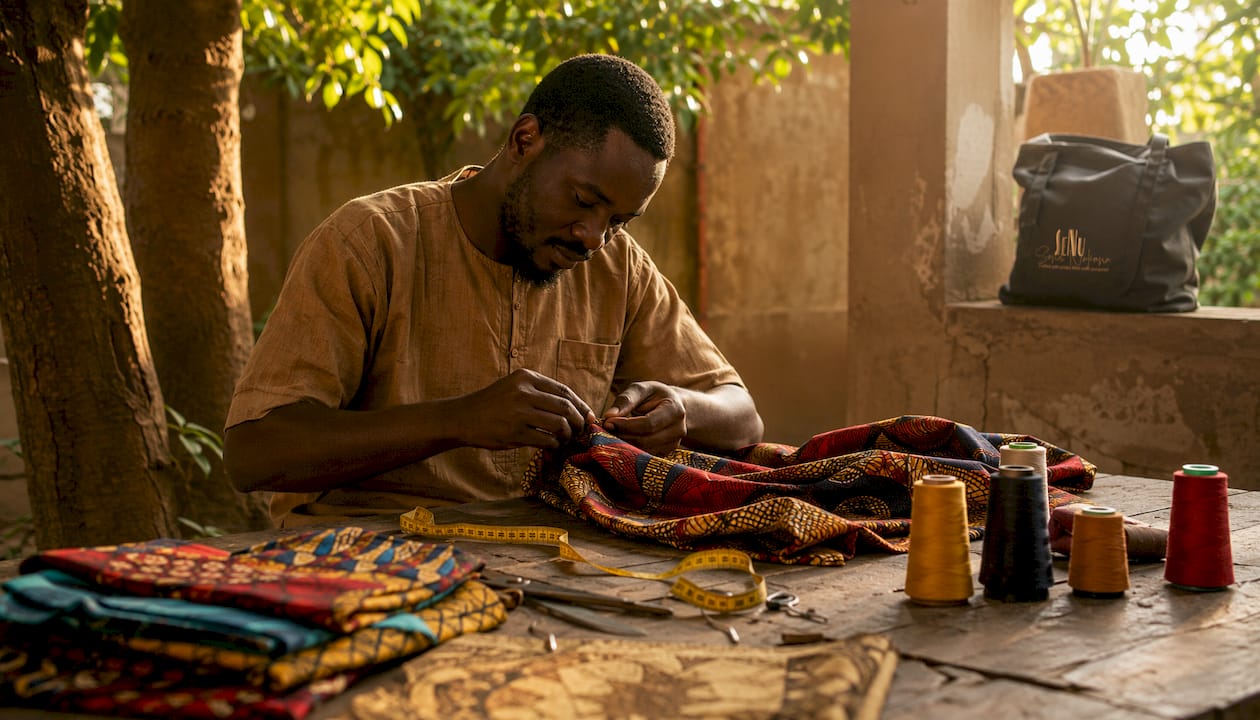
Start with a style direction before you open any shop. A mood board of 3–5 saved looks on Pinterest or Instagram, labeled by occasion and cultural motif, gives you a brief to shop against rather than a vague feeling. Building a cultural wardrobe works best when the gap list comes before the browsing, not after.
Step-by-step workflow:
- Audit your existing wardrobe and identify what you actually wear.
- Set a style direction board with 3–5 saved looks (occasion, mood, motif).
- Write a gap list of 4–8 specific missing items.
- For each candidate piece, apply the Three Outfit Test: if you cannot picture three distinct outfits using it with clothes you already own, it likely doesn't belong on the list.
- Prioritize pieces with the highest outfit-per-item yield first.
Outfit formulas that work in a U.S. context:
- Casual: Patterned Ankara wrap skirt + white cotton tee + minimal sneakers
- Elevated day: Agbada-style jacket + tailored dark denim + loafers
- Event: Full matching set or kaftan dress + minimal jewelry + heeled boots
Neutral anchors, a black blazer, dark denim, crisp white shirt, and neutral knitwear, make West African statement pieces wearable across more occasions without diluting their presence. The goal is a wardrobe where every piece, heritage or foundational, earns its place through repeat wear.
How do discovery tools and AI help without replacing your style direction?
Discovery tools are for gathering inspiration tied to a brief, not for replacing your gap list. Pinterest boards and Instagram saves work best when you label each image with its intended outfit role ("elevated day," "celebration," "everyday cultural") rather than saving indiscriminately.
AI fashion agents add a meaningful layer when used well. Coveti's AI fashion agent is designed to surface designers and pieces that match an editorial brief, mapping occasion, mood, and silhouette rather than returning popularity-based results. That's the right model: give the tool context, and it acts as a personal stylist rather than a keyword matcher.
- Curate saved boards by occasion and cultural motif, not just aesthetics
- Label images with the outfit role they fill in your gap list
- Use AI agents with a specific brief: "occasion: celebration dinner, mood: regal, silhouette: flowing"
- Treat AI suggestions as candidates, not decisions
Pro Tip: When an AI recommendation looks compelling, run it through the Three Outfit Test and the 24–48 hour cart wait before committing. Discovery tools surface options; your gap list and style direction make the final call.
Custom vs. ready-to-wear: which is right for you?
Custom gives you precise fit and the deepest provenance story, but it requires lead time and a higher budget. Ready-to-wear is faster and can be equally authentic when the curator is transparent about origin and construction.
- Intended use: Is this for a specific event with a fixed date, or everyday wear? Events with tight timelines favor ready-to-wear.
- Budget envelope: Custom pieces reflect artisan labor honestly; expect a premium over mass-produced alternatives.
- Timeline tolerance: Made-to-order lead times vary by maker. Confirm the schedule in writing before paying a deposit.
- Alteration access: Ready-to-wear can often be tailored locally; custom pieces may need fewer adjustments if measurements are precise.
Pro Tip: Before placing a custom order, ask for progress photos at the cutting and assembly stages, and request a written production schedule. A maker who welcomes this transparency is one worth trusting.
What should U.S. shoppers verify at checkout and on delivery?
Verify payment security, return terms, shipping timeline, and duty disclosures before you complete any purchase. After delivery, inspect the piece immediately.
At checkout:
- HTTPS confirmed and a recognized payment processor present
- Return window and refund method stated clearly
- U.S. shipping carrier and estimated transit time listed
- Customs and import duty responsibility disclosed
On delivery:
- Inspect seam edges, topstitching, and fiber texture against the product description
- Photograph any defects within 24 hours and contact customer service immediately
- Follow care instructions precisely to preserve artisan finishes and natural dyes
Pro Tip: If you ordered a made-to-measure piece, identify a local tailor or alterations specialist before the garment arrives. A single fitting appointment can make the difference between a piece you wear constantly and one that stays on the hanger.
Why curated, ethical sellers matter for West African fashion
Curated, ethically run sellers reduce purchase risk and amplify the cultural meaning of every piece. When provenance is clear and commerce policies are transparent, you shop with confidence rather than hope.
Three reasons to choose a vetted curator:
- Provenance and storytelling: Each piece carries a named origin, artisan connection, and textile tradition, so your wardrobe holds living heritage, not just clothing.
- Transparent commerce policies: Clear returns, shipping terms, and duty disclosures protect U.S. buyers and signal a seller who stands behind their work.
- Wardrobe integration: Curated pieces are selected for versatility and quality, so they connect with your existing capsule rather than sitting apart from it.
Senanukunu is built around exactly these principles, offering authentic West African fashion with artisan stories, limited-quantity craftsmanship, and U.S.-friendly commerce policies.
Key Takeaways
Mastering the essentials of curated fashion shopping means pairing a written gap list and style direction with rigorous provenance checks, fabric evaluation, and safe checkout habits before every purchase.
| Point | Details |
|---|---|
| Style direction first | Set a 3–5 look mood board and write a gap list before browsing any shop. |
| Fabric and seam checks | Prioritize natural fibers and confirm seam construction from product photos and descriptions. |
| Provenance verification | Look for named artisans, regional textile traditions, and limited-quantity disclosures before buying. |
| Safe checkout habits | Confirm HTTPS, return policy, U.S. shipping, and duty disclosures before completing any order. |
| Senanukunu as a vetted option | Senanukunu offers authentic West African ready-to-wear and custom pieces with clear artisan provenance and U.S.-friendly policies. |
What curated fashion shopping means to me
Every stitch in a well-made West African garment carries a story that stretches back generations. What I have come to believe, after years of working with artisans and watching how people connect with these pieces, is that the shopping process itself is an act of cultural respect. When you slow down, verify provenance, and choose with intention, you are not just building a wardrobe. You are participating in a living tradition and supporting the hands that keep it alive. That is the spirit behind every piece at Senanukunu, and it is the spirit we hope you carry into every purchase you make, wherever you shop.
Senanukunu: where your curated West African wardrobe begins
Senanukunu curates authentic West African ready-to-wear and made-to-order pieces with named artisan provenance, clear fiber and construction details, and U.S.-friendly shipping and return policies. Every collection is limited in quantity, crafted with purpose, and selected to integrate with a thoughtful capsule wardrobe.
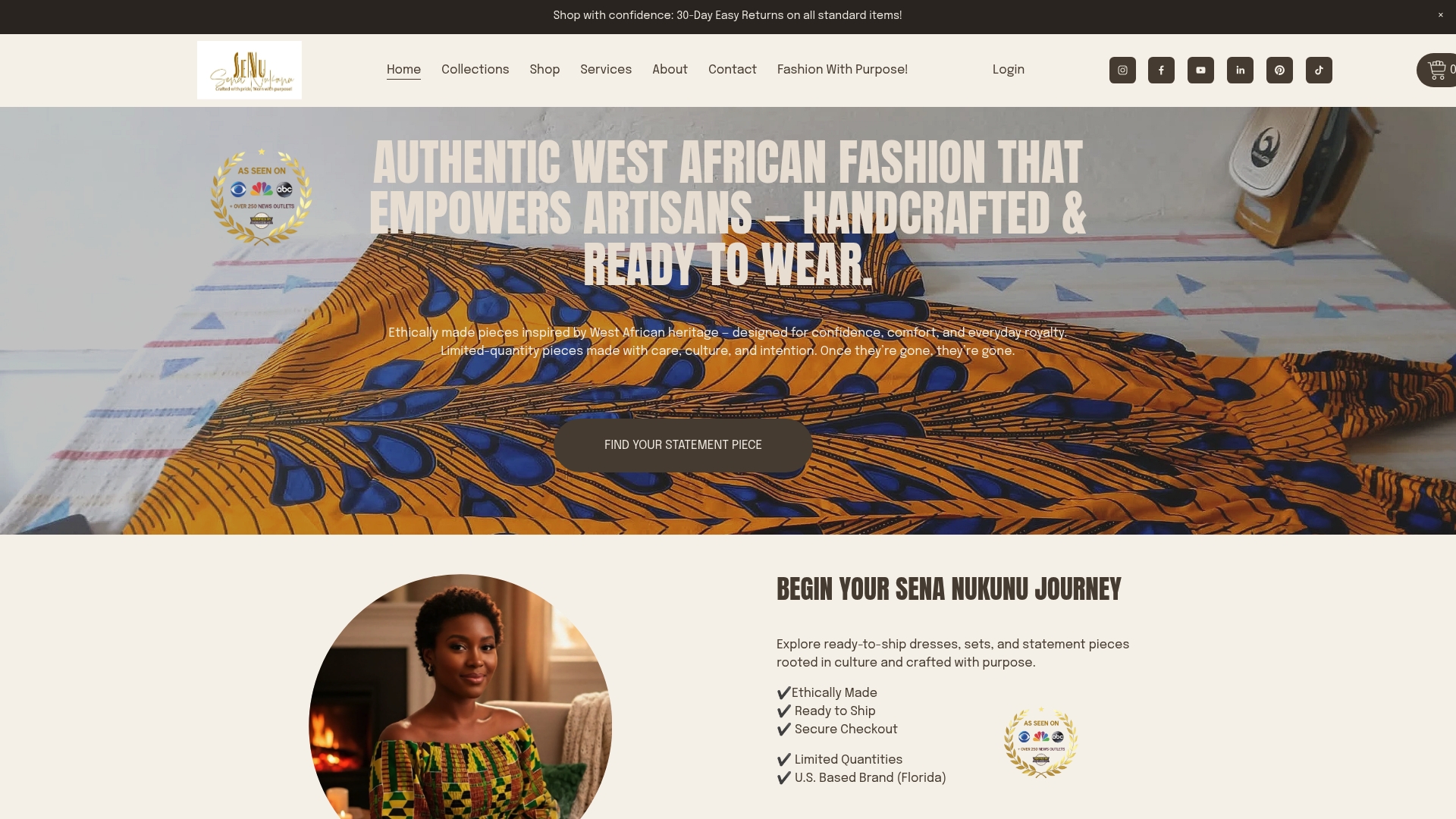
Browse the full collection at Senanukunu to find ready-to-ship dresses, kaftans, agbada sets, and matching statement pieces. For custom work, contact the team directly to discuss lead times, measurements, and production schedules. Style guides and cultural wardrobe resources are available on the blog to support your gap-list planning. Visit senanukunu.com to start building a wardrobe that honors heritage and fits your life.
Useful sources and further reading
These are the primary sources this article drew from, along with Senanukunu's own style guides for deeper planning:
- How to Shop Like a Stylist — The Well Dressed Life: gap-list workflow, style boards, and fabric quality guidance
- How Coveti's AI Fashion Agent Works — Coveti: AI discovery as a personal-stylist tool
- Capsule Wardrobe Shopping List — The Capsulist: minimalist capsule building and foundational pieces
- Wardrobe Basics Checklist — Real Simple: staples that anchor statement pieces
- The Ultimate Guide to Curated Fashion Collections — Aura Restored: why curation supports ethical shopping
- How to Build a Cultural Wardrobe: 2026 Guide — Senanukunu Blog: step-by-step cultural wardrobe planning
- West African Capsule Wardrobe Style Guide — Senanukunu Blog: outfit formulas and capsule rules specific to West African fashion
- Ways to Mix Streetwear with High Fashion — ANARXHY: practical ideas for mixing statement cultural pieces with contemporary styles