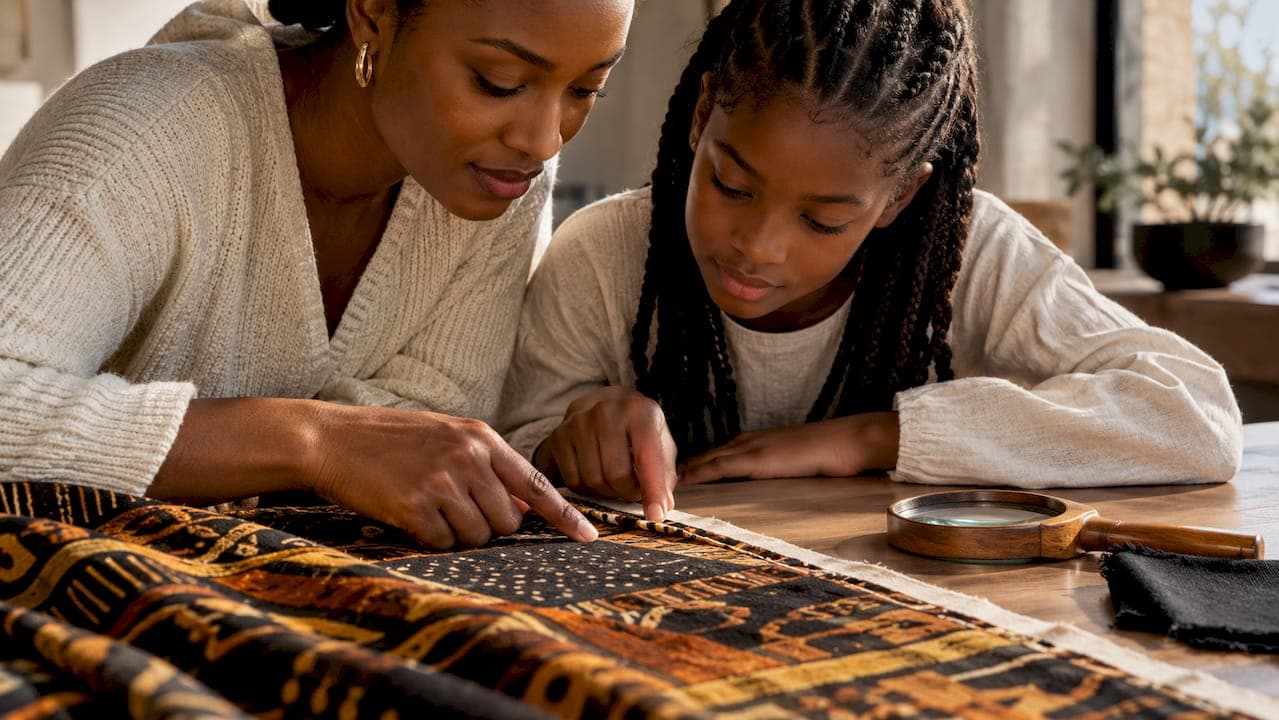
For a West African celebration, prioritize garments made from authentic textiles, a ceremonial agbada, a woven kente or aso-oke dress, over generic printed fashion. These pieces carry cultural weight, hold up as heirlooms, and honor the artisans who made them. Ethically minded sellers offer a direct, transparent way to shop this category without guessing at origin or quality.
TL;DR:
- Authentic textiles like handwoven kente and aso-oke feature narrow strips with visible seams and slight variations, indicating traditional craftsmanship.
- Garments with intricate hand embroidery and natural dye fabrics are usually priced closer to heirlooms, reflecting their labor-intensive production.
- Custom tailoring provides an exact fit for ceremonial outfits, but requires extra time, unlike ready-to-wear pieces that suit tighter schedules.
- Metallic embroidery garments should be professionally cleaned and stored properly to preserve their detail and prevent tarnish.
- Limited-edition collections and artisan partnerships ensure the garments retain cultural significance and long-term value.
Table of Contents
- How to choose authentic West African celebration outfits: a practical checklist
- Signature garments and textiles explained: agbada, kente, aso-oke, bogolan
- Styling, sizing, tailoring, and care for celebration outfits
- Brand perspective: why ethical sourcing and artisan partnerships matter
- Shop curated celebration collections: quick links and what to expect
- Sources
- FAQ
How to choose authentic West African celebration outfits: a practical checklist
Authenticity starts with the fabric itself. Handwoven kente is made in narrow strips that a weaver joins together, so look closely for even strip seams and visible selvedges rather than a single sheet of printed fabric imitating the pattern. Aso-oke follows a similar narrow-strip construction, while bogolan carries the telltale marks of mud-dye work: hand-brushed motif edges and a slightly uneven dark background rather than the crisp repeats of batik or tie-dye, as the Smithsonian Center for Folklife and Cultural Heritage documents.
Construction tells you just as much as the textile. Dense, regular hand embroidery, consistent stitch spacing, and finished interior seams point to careful workmanship, and metallic Lurex threads read differently under light than hand-dyed silk, so ask a seller which one you're getting.
Before you buy, weigh these factors:
- Fabric origin: ask whether the piece is handwoven, hand-dyed, or printed, since each carries a different price and meaning.
- Fit path: ready-to-wear suits standard measurements and shorter timelines, while custom tailoring suits an exact drape and a specific event.
- Ethical signals: look for stated artisan partnerships, limited-quantity language, and a clear country of origin.
- Return policy: confirm alteration or return terms before committing to a ceremonial piece.
- Price versus craftsmanship: a heavily embroidered agbada or a full kente set is priced closer to an heirloom than a party outfit.
Pro Tip: Photograph the inside seams and weave joins when you're shopping online, then zoom in. Authentic handwork rarely looks perfectly machine-uniform.
Ready-to-wear pieces that name their artisan partnerships and limit their production runs tend to hold their value and meaning longer than mass-produced alternatives, a distinction worth paying attention to before you check out.
Signature garments and textiles explained: agbada, kente, aso-oke, bogolan
Each of these garments has a specific identity, and knowing the difference helps you shop with confidence and ask sellers sharper questions.
- Agbada is a loose, wide-sleeved ceremonial robe worn by men across West Africa, typically part of a multi-piece ensemble. According to the Metropolitan Museum of Art, larger robes with more elaborate embroidery historically signaled higher status, and the garment is worn over other clothing, falling to the lower leg.
- Kente is a prestige cloth from Ewe and Akan communities in Ghana and Togo, handwoven in narrow strips on looms and sewn together by master weavers, according to Fashion History Timeline. Its colors and motifs carry symbolic meaning, and it is traditionally reserved for high-stakes celebrations rather than everyday wear.
- Aso-oke is a Yoruba weaving tradition used for ceremonial garments, including agbada linings and matching sets. The Fashioning Africa project notes that varieties like sanyan, alaari, and etu are handwoven in long narrow strips, and families often commission aso-oke for major life milestones, then pass it down as an heirloom.
- Bogolanfini, or bogolan, is a Malian mud-dye technique where the background is painted dark and the pattern is left untouched, creating residual clay texture and hand-brushed edges that separate it from batik or tie-dye.
These garments were traditionally meant to be passed down, so provenance and construction quality matter as much as how a piece looks in a photo. A kente-inspired dress that credits its weaving technique gives you a clearer read on what you're actually buying.
Styling, sizing, tailoring, and care for celebration outfits
Getting the fit right starts with understanding how these garments are meant to move. An agbada should drape loosely enough to allow airflow and movement through the sleeves and torso, never pulled tight at the shoulders. Woven dresses in kente or aso-oke should sit close enough to hold their shape without straining the strip seams.
- Measure before you buy. Chest, shoulder width, and robe length matter most for agbada, while bust, waist, and hip measurements guide fitted dresses.
- Request specific tailoring adjustments. Ask for sleeve length, hem length, and a lining that protects the skin from metallic thread.
- Plan for custom timelines. Commissioned ceremonial pieces are still common practice in West Africa, and recent reporting from Vogue notes that ready-made retail remains less established than tailoring culture, so build in extra weeks if you're commissioning.
- Coordinate accessories thoughtfully. Pair a gele or fila with your outfit's dominant color rather than a competing pattern, letting the woven textile stay the focal point.
- Store pieces properly. Use acid-free tissue and a breathable garment bag, and choose professional dry-cleaning for metallic-thread garments while hand-washing natural-dye fabrics in cold water only.
Pro Tip: If your outfit has both metallic embroidery and natural dye sections, always defer to professional cleaning. Mixing care methods risks the dye bleeding into the thread.
Ready-to-wear suits shoppers on a tighter timeline or budget, while custom commissioning suits anyone who wants an exact fit for a once-in-a-lifetime event.
Brand perspective: why ethical sourcing and artisan partnerships matter

This brand was built around a simple belief: every stitch carries the spirit of a legacy, and that legacy deserves fair compensation, not shortcuts. Their ready-to-wear pieces are curated in limited quantities, made through direct artisan partnerships, and rooted in a U.S. origin story that honors West African craftsmanship at its source.
Limited runs aren't just a marketing device. They are how pieces are kept meaningful, so the garment worn to a celebration still means something when passed down. When customers have questions about sizing or fabric, they are encouraged to ask before buying, not after.
— Sena
Shop curated celebration collections: quick links and what to expect
The shop features Men's Agbada Ensembles, Men's Heritage, and Women's Collections, alongside curated capsule sets like Woven Nobility: Kings' Robe and Woven Radiance: Queens in Bloom. Each piece is made in limited quantities with artisan partnerships behind it, so what appears in a collection today may not be available again.
On our collections page, you'll find curated celebration styles alongside blog resources on festive African dress and West African wedding guest attire to help you plan a full look.
| What you'll find | Where to look |
|---|---|
| Men's agbada sets and heritage pieces | Shop landing page |
| Woven Nobility, Woven Radiance, and related capsule collections | Collections page |
| Styling inspiration and coordinated sets | Heritage Mosaic Set example |
Browse the current collections before the pieces you love sell out.
Sources
- Hausa, Nupe, and/or Yoruba artists - Agbádá (man’s ceremonial robe) - Metropolitan Museum of Art
- Kente - Fashion History Timeline (FIT)
- Aso-oke groom's outfit - Fashioning Africa project (Brighton Museums)
- Mass production killed Made in Ghana. Now what? | Vogue
If you're shopping for a gift rather than yourself, this multicultural gift guide offers additional context on choosing culturally meaningful presents.
FAQ
How can I tell if a kente or aso-oke piece is authentic?
Look for narrow strips joined with visible, even seams rather than a single printed panel, since handwoven cloth is constructed strip by strip. Genuine pieces also show slight natural variation in weave tension, which museum collections note as a common indicator of traditional production.
Should I buy ready-to-wear or commission a custom celebration outfit?
Ready-to-wear works well when you have a set budget and a shorter timeline before your event. Custom commissioning takes longer, since tailoring remains central to ceremonial dressing in many West African communities, but it gives you an exact, made-for-you fit.
How do I care for a garment with metallic embroidery?
Metallic-thread garments should go to a professional dry cleaner rather than a washing machine, since home washing can loosen or dull the thread. Store the piece in a breathable garment bag with acid-free tissue to prevent creasing and tarnish.
What sizing information is needed for a custom fit?
Standard measurements like chest, shoulder, and length for agbada sets, and bust, waist, and hip for fitted dresses are typically required. Customers are advised to reach out through the shop for specific guidance on sizing before ordering.
Why do some celebration outfits cost more than others?
Price generally reflects the textile and the labor behind it. Handwoven kente, aso-oke, or heavily embroidered agbada require far more time from skilled artisans than printed fabric, which is why Sena Nukunu frames these pieces as investments meant to be worn for years, not one season.