TL;DR:
- Authentic West African craftsmanship is rooted in centuries of tradition, cultural meaning, and artisan techniques.
- Recognizing genuine pieces involves inspecting hand-dyed textiles, natural fibers, cultural motifs, and proof of artisan provenance.
You pull a garment off the rack, drawn in by its bold patterns and vibrant colors, only to flip the tag and find "Made in China" with no further detail, no name, no story. It's a frustration that fashion-conscious consumers encounter far too often: mass-produced imitations dressed up in the visual language of West African tradition, sold without context, credit, or care. Knowing how to recognize genuine craftsmanship is not just about getting your money's worth. It's about honoring the artisans whose skill, heritage, and resilience live inside every carefully woven thread, and ensuring that your purchase actually empowers the communities you admire.
Table of Contents
- What defines authentic African craftsmanship?
- Essential guide: Materials, tools, and what to look for
- Step-by-step: How to verify authenticity before you buy
- Supporting artisans and ethical fashion: Going beyond your purchase
- Why true African craftsmanship is worth the effort—and what most guides miss
- Discover authentic African craftsmanship with Sena Nukunu
- Frequently asked questions
Key Takeaways
| Point | Details |
|---|---|
| Understand true authenticity | Handmade techniques, cultural context, and artisan stories define genuine African craftsmanship. |
| Use practical checks | Inspect materials, ask about origins, and seek evidence of handwork for each piece. |
| Support artisans’ futures | Buying authentic pieces sustains traditional skills and empowers local communities. |
| Look for transparency | Trustworthy brands highlight artisans, materials, and production methods without vague claims. |
What defines authentic African craftsmanship?
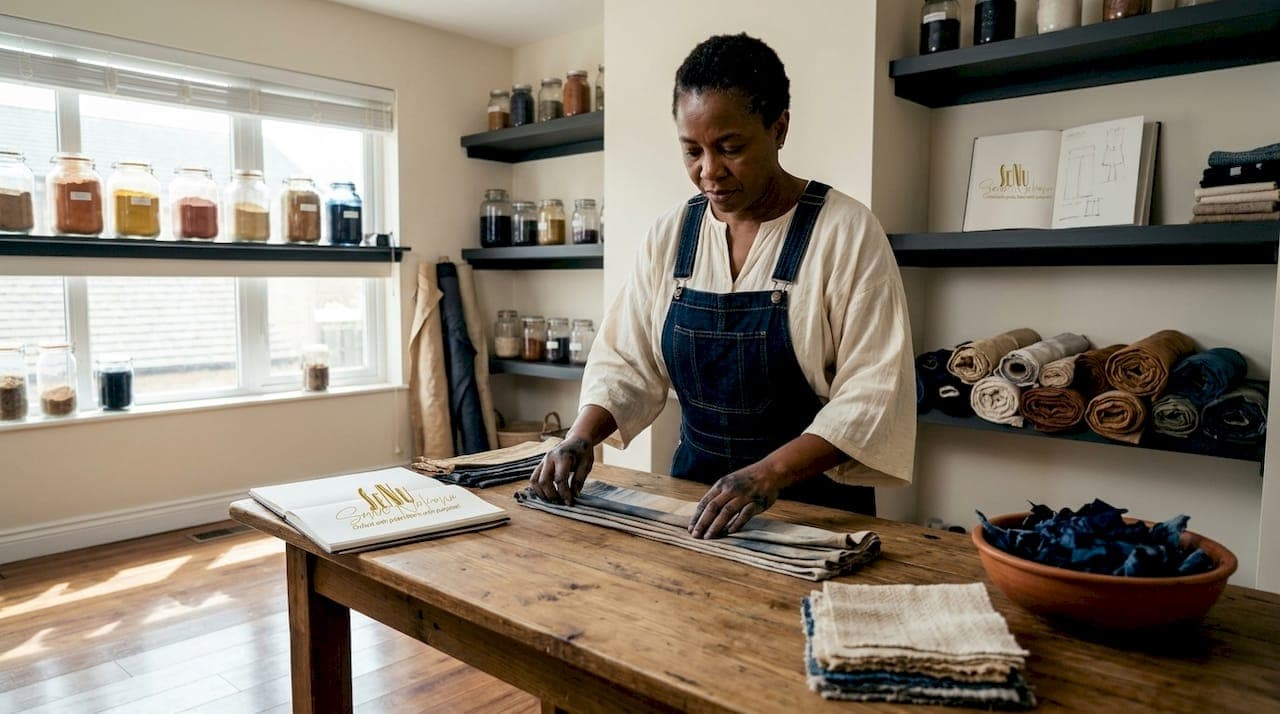
Before you can spot a counterfeit, you need a clear picture of what the real thing looks like. Authentic West African fashion is not simply about a pattern or a print. It is rooted in centuries of tradition, cultural meaning, and community knowledge passed from one generation to the next. Each garment carries a story, and that story is visible in how the piece was made, who made it, and where it comes from.
Handmade African garments often feature hand-dyed textiles, embroidery, or weaving with locally sourced materials, and these techniques are the first thing to look for when assessing authenticity. Batik, for example, is a wax-resist dyeing method where artisans apply wax to fabric before dyeing, creating intricate, layered designs with beautiful bleeding edges. Tie-dye, known across West Africa by various names, involves binding or folding cloth before dyeing to produce organic, non-repeating patterns. Both techniques leave behind visible character marks that machine printing simply cannot replicate.
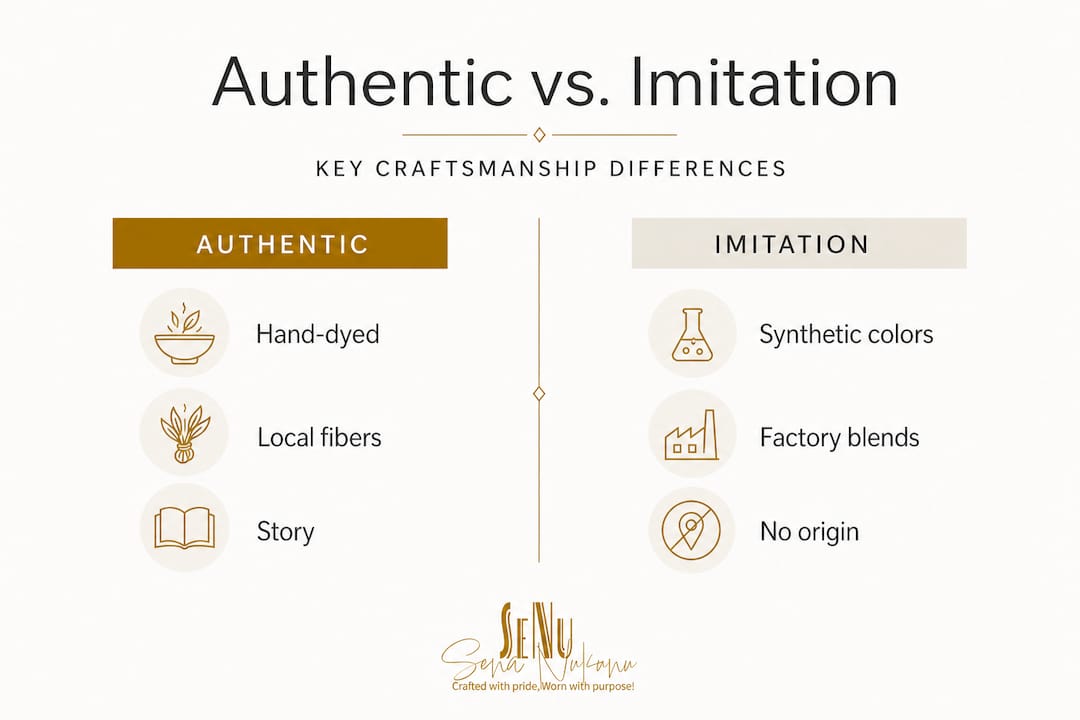
Kente cloth from Ghana is one of the most recognized examples of authentic weaving, with each color and geometric pattern carrying specific cultural meaning. Gold symbolizes royalty and wealth; green represents growth and renewal; black speaks to spiritual maturity. Adinkra stamps from the Ashanti people of Ghana are another powerful example, where symbolic motifs are carved into gourds and stamped onto fabric using natural dyes. These symbols are not decorative additions; they are language, philosophy, and identity woven into cloth.
Here is what to look for as the foundation of authentic West African craftsmanship:
- Hand-dyeing evidence: Slight variations in color depth, organic bleeding at pattern edges, and uneven saturation
- Handwoven structure: A visible warp and weft with slight tension differences across the fabric width
- Natural fiber base: Cotton, raffia, or silk that feels breathable and substantial, not slippery or synthetic
- Cultural symbolism: Deliberate use of motifs with documented meaning, not random "tribal" decoration
- Small-batch production: Limited quantities with slight variation between pieces rather than identical copies
- Artisan provenance: A named maker, a community of origin, or a documented creative process
"Authentic craftsmanship is not a visual style—it is a living practice. The soul of a garment is found in who made it, what it means, and why it was created this way."
Why story and provenance matter as much as visible skill cannot be overstated. A garment may look handmade but have been produced in a factory using digital printing techniques designed to mimic imperfection. The story behind a piece, the artisan's name, their region, their technique, is the most reliable marker of genuine cultural craftsmanship.
Essential guide: Materials, tools, and what to look for
Understanding what makes something authentic, the next step is knowing exactly what to check for as you browse or examine a garment. Genuine pieces are made with region-specific cottons, natural dyes, and handwoven patterns, and these details are often visible and tangible to anyone who knows what they are looking for.
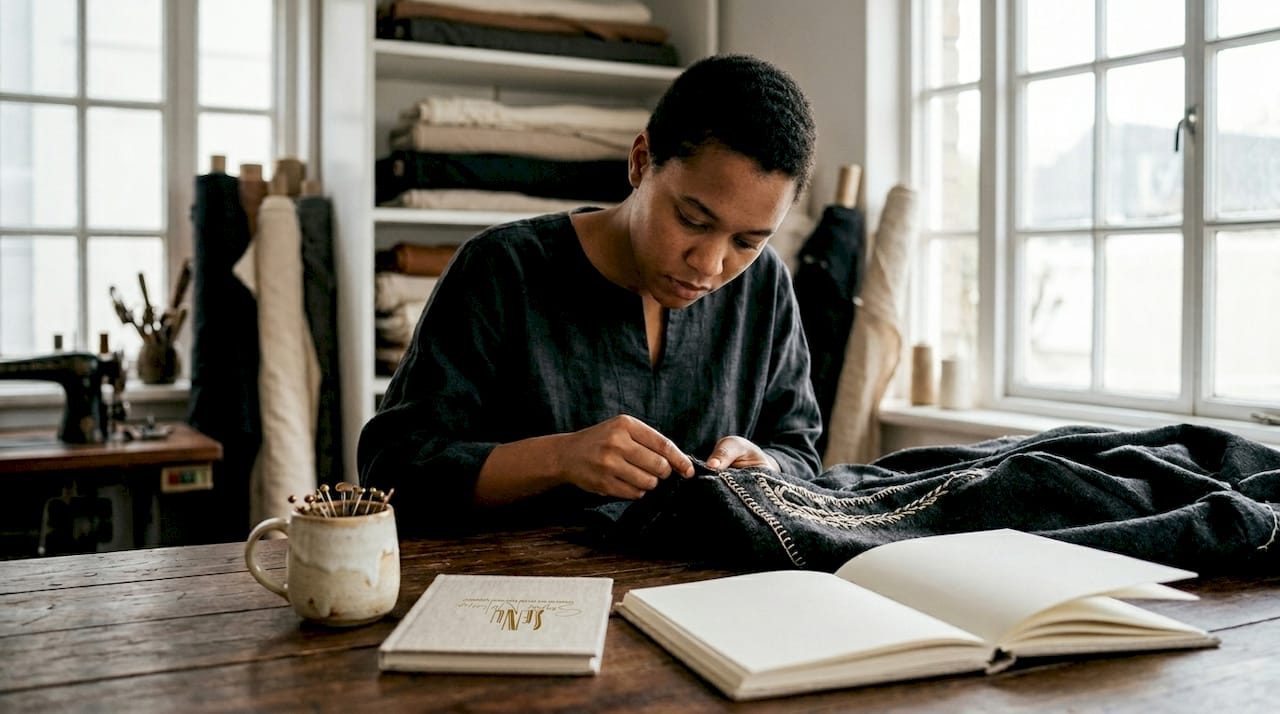
| Feature | Authentic craftsmanship | Mass-produced imitation |
|---|---|---|
| Fabric base | Natural cotton, silk, or raffia | Polyester or synthetic blends |
| Dye method | Natural plant dyes or wax-resist | Chemical printing or screen printing |
| Pattern variation | Slight inconsistencies between pieces | Perfectly uniform, repeating prints |
| Seam finishing | Hand-stitched or carefully finished by artisan | Machine-serged with synthetic thread |
| Weight and drape | Substantial, structured, breathable | Light, flimsy, or stiff with chemicals |
| Cultural detail | Named motifs with documented meaning | Generic patterns with no cultural context |
| Production size | Limited quantities, often one-of-a-kind | Large runs, widely available |
Beyond the table, there are specific construction details to examine closely when you hold a garment in your hands. Look at the seams first. On authentic handmade pieces, seam allowances may be finished by hand or with a local sewing technique that differs from Western factory stitching. The thread color often matches deliberately, chosen with care. Check the lining, if there is one. A quality authentic piece will typically feature a natural cotton lining rather than slippery, cheap polyester.
A quick checklist to use when examining a garment:
- Run your fingers across the fabric. Does it feel textured, warm, and alive, or flat and synthetic?
- Hold the fabric up to light. Can you see a woven structure, or does it look like a printed sheet?
- Check the inside of seams. Are they neat and intentional, even if not perfectly machine-uniform?
- Look for slight color variation across the garment, which signals natural dyeing.
- Examine buttons, closures, or embellishments. Authentic pieces often use materials like wooden buttons, brass rings, or hand-applied beadwork.
Questions to ask sellers are equally important, and a seller committed to authentic craft will welcome them. Ask: Who made this piece? Where were the materials sourced? What dyeing or weaving technique was used? How many pieces were made in this run?
Pro Tip: Trust your hands as much as your eyes. Handwoven and naturally dyed fabrics have a warmth and texture that feels distinct from mass-manufactured cloth. If a "handmade" fabric feels like a printed polyester shirt, it probably is one.
Step-by-step: How to verify authenticity before you buy
Now that you know the visual and textural signals, here is a step-by-step process to verify authenticity every time you shop, whether you are browsing online or standing in a boutique.
-
Research the brand's values first. Before you look at a single product, explore the brand's mission, sourcing practices, and artisan partnerships. Brands serious about ethical sourcing in fashion are transparent about where their garments come from and why that matters.
-
Ask for artisan and technique details. A responsible seller can tell you which community or individual made your garment, which technique was used, and what materials went into it. Vague answers like "inspired by African tradition" or "made with African-style prints" are red flags.
-
Inspect for signs of handwork. Look for the markers described in the previous section. Slight imperfections are a feature, not a flaw. If a garment is perfectly uniform in every way, it was almost certainly machine-produced.
-
Look for reputable certifications or artisan endorsements. Retailers and fashion houses serious about authenticity provide details about the artisans, the techniques used, and certifications where available. Fair trade seals, artisan cooperative memberships, or documented partnerships with African design schools are meaningful signals.
-
Check provenance and pricing. Authentic handmade garments require hours of skilled labor. If a piece is priced comparably to a fast-fashion item, something is off. Real craftsmanship reflects real cost, and that cost represents fair pay for artisan time, materials, and expertise.
-
Read product listings carefully. A genuinely authentic seller will include the name of the technique, the origin region, the fiber content, and often the artisan's name or collective. Listings that only describe visual features without process information deserve extra scrutiny.
"Only purchase when the chain of production is clear. Transparency is not a bonus feature—it is the baseline of ethical, authentic fashion."
Pro Tip: When you are unsure about a purchase online, look for artisan-focused organizations and directories that vet West African fashion brands. These resources can point you toward sellers whose authenticity has been independently confirmed.
Supporting artisans and ethical fashion: Going beyond your purchase
A truly authentic purchase also supports a much larger cause. Choosing authentic African fashion helps sustain traditional artisan techniques and uplifts local communities, and your role as a conscious consumer extends well beyond the transaction itself.
Every dollar you spend with an authentic artisan or ethical brand is a vote for cultural preservation and economic dignity. When artisans earn fair wages for their craft, they can pass their techniques to apprentices, invest in better materials, and sustain their communities. The inverse is equally true: when consumers choose mass-produced imitations, the economic signal discourages authentic production and undervalues the cultural knowledge embedded in every genuine piece.
Here are concrete actions you can take beyond your purchase:
- Share artisans' stories on social media, tagging the brand and the specific technique or region involved
- Advocate for transparency by asking brands in your network about their sourcing practices, publicly if appropriate
- Gift authentic pieces to people in your life, along with the story of who made them and why it matters
- Follow and amplify the voices of West African designers and artisan communities on platforms where they are building their own audiences
- Educate yourself about sustainable fashion trends and how West African artisans are shaping the future of ethical style
| Impact area | Artisan-sourced authentic fashion | Mass-produced "African" fashion |
|---|---|---|
| Artisan income | Fair wages, direct economic empowerment | None; profits go to manufacturers far removed from culture |
| Cultural preservation | Techniques passed down, communities supported | Techniques diluted or erased |
| Environmental impact | Natural dyes, locally sourced materials | Synthetic chemicals, long-distance shipping |
| Consumer experience | Unique, story-rich, meaningful garments | Generic, interchangeable, disposable |
| Community investment | Supports families, apprentices, local economies | Profits concentrated outside the community |
Understanding what makes fashion ethical goes hand in hand with recognizing authentic craftsmanship. Ethical fashion is not a single certification or a marketing label. It is a commitment to fair pay, cultural respect, environmental responsibility, and transparent relationships between producers and consumers.
Why true African craftsmanship is worth the effort—and what most guides miss
Most guides to identifying authentic African fashion stop at the visual. They tell you to look for imperfections, check the seams, ask about the fabric. That advice is correct, but it misses what makes the effort genuinely worthwhile.
The heart of authentic craftsmanship is not the material or the technique alone. It is the relationship embedded in the garment. When you buy from a brand that can tell you the artisan's name, their region, their process, you are not just purchasing a beautiful piece of clothing. You are entering into a relationship with a living tradition. You are saying, through the language of commerce, that this person's knowledge and time and cultural identity have real value.
Mainstream fashion discourse treats authenticity as a product attribute, something to verify and move on from. We believe it is something deeper. The subtle signs that most guides miss include a brand's willingness to put you in direct contact with artisans, to share unfiltered behind-the-scenes content, or to admit openly when a technique required compromise. That kind of radical transparency is rare, and it is the most reliable indicator of a brand that genuinely honors the culture it represents.
There is also the matter of what you carry when you wear something authentic. A piece crafted with intention and care, with a named maker and a documented story, transforms how you move through the world. You are not just wearing authentic West African fashion statements. You are wearing a responsibility, a conversation starter, a bridge between cultures.
Conventional wisdom says: pay more, get quality. What we would add is: invest in relationship, get meaning. The satisfaction of wearing culture with integrity is something no fast-fashion alternative can offer, and it grows over time rather than fading with the next trend cycle.
Pro Tip: Build a relationship with two or three trusted vendors or tailors whose sourcing you have verified. Over time, you will develop a shared language and a personal connection to the pieces you wear, which is the richest reward authentic fashion can offer.
Discover authentic African craftsmanship with Sena Nukunu
Ready to discover craftsmanship you can trust? At Sena Nukunu, every piece in our collection is chosen for its cultural integrity, artisan connection, and timeless beauty. We believe that fashion should tell a story worth wearing, and we are committed to making that experience accessible to you wherever you are in the world.
Browse our curated selection of authentic African dresses, each crafted with care, purpose, and genuine artisan skill. Whether you are looking for a ready-to-wear statement piece or something more personal, our custom design services offer you the opportunity to collaborate directly with the creative process. When you shop with us, you are not just adding something beautiful to your wardrobe. You are investing in the artisans, the traditions, and the communities that make West African fashion one of the most vibrant and meaningful expressions of culture in the world.
Frequently asked questions
How can I tell if a fabric is really hand-dyed?
Look for unique color variations and slight imperfections across the cloth—hand-dyed fabrics feature inconsistencies that add character and confirm authenticity, while machine-printed fabric shows perfect, uniform color throughout.
What questions should I ask to verify item authenticity from a retailer?
Ask about the product's origin, who made it, the traditional techniques used, and any artisan partnerships the brand maintains. Retailers committed to authenticity share clear details on artisans, processes, and certifications without hesitation.
Is buying authentic African clothing more expensive?
Yes, handmade authentic craftsmanship usually costs more than mass-produced items because it reflects fair labor and high-quality materials. Genuine pieces are priced higher to honor the artisan's skill and the complexity of traditional techniques.
Does wearing authentic African fashion help artisans directly?
Yes, buying authentic items provides vital income to artisans and helps preserve traditional techniques that might otherwise disappear. Shopping authentically supports both artisan livelihoods and the broader cultural heritage they carry forward.
Are there certifications I should look for on authentic African products?
Some brands offer artisan partnership certifications or cooperative endorsements as proof of their sourcing commitments. Retailers and brands use certifications and transparent documentation to demonstrate that their pieces are genuinely and ethically produced.