TL;DR:
- Authentic West African clothing requires close inspection of fabric, stitching, and labels, and verification of seller provenance. Buyers must confirm a physical address, examine detailed craftsmanship evidence, and request documentation like artisan names or receipts. Protect yourself by avoiding listings with mismatched prices, poor seller reviews, or unverified images, and be aware of health risks from counterfeit garments containing harmful chemicals.
Before you spend a dollar on a West African–inspired piece, run through these five steps: inspect the fabric and stitching up close, check the care and origin labels, verify the seller's physical address and reviews, request provenance documentation, and confirm no chemical safety concerns. That checklist covers the core of identifying genuine apparel, and every section below unpacks exactly what to look for at each stage.
Your quick-reference checklist:
- Inspect fabric weight, weave, and hand feel for natural fibers and artisanal texture
- Check stitching for matched thread color and even spacing, front and back
- Read every label: care instructions, country of origin, fiber content
- Verify the seller: physical address, working phone, verifiable reviews
- Request provenance documentation: artisan name, batch note, or receipt
- Run a reverse-image search on listing photos
- Confirm a clear return policy and safe payment method
For a deeper look at what authentic craftsmanship looks like in practice, Senanukunu's handcrafted fashion checklist is a strong companion resource.
Table of Contents
- How do you inspect craftsmanship to verify authentic garments?
- How do you verify a seller and confirm a garment's provenance?
- What red flags should make you walk away from a listing?
- Are there health and safety risks in counterfeit or unregulated garments?
- What questions should you ask the seller before buying?
- How do you authenticate vintage or custom-made West African pieces?
- How does Senanukunu demonstrate authenticity as a trusted seller?
- Key Takeaways
- Why authenticity is worth protecting
- Verified, ethically made West African pieces, ready to wear
- Useful sources and next steps
How do you inspect craftsmanship to verify authentic garments?
Six physical checks catch most fakes before you commit to a purchase.
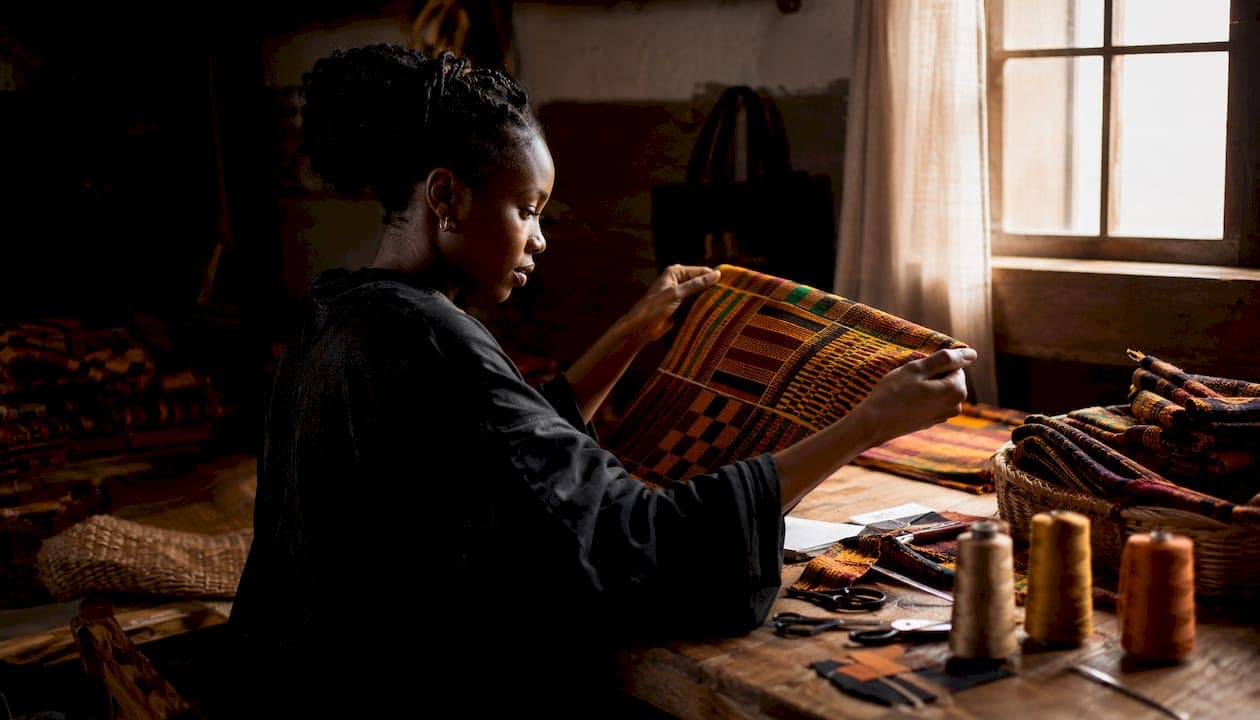
1. Fabric hand and weight. Authentic West African textiles, including kente, ankara, and aso-oke, are woven from natural or blended fibers that feel substantial in your hands. Thin, papery fabric that crinkles under light pressure is a reliable warning sign. Vintage and resale experts consistently point to fabric weight and hand as among the most reliable tactile indicators of authenticity.
2. Weave pattern. Traditional hand-woven fabrics carry slight irregularities, narrow strip widths (kente is typically woven in narrow strips and then sewn together), and a density that machine-woven imitations rarely replicate.
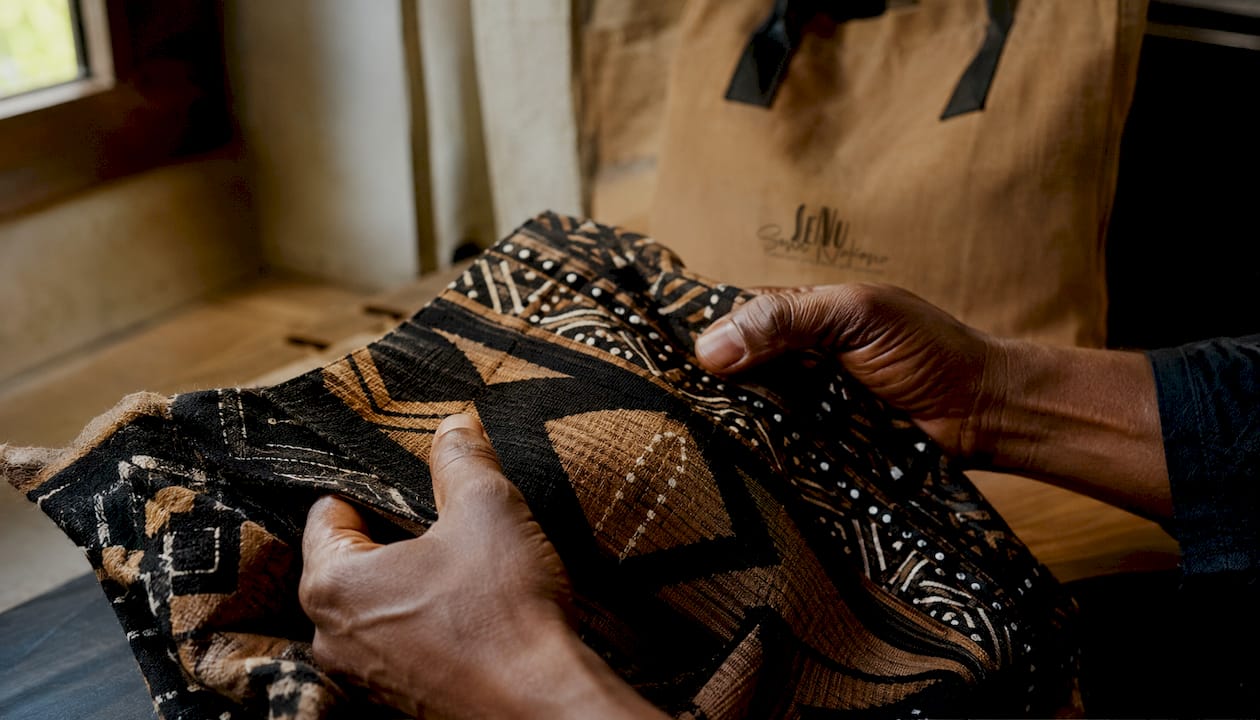
3. Stitch quality. Authentic craftsmanship uses thread that precisely matches the fabric color. Flip the garment inside out and examine the back of every label and seam. Contrasting, messy, or looping thread is one of the clearest signs of counterfeit production.
4. Pattern continuity. On a genuine piece, printed or woven patterns align across seams. Mismatched repeats at shoulder seams or side seams signal rushed, low-cost production.
5. Hardware weight. Zippers, buttons, and clasps on quality garments feel solid and move smoothly. Lightweight, hollow-feeling hardware is a common shortcut in counterfeit pieces.
6. Label integrity. Care labels should be sewn in cleanly, with thread that matches the label's own color. A label that looks newer than the surrounding fabric, or one stitched with a different thread tension, may be a replacement.
| Inspection point | Handmade / authentic | Machine-made / counterfeit |
|---|---|---|
| Stitch spacing | Slight natural variation | Perfectly uniform (modern machinery) |
| Thread color | Matches fabric precisely | May contrast or mismatch |
| Pattern at seams | Continuous, aligned | Mismatched or offset |
| Fabric weight | Substantial, natural feel | Thin, synthetic, papery |
| Hardware | Heavy, smooth movement | Light, rough, or sticky |
| Label stitching | Clean, matched thread | Mismatched tension or color |
Pro Tip: Turn the garment inside out and photograph the back of the collar label under bright light. Authentic pieces show clean, even stitching; counterfeits often reveal rushed finishing that the front of the garment hides entirely.
For more on recognizing artisanal details, Senanukunu's craftsmanship guide walks through each marker with visual examples.
How do you verify a seller and confirm a garment's provenance?
Seller verification is where many buyers skip steps, and where the most money gets lost. Follow this sequence before you pay.
- Confirm a physical address. A legitimate seller lists a verifiable street address, not just a city name or P.O. box. Cross-reference it on Google Maps. According to UK government guidance on spotting fake fashion, a verifiable physical address, working phone number, and consistent positive reviews are the baseline trust signals for any online seller.
- Call or message the phone number. A working, answered number is a meaningful trust signal. Disconnected lines or auto-replies with no follow-up are not.
- Read reviews critically. Look for detailed, specific reviews that mention the garment's fabric or fit, not generic five-star praise. Check Google Business and independent platforms for consistency.
- Check domain age. A seller's website registered within the last few months, combined with premium pricing, warrants extra scrutiny.
- Request provenance documentation. Ask for the artisan's name, a batch or production note, or a receipt from the maker. Ethical producers can usually supply at least one of these.
- Ask for close-up photos of inner tags and stitching. Sellers who freely share detailed close-ups of collar tags, jock tags, and any serial markers are far more likely to be selling genuine pieces.
- For high-value purchases, consider third-party authentication. Paid authentication services are a cost-effective safeguard when the price of the piece justifies it.
Provenance looks different depending on what you're buying. A new, ready-to-wear piece should come with a brand tag and production note. A custom order should include the artisan's name and timeline documentation. A vintage or heirloom piece may lack a receipt entirely, which means physical dating cues carry more weight.
What red flags should make you walk away from a listing?
Three checks catch most fakes within two minutes: compare the price against the known market rate for that garment type, search the seller's business name for registration or reviews, and run a reverse-image search on every listing photo. If any of those three return a problem, the rest of the inspection barely matters.
Watch for these listing red flags: vague descriptions that name a style without specifying fabric or origin; photos that appear in multiple unrelated listings (reverse-image search reveals this immediately); missing or photographed-from-a-distance care labels; claims of "handmade" with no artisan detail; unrealistic discounts on pieces that typically retail at a premium; and payment methods that offer no buyer protection.
Each of these signals matters because authentic West African artisanal pieces carry real production costs. A kente cloth agbada or hand-embroidered kaftan made with care and purpose cannot be priced like fast fashion. When a listing undercuts the market dramatically, the gap usually reflects a gap in quality, origin, or both.
Pro Tip: Experienced resellers paste listing photos into Google Lens before reading a single word of the description. A photo that appears on a wholesale supplier's site or a different seller's page is immediate grounds to move on.
Are there health and safety risks in counterfeit or unregulated garments?
Yes, and this is the part of the conversation that gets too little attention. Counterfeit clothing can contain unregulated dyes and materials, including lead and other harmful chemicals, that pose real health risks to the wearer. Clothing sits against your skin for hours at a time, which makes it a higher-risk counterfeit category than many buyers realize.
If you suspect a garment contains harmful chemicals: stop wearing it immediately, seal it in a bag, and contact the platform or seller to request a refund. For items purchased in the U.S., you can report unsafe products to the Consumer Product Safety Commission (CPSC) at cpsc.gov. Document everything, including photos of the label and your purchase receipt, before returning the item.
Practical precautions when buying from an unfamiliar seller: wash new garments before wearing them, check for a strong chemical odor when you open the package (a faint, natural smell is normal; a sharp synthetic smell is not), and look for signs of responsibly made fashion such as disclosed fiber content and ethical production statements.
What questions should you ask the seller before buying?
Three questions reveal the most, fastest: Can you provide a receipt or proof of purchase from the maker? What is the artisan's or manufacturer's name? Can you send a high-resolution photo of the interior collar tag and stitching?
Here is a copyable checklist you can paste directly into a message:
- Can you share the artisan's name or the production facility?
- Do you have a receipt, batch note, or certificate of origin for this piece?
- Can you send close-up photos of the interior label, stitching, and any serial tags?
- Where does this garment ship from, and what is the return policy if it doesn't match the description?
- Is the fabric content listed on the care label, and does it match what's in the listing?
A legitimate seller answers these questions readily. Hesitation, deflection, or a refusal to photograph the interior label are all signals to walk away. Silence after a reasonable follow-up is itself an answer.
Pro Tip: Frame your questions as enthusiastic rather than skeptical: "I love this piece and want to care for it properly, so could you share the artisan's name and a close-up of the label?" Genuine sellers respond warmly to buyers who clearly value craftsmanship.
How do you authenticate vintage or custom-made West African pieces?
Vintage and custom pieces need a different approach because labels, receipts, and serials may be absent or altered. Physical dating cues carry the most weight here.
| Marker | True vintage | Retro / reproduction |
|---|---|---|
| Labels | Period-correct fonts, union tags (ILGWU for U.S.-made pre-1980s), country names that no longer exist | Modern fonts, current country names, care instructions on pre-1972 pieces |
| Seam construction | French seams, pinked edges, wide allowances up to 1 inch | Narrow allowances, overlocked seams on claimed mid-century pieces |
| Hardware | Metal zippers (Talon, Conmar), shell or Bakelite buttons, brass snaps | Plastic snaps, resin buttons, lightweight pulls |
| Fabric hand | Natural fibers dominant; slight irregularities | High synthetic content; uniform texture |
Vintage items can be dated through labels, union tags, seam allowances, hardware, and fabric characteristics, and these physical markers often reveal the production era more reliably than any documentation. For high-value heirloom or vintage pieces, a paid third-party authenticator is worth the cost. Collector forums and local textile experts, particularly those with West African textile knowledge, can also provide informed opinions at lower cost.
Custom-made pieces should come with direct documentation from the maker: a written description of materials, the artisan's contact information, and ideally a photo of the work in progress. Senanukunu's custom and bespoke services page is a useful reference for what responsible documentation of a custom order looks like.
How does Senanukunu demonstrate authenticity as a trusted seller?
Senanukunu sets a clear standard for what a trustworthy seller's product page should look like, and you can use it as a template when evaluating any other source.
What to look for on any authentic seller's page: detailed close-up photography of fabric, stitching, and labels; an explicit statement of production method and ethical sourcing; artisan or production notes that name the origin of the piece; a clear, written return policy; and a working contact method. These are not extras. They are the baseline.
On Senanukunu's product pages, pieces like the Nyame Nti embroidered kaftan include artisan notes, fabric details, and close-up photography that let you see the handwork before you buy. The brand's blog posts on authentic apparel and craftsmanship go further, explaining the cultural significance of specific techniques and patterns. Limited-quantity production is itself a provenance signal: a brand that makes pieces in small batches has a direct relationship with its makers.
When a seller cannot or will not match these signals, that absence tells you something important.
Key Takeaways
Authentic West African garments require verifying three things before purchase: seller identity, close-up craftsmanship evidence, and provenance documentation.
| Point | Details |
|---|---|
| Inspect stitching and thread | Matched thread color and even spacing, visible on the inside of labels, confirm authentic production. |
| Verify the seller fully | Confirm a physical address, working phone, and detailed reviews before any payment. |
| Request provenance documents | Ask for the artisan's name, a batch note, or a receipt; legitimate sellers provide at least one. |
| Chemical safety is real | Stop wearing any garment with a sharp synthetic odor and report unsafe items to the CPSC. |
| Senanukunu as your benchmark | Senanukunu's product pages, artisan notes, and craftsmanship blog posts show exactly what trustworthy seller documentation looks like. |
Quick screenshot checklist:
- Fabric feels substantial, natural, and well-woven
- Thread matches fabric color inside and out
- Seller has a verifiable address and real reviews
- Provenance documentation available on request
- Clear return policy in writing
- No strong chemical odor when the package opens
If a garment smells strongly of chemicals, stop wearing it immediately and contact the seller or platform.
Why authenticity is worth protecting
The conventional wisdom around buying West African fashion online tends to focus on price and aesthetics. What gets underestimated is the cultural cost of a counterfeit. Every inauthentic piece that enters the market does two things: it takes revenue from the artisan who would have made the real thing, and it quietly erodes the visual language of a tradition that carries centuries of meaning. A kente pattern is not decoration. It is a record of lineage, occasion, and identity.
Buyers who invest in the verification steps above are not just protecting their own money. They are participating in a chain of accountability that keeps artisan livelihoods viable and keeps cultural knowledge alive in the hands of the people who hold it. The checklist in this article is practical, but the reason it matters runs deeper than any single purchase.
Senanukunu's approach, limited quantities, documented ethical production, and transparent artisan notes, is a direct response to a market where shortcuts are common. The brand's commitment to authentic African craftsmanship reflects a belief that fashion rooted in heritage deserves to be treated with the same care that went into making it.
Verified, ethically made West African pieces, ready to wear
If you'd rather skip the verification process entirely and buy from a seller who has already done the work, Senanukunu's curated collection is the place to start. Every piece on the Senanukunu shop comes with detailed product photography, artisan notes, and a clear return policy, so the provenance signals this article describes are already built into every listing.
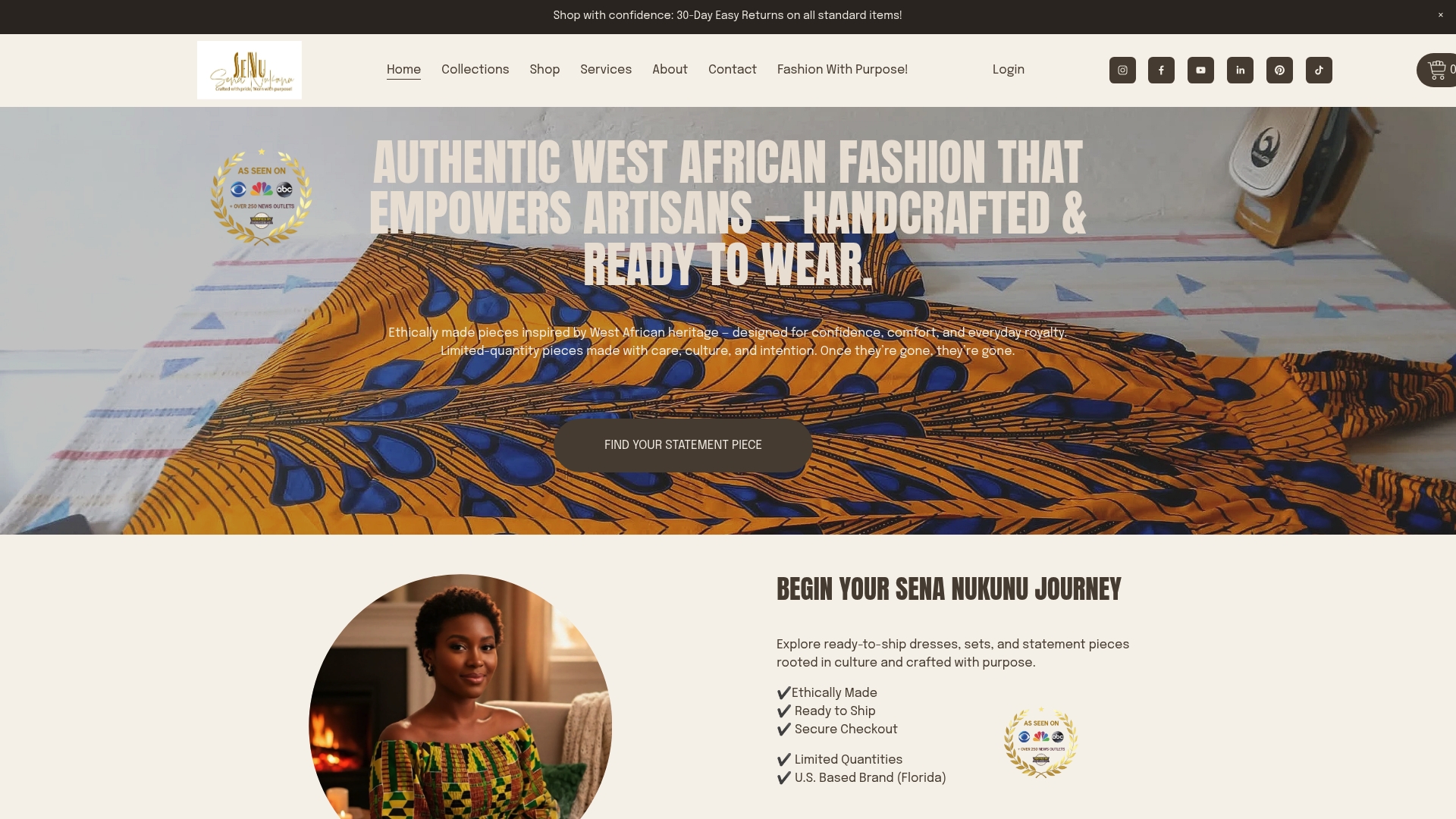
The dress collection includes ready-to-ship statement pieces made in limited quantities with ethical production at every stage. No guesswork about origin, no vague descriptions, and no missing care labels.
- Detailed close-up photography of fabric and stitching on every product page
- Artisan and production notes that document the garment's origin
- Clear, written return policy and a working contact for every order
Browse the collection and find a piece that carries the legacy it claims.
Useful sources and next steps
The sources below are the most authoritative starting points for deeper verification, safety reporting, and authentication research.
- GOV.UK: How to spot fake fashion when shopping second-hand — Government guidance on identifying counterfeits on resale platforms and reporting suspicious listings.
- NPR: How to avoid buying counterfeit products — Covers health and safety risks, including chemical hazards in counterfeit clothing.
- Vintage Shope: How to authenticate vintage clothing — Detailed guide to label dating, seam construction, hardware, and fabric evaluation for vintage pieces.
- CPSC (cpsc.gov) — The U.S. Consumer Product Safety Commission; use to report unsafe or chemically suspect garments purchased in the United States.
- Tumbleweed Thrift: True vintage clothing — Practical guidance on dating vintage pieces through physical markers.
- Collector forums and textile experts — For West African textiles specifically, local cultural organizations, university textile departments, and authenticated resale platforms with West African fashion expertise offer community-based verification that no algorithm replaces.