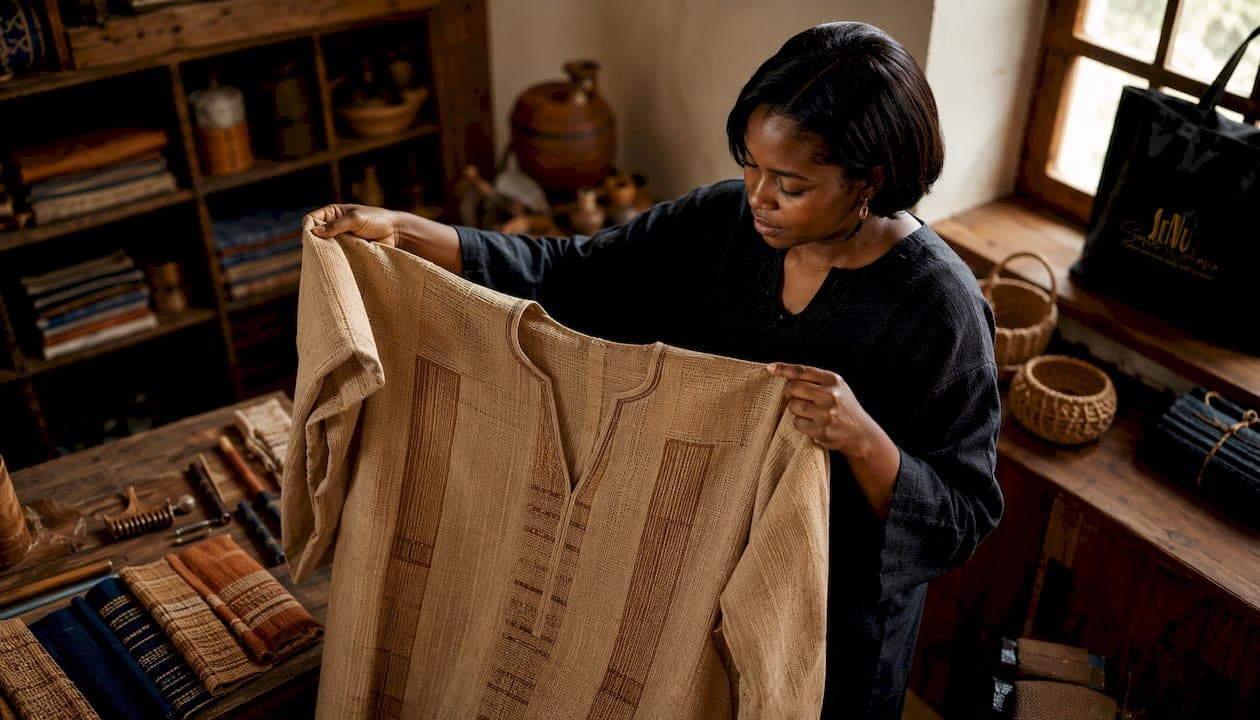
A practical fashion heritage checklist lets you verify authenticity and ethical provenance before you buy. Use these eight points every time you consider a West African heritage piece:
- Materials and fiber content — natural fibers, hand-spun or handwoven
- Weave and technique — loom selvedge, resist-dye marks, hand embroidery
- Construction quality — seam finishes, reinforced stress points, pattern alignment
- Pattern and motif meaning — named cultural origin, ceremonial or everyday purpose
- Maker attribution — artisan name, village or region, atelier
- Provenance documentation — receipts, batch numbers, production photos
- Ethical production signals — named wages, limited runs, benefit-sharing
- Price integrity — cost reflects artisan hours and slow production
WIPO's cultural-due-diligence guidance recommends prior and informed consent, attribution, and benefit-sharing before any brand uses traditional cultural expressions. The National Museum of Australia's conservation practices show how documented provenance transforms a garment into a lasting cultural record. Senanukunu, a Florida-based e-commerce brand, applies these principles across its limited-quantity West African statement pieces.
Table of Contents
- What does a physical inspection reveal about heritage fashion?
- What cultural and intangible details should you verify?
- How do you verify provenance before you buy?
- What questions should you ask sellers, and what are the red flags?
- How do materials and construction predict how long a piece will last?
- Which ethical production signals are trustworthy?
- What should you expect to pay for authentic heritage apparel?
- How do you become a steward of the heritage you buy?
- How does Senanukunu meet this checklist?
- Key Takeaways
- Why this checklist matters to me
- Senanukunu's heritage pieces are ready for you to explore
- Useful sources and further reading
What does a physical inspection reveal about heritage fashion?
Every authentic West African garment carries its story in its structure. Knowing what to look for, whether you're shopping online or in person, separates a living tradition from a printed imitation.
Fiber content is your first signal. Genuine heritage textiles often use cotton, silk, or raffia, sometimes hand-spun before weaving. Request a fiber content label; if none exists, ask directly. Natural fibers feel different from synthetics: they breathe, they have slight irregularities, and they age gracefully.
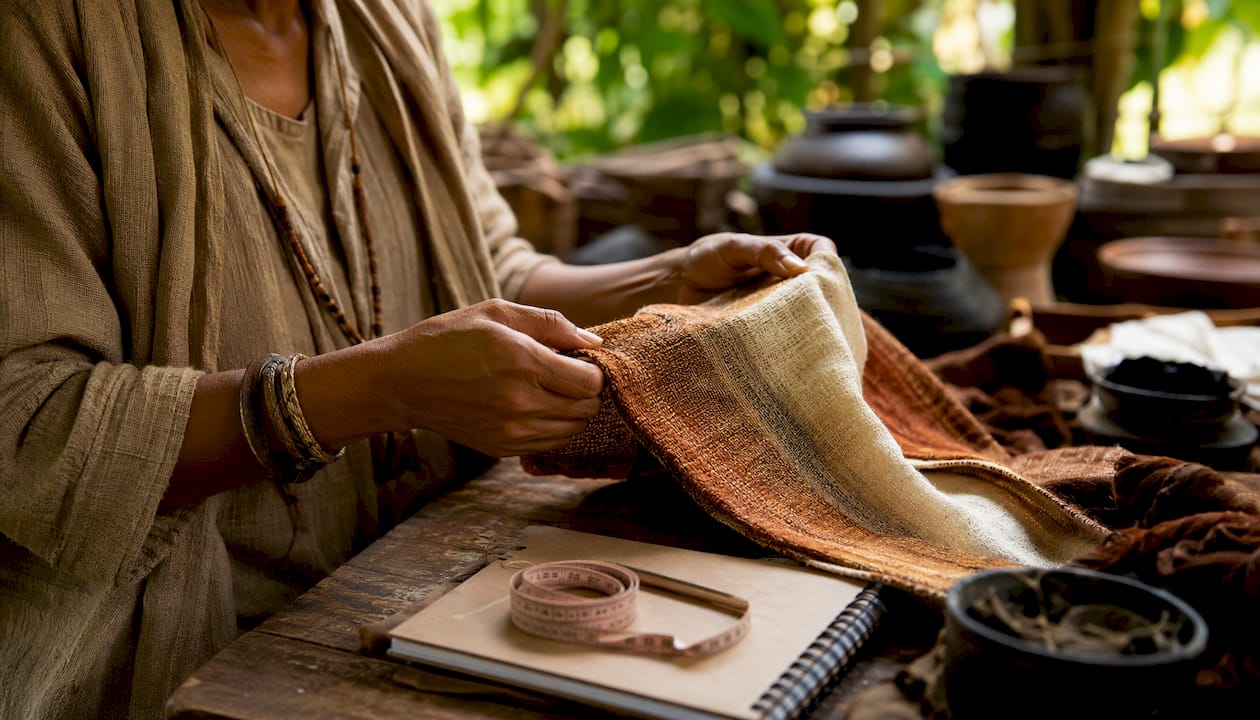
Weave and technique clues go deeper. Handwoven kente or aso-oke fabric shows a loom selvedge, a clean, slightly uneven edge where the weft thread turns back. Indigo ring-dyeing leaves subtle tonal variation that printed fabric cannot replicate. Ikat resist marks appear as soft, feathered edges on the pattern. These are not flaws; they are proof.
Construction details predict longevity. Look for finished interior seams, reinforced stress points at armholes and side seams, hand-stitched hems, and precise pattern alignment at seams. These are the signs of real artisanal quality that mass production skips.
| Feature | Authentic Heritage Piece | Mass-Produced Imitation |
|---|---|---|
| Selvedge edge | Present, slightly irregular | Absent or machine-cut |
| Dye variation | Subtle tonal shifts | Uniform, printed color |
| Interior seams | Finished, often hand-stitched | Serged or raw |
| Pattern alignment | Matched at seams | Mismatched |
| Fiber content label | Natural fiber, often named | Synthetic blend, vague |
Pro Tip: Request at least three production photos: one of the loom or dye vat, one of the artisan's hands at work, and one showing a batch or serial tag. If a seller cannot provide all three, treat that as a gap in the record, not a minor detail.
What cultural and intangible details should you verify?
The physical object is only half the story. The meaning woven into a pattern, the community that created it, and the oral history attached to its motifs are what make a piece truly irreplaceable. This is the intangible dimension of your style heritage assessment.
WIPO's draft guidance for fashion outlines six steps companies should follow before using traditional cultural expressions, including researching cultural meaning, reaching appropriate custodians, and negotiating terms. As a buyer, you can apply the same logic. Ask the seller to name the community of origin, the purpose of the motif (ceremonial, everyday, status marker), and any oral history the maker shared.
Watch seller language carefully. "Inspired by African tradition" is marketing. "Handwoven by Fatima Diallo in the Ashanti region, using a pattern reserved for celebration wear" is attribution. The difference matters for the living communities whose expressions these are.
Black clothing brands that practice storytelling through design demonstrate that named attribution and community context are achievable at every price point. If a brand can tell that story, it will.
How do you verify provenance before you buy?
Provenance verification is a sequence, not a single question. Follow these steps before completing any purchase of a heritage piece.
- Request a provenance file. Ask for the maker's name, the region of production, the date of completion, and the materials source.
- Confirm maker identity. A named artisan or atelier is verifiable. A vague "West African artisan" is not.
- Review production photos and dates. Photos should show the actual piece being made, not stock imagery of generic looms.
- Confirm limited batch information. Authentic limited-run pieces often carry batch numbers or order counts. Some heritage brands issue authenticity cards with engraved serial numbers as a verification tool.
- Ask about payments and royalties. How is the artisan compensated? Is there a community reinvestment component?
Receipts and authenticity cards should carry four fields: who made it, when it was made, where materials originated, and how the technique was executed. Missing fields are worth following up on before purchase.
Pro Tip: If a seller hesitates on any provenance question, ask to be connected with the artisan or a community representative directly. A brand with genuine maker relationships will welcome that request.
What questions should you ask sellers, and what are the red flags?
These questions work in any U.S. buying context, whether you're on an online marketplace, in a boutique, or at an artisan fair.
A seller with genuine provenance will answer these without hesitation. Reasonable documentation looks like: a named maker, a region, at least one process photo, and a clear statement on compensation.
Red flags to pause on:
- Origin described only as "African" or "West African-inspired" with no named community
- Stock photography instead of actual production images
- Inconsistent material claims (e.g., "handwoven silk" priced below the cost of the yarn)
- No batch or quantity information
- Vague ethical language ("we care about artisans") with no supporting detail
Pro Tip: At artisan fairs, ask the seller to describe the weaving technique in one sentence. Someone who has worked directly with the maker will answer specifically. Someone selling a mass-produced piece will generalize.
How do materials and construction predict how long a piece will last?
Heritage garments built to last share a set of physical traits. Natural fibers, handwoven density, interlocking selvedges, and hand-stitched reinforcement all signal a piece made for decades, not seasons. Documented provenance adds conservation value that compounds over time.
| Textile Type | Washing | Storage | Repair |
|---|---|---|---|
| Indigo-dyed cotton | Hand wash cold, separately | Fold, avoid direct light | Re-dye faded areas with natural indigo |
| Handwoven brocade | Dry clean or hand wash gently | Roll on acid-free tube | Professional reweaving for snags |
| Embroidered panels | Spot clean only | Flat storage, tissue between folds | Embroidery conservator for damage |
When a piece shows genuine wear, a textile conservator is worth consulting before attempting home repair. Museum conservation practice maps directly to home care: cool storage, minimal light exposure, and acid-free materials for folding.
Pro Tip: Attach a small provenance tag to the garment's care label, noting the maker's name, origin, and date of purchase. Future owners, including your own children, will thank you.
Which ethical production signals are trustworthy?
Not every "ethical" badge carries the same weight. The signals worth trusting are specific and verifiable.
Trustworthy signals: named artisan partnerships with documented compensation terms, limited-batch production notes with actual numbers, royalties or benefit-sharing agreements stated explicitly, and third-party audits when present. Transparent benefit-sharing is a documented model that responsible brands use to connect purchases to community development.
Weaker signals require follow-up: vague "sustainable" or "ethical" badges, influencer endorsements without sourced claims, and CSR language that describes values without data.
Ask for payment terms, a sample artisan contact, or evidence of community projects. A brand that cannot provide any of these after a direct request is telling you something important.
What should you expect to pay for authentic heritage apparel?
Authentic, ethically made West African heritage apparel costs more than fast fashion, and the reasons are worth understanding. Artisan hours, hand-dyeing and slow weaving techniques, natural material costs, limited production runs, provenance documentation, and logistics from West Africa to the U.S. all contribute to the final price.
As general guidance, not fixed rules:
- Statement dresses and kaftans: expect to invest meaningfully above mass-market pricing, reflecting hand-finishing and limited runs
- Matching sets: two-piece artisan sets carry the labor cost of coordinating pattern alignment across both pieces
- Handcrafted jackets with embroidery: among the most labor-intensive pieces; price reflects embroidery hours alone
Budgeting tips worth keeping:
- Reserve a small repair and preservation fund alongside the purchase price
- Prioritize pieces with verifiable maker information over anonymous "heritage-style" alternatives
- Calculate cost-per-wear: a well-made kaftan worn 50 times costs far less per occasion than a cheaper piece that fades or unravels after five
How do you become a steward of the heritage you buy?
Buying is the beginning, not the end. Stewardship means caring for the piece, crediting its makers, and eventually passing it on with its story intact.
Practical steps:
- Document origin digitally (photos of the piece, the provenance tag, and any receipts) and physically (a small card stored with the garment)
- Follow care instructions specific to the textile type, and repair rather than discard
- Credit the maker and community when sharing images on social media or in conversation
- Avoid wearing pieces in sacramental or ceremonial contexts without explicit permission from the originating community
- Support continuity by returning to the same artisan brands, attending workshops, or funding knowledge-transfer programs when possible
When passing a piece to the next generation, include: the maker's name, the region of origin, the cultural meaning of the motif, the date of purchase, and any care history. That record is what cultural heritage shapes into a living legacy.
How does Senanukunu meet this checklist?
Senanukunu is a Florida-based e-commerce brand built around exactly these principles. Its product pages describe artisan attribution, limited-quantity production, and the cultural stories behind each piece. The brand's stated commitment to ethical manufacturing and craftsmanship aligns with the provenance and ethical signals this checklist prioritizes.
To verify a Senanukunu piece against the checklist: review the product page for maker details and batch information, request production photos through the brand's customer service, and ask specifically about artisan compensation terms. The brand's focus on limited quantities means batch information is often available and meaningful.
For provenance questions not answered on the product page, contact Senanukunu directly before purchase. A brand with genuine maker relationships will provide documentation willingly.
Key Takeaways
Authentic West African heritage fashion requires eight verifiable criteria: materials, technique, construction, motif meaning, maker attribution, provenance documentation, ethical production signals, and price integrity.
| Point | Details |
|---|---|
| Demand maker attribution | A named artisan and region are the minimum standard; "West African-inspired" is not enough. |
| Request production photos | Loom shots, dye vat images, and batch tags confirm the piece was made as described. |
| Apply WIPO's due-diligence steps | Prior and informed consent, attribution, and benefit-sharing protect living cultural traditions. |
| Calculate cost-per-wear | Authentic, limited-run pieces justify their price when worn and cared for over decades. |
| Senanukunu as a vetted option | Senanukunu lists artisan attribution and limited-quantity details on product pages, with documentation available on request. |
Why this checklist matters to me
The checklist in this article grew from a simple conviction: that every person who wears West African heritage fashion deserves to know the full story behind what they carry. Culture is not a trend. The motifs woven into kente, the indigo pressed into cotton, the embroidery passed from one generation of hands to the next — these are living expressions, not raw material for mass production. When you insist on documentation, ask for the maker's name, and choose brands that share benefits with the communities they work with, you are doing something that goes beyond shopping. You are participating in preservation. That is the spirit behind everything Senanukunu creates, and it is the reason this checklist exists.
Senanukunu's heritage pieces are ready for you to explore
Senanukunu brings together authentic West African ready-to-wear, from statement dresses and kaftans to agbada sets and handcrafted jackets, each made in limited quantities with documented artisan craftsmanship. Unlike mass-market alternatives, every piece comes with cultural context and ethical production at its core, not as an afterthought.
Product pages list maker details and batch information directly. For additional provenance documentation or production photos, the brand's customer service team responds to verification requests before purchase. You can view the full curated collection and reach out with questions at Senanukunu's heritage shop. Choose a piece you can wear with pride, care for with intention, and pass on with its story intact.
Useful sources and further reading
- WIPO cultural-due-diligence guidance — the authoritative source for prior and informed consent, attribution, and benefit-sharing steps when engaging with traditional cultural expressions.
- WIPO draft steps for fashion and traditional cultural expressions — six concrete steps companies and buyers can follow; directly applicable to the provenance and ethical production sections of this checklist.
- National Museum of Australia — silk brocade dress provenance — a conservation case study showing how documented provenance elevates a garment's cultural and evidentiary value over centuries.
- AlpTextyles Heritage Toolkit — practical guidance on documenting both tangible and intangible heritage elements; useful for standardizing the metadata you collect when buying.
- Senanukunu brand page — the brand's own product pages and cultural storytelling, a working example of how provenance and artisan attribution can be presented to U.S. consumers.
- Fashion History Timeline (FIT) — a research hub for understanding historical textile techniques and cultural context, useful when verifying motif origins.
- How Fashion Supports Social Causes — explains benefit-sharing models and community development collaborations in fashion, relevant to ethical production verification.