TL;DR:
- Ghana's textile production significantly declined from 130 million to 15 million yards over 40 years.
- Genuine heritage fashion relies on tradition, artisanship, and meaningful symbolism.
- Supporting artisan collaborations ensures cultural preservation, economic dignity, and ethical fashion practices.
Ghana's textile production dropped from 130 million to just 15 million yards between 1977 and 2017, even as "African-inspired" prints trend across global runways and fast-fashion aisles. That gap tells a painful story: the world wants the look, but not always the legacy behind it. If you've ever felt drawn to the vibrant patterns and intricate craftsmanship of West African fashion, you deserve to understand what truly makes a piece meaningful, who made it, and how your choices can honor the living communities behind every thread. This guide gives you that context, clarity, and a practical path forward.
Table of Contents
- Understanding cultural heritage in fashion
- Inspiration or appropriation? Navigating respect and recognition
- Revival through collaboration: How heritage empowers artisans and communities
- Practical steps: How to choose and wear authentic heritage pieces
- Our perspective: Why authenticity in heritage fashion truly matters
- Discover vibrant, authentic heritage fashion with Sena Nukunu
- Frequently asked questions
Key Takeaways
| Point | Details |
|---|---|
| Authenticity matters | True cultural heritage in fashion comes from honoring origins and supporting artisans, not just patterns. |
| Appreciation vs. appropriation | Collaboration, credit, and direct economic benefit differentiate authentic cultural appreciation from appropriation. |
| Collaboration empowers | Designer-artisan partnerships boost incomes, preserve heritage, and create meaningful, ethical fashion. |
| Make informed choices | Select and wear heritage pieces with careful research, direct sourcing, and respect for traditional craftsmanship. |
Understanding cultural heritage in fashion
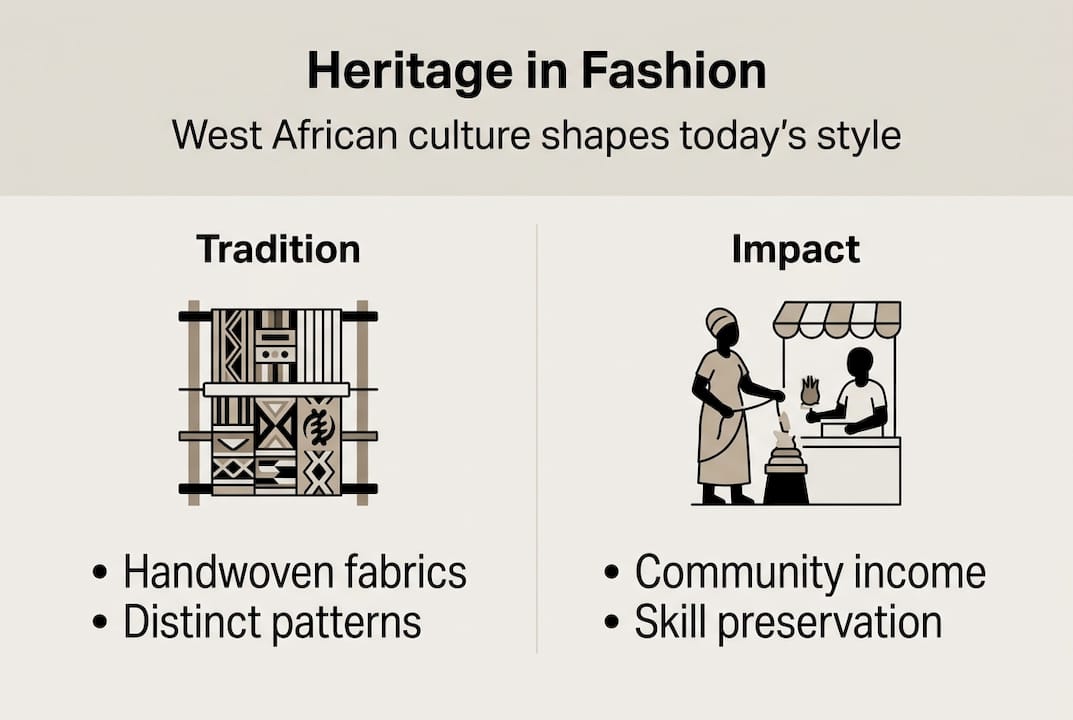
Cultural heritage in fashion is far more than a color palette or a striking print. It is a living system of knowledge, identity, and artistry passed down through generations. When we talk about heritage in the context of West African fashion, we mean specific weaving techniques, symbolic motifs, natural materials, and community rituals that give each textile its meaning and soul.
True heritage fashion is rooted in three pillars:
- Tradition: Techniques like hand-weaving kente cloth in Ghana or bogolan (mudcloth) dyeing in Mali have been practiced for centuries. Each motif carries a specific meaning, from royalty to resilience to spiritual protection.
- Artisanship: Skilled craftspeople spend years mastering their craft. The craftsmanship in fashion that defines these pieces cannot be replicated by a machine in a factory overseas.
- Motif integrity: Symbols are not decorative accidents. In kente, specific color combinations and patterns communicate social status, occasion, and values. Stripping those symbols from their context erases the message entirely.
The difference between genuine preservation and shallow trend adoption is significant. Genuine preservation means working with artisans, sourcing traditional materials, and crediting the communities of origin. Shallow adoption means printing a kente-inspired pattern on polyester and calling it "African chic." One sustains a legacy. The other profits from it without giving anything back.
"Heritage techniques like bogolan and kente use natural materials and low-impact methods, rooted in centuries of ecological and cultural knowledge."
Understanding sustainable fashion meaning in this context means recognizing that the most ethical textiles are often the oldest ones. Traditional West African methods were sustainable long before that word became a marketing trend. When mass production floods the market with imitation prints, it doesn't just undercut artisan incomes. It dilutes the cultural story that makes these textiles extraordinary in the first place.
Inspiration or appropriation? Navigating respect and recognition
Once you understand the depth of heritage, the next question becomes: when does admiration cross into exploitation? The line between cultural appreciation and appropriation is real, and it matters deeply to the communities whose traditions are at stake.
Appropriation happens when motifs, garments, or symbols are borrowed without credit, collaboration, or economic benefit to the originating community. Warning signs include:
- No mention of artisan origins or community partnerships
- Mass-produced replicas sold at low prices that undercut authentic makers
- Symbols used decoratively with no acknowledgment of their meaning
Two well-known examples illustrate the stakes. When Louis Vuitton incorporated kente-inspired patterns into a high-profile collection without direct collaboration with Ghanaian weavers, it sparked widespread criticism. Similarly, when U.S. lawmakers wore kente cloth stoles during a political gesture in 2020, many Ghanaians felt the sacred fabric was reduced to a costume prop rather than honored as a cultural expression.
| Appreciation | Appropriation | |
|---|---|---|
| Credit | Artisan and community named | Anonymous or erased |
| Collaboration | Co-created with makers | Copied without input |
| Economic benefit | Flows back to community | Stays with outside brand |
| Cultural context | Explained and respected | Ignored or distorted |
True appreciation involves collaboration, credit, and economic benefit. Appropriation involves copying motifs without supporting artisans. Here's how designers and brands can get it right:
- Research the specific cultural origin of every motif or technique before using it.
- Reach out to artisan communities or cooperatives for direct partnership.
- Credit makers publicly and prominently in all marketing.
- Ensure fair compensation flows to the originating community.
- Educate your audience about the cultural significance of what they're wearing.
Exploring fashion storytelling examples from brands that do this well shows you what genuine respect looks like in practice.
Pro Tip: Before purchasing a "heritage-inspired" piece, ask the brand three questions: Who made this? Where did the design originate? How does buying this support the artisan community? If they can't answer clearly, that silence is your answer.
Learning how to support artisan fashion is one of the most empowering steps you can take as a conscious consumer.
Revival through collaboration: How heritage empowers artisans and communities
When brands and designers choose collaboration over imitation, the results are transformative, not just for fashion, but for entire communities. Positive, culture-first partnerships are one of the most powerful tools for preserving West African heritage while creating real economic dignity.
The numbers speak clearly. Ethical Fashion Initiative partnerships led to 40% income increases for weavers, and Kantamanto Market in Ghana reuses 15 million garments annually while supporting 2.5 million jobs. These aren't abstract statistics. They represent families, schools, and futures built on the foundation of traditional craft.
Designers like Awa Meité and Aïssa Dione have shown what genuine collaboration looks like. Meité works directly with Malian weavers to produce bogolan textiles that honor ancestral dyeing methods while reaching international audiences. Dione's studio in Dakar employs local artisans and positions their work as luxury, because it is. These collaborations don't just preserve technique. They reframe the value of African artisanship on a global stage.
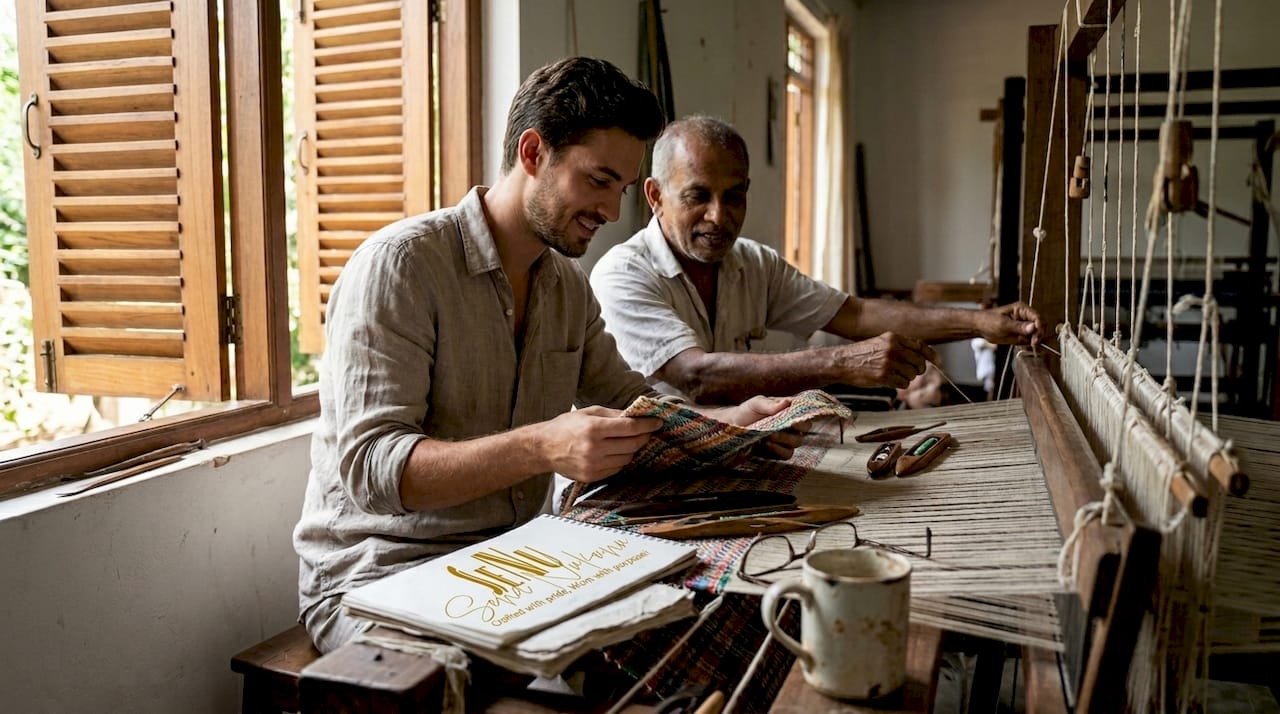
In 2024, UNESCO recognized Kente weaving as an intangible cultural heritage, a milestone that underscores how designer collaborations can safeguard traditions for future generations.
Here's what meaningful collaboration actually looks like in practice:
- Paying artisans above fair-trade wages and sharing design credit publicly
- Using traditional materials sourced from within the community
- Involving makers in creative decisions, not just production
- Reinvesting a portion of profits into community development
| Collaboration type | Community impact |
|---|---|
| Direct artisan partnership | Income stability, skill preservation |
| Fair-trade certification | Verified ethical standards |
| Co-designed collections | Creative agency for makers |
| Local sourcing | Supports regional supply chains |
Understanding why handmade fashion matters helps you see these collaborations not as charity, but as a recognition of excellence. Exploring how brands are empowering West African artisans reveals a growing movement that you can actively participate in through your wardrobe choices. Browse featured collections that reflect this commitment in every stitch.
Practical steps: How to choose and wear authentic heritage pieces
Knowing the history and values behind heritage fashion is powerful. Translating that knowledge into action is where your personal style becomes a statement of integrity. Here's how to do it well.
Step-by-step guide to choosing authentic pieces:
- Research the origin. Before you buy, look into the specific region, technique, or artisan group associated with the piece. Authentic sellers will share this information freely.
- Verify the maker. Look for named artisans, cooperative partnerships, or transparency about where and how the garment was produced.
- Seek direct artisan support. Buying from platforms that work directly with makers ensures your money reaches the right hands. Initiatives like Kantamanto Market prove the value of supporting reuse and true origin stories.
- Check for certifications. Fair-trade labels, UNESCO recognition, and artisan cooperative memberships are meaningful signals of ethical production.
- Ask about community reinvestment. Does the brand give back to the communities it draws from? This is a non-negotiable for truly ethical fashion.
Red flags to watch for:
- Generic mass-printed "African" patterns with no cultural specificity
- No artisan story, no community partnership, no origin transparency
- Prices so low they couldn't possibly reflect fair wages
- Synthetic fabrics labeled as "traditional" without explanation
Once you've found a piece you love, wear it with intention. Explore culture-inspired fashion styling ideas that help you honor the story behind your garment.
Styling tips for heritage statement pieces:
- Let the piece lead. Pair bold kente or ankara prints with neutral, minimalist basics so the textile remains the focal point.
- Mix textures thoughtfully, combining handwoven fabrics with simple cotton or linen for a grounded, modern look.
- Wear pieces on occasions that feel meaningful, not just trendy, to honor their cultural weight.
- Learn one fact about the piece's origin and share it when someone asks. That's how stories survive.
Pro Tip: When combining heritage pieces with modern trends, choose one statement garment per outfit. A hand-woven jacket over a simple dress, or a printed set with clean accessories, lets the craftsmanship breathe without competing for attention.
Finally, care for your pieces as you would any treasured heirloom. Understanding how to care for African fabrics ensures that the artistry lasts for years, honoring both the maker and the tradition. Dive deeper into heritage apparel ethics to continue building your knowledge.
Our perspective: Why authenticity in heritage fashion truly matters
Here's the part of this conversation that most fashion content skips: wearing heritage fashion is not primarily about aesthetics. It's about economic dignity and the survival of living knowledge systems. When outsiders romanticize West African textiles as "exotic" or "bohemian" while purchasing cheap imitations, they participate in a cycle that drains the very communities they claim to admire.
Conventional wisdom says cultural fashion is about style. The reality is that it's about story continuity and who gets to profit from it. True connection to heritage fashion means long-term investment, not a one-season trend. It means co-creation, not extraction. It means crediting the weaver by name, not just the brand.
We believe that when you choose authenticity, your wardrobe becomes richer in every sense. You carry a story that matters, wear a skill that took years to master, and support a community that deserves to thrive. That's not just fashion. That's a living legacy. Explore more on culture, ethics, and empowerment to go even deeper.
Discover vibrant, authentic heritage fashion with Sena Nukunu
At Sena Nukunu, every piece in our collection is a bridge between West African artisanship and your everyday life. We work directly with makers whose skills carry generations of knowledge, and we bring those stories to you through ready-to-wear dresses, sets, and statement pieces crafted with care and purpose.
When you shop our signature collections, you're not just choosing a garment. You're choosing to honor a legacy, support an artisan, and wear something that was made with intention. If you're looking for something uniquely yours, our design services connect you with culturally rooted creativity that goes far beyond trend. This is fashion with a soul, and it's waiting for you.
Frequently asked questions
How do I know if a heritage piece is ethically made?
Look for provenance, named artisan credit, and clear transparency about materials and origin. Avoid anonymous, generic mass prints with no traceable story, as heritage techniques and artisan partnerships are the true markers of authenticity.
What is the impact of buying heritage fashion?
It supports artisan livelihoods, community development, and the preservation of traditional crafts. EFI partnerships increased weaver incomes 40%, and Kantamanto Market supports 2.5 million jobs, showing just how far a conscious purchase can reach.
Can Western brands use West African motifs ethically?
Yes, but only when they collaborate with communities, credit origins publicly, and return economic benefits to the makers. Collaboration and credit are what separate genuine appreciation from appropriation.
How do I style heritage statement pieces?
Pair one-of-a-kind garments with minimalist basics to let the textile shine, and take a moment to learn the story behind the piece so you wear it with true intention and pride.