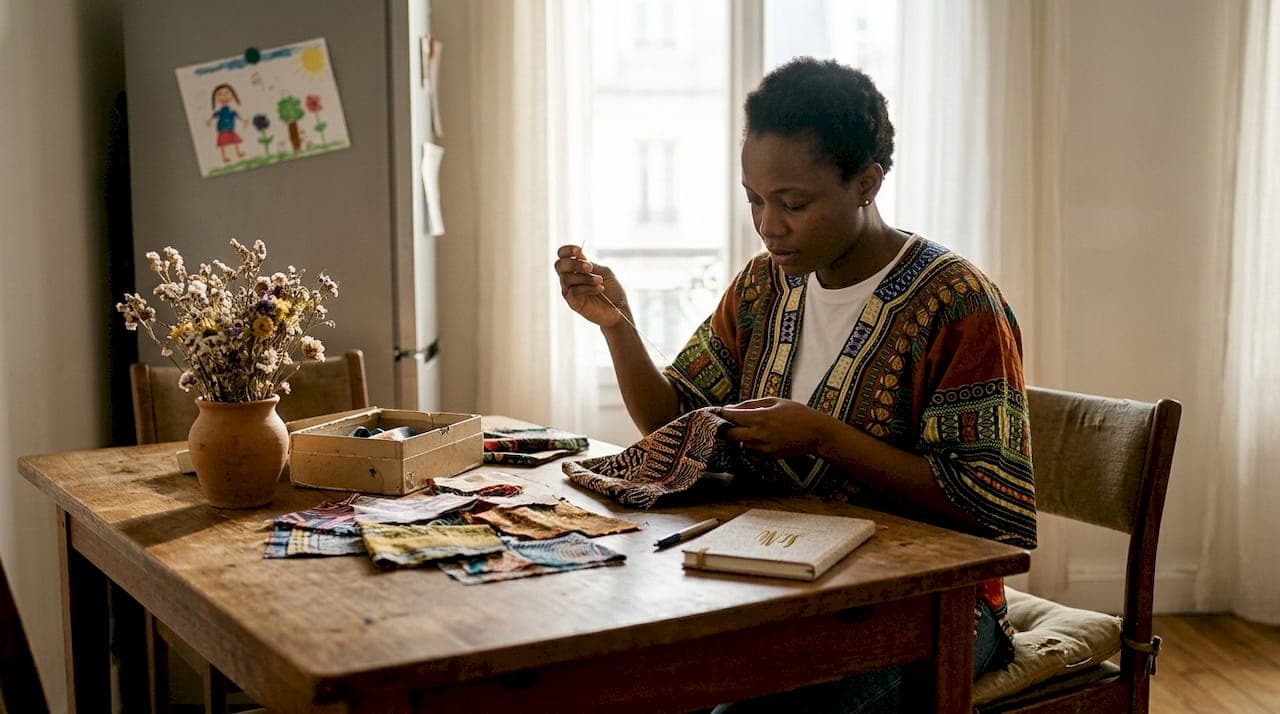
Sustainable fashion is often reduced to a single idea: use organic cotton, call it green, move on. But that framing misses the most powerful parts of the story. For women who dress with intention, who see clothing as a form of cultural expression and personal pride, sustainability is about so much more than fabric choice. It reaches into ethics, heritage, artisan empowerment, and the stories woven into every seam. This guide unpacks what sustainable fashion truly means, the principles that define it, the challenges that slow real progress, and the inspiring ways West African designers are rewriting the conversation entirely.
Table of Contents
- What is sustainable fashion?
- Core principles of sustainable fashion
- Nuances, challenges, and greenwashing risks
- West African heritage: Sustainability as empowerment and creativity
- A fresh perspective: Sustainable fashion's true impact goes beyond materials
- Express your values through sustainable, vibrant styles
- Frequently asked questions
Key Takeaways
| Point | Details |
|---|---|
| Holistic definition | Sustainable fashion considers social fairness, cultural respect, and environmental responsibility across a garment's entire life. |
| Red flags for greenwashing | Vague claims without concrete details often signal unsustainable practices and misleading marketing. |
| Empowerment and heritage | West African brands show how sustainable fashion empowers women and preserves cultural identity. |
| What you choose matters | Every mindful purchase supports artisans, the planet, and movements toward true sustainability. |
What is sustainable fashion?
The word "sustainable" gets stretched in so many directions that its meaning can blur. In fashion, it is tempting to assume it simply means recycled materials or a nature-inspired color palette. The reality is far richer and more demanding.
Sustainable fashion refers to the design, production, marketing, and consumption of clothing and accessories in ways that are environmentally responsible and socially fair, considering the full lifecycle from raw materials to disposal. That lifecycle framing is crucial. It means a garment's sustainability is judged not just at the point of sale, but from the field where its fibers were grown, through the hands of every artisan who shaped it, to the moment it is repaired, passed on, or composted.
Three dimensions sit at the heart of this definition:
- Environmental: Reducing emissions, water use, chemical pollution, and textile waste throughout production and end-of-life.
- Social: Ensuring fair wages, safe working conditions, and respect for the cultural communities involved in making the clothing.
- Cultural: Honoring and preserving the heritage crafts, techniques, and identities embedded in traditional textile practices.
This third dimension is where many mainstream conversations fall short. Clarifying definitions in academic research shows that interpretation varies widely between micro-organizations, industry experts, and everyday consumers, which creates space for vague claims to thrive.
"Every stitch, brushstroke, and design carries the spirit of a legacy. Sustainable fashion, at its truest, honors that spirit rather than erasing it."
For women drawn to craftsmanship and culture, this broader definition is empowering. It means that choosing a piece made by skilled artisans, rooted in a living tradition, is itself a deeply sustainable act. And the fashion storytelling examples that resonate most powerfully are the ones where sustainability and identity are inseparable.
With a foundation for what makes fashion truly sustainable, it is time to explore the core principles that separate authentic practice from superficial green marketing.
Core principles of sustainable fashion
Principles give sustainability its backbone. Without them, the concept drifts into marketing language. With them, it becomes a measurable, meaningful commitment.
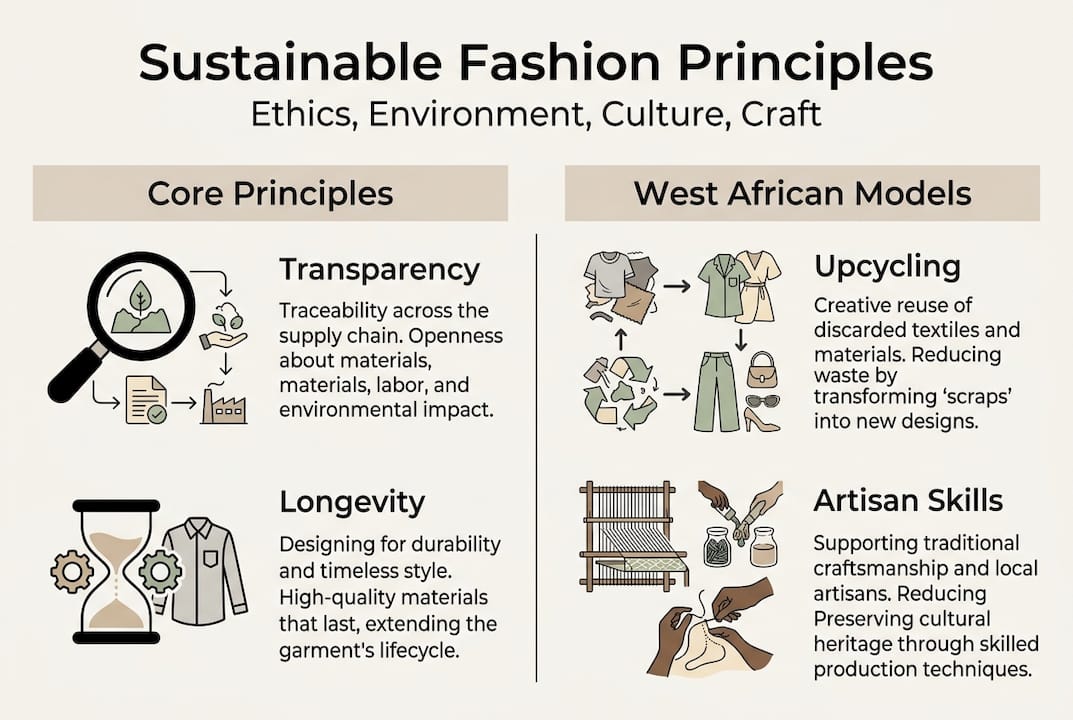
Key principles include designing for durability and circularity (reuse, repair, recycling), transparency in supply chains, fair working conditions and wages, and reducing environmental harm through eco-friendly materials and lower resource use. These are not aspirational ideals. They are operational standards that brands either meet or they do not.
Here is how those principles break down in practice:
- Durability and circularity: Garments designed to last, to be repaired, and eventually to re-enter the material cycle rather than ending up in landfill.
- Supply chain transparency: Clear, verifiable information about where materials come from and who made the clothing.
- Fair labor: Wages and conditions aligned with international standards, not just local minimums.
- Environmental impact reduction: Lower water use, fewer synthetic chemicals, and reduced carbon emissions at every production stage.
- Cultural preservation: Actively supporting the artisan communities and heritage techniques that give clothing its soul.
To measure progress, brands and researchers use structured tools. Methodologies involve life cycle assessment (LCA), social KPIs based on ILO standards, durability testing, and multicriteria scoring. These frameworks help move sustainability from a feeling to a fact.
| Principle | What to look for | Red flag |
|---|---|---|
| Transparency | Published supplier lists | "We care about ethics" with no detail |
| Fair labor | Third-party audits, living wage data | Vague "fair trade" claims |
| Circularity | Take-back programs, repair guides | No end-of-life plan |
| Cultural respect | Artisan credit, heritage context | Appropriation without attribution |
The importance of craftsmanship cannot be overstated here. Brands that genuinely invest in artisan skills, training, and fair compensation are practicing cultural sustainability in its most vibrant form. And the artisan empowerment trends emerging from West Africa show exactly what this looks like when done with intention and pride.
Pro Tip: When shopping, ask one simple question: "Can this brand show me who made this piece and what they were paid?" If the answer is silence, that tells you everything.
Knowing the principles is only half the story. The real test comes in recognizing the challenges, greenwashing risks, and nuances of real-world implementation.
Nuances, challenges, and greenwashing risks
Sustainability in fashion sounds straightforward in theory. In practice, it runs into systemic walls, conflicting incentives, and a troubling pattern of exaggeration.
The numbers are sobering. The fashion industry accounts for 8 to 10% of global greenhouse gas emissions, 92 million tonnes of textile waste per year, and approximately 2,700 liters of water to produce a single T-shirt. Apparel sector emissions reached 944 million tonnes of CO2e in 2023, up 7.5% from the previous year. Progress is not keeping pace with ambition.
Greenwashing sits at the center of this problem. Brands use vague claims like "conscious collection" or "eco-friendly" without disclosing what those terms actually mean in their supply chains. The impact benchmarks from industry research show that brands average roughly 50% of their own stated sustainability goals, meaning even well-intentioned companies often fall short.
Here are the most common greenwashing tactics to watch for:
- Highlighting one eco-friendly material while ignoring labor conditions
- Using nature imagery and green packaging without substantive change
- Claiming "sustainable" for a small capsule line while the core business model remains unchanged
- Citing certifications that cover only a fraction of the supply chain
The fast fashion versus slow fashion tension is real. Fast fashion thrives on volume, speed, and low prices, all of which work against sustainability. Luxury fashion is often perceived as more sustainable because of its price point, but weak social disclosure remains a persistent problem even at the top of the market.
For women making empowering fashion choices, this landscape can feel discouraging. But it also sharpens the case for seeking out bold, empowering styles from brands that lead with transparency and cultural integrity rather than marketing polish.
Systemic change requires policy, disclosure mandates, and just transitions for artisan communities. Consumer choices matter, but they work best when supported by structures that hold brands accountable.
If the road to authentic sustainability is complex, are there inspiring models women can look to? West Africa's approach holds vital lessons.
West African heritage: Sustainability as empowerment and creativity
West Africa is not waiting for the global fashion industry to figure out sustainability. It is building its own model, one rooted in heritage, creativity, and community resilience.
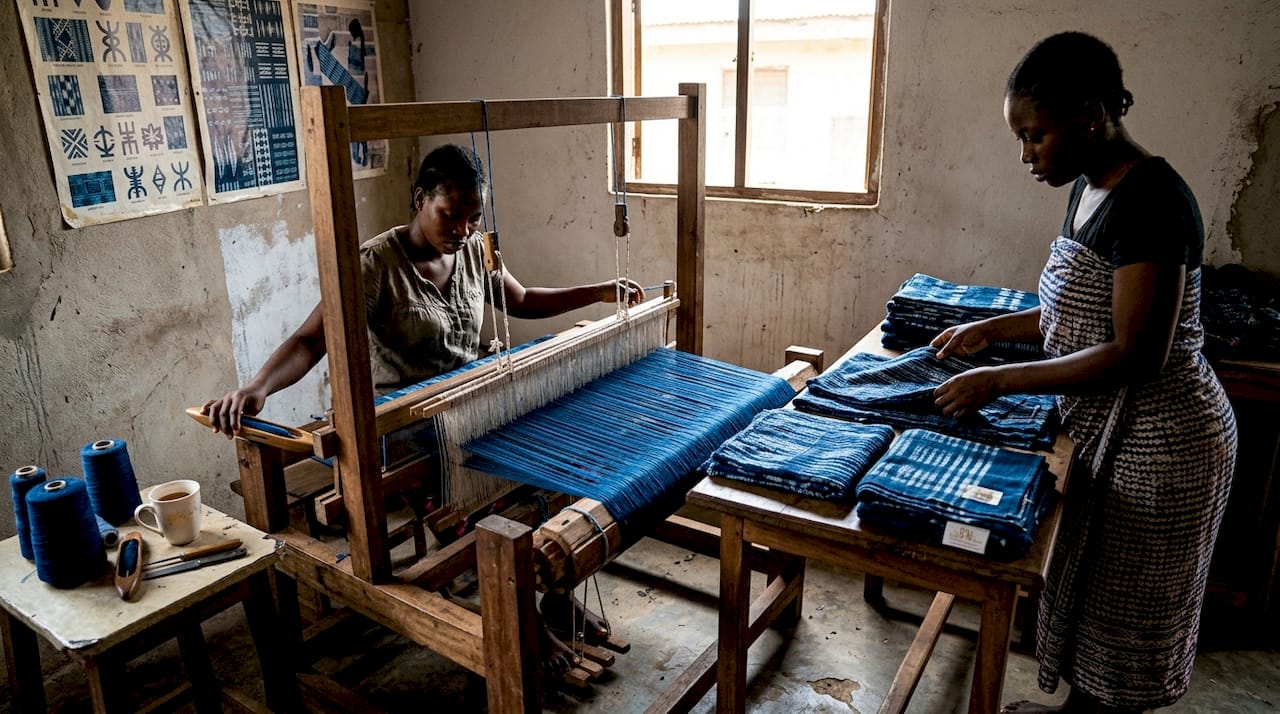
The NKWO Dakala technique, developed by Nigerian designer Nkwo Onwuka, transforms discarded denim into richly textured heritage-inspired fabric. This is upcycling elevated to artistry, where waste becomes a canvas for cultural storytelling. Similarly, Bomizambo weavers are reviving traditional weave patterns that carry generations of meaning, blending ancestral knowledge with contemporary design sensibility.
In Ghana, programs focused on just transition from waste are retraining kayayei (female porters) as skilled textile artisans, giving women economic agency and a dignified livelihood rooted in craft. This is what mass production killed in Ghana, and what ethical fashion is now working to restore.
What makes the West African approach distinctive:
- Upcycling as heritage: Waste materials become culturally significant fabrics, not just recycled filler.
- Women at the center: Empowerment programs place women as the primary beneficiaries and creators.
- Living traditions: Heritage weaves and dyeing techniques are practiced, not just referenced.
- Community economics: Artisan income stays within local communities, strengthening the social fabric alongside the textile one.
Cultural sustainability, in this context, means protecting identity while designing for the future. It means that a garment is not just a product but a living record of a community's resilience and creativity.
Pro Tip: When you invest in a piece made by West African artisans, ask about the technique behind it. Understanding the craft deepens your connection to what you wear and honors the hands that made it.
The empowering West African artisans movement and the broader vision of modern West African style show that sustainability and beauty are not in tension. They are the same conversation.
A fresh perspective: Sustainable fashion's true impact goes beyond materials
The sustainability conversation in fashion gets stuck, again and again, on technical standards and eco-labels. Certifications matter. LCA scores matter. But they are not where the deepest impact lives.
Real advancement happens when fashion enables generational pride. When a daughter wears a piece made with the same technique her grandmother knew. When an artisan family earns a living wage and sends their children to school. When a woman in Florida walks into a room wearing something that carries the spirit of a West African legacy and feels completely, powerfully herself.
Choosing culturally rooted, ethically made clothing creates ripple effects that no carbon calculator can fully measure. It sustains communities. It keeps living traditions alive. It gives women agency over what their wardrobe says about who they are and what they value.
We believe that empowering West African artisans is not a niche concern. It is the heart of what sustainable fashion should aspire to be. Every stitch in an ethically made, heritage-inspired piece is a small act of resistance against a system that has long undervalued both culture and craft.
Sustainable fashion done right is not just about the planet. It is about honoring stories.
Express your values through sustainable, vibrant styles
Now that you know what sustainable fashion truly means and why it matters, the next step is wearing those values with pride. At Sena Nukunu, every piece in our collection is crafted with ethics, heritage, and creativity at its core. Each garment tells a story rooted in West African artistry and designed to make you feel regal, confident, and connected to something larger than a trend.
When you choose a Sena Nukunu piece, you are choosing transparency, fair craftsmanship, and cultural pride all at once. Explore our collections to discover statement pieces that honor living traditions, or browse our latest styles for fresh arrivals crafted with purpose. Step into vibrant styles that do more than dress you. They speak for you.
Frequently asked questions
How can I tell if a brand is truly sustainable?
Look for detailed transparency on materials, labor practices, and third-party certifications, rather than vague marketing claims that offer no verifiable detail. Authentic brands show their work, not just their values.
What makes West African sustainable fashion unique?
West African fashion often blends heritage crafts, upcycling, and women's empowerment, creating value for communities and the planet simultaneously. Techniques like the NKWO Dakala method turn waste into culturally resonant art.
Why does sustainable fashion cost more?
Ethical, sustainable clothing uses better materials, pays fair working conditions and wages, and avoids cutting corners in production, all of which increase costs. The price reflects the true value of the craft and the people behind it.
Is buying secondhand or vintage considered sustainable fashion?
Yes. Choosing secondhand extends a garment's life and reduces demand for new resources, aligning directly with the circularity principle that sits at the heart of sustainable fashion. It is one of the most accessible ways to participate in the movement.