TL;DR:
- Authentic African heritage apparel embodies cultural meaning, artisan craftsmanship, and ethical production.
- Textiles encode proverbs, social signals, and life transitions, serving as cultural storytelling tools.
- Ethical production supports community empowerment, preserves traditions, and maintains garment integrity.
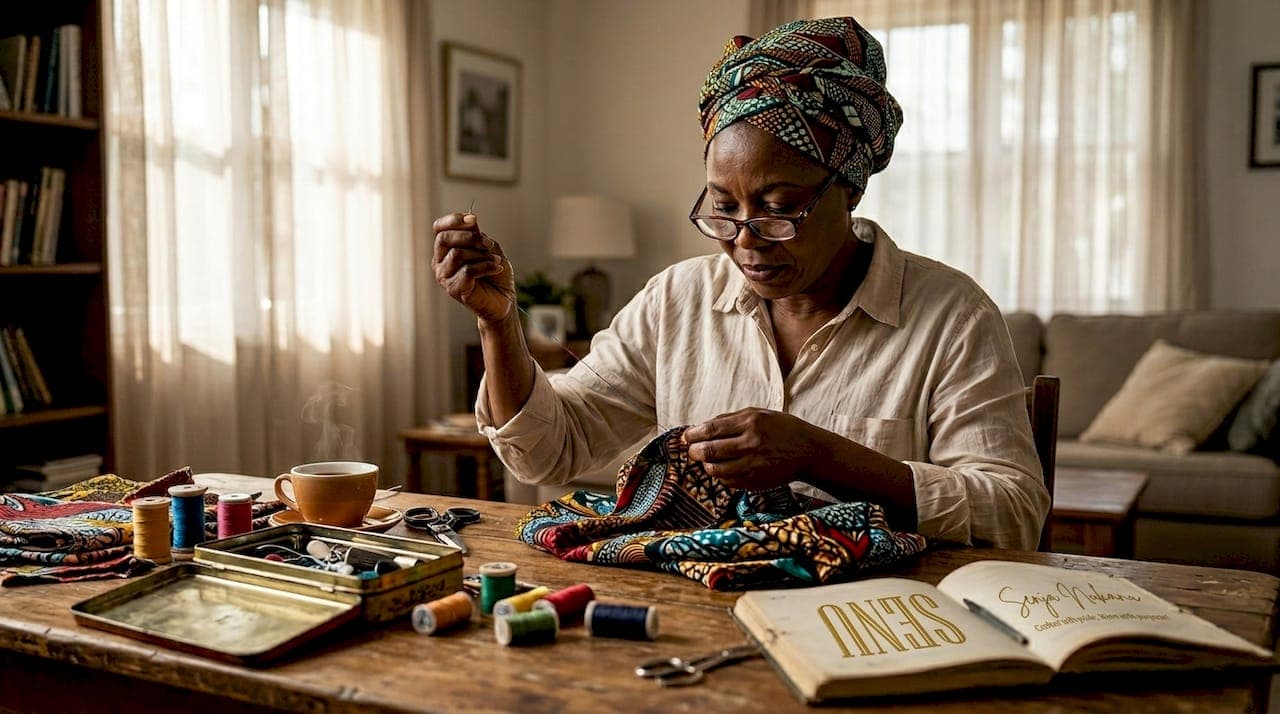
Most people hear "African heritage apparel" and picture bold Ankara prints splashed across a dress or a matching set. That image is beautiful, but it only scratches the surface. These garments carry something far more powerful than pattern and color. These textiles function as cultural archives, communicating proverbs, social hierarchy, life transitions, and oral traditions that have been passed down across generations. When you wear a piece rooted in West African heritage, you are not just making a style choice. You are participating in a living story, honoring the artisans who made it, and standing for something that matters.
Table of Contents
- What makes apparel authentically African heritage
- Cultural stories woven into every garment
- Ethical production and artisan empowerment
- How to choose and style African heritage apparel
- Why true African heritage apparel is more than a trend
- Discover vibrant African heritage styles
- Frequently asked questions
Key Takeaways
| Point | Details |
|---|---|
| Authentic apparel signals culture | True African heritage apparel is rooted in cultural storytelling, not just vibrant prints. |
| Ethical choices empower artisans | Choosing ethically made garments directly supports artisan communities and preserves tradition. |
| Intentional styling sustains heritage | Consciously selecting and caring for your apparel maintains its cultural and ethical impact. |
| Mass production risks authenticity | Fast fashion dilutes cultural meaning and craftsmanship, highlighting the need for informed choices. |
What makes apparel authentically African heritage
Having established the myth, let's unpack what truly makes apparel "African heritage" by going beyond surface prints to its core meaning.
One of the most surprising facts about African prints is their origin. Ankara prints originated from Dutch wax processes, introduced through colonial trade routes, and were later transformed into powerful cultural symbols by African traders who reclaimed and redefined them. That reclamation is itself a story of resilience. The fabric did not begin as African, but the meaning woven into it absolutely is.
Authentic African heritage apparel is defined by three core elements: cultural meaning, artisan craftsmanship, and ethical production. A garment that checks all three is a world apart from a mass-produced item printed with an African-inspired motif. Understanding fashion storytelling examples helps you see why the difference matters deeply.
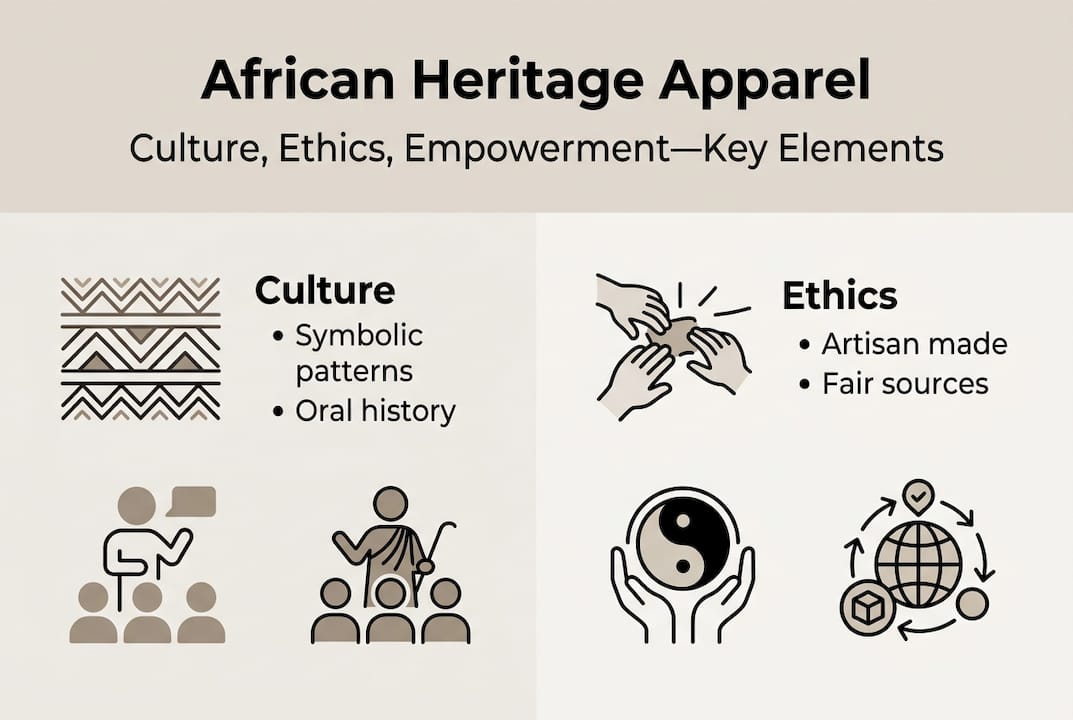
Here is a quick comparison to bring this to life:
| Feature | Authentic heritage apparel | Fast fashion imitation |
|---|---|---|
| Materials | Traditional or locally sourced fabrics | Synthetic or generic imports |
| Production | Artisan-made, limited quantity | Mass-produced, factory line |
| Cultural meaning | Encoded stories, proverbs, traditions | Surface-level print only |
| Ethical impact | Empowers artisans and communities | Often exploitative labor |
| Longevity | Built to last, heirloom quality | Trend-driven, disposable |
When you look at a garment through this lens, the question shifts from "Does it look African?" to "Does it carry African meaning?" The role of craftsmanship in fashion is what bridges those two questions.
Key markers of authenticity to look for include:
- Handcrafted or small-batch production by skilled artisans
- Traditional materials such as kente cloth, adire, or hand-dyed fabrics
- Transparent sourcing that names the artisans or communities involved
- Cultural context shared by the brand, explaining the garment's significance
- Ethical pricing that reflects fair wages and sustainable practices
"Every stitch carries the spirit of a legacy" is not just a phrase. It is a standard you can hold every purchase to.
Authentic pieces are not just clothing. They are cultural archives communicating proverbs and traditions that would otherwise fade without conscious preservation.
Cultural stories woven into every garment
Now that we understand authentic heritage markers, let's explore how these garments actively tell stories and signal meaning within communities.
Textile storytelling in West Africa operates on a level that most Western fashion has never attempted. Fabrics do not just decorate the body. They speak. A garment's pattern, color, and even the direction of its motif can communicate a person's social status, mark a life transition like marriage or mourning, or carry a proverb that the wearer wants to embody. Some fabrics in Ghanaian communities have been used to signal divorce or even calls for help, functioning as wearable messages in a shared cultural language.
Here are four ways African textiles carry cultural narratives:
- Proverbs encoded in pattern: Adinkra symbols from Ghana each represent a philosophical idea, such as adaptability, unity, or the importance of learning from the past.
- Social hierarchy signaled through fabric: Kente cloth, woven in specific color combinations, historically indicated royalty, spiritual leadership, or community standing.
- Life transitions marked by garment choice: Specific fabrics are worn at births, funerals, weddings, and coming-of-age ceremonies, marking the wearer's place in the community story.
- Oral tradition preserved through design: When written records were scarce, textiles carried cultural memory, ensuring that values and histories survived across generations.
The Kanga cloth of East Africa offers another vivid example. Each Kanga is printed with a Swahili proverb along its border, making the garment a literal conversation starter and a piece of wearable wisdom. This tradition of textile as text is not unique to one region. It runs through the fabric of the entire continent.
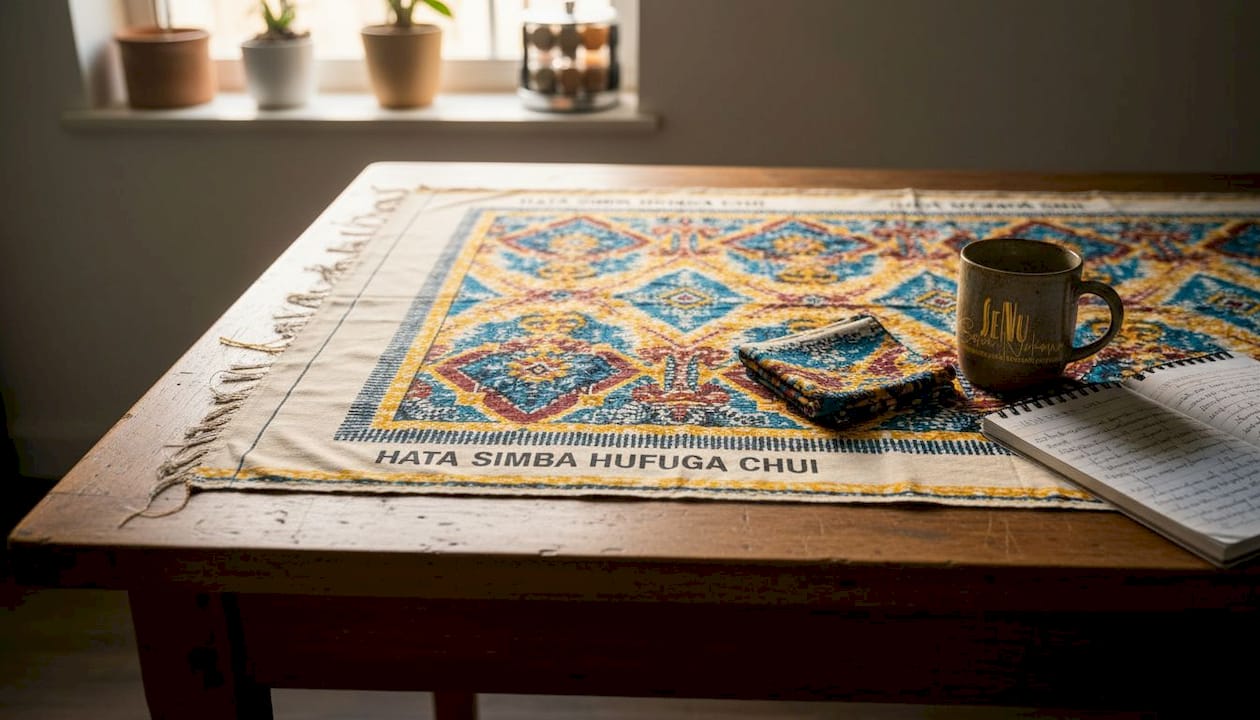
Pro Tip: Before you wear a heritage piece to a special occasion, take a moment to learn the story behind its pattern or fabric. That knowledge transforms how you carry yourself and how others experience your style.
Knowing how to care for these garments is just as important as understanding their meaning. Proper care ensures the story survives. You can find detailed guidance on caring for African fabrics to keep your pieces vibrant and intact for years to come.
| Textile | Origin | Cultural signal |
|---|---|---|
| Kente cloth | Ghana | Royalty, celebration, identity |
| Adire | Nigeria (Yoruba) | Community, spiritual meaning |
| Kanga | East Africa | Proverbs, personal messages |
| Bogolan (Mudcloth) | Mali | Rites of passage, protection |
Ethical production and artisan empowerment
Cultural stories require protection, so let's examine how ethical production sustains those stories and empowers artisans.
Mass production and fast fashion erode authenticity, stripping garments of their cultural meaning and replacing skilled artisan work with exploitative factory labor. When a heritage textile is replicated cheaply at scale, the community that created it receives nothing. The story is copied but the storyteller is erased.
Ethical production flips that dynamic entirely. When a brand commits to small-batch, artisan-made apparel with transparent sourcing, every purchase becomes a direct investment in a community. The artisan earns a fair wage. The tradition survives. The garment carries genuine meaning because the person who made it poured genuine skill into it.
Here is what ethical production looks like in practice:
- Fair wages paid directly to artisans, not filtered through exploitative middlemen
- Small-batch or limited-quantity production that preserves quality and cultural integrity
- Community partnerships that give artisans creative agency, not just labor roles
- Sustainable materials that reduce environmental harm and honor traditional methods
- Transparent storytelling from brand to buyer about who made the garment and how
Exploring sustainable fashion trends reveals just how much momentum this movement has built, especially among conscious consumers in the U.S. who want their wardrobe to reflect their values.
Pro Tip: When evaluating a brand, ask one simple question: "Can they tell me who made this?" If the answer is yes and includes a name, a community, or a region, that is a strong signal of genuine ethical commitment.
The choice to buy ethically made African heritage apparel is not just a personal style statement. It is a vote for a world where modern West African style thrives on its own terms, driven by the communities that created it.
How to choose and style African heritage apparel
Having explored ethical production, let's make it practical. Here is how you can select and wear African heritage apparel intentionally.
Revival through sustainable luxury is possible when you make intentional choices at every step, from the moment you discover a piece to the way you care for it over time. Intentionality is the thread that connects all of it.
How to identify authentic heritage apparel:
- Look for brands that name their artisans or production communities
- Read the product description for cultural context, not just style notes
- Check for natural or traditional materials rather than generic synthetics
- Favor limited-quantity pieces over mass-produced runs
- Seek out brands with clear ethical sourcing policies
How to style for different occasions:
- Everyday wear: A vibrant heritage dress paired with minimal accessories lets the fabric speak. Let the garment be the statement.
- Special occasions: A full matching set in kente-inspired fabric or adire print signals celebration and cultural pride without needing explanation.
- Statement layering: A heritage jacket worn over a simple outfit bridges cultures beautifully, honoring tradition while fitting a modern wardrobe.
- Intentional gifting: Giving a heritage piece as a gift, along with its cultural story, transforms a fashion item into a meaningful gesture.
Caring for your pieces ensures they last and retain their significance. Hand wash or use a gentle machine cycle with mild detergent, air dry away from direct sunlight, and store folded rather than hung to preserve fabric integrity. Learning more about supporting artisan fashion gives you even more ways to engage beyond the purchase itself.
For women navigating U.S. style contexts, fashion empowerment tips can help you wear these pieces with the confidence and context they deserve.
Why true African heritage apparel is more than a trend
Fashion trends come and go in cycles, and African-inspired prints have had their moments in mainstream Western fashion, often celebrated loudly and then quietly shelved when the next wave arrives. We want to say this clearly: authentic African heritage apparel is not a trend. It never was.
The garments rooted in West African tradition carry meaning that does not expire with a season. The proverbs woven into adinkra patterns are as relevant today as they were centuries ago. The artisan who hand-stitches a piece in a small community in Ghana is not producing a trend item. She is preserving a living culture.
For fashion-conscious women in the U.S., choosing authentic heritage apparel is an act of cultural solidarity and personal empowerment. It says something about who you are and what you value. Exploring sustainable fashion principles deepens that understanding and keeps your choices grounded in something lasting. The empowerment that comes from wearing a garment with genuine cultural roots outlasts any trend cycle. That is the kind of style that ages beautifully.
Discover vibrant African heritage styles
You now have the context, the criteria, and the confidence to choose African heritage apparel with real intention. The next step is finding pieces that live up to everything we have explored together.
At Sena Nukunu, every piece in our collection is crafted with cultural pride, ethical production, and artisan empowerment at its core. From statement dresses to vibrant matching sets, each garment tells a story worth wearing. Shop African dresses to find your next statement piece, view our collections to explore the full range of West African inspired styles, or explore vibrant styles and discover the heritage behind every design. Your wardrobe can be a celebration of culture, craft, and conscious choice.
Frequently asked questions
What distinguishes authentic African heritage apparel from mainstream 'African print' clothing?
Authentic apparel features cultural storytelling, traditional materials, artisan craftsmanship, and ethical production. Ankara prints originated from Dutch wax processes and were reclaimed as cultural symbols by African traders, making the meaning behind the fabric just as important as the fabric itself.
How do African textiles communicate cultural narratives?
Textiles encode proverbs, social signals, and life transitions, making them wearable storytelling tools. These textiles function as cultural archives, communicating social hierarchy and oral traditions that have been preserved across generations.
Why is ethical production important for African heritage apparel?
Ethical production preserves cultural traditions and empowers artisans by supporting sustainable, community-driven fashion. Mass production erodes authenticity and strips garments of the meaning and craftsmanship that make them genuinely valuable.
How can I responsibly care for African heritage garments?
Hand wash or use a gentle machine cycle with mild detergent, air dry away from direct sunlight, and store folded to protect the fabric. African textiles require care to preserve both their beauty and the cultural heritage they carry.