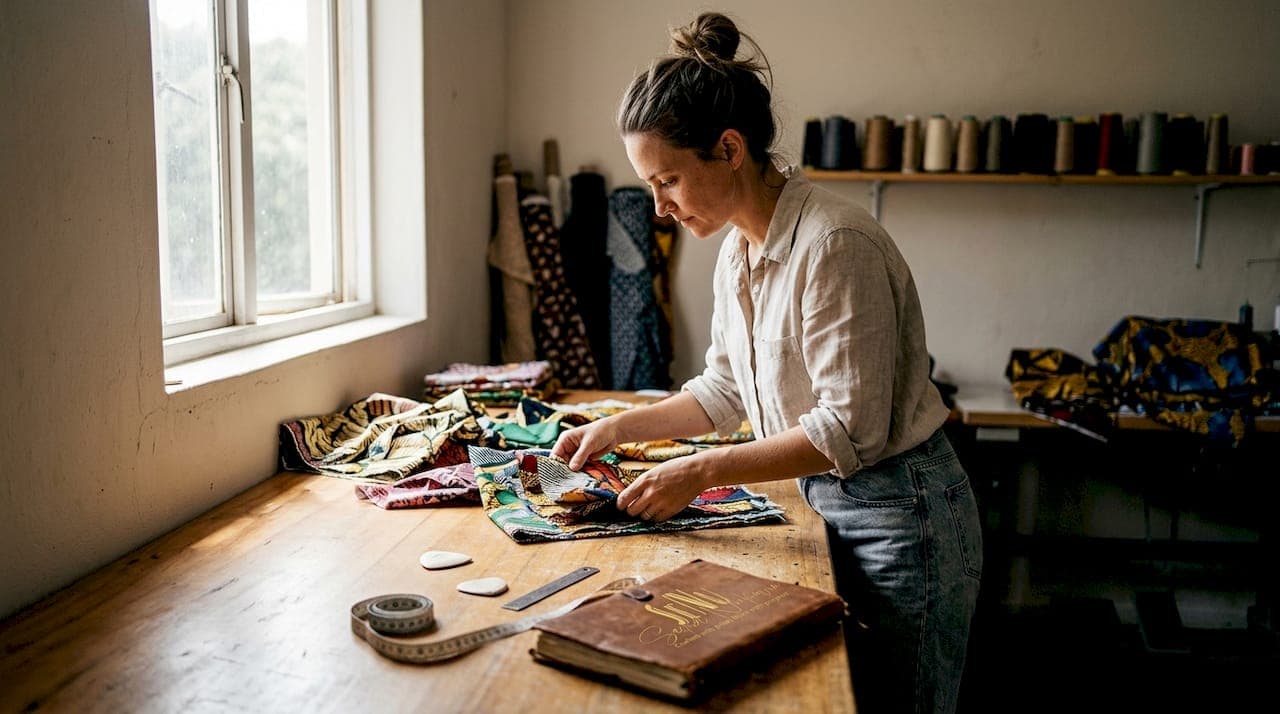
What you wear tells a story before you speak a single word. For too long, fashion has been reduced to trends and price tags, leaving behind the deeper question of where a garment comes from, who made it, and what it carries forward. Fashion storytelling involves embedding narratives of heritage, craftsmanship, and ethics into garments to create emotional connections that outlast any season. This article walks you through what genuine fashion storytelling looks like, how to evaluate it, and which West African brands are setting the standard for culturally rich, ethically made clothing.
Table of Contents
- Understanding fashion storytelling: What sets it apart
- Criteria for meaningful fashion storytelling
- West African fashion storytelling: Standout examples
- International benchmarks: Global storytelling campaigns
- Edge cases and challenges: Authenticity, fusion, and scaling
- Fashion storytelling comparison table: Artisan vs. global
- Discover statement pieces inspired by African heritage
- Frequently asked questions
Key Takeaways
| Point | Details |
|---|---|
| Storytelling adds value | Clothing with embedded stories creates stronger emotional connections and signals ethics. |
| Artisan partnerships matter | Brands working directly with artisans offer authenticity and support local livelihoods. |
| West African heritage stands out | Made-to-order and culturally symbolic pieces honor tradition while reducing waste. |
| Compare global and local | International brands focus on reach, but local brands emphasize cultural provenance. |
| Consumers influence impact | Your choices support fashion that preserves heritage, empowers artisans, and values sustainability. |
Understanding fashion storytelling: What sets it apart
Fashion storytelling is not a marketing buzzword. It is the practice of weaving personal, cultural, and ethical narratives directly into the design, production, and presentation of clothing. When a brand shares the name of the artisan who wove a fabric, or explains the ancestral meaning behind a print, the garment becomes more than an object. It becomes a carrier of identity.
Brands that do this well use several tools: founder origin stories that ground the label in lived experience, artisan collaborations that bring traditional techniques into contemporary silhouettes, and cultural symbols that communicate belonging and pride. The impact of narrative branding on consumer loyalty is well documented, and it is especially powerful in communities where clothing has always carried social and spiritual meaning.
"Storytelling differentiates ethical brands by turning clothing into cultural artifacts with provenance, appealing to consumers valuing sustainability and heritage over fast fashion."
This is why exploring collections with cultural symbolism feels different from browsing a generic retailer. You are not just selecting a color or a cut. You are choosing a piece of a living tradition.
Criteria for meaningful fashion storytelling
With a clear sense of what storytelling can achieve, let's pinpoint how to tell genuine stories and avoid superficial narratives. Not every brand that uses African prints or references heritage is practicing authentic storytelling. Here is a framework you can use to evaluate any brand's claims.
- Transparency in the supply chain. Ethical brands share where materials come from, who processes them, and under what conditions. Co-creation with artisans and transparency in supply chains are core methodologies of brands that take storytelling seriously.
- Direct artisan collaboration. Look for evidence of fair royalties, named partnerships, and artisan-led design input. A brand that credits its makers is one that respects them.
- Cultural authenticity. Genuine storytelling preserves heritage rather than flattening it for mass appeal. This means working with communities, not extracting from them.
- Visual and media narratives. Short films, behind-the-scenes content, and founder memoirs are signs that a brand is committed to showing its process, not just its product.
- Longevity and meaning. Pieces designed to last, both physically and emotionally, signal a brand that values depth over volume.
The scale of opportunity here is significant. African textile exports reach approximately US$15.5 billion, and with under-25s making up 50% of Africa's population, demand for culturally resonant fashion is only growing. Brands that invest in regenerative supply chains are positioning themselves for long-term relevance.
Pro Tip: Before purchasing from a brand that claims cultural inspiration, search for the names of the artisans or communities involved. If you cannot find them, the story may be incomplete.
You can also explore sustainable retail models with storytelling to understand how brands structure their offerings around these values.
West African fashion storytelling: Standout examples
Now that you know what to look for, let's examine West African brands creating meaningful narratives and ethical pieces. Three names stand out for their commitment to both craft and cultural integrity.
- Dahomey Paris uses Adire dyeing, a resist-dyeing technique rooted in Yoruba heritage, to create luxury pieces that carry centuries of artistic tradition into contemporary fashion.
- KÍLÉNTÁR hand-sources Aso Oke and Adiré fabrics directly from Nigerian female artisans, producing made-to-order sustainable womenswear that reduces waste and empowers makers.
- OBIDA CULTURE waxes unique motifs onto Funtua cotton, honoring West African roots through a process that is as intentional as it is beautiful.
These brands share a commitment to artisan empowerment and limited production, which reduces waste and keeps cultural integrity intact. The made-to-order model, in particular, is a powerful statement: every piece exists because someone chose it, not because a factory overproduced it.
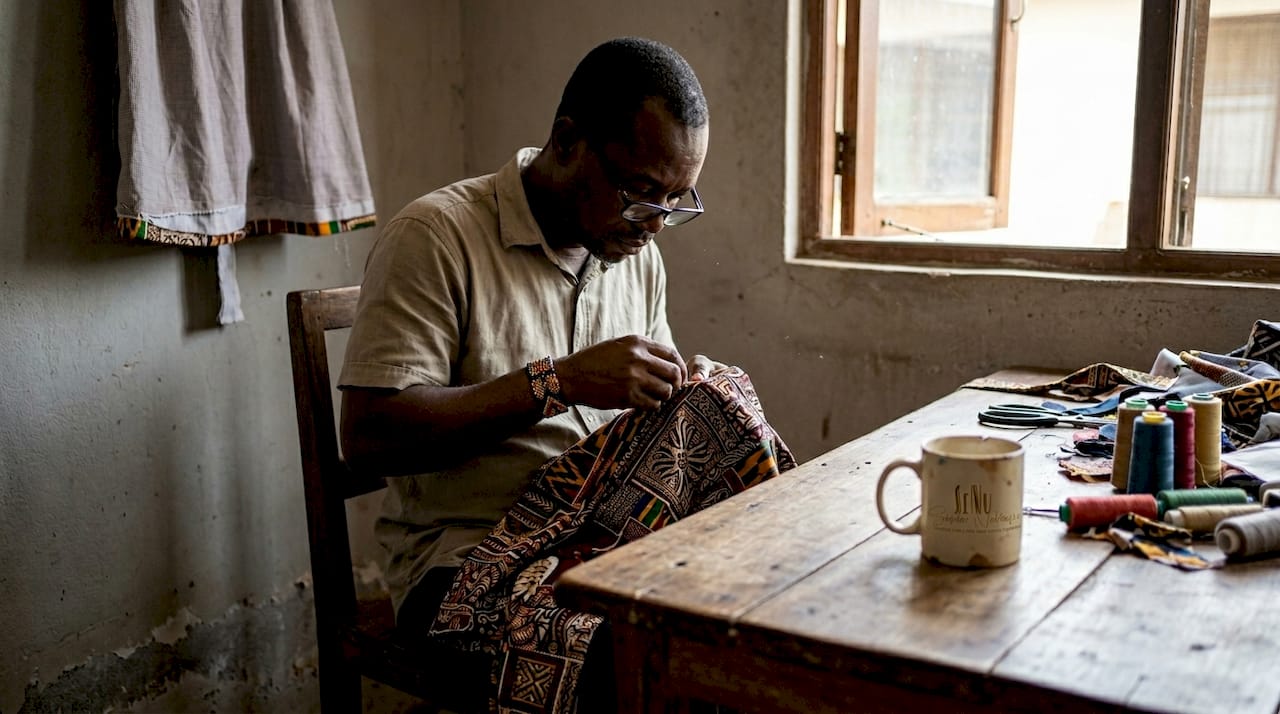
For readers who want to experience this kind of intentionality firsthand, heritage-inspired two-piece sets and West African print pants are excellent starting points for building a wardrobe with meaning.
It is also worth noting the nuance around hybrid styles and cultural integrity. Fusion fashion, which blends West African aesthetics with Western silhouettes, can be a bridge or a barrier depending on how it is handled. The difference lies in intention and community involvement.
International benchmarks: Global storytelling campaigns
With regional examples explored, let's benchmark these against major international storytelling campaigns to understand the contrast in scale and approach.
Levi's is one of the most cited examples of large-scale narrative branding. Their campaigns achieved 6.4 billion impressions through storytelling that connected personal transformation with the brand's denim legacy. That is an extraordinary reach, and it demonstrates how powerful a well-crafted narrative can be at scale.
"The difference between global campaigns and artisan-led storytelling is not quality. It is proximity. One speaks to millions; the other speaks to you."
Christy Dawn offers a contrasting model. Rather than chasing impressions, the brand focuses on regenerative farming partnerships and small-batch production, building loyalty through radical transparency. Their consumer base is smaller but deeply committed.
| Approach | Scale | Cultural depth | Consumer loyalty | Waste impact |
|---|---|---|---|---|
| Global campaign (e.g., Levi's) | Billions of impressions | Moderate | Broad but shallow | Higher production volume |
| Artisan-led (e.g., KÍLÉNTÁR) | Community-scale | Very high | Deep and sustained | Minimal, made-to-order |
| Regenerative brand (e.g., Christy Dawn) | Niche | High | Strong and values-driven | Low, small-batch |
For readers drawn to African textile export statistics and the broader economic picture, these contrasts matter. Supporting artisan-led brands is not just a personal choice. It is a contribution to a living cultural economy. You can also explore retail-driven campaigns with symbolism that bring this balance to life.
Edge cases and challenges: Authenticity, fusion, and scaling
Beyond major success stories, real challenges emerge at the crossroads of authenticity and expansion. Growing an ethical fashion brand without compromising its values is one of the hardest problems in the industry.
Balancing authenticity with commodification is a tension every storytelling brand faces. Magnolia Pearl, for example, built a fashion empire on narrative and generosity, but scaling that model required constant vigilance to avoid diluting the original spirit. The same risk applies to West African brands that attract international attention.
Pro Tip: When a brand you love begins to scale rapidly, check whether their artisan partnerships and sourcing practices are still named and verifiable. Growth should not erase the story.
Here are the key questions to ask when evaluating any brand navigating this tension:
- Are the artisans still named and compensated fairly as the brand grows?
- Has the production model shifted from limited to mass quantities?
- Is the cultural community involved in design decisions, or just referenced in marketing?
- Does the brand acknowledge innovative hybrids honestly, or present fusion as pure tradition?
For those interested in brands that are actively working through these questions, exploring made-to-order womenswear and heritage-inspired fashion offers a window into how ethical scaling can look in practice.
Fashion storytelling comparison table: Artisan vs. global
To close the loop, let's put the different storytelling strategies side-by-side so you can decide what resonates most with your values and your wardrobe.
Pure heritage preservation versus innovative hybrids represents a genuine spectrum, and slow fashion yields loyalty but slower growth compared to fast fashion's volume. Neither approach is inherently wrong, but they serve different purposes and different consumers.
| Dimension | Artisan-led brands | Global campaigns | Hybrid/fusion brands |
|---|---|---|---|
| Cultural integrity | Very high | Variable | Moderate |
| Artisan involvement | Direct and named | Rarely featured | Sometimes included |
| Production model | Limited or made-to-order | Mass production | Mixed |
| Consumer impact | Deep, values-aligned | Broad awareness | Trend-driven |
| Longevity of pieces | High | Moderate | Variable |
| Price point | Mid to premium | Wide range | Mid range |
This table is a starting point, not a verdict. Your values will guide which column matters most to you. If cultural integrity and artisan empowerment are your priorities, artisan-led brands are your natural home. If you want broad cultural exposure with occasional depth, hybrid brands can offer that bridge. Explore heritage-driven collections to see how these values translate into actual garments you can wear and cherish.
Discover statement pieces inspired by African heritage
Every piece in the Sena Nukunu collection carries a story worth wearing. Rooted in West African heritage and crafted with ethical intention, each design reflects the artistry, resilience, and pride of a living cultural tradition. If the storytelling principles in this article resonate with you, the next step is simple: find a piece that speaks to your identity.
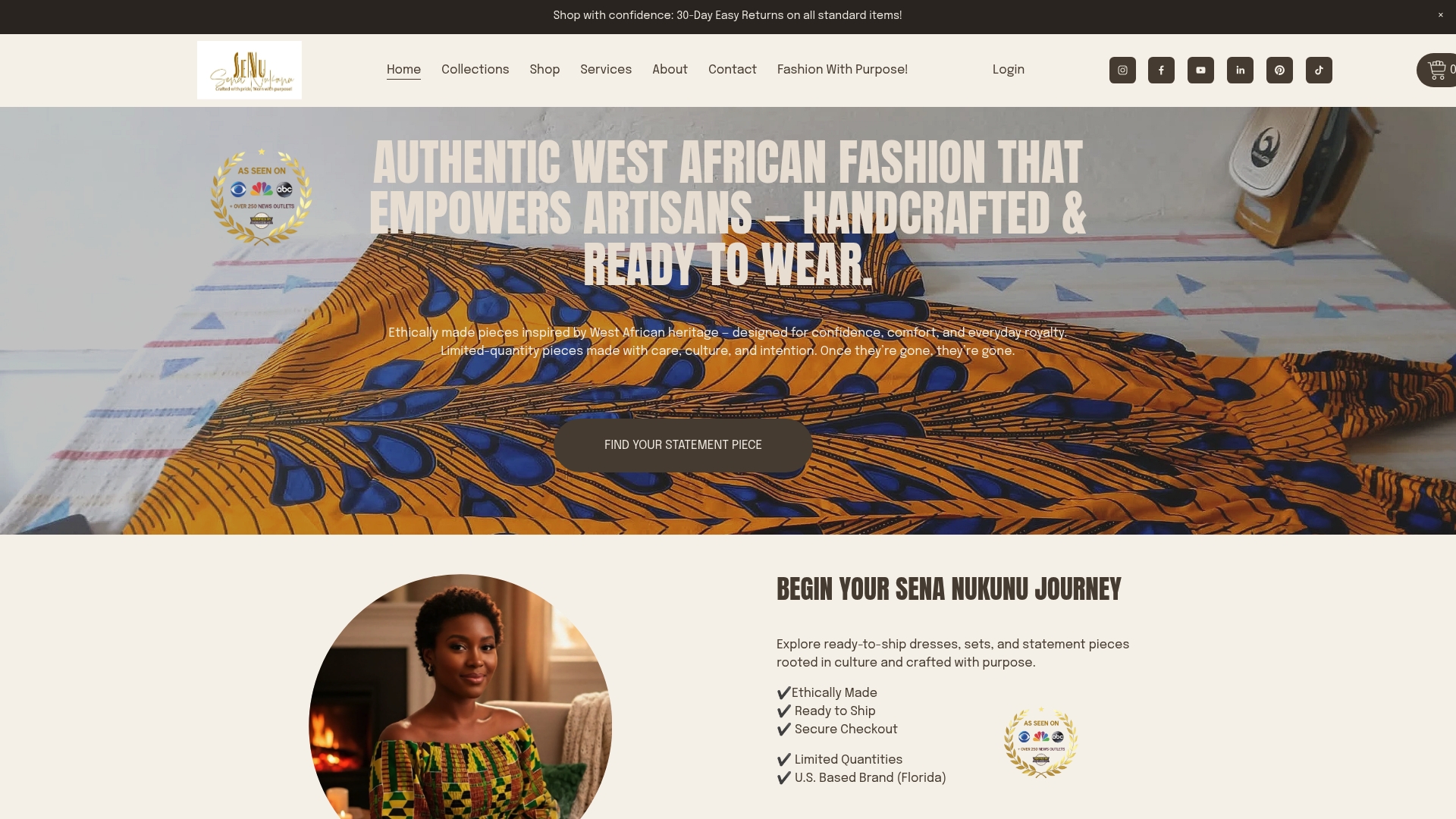
From vibrant prints to intricate silhouettes, explore vibrant styles that honor the legacy of West African craftsmanship. Browse heritage collections curated with care and purpose, or discover the bold beauty of the sankofa flame palazzo pants, a statement piece that bridges tradition and contemporary style. When you choose Sena Nukunu, you are not just buying clothing. You are joining a community that believes fashion can be a force for cultural pride and meaningful change.
Frequently asked questions
What makes fashion storytelling different from simple branding?
Fashion storytelling embeds cultural, ethical, and artisan narratives into each piece, creating emotional connections that transcend slogans or logos. Simple branding communicates identity; storytelling builds it into the fabric itself.
How can I identify authentic artisan collaboration in fashion?
Look for brand transparency, clear sourcing information, and evidence of direct partnership or fair royalties given to artisans. Co-creation with artisans and supply chain transparency are the clearest signals of genuine collaboration.
Is West African heritage fashion more sustainable than mainstream brands?
Many West African heritage brands prioritize limited production and made-to-order models, which helps reduce waste and empower artisans. This stands in sharp contrast to the overproduction cycles common in mainstream fashion.
Do global storytelling campaigns offer the same cultural value as local brands?
Global campaigns often focus on mass engagement and volume, while local brands prioritize authenticity, heritage, and deeper connections. Slow fashion yields loyalty but slower growth compared to fast fashion's volume, and that trade-off is often worth it for culturally conscious consumers.