
TL;DR:
- Conscious fashion emphasizes mindful choices, cultural respect, and ethical production processes.
- It involves principles like the 7 R's which promote sustainable wardrobe habits.
- Authentic artisan and African heritage fashion support community empowerment and challenge fast fashion.
Conscious fashion is not simply about swapping synthetic fabrics for organic cotton. That common misconception keeps many shoppers from exploring the full depth of what intentional dressing can mean. Conscious fashion is clothing created, engaged with, and cared for mindfully and in a socially and environmentally responsible manner, emphasizing awareness of the industry's harms. It is a practice that weaves together cultural respect, ethical production, artisan empowerment, and personal identity. When you choose a piece thoughtfully, you are casting a vote for the kind of world, and the kind of wardrobe, you want to stand in.
Table of Contents
- Defining conscious fashion: More than just 'eco-friendly'
- The 7 R's and the practice of mindful wardrobe choices
- Social and cultural dimensions: African heritage and artisan empowerment
- Spotting greenwashing: Certifications, transparency, and what to watch out for
- Our perspective: The empowerment hidden in every conscious fashion choice
- Discover vibrant conscious fashion you'll love
- Frequently asked questions
Key Takeaways
| Point | Details |
|---|---|
| Mindful clothing matters | Conscious fashion is about intentional, informed choices that benefit people and the planet. |
| The 7 R’s framework | Applying the 7 R’s helps reshape habits, reduce waste, and support ethical production. |
| Culture and community first | Choosing artisanal and African heritage styles uplifts communities and honors cultural craftsmanship. |
| Beware greenwashing | Verify brand claims through transparency and recognized certifications to avoid misleading marketing. |
Defining conscious fashion: More than just 'eco-friendly'
Now that we have a common understanding, let's unpack what truly sets conscious fashion apart at every level of the process.
The word "sustainable" gets tossed around freely in fashion marketing, but it carries a heavy load of debate. Many critics argue that true zero-impact fashion is an impossible standard, one that leaves shoppers feeling defeated before they even begin. Conscious fashion is preferred precisely because it centers mindfulness rather than zero-impact perfection, recognizing that awareness and intentional action are far more achievable and meaningful goals. It shifts the conversation from guilt to empowerment.
The distinction matters in practical terms. Calling something "eco-friendly" often signals a narrow focus on materials, perhaps recycled polyester or organic linen, without addressing the people who cut, stitch, and finish every garment. Conscious fashion asks a fuller set of questions: Who made this? Were they paid fairly? Does this design honor or appropriate a cultural tradition? What happens to this piece when I no longer wear it? Every answer shapes the moral weight of your wardrobe.
"Conscious fashion is about mindfulness rather than zero-impact perfection. The word 'sustainable' carries baggage and ongoing debates about its impossibility, making 'conscious' a more honest and actionable framework for most people." — Conscious Style
What conscious fashion includes and what it leaves behind are two very different lists. Here is how to think about it clearly:
Conscious fashion DOES include:
- Cultural storytelling and respect for heritage traditions, as explored in these fashion storytelling examples
- Transparent supply chains that name and pay artisans equitably
- Garments designed to last seasons, not trends
- Buying practices guided by need and intention, not impulse
- Celebrating identity, including West African culture-inspired fashion, as a form of self-expression
Conscious fashion does NOT mean:
- Throwing out your entire wardrobe overnight to buy all-new "green" pieces
- Paying a premium only to receive vague environmental claims with no evidence
- Treating cultural clothing as a costume rather than a living tradition
Your personal and cultural identity is at the heart of every truly conscious choice. When you put on a piece that reflects your heritage or honors someone else's, you are participating in a conversation that stretches across generations and borders. That is a level of meaning no label or certification alone can manufacture.
The 7 R's and the practice of mindful wardrobe choices
Having explored the philosophy, let's look at how conscious fashion becomes a daily habit through actionable principles.
The 7 R's of conscious fashion are Rethink, Refuse, Reduce, Reuse, Repair, Repurpose, and Recycle. Together, they form a framework for operating within planetary boundaries while respecting both human and animal rights. They also reflect a principle called sufficiency, meaning knowing when enough is truly enough. Understanding what each R calls you to do makes the practice feel grounded and realistic, not overwhelming.
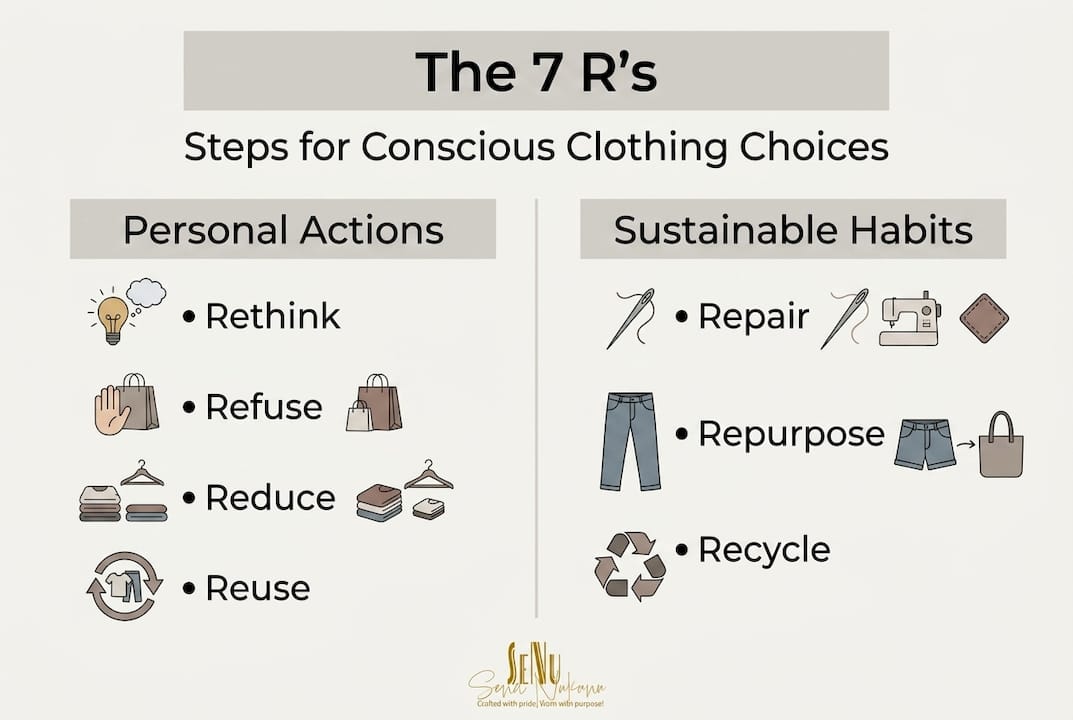
| R | What it means | Real-world wardrobe action |
|---|---|---|
| Rethink | Question your purchasing habits and values | Ask "do I truly need this?" before buying |
| Refuse | Say no to harmful production practices | Decline fast fashion produced in unsafe conditions |
| Reduce | Buy less, but better quality | Invest in fewer, more versatile statement pieces |
| Reuse | Extend the life of what you already own | Rotate and style existing pieces in new ways |
| Repair | Fix instead of discard | Mend a loose seam or restore a faded color |
| Repurpose | Give pieces a new function | Transform an old wrap skirt into a headwrap or shawl |
| Recycle | Responsibly end a garment's life cycle | Donate, swap, or return to brand take-back programs |
Applying the 7 R's does not require a dramatic lifestyle overhaul. You can start small, right now, with these steps:
- Audit your closet. Pull out pieces you haven't worn in six months. Identify what still fits your lifestyle and what could be donated or repurposed before a new purchase enters your space.
- Set a conscious intention before shopping. Decide ahead of time what gap in your wardrobe you are filling, and stick to it. Browsing without intention is where impulse purchases take root.
- Research one brand deeply. Choose one label you love and spend 15 minutes learning about where their fabric comes from, who sews the pieces, and what happens if a garment is defective. You will quickly see the difference between transparency and marketing language.
- Practice repair before replacement. The next time a favorite piece needs attention, seek out a local tailor or try a simple hand stitch. This habit alone reshapes how you value clothing over time.
- Celebrate cultural craftsmanship. Seek out pieces with a story. Handcrafted apparel rooted in living traditions carries its own form of sustainability through the preservation of skill and meaning.
Pro Tip: Before purchasing any new piece, check whether it satisfies at least three of the 7 R's. Ask yourself: Can I Reuse it in multiple ways? Would I Repair it if something went wrong? Does it Reduce my need to buy something else? If the answer to all three is yes, that piece earns a place in your conscious wardrobe. Exploring the sustainable fashion meaning behind a brand's mission can also reveal whether their values align with yours before you invest.
Social and cultural dimensions: African heritage and artisan empowerment
While daily choices matter, the cultural and social impact of fashion runs even deeper.
Conscious fashion, at its most vibrant, is an act of community care. Purpose-driven fashion integrates cultural respect and community empowerment beyond just environmental sustainability, and practices from the Global South, including slow-made artisanal clothing, directly challenge the Western overproduction model that has dominated retail for decades. When you choose an artisan-made piece, your investment travels back to the hands that shaped it, sustaining livelihoods and keeping ancient techniques alive.
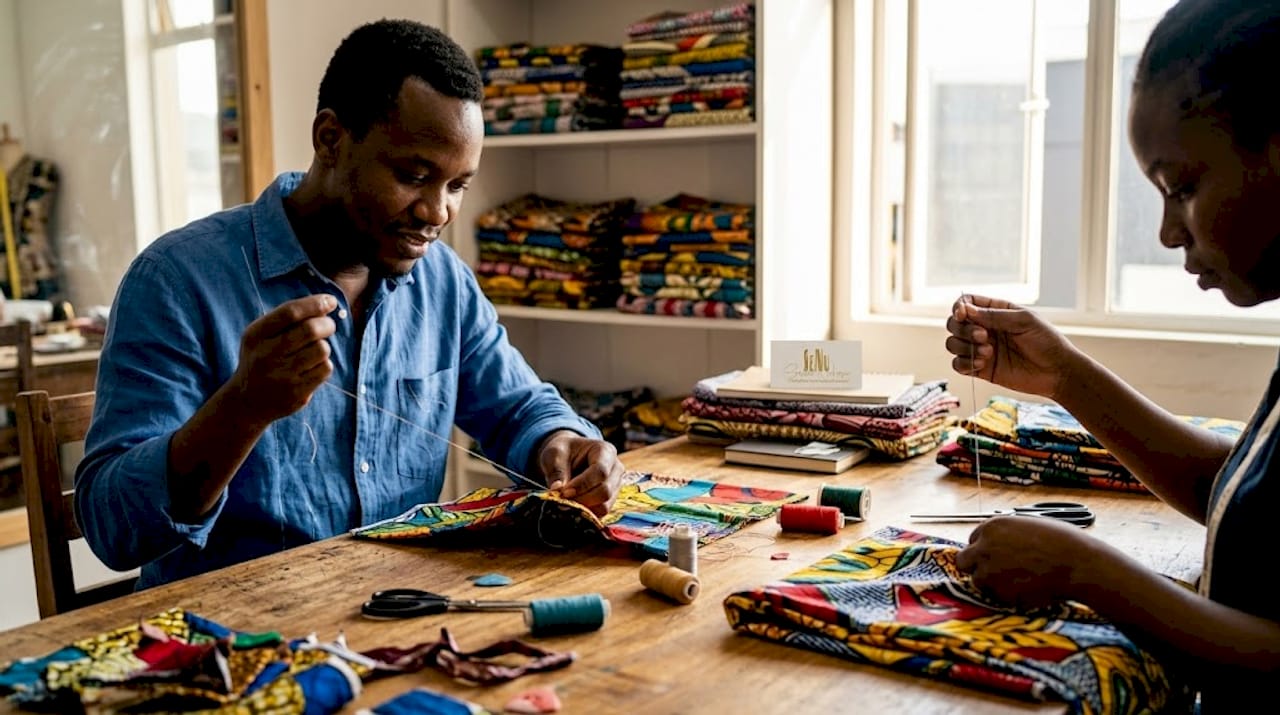
West African fashion traditions are particularly rich in this regard. Wax print fabrics, hand-loomed kente, adire indigo dyeing, and embroidered boubou styles are not trends. They are living cultural texts, read by communities across generations. Supporting artisan fashion means supporting the women and men who carry this knowledge, ensuring it is not lost to mass production or misappropriation.
| Attribute | Fast fashion | Slow-made artisan fashion |
|---|---|---|
| Production speed | Days to weeks | Weeks to months per piece |
| Labor conditions | Often anonymous, underpaid | Named artisans, equitable wages |
| Cultural value | Trend-driven, disposable | Heritage-rooted, enduring |
| Environmental footprint | High waste, synthetic materials | Low waste, natural or traditional fibers |
| Personal connection | None | Every piece carries a maker's story |
The key cultural elements you will find woven into conscious African fashion include:
- Symbolic textile patterns that communicate identity, status, and history, not just aesthetics
- Natural dyes and fibers sourced within the region, honoring ecological relationships that local communities have tended for centuries
- Intergenerational skill transfer, where techniques pass from grandmother to granddaughter, preserving knowledge no factory algorithm can replicate
- Community ownership of the design process, meaning that patterns and motifs belong to the people who originated them
Pro Tip: To recognize genuine artisan work from mass production, look for slight, beautiful irregularities. A handwoven fabric will show subtle variation in thread tension and color saturation. A machine-printed "tribal" pattern will be perfectly uniform. That small imperfection in an artisan piece is not a flaw. It is a fingerprint, proof that human hands and craftsmanship in fashion shaped what you are holding. Also check whether the brand credits the specific community or region of origin for their textiles, because transparency in attribution is a mark of genuine respect. When you explore ready-to-wear African attire, knowing how to spot authentic craftsmanship helps you shop with both confidence and purpose.
Spotting greenwashing: Certifications, transparency, and what to watch out for
To maximize the positive impact of your wardrobe, you need to know how to separate real conscious fashion from misleading marketing.
Greenwashing, the practice of making a brand or product appear more ethical or environmentally responsible than it actually is, is rampant in fashion. The problem is especially sharp with the word "conscious" because, unlike "organic" in food production, the term is vague and unregulated, enabling misleading marketing from brands of every size. This means a company can label a product line "conscious" with no third-party verification, no supply chain disclosure, and no meaningful environmental improvement.
The most glaring example in recent memory involves H&M's Conscious Collection, a line marketed as environmentally responsible while containing only a minimal percentage of sustainable materials. The lesson is clear: a label is not proof of a practice.
"True conscious fashion demands full supply chain disclosure and equitable artisan pay, especially in contexts where artisan communities are the backbone of production." — Sustain the Style, 2026
Knowing what to look for protects both your investment and your values. Here are the certifications and transparency signals you can trust:
- GOTS (Global Organic Textile Standard): Covers organic fiber production, processing, manufacturing, and labeling, with social criteria included
- Fair Trade Certified: Confirms that producers received fair wages and worked in safe conditions
- B Corp Certification: Recognizes companies that meet high standards of social and environmental performance overall, not just in one product line
- Transparent supply chain disclosure: A trustworthy brand names the factories, workshops, or artisans involved in their production and often shares photos, locations, and pay details
- Country of origin labeling: Knowing exactly where a piece was made, down to the specific region or workshop, is a baseline expectation for ethically crafted fashion
- Living wage commitment: The brand publicly states that all workers, including artisans and weavers, earn a living wage, not just minimum wage
When checking for true artisan empowerment and equitable pay, go beyond the About page. Search for a brand's impact reports, annual disclosures, or partnerships with fair trade organizations. Look for brands that share the names and faces of the people who make their pieces, because anonymity is often a shield for poor labor practices. Prioritizing fashion empowerment for women means choosing labels that uplift the women in their supply chains, not just the women who wear their pieces.
Our perspective: The empowerment hidden in every conscious fashion choice
Bringing the conversation full circle, here is why these choices are so transformative, for you and for everyone involved.
We believe that conscious fashion is not a burden of perfection. It is an invitation to stand for something every single day, through what you put on your body. Choosing a piece that carries the story of a West African artisan, stitched with care and guided by generations of knowledge, is one of the most quietly radical acts available to you. It says that beauty has roots, that craft has value, and that your presence in the world deserves to be dressed with intention.
At Sena Nukunu, we have seen firsthand how empowering artisans through fashion creates ripple effects that reach far beyond any single garment. When you invest in a piece that honors heritage, you are not just updating your wardrobe. You are contributing to a living tradition. You are saying yes to the women who dye, weave, and embroider with their whole hearts. Small, intentional choices, made consistently, create a wardrobe that reflects who you truly are and what you genuinely value.
Discover vibrant conscious fashion you'll love
If you're ready to step forward with intention and style, here is where inspiration meets action.
At Sena Nukunu, every piece in our collection is designed to carry meaning and turn heads for all the right reasons. Our empowering dresses celebrate West African heritage through vibrant prints, thoughtful silhouettes, and ethical craftsmanship that you can feel from the moment you slip one on. Looking for something to layer or style for everyday confidence? Our unique blouses bring cultural artistry into every morning routine. Whether you are dressing for a statement moment or simply honoring yourself on an ordinary Tuesday, explore all vibrant styles and find the piece that speaks your values out loud.
Each garment is made in limited quantities, crafted with care, and ready to ship when you are ready to wear your values proudly.
Frequently asked questions
What makes conscious fashion different from sustainable fashion?
Conscious fashion stresses mindful decision-making and respects cultural, social, and environmental aspects together, while "sustainable" often focuses narrowly on environmental impact, carrying baggage from debates about its true achievability.
How can I tell if a fashion brand is truly conscious?
Check for transparent supply chain practices and look for certifications like GOTS or Fair Trade alongside fair artisan pay disclosures clearly published on their website.
What are the 7 R's of conscious fashion?
They are Rethink, Refuse, Reduce, Reuse, Repair, Repurpose, and Recycle, a set of principles guiding more mindful wardrobe habits at every stage of a garment's life.
Why does African heritage play a key role in conscious fashion?
African artisan fashion emphasizes slow creation, community empowerment, and cultural storytelling, and slow-made artisanal clothing from the Global South directly challenges Western fast fashion overproduction models.
What are signs of greenwashing in fashion?
Vague or unverified terms like "conscious", lack of third-party certifications, and poor transparency about who makes a brand's clothing are the most common and telling red flags to watch for.