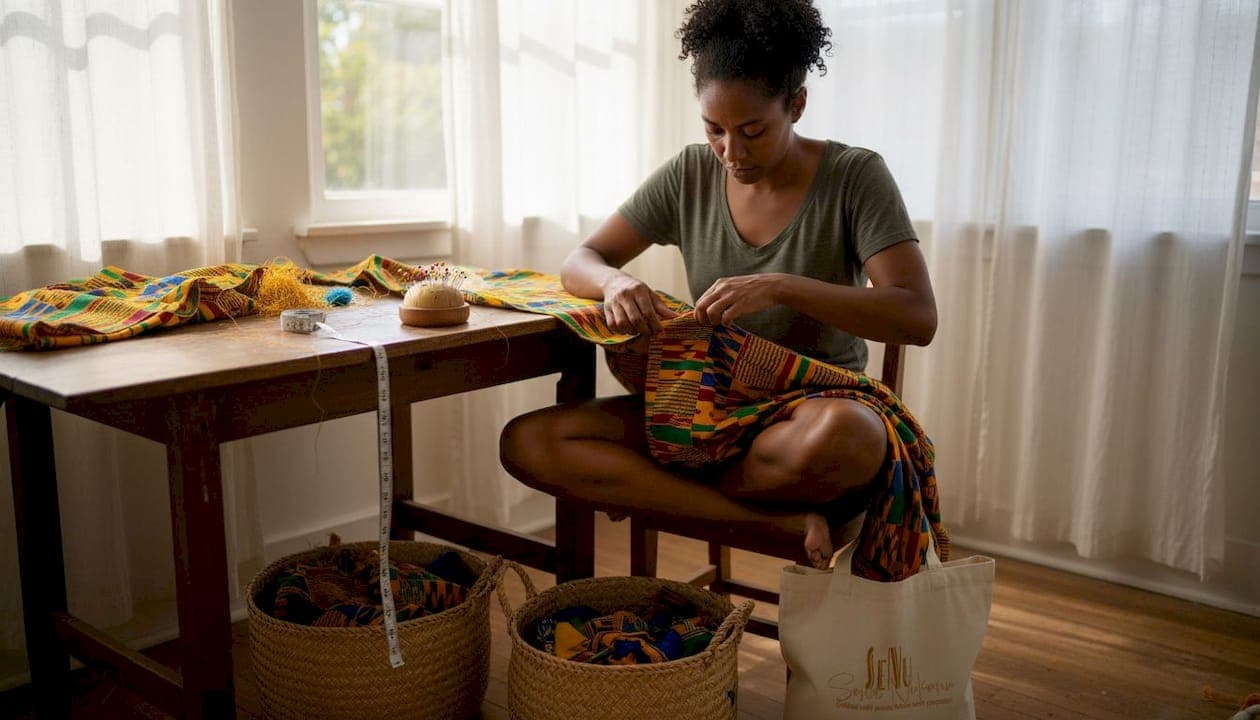
TL;DR:
- Handcrafted apparel is unique, skill-intensive, and rooted in cultural traditions.
- Choosing handcrafted clothing supports ethical labor, cultural preservation, and sustainability.
- High-quality, durable garments have a lower environmental impact and promote artisan communities.
Most people assume that paying less for clothing means getting more value. Fast fashion has built an entire industry on that idea, flooding closets with pieces that fade, fray, and fall apart within months. But what if the real value in fashion isn't found in volume or speed? Handcrafted apparel supports artisan economies, preserves cultural knowledge, and ensures ethical labor by prioritizing skill over mass production speed. When you choose a handcrafted piece, you're not just buying a garment. You're investing in a living tradition, a skilled maker, and a story that no algorithm can replicate. This article explores the cultural depth, ethical weight, quality advantages, and sustainability benefits that make handcrafted apparel genuinely worth your attention.
Table of Contents
- Why handcrafted apparel stands apart
- Cultural heritage and meaning in every piece
- Quality, durability, and environmental impact
- Handcrafted apparel, ethics, and supporting artisan communities
- Our perspective: Why choosing handcrafted is more radical than you think
- Explore vibrant handcrafted styles rooted in heritage
- Frequently asked questions
Key Takeaways
| Point | Details |
|---|---|
| Cultural meaning | Handcrafted apparel captures and transmits deep cultural stories and traditions, especially in West African styles. |
| Quality and durability | Handcrafted garments are constructed for longevity, making them more durable and sustainable than fast fashion. |
| Ethical impact | Choosing handcrafted supports fair labor, artisan economies, and knowledge preservation. |
| Sustainability | Handcrafted apparel has a lower environmental impact per wear and resists disposable fashion cycles. |
Why handcrafted apparel stands apart
Handcrafted apparel refers to clothing made through skilled, manual techniques rather than automated factory processes. Each piece is shaped by human hands, guided by generations of knowledge, and finished with an attention to detail that machines simply cannot replicate. In contrast, mass production prioritizes speed and uniformity, often sacrificing quality and individuality in the process.
West African textile traditions offer some of the world's most striking examples of this distinction. Kente weaving from Ghana involves interlacing silk or cotton strips on a horizontal loom, producing geometric patterns that carry specific royal and ceremonial meanings. Adire dyeing, practiced widely in Nigeria, uses resist techniques with cassava paste or tied fabric to create bold indigo designs. Bogolanfini, the iconic mud cloth from Mali, is made by painting fermented mud onto hand-woven cotton in intricate patterns that tell community stories.
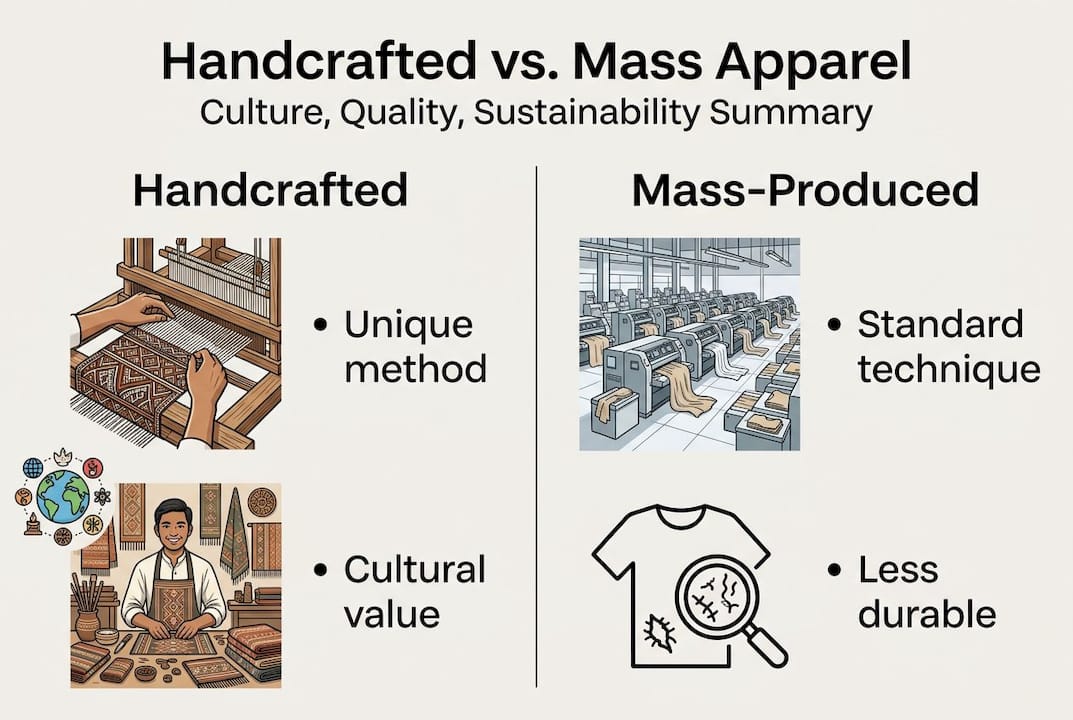
These are not decorative choices. They are time-intensive methodologies that promote sustainability and community support, rooted in practices passed down across generations. A single Kente cloth can take weeks to complete. That time investment is reflected in the uniqueness and value of the finished piece.
Exploring handmade West African fashion reveals just how far removed these garments are from anything you'd find on a fast fashion rack. And when you look at empowering artisan fashion, you begin to understand that the maker is as much a part of the garment as the fabric itself.
Here's what sets handcrafted apparel apart at a glance:
- One of a kind: No two pieces are identical, making each garment a wearable original
- Skill-intensive: Techniques require years of training and practice to master
- Culturally rooted: Designs carry meaning, history, and community identity
- Sustainable practices: Natural fibers, low-waste methods, and slower production cycles reduce environmental harm
| Aspect | Handcrafted apparel | Mass-produced apparel |
|---|---|---|
| Technique | Manual, skill-based | Automated, standardized |
| Time to produce | Days to weeks | Minutes to hours |
| Uniqueness | One of a kind or limited | Identical, high volume |
| Sustainability | Lower impact, natural materials | Higher waste, synthetic fibers |
Cultural heritage and meaning in every piece
After demonstrating the unique craftsmanship of handcrafted apparel, let's explore the deeper layers of meaning embedded within these special garments.
Handcrafted clothing does something that mass production fundamentally cannot: it carries memory. Every pattern, color choice, and weaving technique in West African textiles encodes cultural symbolism, proverbs, and narratives that have been refined over centuries. West African designs like Kente, Aso-Oke, and Bogolanfini encode cultural symbolism and narratives unavailable in mass production, making each garment a living document of its people's history.
Kente cloth, for example, is not simply decorative. Specific color combinations carry distinct meanings: gold represents royalty and wealth, green symbolizes growth and renewal, and black reflects spiritual strength and maturity. Wearing Kente is an act of cultural affirmation. Aso-Oke, woven by the Yoruba people of Nigeria, is traditionally worn at weddings and naming ceremonies, its raised texture and rich colors signaling celebration and social identity. Bogolanfini from Mali uses symbols tied to specific proverbs, hunting traditions, and rites of passage.
| Textile | Origin | Cultural significance |
|---|---|---|
| Kente | Ghana | Royal symbolism, ceremonial use, color-coded meaning |
| Aso-Oke | Nigeria (Yoruba) | Celebration, social status, ceremonial dress |
| Bogolanfini | Mali | Proverbs, rites of passage, community identity |
This depth of meaning is what makes a West African culture statement so powerful. You're not wearing a trend. You're wearing a worldview. And that kind of fashion storytelling creates a connection between the wearer, the maker, and an entire lineage of artisans who kept these traditions alive.
Pro Tip: When shopping for handcrafted pieces with authentic heritage, ask the seller about the specific technique used, the region of origin, and whether the artisan was fairly compensated. Transparency in these three areas is usually a strong indicator of genuine craftsmanship.
Mass-produced fashion can mimic the look of these textiles, but it cannot replicate the knowledge embedded in them. That exclusivity, the sense that you are wearing something truly irreplaceable, is a value that no price tag can fully capture.
Quality, durability, and environmental impact
With a richer appreciation for cultural significance, let's turn to the practical strengths of quality, durability, and environmental impact that handcrafted pieces offer.
Handcrafted garments are built differently from the inside out. Superior construction, reinforced seams, and durable finishing lead to a longer lifespan and easier repairs compared to mass-produced fashion. When a seam loosens on a handcrafted piece, a skilled tailor can restore it. When a synthetic fast fashion item breaks down, it usually goes straight to landfill.
Here are the key durability factors that distinguish handcrafted from mass-produced apparel:
- Reinforced seams: Hand-stitched or carefully finished seams resist stress and wear over time
- Natural fiber quality: Materials like cotton, silk, and hand-spun yarn hold their shape and breathe better than synthetics
- Intentional construction: Each step is deliberate, with no shortcuts taken to meet a production quota
- Repairability: Handcrafted pieces are designed with longevity in mind, making alterations and repairs straightforward
- Colorfastness: Natural dyes used in traditional techniques often bond more deeply with fibers, resisting fading
The environmental case is equally compelling. Quality handcrafted and natural fiber garments have a lower per-wear environmental impact than synthetic or mass-produced fast fashion, and traditional garments are widely recognized as more durable.
Buying one well-made handcrafted garment that lasts ten years produces significantly less carbon per wear than buying five cheap replacements over the same period. Longevity is the most underrated sustainability strategy in fashion.
This aligns perfectly with conscious consumption. The handcrafted garment impact extends beyond the individual wearer. It supports a circular approach to fashion, where pieces are treasured, maintained, and passed on rather than discarded. Understanding sustainable fashion explained helps clarify why slowing down your wardrobe choices is one of the most powerful environmental decisions you can make.
Handcrafted apparel, ethics, and supporting artisan communities
Armed with an understanding of handcrafted apparel's quality and impact, let's explore how these choices power real change for artisans and communities.
When you buy handcrafted, you are not just purchasing a garment. You are directing resources toward a skilled artisan, their family, and often an entire community built around that craft. Handcrafted apparel supports artisan economies, preserves cultural knowledge transmission, and upholds ethical labor, though scalability and cost remain real challenges that deserve honest acknowledgment.
The contrast with mass production is stark. Ghana's textile output dropped from 130 million to 15 million yards over 40 years as cheap imported goods flooded local markets. That decline represents not just lost revenue but lost livelihoods, lost skills, and lost cultural continuity. Every intentional purchase of handcrafted apparel pushes back against that erosion.
Here's how choosing handcrafted empowers communities:
- Direct income: Artisans receive fair compensation for their time and expertise
- Skill preservation: Demand for handcrafted goods encourages younger generations to learn traditional techniques
- Community investment: Artisan cooperatives often reinvest earnings into local education and infrastructure
- Cultural continuity: Sustained demand keeps endangered textile traditions alive and relevant
Pro Tip: Before purchasing, ask the brand or seller these three questions: Who made this piece? What technique was used? How is the artisan compensated? Brands that answer these questions openly are far more likely to be operating with genuine ethical integrity.
It's also worth being honest about the challenges. Not every consumer can afford the premium that handcrafted apparel commands, and not every brand that claims artisan credentials delivers on that promise. Support artisan heritage by researching brands carefully, and explore the intersection of craftsmanship and ethics to make choices that align with your values and your budget.
Our perspective: Why choosing handcrafted is more radical than you think
Most conversations about handcrafted fashion focus on the beauty of the product or the warmth of the story behind it. That framing, while genuine, undersells what's actually at stake. Choosing handmade fashion is not a romantic lifestyle preference. It is an act of cultural preservation in a world where industrial scaling actively erodes irreplaceable knowledge systems.
Here's what most articles won't tell you: the real threat isn't just environmental. It's epistemological. When a weaving tradition disappears because there's no market for it, the knowledge encoded in those patterns, the proverbs, the histories, the community identities, disappears with it. No museum exhibit can fully restore what a living practice holds.
Scaling handcrafted production also carries its own risks. When demand grows faster than authentic supply, shortcuts follow. Authenticity gets diluted. This is why intentional, informed purchasing matters more than volume. Buying one piece from a verified artisan source does more than buying ten from a brand that appropriates aesthetics without accountability.
Not everyone will pay the premium, and that's a real economic reality worth respecting. But every conscious purchase shifts the landscape incrementally, signaling to the market that cultural integrity and ethical labor have value. That signal, repeated across thousands of buyers, is genuinely transformative.
Explore vibrant handcrafted styles rooted in heritage
Ready to make a statement that empowers artisan communities and celebrates cultural heritage? Here's where to start your journey.
At Sena Nukunu, every piece in our collection is chosen with intention, honoring the craftsmanship, cultural depth, and ethical values you've just explored. You can browse our full handcrafted apparel collections to find ready-to-wear statement pieces inspired by West African heritage, each crafted in limited quantities to preserve their meaning and quality.
If you're looking for something that speaks to your personal style while honoring a living tradition, our curated selection of unique handmade dresses offers vibrant, timeless options that move with you every day. Each purchase directly supports the artisans and communities behind these extraordinary textiles.
Frequently asked questions
Why is handcrafted apparel more expensive than mass-produced clothing?
Handcrafted apparel costs more because it requires significant time, specialized skill, and ethically compensated labor, all of which contribute to a higher-quality, time-intensive piece that outlasts its mass-produced counterparts many times over.
How does handcrafted apparel help preserve culture?
Many handcrafted garments, especially across West Africa, carry symbols, colors, and patterns that reflect specific histories and community values, meaning each piece actively transmits cultural symbolism and narratives that mass production cannot encode.
Is handcrafted fashion more sustainable?
Yes. Quality handcrafted garments have a lower per-wear environmental impact because they last longer, use natural fibers, and support slow, responsible production methods that minimize waste.
What should I look for to ensure authenticity when shopping for handcrafted apparel?
Look for transparent information about the maker, the specific craft technique used, and the cultural context behind the garment. Brands that share these details openly are far more likely to offer genuinely authentic pieces.
What are some iconic West African handcrafted textiles?
Kente from Ghana, Aso-Oke from Nigeria, and Bogolanfini from Mali are among the most celebrated, each renowned for their cultural significance and the traditional, skill-intensive methods used to create them.