TL;DR:
- Wearing West African-inspired fashion affirms identity, heritage, and cultural pride.
- Textiles encode social meanings and tell stories of community, history, and values.
- Ethical choices support artisans, preserve traditions, and promote respectful cultural appreciation.
There is a persistent idea that wearing culturally inspired fashion is simply about choosing something eye-catching, something that looks different from the usual. But for women with West African roots living in the U.S., and for those who genuinely admire this heritage, the choice runs far deeper than a pattern or a print. Every garment rooted in West African tradition carries stories, values, and a connection to communities of skilled makers whose livelihoods depend on that legacy being honored. This guide walks you through what culturally inspired fashion truly means, how to recognize ethical choices, and how to wear these pieces in a way that gives back as much as it expresses.
Table of Contents
- Why culturally inspired fashion is more than aesthetic
- How West African fashion carries meaning and tells stories
- Choosing ethical, artisan-made styles: what to look for
- Appreciation vs. appropriation: navigating cultural respect
- A fresh perspective: true respect isn't just in the label
- Shop authentic, artisan-made West African styles
- Frequently asked questions
Key Takeaways
| Point | Details |
|---|---|
| Style as self-expression | Culturally inspired fashion allows you to celebrate identity and heritage in meaningful ways. |
| Garments with meaning | West African textiles and designs tell stories and communicate powerful cultural messages. |
| Support ethical artisans | Buying artisan-made pieces directly helps keep traditional craft and livelihoods alive. |
| Appreciation over appropriation | Make respectful choices by understanding, crediting, and supporting the cultures that inspire your style. |
| Look for authenticity | Choose brands that acknowledge artisans and cultural origins, not just trends. |
Why culturally inspired fashion is more than aesthetic
When you put on a piece of clothing rooted in West African heritage, you are doing more than accessorizing your day. You are making a statement about who you are, where your family comes from, and what values you carry forward. This kind of dressing is a form of identity affirmation, a quiet and powerful way of saying: I see my culture, I respect it, and I am proud to carry it with me.
"Wearing culturally inspired fashion can be meaningful self-expression and identity affirmation, especially for people with West African roots in the U.S., not just aesthetic borrowing."
For many women, this connection is deeply personal. Maybe your grandmother wore a specific kente cloth to celebrations. Maybe a particular wax print reminds you of a market you visited as a child, or a family photo hanging in your living room. These memories are woven into the fabric itself, and wearing them is a way of honoring the people and places that shaped you.
Authentic West African cultural fashion differs from simple style adoption in a crucial way: it is rooted in lived experience and cultural knowledge, not just visual appeal. Here is what that distinction looks like in practice:
- Identity expression: The garment reflects your personal history and community ties, not just a trend you found online.
- Cultural pride: You wear the piece with awareness of its origins, its makers, and the traditions behind its design.
- Community connection: Choosing these styles can link you to a broader network of people who share the same roots and values.
- Emotional resonance: Many women describe a feeling of confidence and groundedness when dressed in pieces that reflect their heritage, a sense of being fully themselves.
Fashion empowerment through West African styles is not a marketing phrase. It is something felt and lived. When a garment connects you to your ancestors and your community at the same time, it becomes something rare and valuable in any wardrobe.
How West African fashion carries meaning and tells stories
West African textiles are not decorative fabrics with pretty patterns. They are a language. Every color, symbol, and weaving technique has historically carried social and spiritual meaning, communicating status, life events, grief, celebration, and community identity to anyone who knew how to read the cloth.
Research confirms that West African textiles encode social meaning, functioning like communication, carrying messages of status, memory, and shared cultural understanding between people who speak the same visual language.
Consider some of the most recognized examples:
| Textile | Origin | Encoded meaning |
|---|---|---|
| Kente cloth | Ghana (Akan people) | Royalty, wealth, spiritual purity |
| Adinkra symbols | Ghana | Proverbs, life philosophy, social values |
| Bogolan (mudcloth) | Mali | Rites of passage, warrior identity, spiritual protection |
| Ankara/wax print | West Africa (widely) | Community celebration, personal milestones, modern identity |
Each of these textiles carries a history that stretches back centuries, and wearing them today is a continuation of that storytelling tradition. When a modern dress is made from kente-inspired fabric, it is not just stylish. It is a thread connecting the wearer to a long, unbroken story about who the Akan people are, what they value, and how they celebrate life.
How heritage shapes fashion becomes clearer when you understand that these choices are never neutral. A piece of bogolan worn to a family gathering speaks differently than the same fabric mass-produced and sold without context in a fast-fashion store. Knowing the difference makes you a more thoughtful, intentional dresser.
Pro Tip: Before buying a piece inspired by a specific textile tradition, spend five minutes learning one thing about its cultural background. That small act of curiosity transforms a purchase into a genuine connection.
Choosing ethical, artisan-made styles: what to look for
Understanding the meaning behind West African fashion naturally leads to a more important question: where does your garment come from, and who made it? Ethical buying is not just a feel-good concept. It has real, measurable consequences for artisan communities and for the survival of traditional textile crafts.

Fast fashion's erosion of textile traditions is well documented. When mass-produced imitations flood the market at low price points, authentic artisan work loses economic ground, skilled makers lose income, and traditional techniques fade from practice because they are no longer financially viable to maintain.
Here is a straightforward framework for making empowered, ethical choices:
- Look for transparent sourcing. Ethical brands name the artisans, cooperatives, or communities behind their pieces. If a product page cannot tell you where or by whom the garment was made, that is a warning sign.
- Check for explicit cultural credit. Respectful brands acknowledge the specific cultural tradition inspiring their designs. They do not use vague language like "African-inspired" without context.
- Prioritize limited-quantity, handcrafted pieces. Mass-produced "cultural" garments are almost never made by the artisans whose traditions they draw from. Small-batch production often signals genuine artisan involvement.
- Research the brand's relationships. Does the brand mention partnerships with West African makers? Do they describe fair wages and working conditions? These details matter enormously.
- Understand the price point. Authentic, handcrafted pieces cost more because skilled labor, quality materials, and ethical practices cost more. If a price seems too good to be true, it probably reflects shortcuts that hurt someone else.
| Ethical artisan fashion | Fast fashion imitation |
|---|---|
| Transparent artisan sourcing | Vague or missing origin information |
| Limited production runs | Mass production at scale |
| Fair wages documented | Labor costs minimized |
| Cultural context acknowledged | Imagery without explanation |
| Higher price reflects true cost | Low price reflects exploitation |
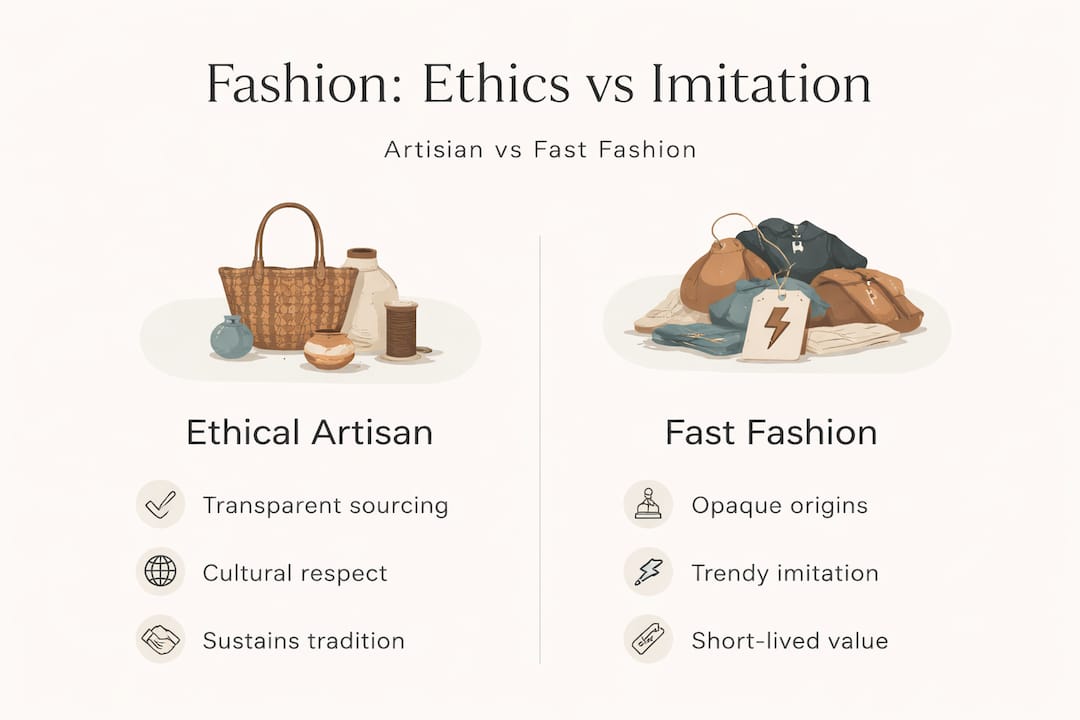
Sustainable artisan fashion is not a niche concern. It is the only way these traditions survive into the next generation. Every intentional purchase you make either strengthens or weakens the ecosystem of makers behind these garments.
Pro Tip: Search for a brand's "about" page and their product descriptions before buying. Brands committed to why handmade matters will always show you the "why" behind their work, not just the "what." If you cannot find that story, keep looking.
Supporting artisan West African fashion means choosing with your values, not just your eyes. The garment you wear carries a supply chain behind it, and your money shapes what that chain looks like.
Appreciation vs. appropriation: navigating cultural respect
One of the most important conversations in culturally inspired fashion is also one of the most misunderstood: the difference between appreciation and appropriation. These two things can look similar on the surface, but they are separated by something significant: context, credit, and community involvement.
Cultural appreciation means engaging with another culture's traditions in a way that is informed, respectful, and mutually beneficial. It means knowing something about the garment you are wearing, buying from brands that give back to the communities they draw inspiration from, and acknowledging where your style choices come from.
Cultural appropriation, by contrast, happens when elements of a marginalized culture are adopted without credit, context, or care, often by people or brands who profit while the originating community does not. As one cultural commentary puts it, "African-inspired" fashion without context can be harmful or exploitative, even when it appears flattering on the surface.
"Wearing something because it looks exotic, without any understanding of its meaning or any benefit flowing back to its makers, reduces a living tradition to a prop."
Here is how to keep your choices on the right side of that line:
- Acknowledge openly. When someone compliments your outfit, share where it comes from and who made it. This simple act keeps the cultural story alive.
- Avoid surface-level adoption. Sacred or ceremonially significant items carry particular meaning. Research whether a piece is appropriate for everyday wear before purchasing.
- Support the source. If a style is rooted in West African tradition, prioritize brands that involve West African makers and communities in the production process.
- Center community voices. Follow West African designers, fashion writers, and cultural commentators. Let their perspectives inform your choices rather than relying solely on mainstream fashion media.
Culture-inspired fashion statements carry the most integrity when the wearer can speak to the origin of what they are wearing. You do not need to be a textile historian, but you do need to care enough to learn.
Modern West African craft is not frozen in time. It evolves, it responds to contemporary life, and it welcomes people who approach it with genuine respect. The goal is not gatekeeping but mutual dignity.
A fresh perspective: true respect isn't just in the label
Here is something most fashion guides will not tell you: buying from the right brand is only the beginning of being a genuinely respectful participant in culturally inspired fashion. Checking the label is the first step, not the final one.
Real honor for West African fashion traditions comes from ongoing education and authentic dialogue. It means following West African designers on social media and listening when they critique the industry. It means reading about the history of a textile before you wear it, not after someone asks you about it. It means sharing what you know, crediting the culture openly, and staying curious over time, not just at the moment of purchase.
We believe this because we see it. The women who wear authentic cultural statements with the most grace and confidence are not always the ones with the most pieces in their wardrobe. They are the ones who can tell you the story behind what they are wearing. They are the ones who talk about the artisans who made it, the region it comes from, and why the color or pattern matters.
There is a contrarian truth here worth naming directly: consuming ethically made fashion without engaging with the culture is still a limited form of respect. You can buy every piece from the most ethical brand in existence and still be a passive participant if you never take the next step of learning, sharing, and contributing to the conversation. Modern style with ethics requires both. The label tells you the garment was made with care. What you do with it from there is your responsibility and your opportunity.
Stories and traditions continue when wearers share meanings openly and credit artisans genuinely. That is how a living culture stays alive. Every time you wear a piece with intention and explain its origins to someone who asks, you become part of the chain of transmission that keeps these traditions vibrant and relevant for the next generation.
Shop authentic, artisan-made West African styles
If this conversation has sparked something in you, the next step is finding pieces that truly align with these values.
At Sena Nukunu, every garment is chosen with cultural integrity and artisan livelihoods at the center. Whether you are looking for a statement artisan West African dress for a special occasion or a vibrant, ethically crafted set for everyday wear, the collection reflects a commitment to transparency, craftsmanship, and the living traditions of West Africa. Each piece is made in limited quantities, crafted with care, and rooted in the stories of the people who made it. Browse the full range of West African collections and find pieces that let you wear your values as confidently as you wear your style. When you shop intentionally, you support real makers, real communities, and a legacy worth celebrating.
Frequently asked questions
What makes West African inspired fashion unique?
West African inspired fashion uses textiles and patterns that communicate history and social meaning, encoding community stories, status, and tradition into every design, not just visual style.
How can I tell if a brand is selling ethically made, culturally inspired fashion?
Look for explicit credit of artisan makers, transparent sourcing details, and cultural acknowledgment on product pages. Brands with genuine ethical sourcing practices are open about who made the piece and where.
Is it OK to wear African inspired fashion if I'm not from West Africa?
Yes, as long as your choices reflect genuine appreciation: buy ethically, give credit openly, and take time to understand the meanings behind the styles. Cultural borrowing is respectful when done with understanding and community context.
How does buying artisan-made West African fashion help?
Your purchase directly supports artisan livelihoods and helps preserve traditional techniques that are increasingly threatened by mass production. Ethical fashion purchases keep textile traditions alive and keep skilled makers earning a fair living from their craft.
Recommended
- Find Your West African Culture-Inspired Fashion Statement
- Fashion storytelling examples: Cultural and ethical picks
- How cultural heritage shapes fashion: lessons from West Africa
- Ready-to-wear African attire: culture, ethics explained
- How fashion reflects heritage: styles, meaning, and trends – Klepsa