TL;DR:
- Fashion rooted in West African culture goes beyond aesthetics to preserve traditions and support artisans. Ethical choices involve understanding craftsmanship, authentic sourcing, and avoiding mass-produced imitations that dilute cultural significance. Supporting genuine, community-connected brands helps sustain these rich textile heritages and promotes meaningful cultural expression.
Fashion with cultural pride is never just about looking beautiful. It is about choosing pieces that carry history, support real artisans, and reflect your values in every thread. Today, the landscape of West African inspired fashion is evolving rapidly, moving away from fast fashion shortcuts toward something far more meaningful and intentional. As West Africa's manufacturing future becomes a global conversation, this guide gives you the practical, ethical, and occasion-aware steps to build a wardrobe that feels both deeply personal and proudly principled.
Table of Contents
- What you need to know before choosing culturally inspired fashion
- How to select ethical statement pieces that honor cultural pride
- Styling cultural pride fashion for every occasion
- Verifying authenticity and avoiding common pitfalls
- Why true cultural pride in fashion is more than a trend
- Find your next authentic statement piece with Sena Nukunu
- Frequently asked questions
Key Takeaways
| Point | Details |
|---|---|
| Prioritize ethical sourcing | Choosing brands that openly support artisans and invest in local systems ensures your look celebrates heritage, not exploitation. |
| Respect occasion and context | Match your cultural attire to the event, considering both modern flair and traditional expectations for dignity and modesty. |
| Spot real artistry | Learn to distinguish authentic, hand-crafted garments from mass-produced imitations with a critical eye and informed questions. |
| Make fashion a movement | Every purchase can advance cultural pride, sustainability, and dignity—beyond temporary style trends. |
What you need to know before choosing culturally inspired fashion
With that context of cultural celebration, let's lay the foundation for consciously sourcing and wearing culturally inspired fashion. Before you browse a single item, it helps enormously to understand what makes West African textiles and craftsmanship so distinct, and what is genuinely at stake when fast fashion enters the picture.
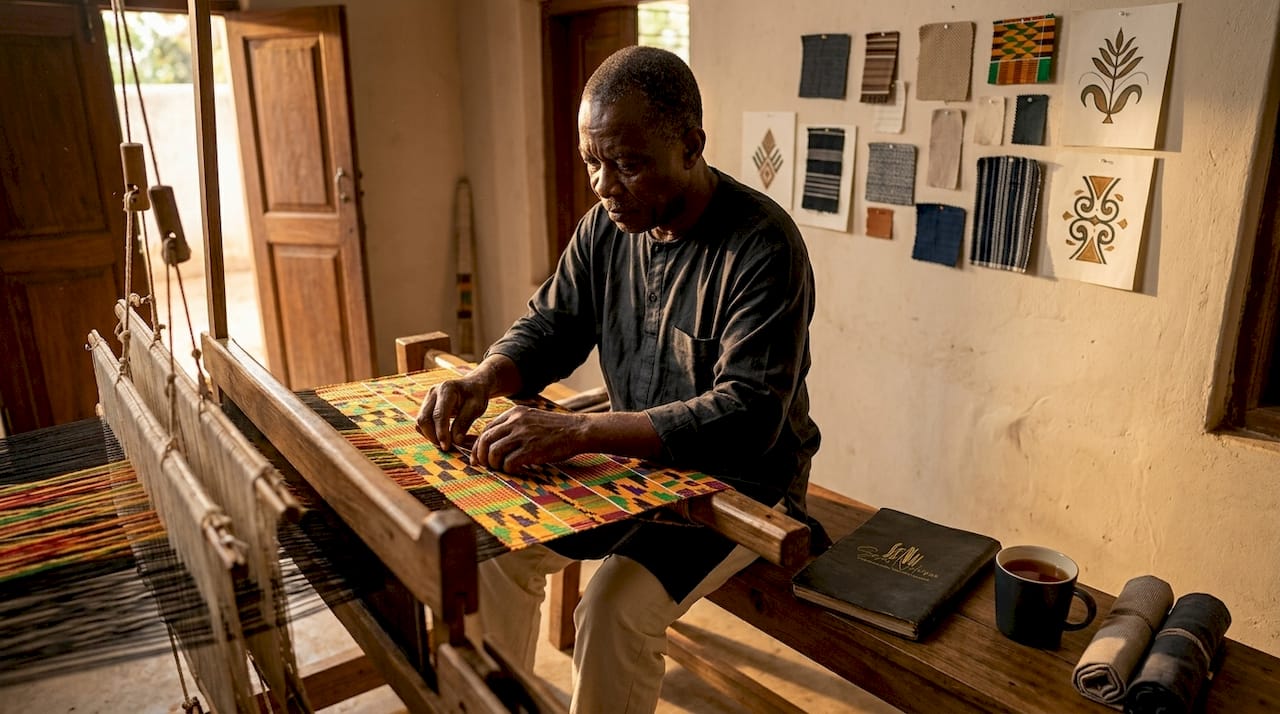
West African textile traditions are some of the most sophisticated and storied on earth. Kente weaving from Ghana, for example, is a centuries-old practice where each color and pattern carries specific meaning, from royalty and fertility to grief and spiritual strength. Ankara (also called African wax print fabric) has a complex, layered history that now spans multiple continents, carrying political and cultural significance far beyond its visual boldness. Adire, the Yoruba tradition of indigo resist-dyeing, involves intricate hand-stitching and folding techniques passed down through generations of women. These are not decorative flourishes. They are living languages. The way heritage shapes fashion across the continent reveals just how inseparable artistry and identity truly are.
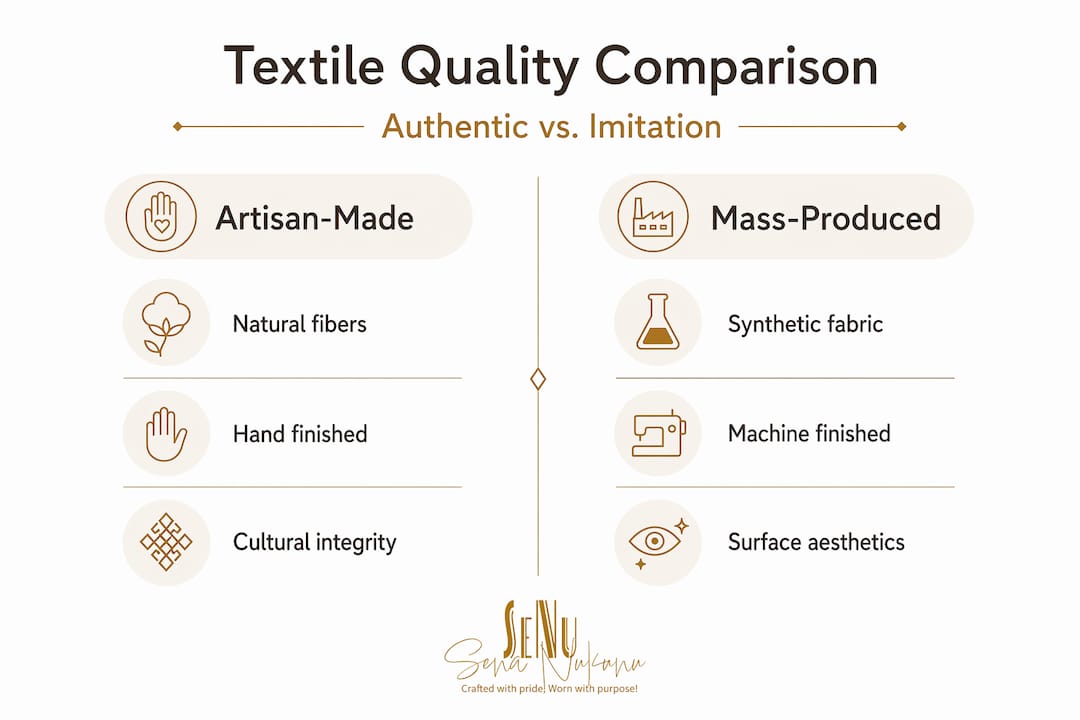
Mass production has placed these traditions under serious pressure. As Vogue reported, mass production's impact is directly linked to the erosion of deep textile traditions and the broader surge in fashion waste, reinforcing why investing in durable, well-made pieces matters so much more than a cheap imitation. When factories produce thousands of prints that superficially resemble traditional fabrics but bypass the skill, time, and cultural context of authentic production, they undermine the livelihoods of artisans and dilute the meaning behind the work. The result is a market flooded with imitations that look similar on a hanger but carry none of the weight, care, or legacy of the real thing.
Understanding the difference between authentic and mass-produced garments is your first and most powerful tool. Here is what to look for:
- Handwoven or hand-dyed textiles show minor variations in pattern and color. These are features, not flaws.
- Artisan-made labels often include the name or region of the maker, not just a corporate brand logo.
- Natural fibers like cotton, silk, or wool are common in traditional West African garments, while fast fashion frequently uses synthetic blends.
- Limited quantities signal that pieces were made thoughtfully, not manufactured by the thousands.
- Transparent supply chains mean you can trace where the fabric came from and who made it.
"Every stitch carries the spirit of a legacy. When you choose authentic craftsmanship, you are not just buying a garment. You are preserving a tradition that has survived centuries of change and continues to evolve with pride and purpose."
What does "ethical manufacturing" actually mean in this context? It means fair wages and safe conditions for artisans, transparent relationships between brands and makers, investment in local textile systems rather than extraction, and a commitment to cultural integrity rather than trend-chasing. Exploring sustainable fashion trends that genuinely empower West African artisans reveals a growing ecosystem of brands doing this work honestly and well.
| Feature | Authentic artisan-made | Mass-produced imitation |
|---|---|---|
| Fabric quality | Natural fibers, hand-finished | Synthetic blends, machine-finished |
| Pattern consistency | Slight intentional variations | Perfectly uniform, often printed |
| Cultural knowledge | Embedded in design choices | Surface aesthetic only |
| Maker transparency | Artisan credited or traceable | Anonymous factory production |
| Price point | Reflects true labor and skill | Artificially low, hidden costs |
| Durability | Long-lasting with proper care | Often degrades quickly |
How to select ethical statement pieces that honor cultural pride
Now that you've grounded yourself in the issues, it's time to apply this knowledge when selecting standout pieces. Choosing fashion that honors both your personal style and West African cultural integrity is a skill, and it gets easier with practice and a clear framework.
Here is a step-by-step approach to evaluating any brand or piece before you purchase:
- Research the brand's sourcing story. Does the brand explain where its fabrics come from and who made them? Vague claims about "African-inspired" designs without specific sourcing details are a warning sign.
- Look for artisan partnerships. Ethical brands build ongoing, respectful relationships with specific weavers, dyers, and tailors. Look for these partnerships named and celebrated on the brand's website.
- Check for cultural context. A reputable brand will tell you about the tradition behind a pattern or technique. You should come away knowing more than you did before you visited the site.
- Read the materials information carefully. Authentic pieces tend to use natural materials sourced responsibly. If a garment claiming to be "traditional" is made from 100% polyester, ask more questions.
- Assess the price honestly. Genuine artisan craftsmanship takes significant time and skill. A price that seems too low often reflects that someone, usually the maker, was not fairly compensated.
- Seek community validation. Reviews, social media, and community discussions can reveal whether a brand has earned genuine trust from customers of West African heritage.
Pro Tip: Search for brands that publish their manufacturing relationships, list the names of artisan cooperatives they support, or share behind-the-scenes content showing how garments are made. Genuine transparency about authentic West African statements is one of the strongest signals of a brand worth supporting.
There is also a broader industry conversation worth holding in mind. Ethical West African manufacturing is not just a question for individual brands. It involves preserving entire local textile systems, avoiding exploitation, and making sure that global interest in African fashion actually benefits African makers. Understanding what sustainable fashion means in principle helps you apply those standards with real discernment.
A practical checklist for responsible shopping:
- Brand clearly explains its artisan relationships
- Fabrics are natural and responsibly sourced
- Cultural context is shared, not just aesthetics
- Pricing reflects fair labor
- Limited quantities confirm intentional production
- Positive reviews from culturally connected communities
Styling cultural pride fashion for every occasion
With your wardrobe foundation set, here's how to style these pieces for both everyday life and milestone occasions. West African fashion is extraordinarily versatile, and understanding how to adapt statement pieces across different contexts lets you wear your values proudly every single day.
Consider these event-based styling approaches:
- Everyday wear: A bold Ankara wrap dress or a vibrant matching set brings energy to a regular workday or weekend outing. Pair with simple sandals and minimal gold jewelry to let the print speak for itself.
- Professional settings: Choose structured cuts in rich, subdued kente-inspired patterns. A tailored jacket in woven fabric over a solid dress signals sophistication and cultural confidence simultaneously.
- Celebrations and weddings: Full ceremonial looks with head wraps (geles), flowing agbadas (a wide-sleeved robe worn across West Africa), or lace asoebi (coordinated fabric worn by guests at Nigerian celebrations) are deeply appropriate and deeply beautiful.
- Cultural festivals and community events: This is the space to wear your most expressive, layered looks. Heritage pieces with handcrafted accessories create outfits that are conversations in themselves.
- Casual social gatherings: A statement blouse or a richly patterned skirt paired with neutral basics allows you to incorporate cultural fashion without feeling overdressed.
One thing worth naming directly: cultural pride fashion should be worn with context awareness, particularly in Nigerian and other West African social settings where dressing respectfully involves genuine knowledge of local expectations around modesty, occasion, and community respect. Celebrating your heritage is not the same as ignoring the norms of the community whose traditions you are honoring. Modesty matters, and so does understanding what is appropriate at a formal ceremony versus a casual gathering.
Pro Tip: A single statement piece, like a striking Ankara jacket or a beaded clutch, can transform a simple outfit into something occasion-ready. Learn how to accessorize ethically using handcrafted jewelry, woven bags, and culturally significant accessories to adapt your looks across formality levels without buying an entirely new wardrobe for each event. You can also use the guidance on styling West African attire to build a flexible approach that always feels intentional and true to you.
Verifying authenticity and avoiding common pitfalls
Once you've styled your look, don't forget the importance of doing a last authenticity check before making your purchase. The fashion industry has a long history of borrowing visual elements from rich cultural traditions without credit, compensation, or genuine understanding. Knowing how to spot the difference protects both you and the artisans whose work deserves recognition.
Here are the key steps to verify authenticity before committing to a purchase:
- Ask where the fabric was made. Authentic brands can tell you. Brands that cannot or will not answer this question are often sourcing from mass production facilities that have no connection to the tradition they claim to represent.
- Look for named artisans or cooperatives. Any brand genuinely invested in West African craftsmanship will celebrate its makers, not hide them.
- Examine the quality in detail. Read the product descriptions carefully. Look for mentions of specific techniques like hand-weaving, block printing, or natural dyeing, and then look for visual evidence in product photos.
- Research the brand's history. How long have they been building their artisan relationships? A newer brand can still be ethical, but it should be able to tell a clear story about how and why those relationships were built.
- Watch for greenwashing. Terms like "eco-friendly," "sustainable," and "ethically made" are only meaningful when backed by specific, verifiable details. Vague buzzwords without substance are a red flag.
"Supporting authentic artistry means asking hard questions and expecting honest answers. When a brand cannot tell you who made your garment or where the fabric originated, that silence speaks volumes."
The broader industry challenge is real and ongoing. As reporting on West Africa's manufacturing potential makes clear, scaling ethical production without exploiting local communities or using African culture purely as a branding tool requires genuine commitment. Your purchasing decisions are part of that conversation. See why celebrating African designers is about more than aesthetics. It is about sustaining the entire ecosystem of culture, craft, and creative dignity that makes these traditions worth honoring in the first place.
Why true cultural pride in fashion is more than a trend
With your route to authenticity clear, here is why your choices matter more than ever.
There is a comfortable but ultimately shallow version of cultural pride fashion, and then there is the real thing. The comfortable version treats vibrant prints and statement silhouettes as seasonal trends, pulling African aesthetics into mainstream closets without asking who benefits or what is lost. The real version understands that choosing an artisan-made garment is an act of cultural stewardship. It is a deliberate decision to keep a tradition alive by investing in the people who carry it forward.
We believe, deeply and without reservation, that fashion rooted in West African heritage is not a trend cycle. It is a living legacy, and your role in sustaining it matters far more than most conversations about style will ever acknowledge. The harms from mass production are not abstract. They show up in shuttered weaving workshops, in artisans who can no longer earn a sustainable income from skills honed over a lifetime, in communities where textile knowledge that survived colonialism is now quietly disappearing under the weight of cheap imitation goods.
Sustained, conscious support for authentic brands and transparent makers is how you reshape this story. It does not require perfection or unlimited purchasing power. It requires curiosity, commitment to asking the right questions, and a willingness to invest meaningfully in fewer, better pieces. Your wardrobe can be an ongoing statement of what you value and who you choose to support. Read how fashion empowerment stories from West African heritage communities show what that impact looks like when it is real, sustained, and community-rooted.
The challenge we leave with you is this: let your wardrobe be a form of advocacy. Choose pieces that carry history, support artisans, and celebrate innovation all at once. That is not a trend. That is a movement worth joining.
Find your next authentic statement piece with Sena Nukunu
Inspired to make an impact with every look? Step confidently into your next authentic find.
At Sena Nukunu, every piece in our collection is chosen with deep care for cultural integrity, artisan craftsmanship, and ethical production. We source intentionally, celebrating the heritage behind each design and ensuring that the makers behind our garments are honored, not exploited. Our curated selection of ready-to-wear dresses, matching sets, and statement pieces is designed for women who want to wear their values as boldly as they wear their style. When you explore vibrant styles across our collection, you will find pieces made to last, designed to inspire, and built on a foundation of cultural pride that goes far deeper than surface aesthetics.
Browse our collection of unique statement dresses perfect for everyday wear and special occasions, or connect with us through our custom design services to create something entirely your own. Your next statement piece is waiting.
Frequently asked questions
How can I tell if a fashion brand truly supports West African artisans?
Look for transparent sourcing, direct partnerships with named artisans or cooperatives, and evidence of genuine investment in local textile systems. As the conversation around West Africa's manufacturing future shows, real support goes well beyond branding.
What are signs of fashion cultural appropriation to avoid?
Appropriation typically lacks context, artisan involvement, or cultural acknowledgment, focusing only on surface aesthetics or trend appeal. Brands that exploit cultural aesthetics without traceability or community connection are the clearest examples to avoid.
How do I choose the right cultural outfit for a specific occasion?
Match the formality and modesty of your outfit to the event and always consider the cultural expectations of the setting. As guidance on dressing in Nigeria shows, context-aware choices express deeper respect than bold statements alone.
Why is sustainable fashion important in cultural pride wardrobes?
Sustainable, well-crafted pieces honor artisans and protect the textile traditions that give these garments their meaning. The direct link between fast fashion's disruption and the erosion of West African textile heritage is a powerful reason to choose quality and durability every time.