TL;DR:
- Ethical West African fashion supports fair wages and cultural preservation through direct artisan partnerships.
- US consumers, especially diaspora communities, drive demand for authentic and ethically made West African garments.
- Decentralized, transparent production models prioritize quality and tradition over mass fast fashion volume.
Fashion is far more than what you wear. Every purchase you make sends a signal, and for West African artisans, that signal can mean a fair wage, a preserved tradition, or a community lifted. Ethical fashion in West Africa empowers artisans through fair wages, skills training, and the preservation of generations-old techniques. As US consumers gain more influence over global supply chains, understanding how clothing choices ripple outward has never been more important. This guide walks you through exactly how ethical West African fashion creates genuine social impact, who it benefits, and how you can be part of a movement that honors culture, craft, and community.
Table of Contents
- How ethical fashion empowers West African artisans
- The influence of US consumers and diaspora on ethical West African style
- Decentralized production and transparency versus fast fashion
- Challenges and solutions for scaling ethical West African fashion
- Why ethical West African fashion is a movement, not a trend
- Support West African artisans with your next purchase
- Frequently asked questions
Key Takeaways
| Point | Details |
|---|---|
| Ethical fashion empowers artisans | Direct partnerships offer fair wages, skills training, and cultural preservation in West African communities. |
| US demand drives impact | American consumers, especially those in the diaspora, are key to sustaining ethical West African brands. |
| Transparency sets ethical fashion apart | Decentralized, artisan-led models ensure fair labor and combat the negative effects of fast fashion. |
| Scalability remains a challenge | Handcrafted production faces obstacles from cheap imports and infrastructure gaps but nimble solutions are emerging. |
| Every purchase fuels positive change | Choosing ethical brands supports real livelihoods and cultural heritage with lasting social impact. |
How ethical fashion empowers West African artisans
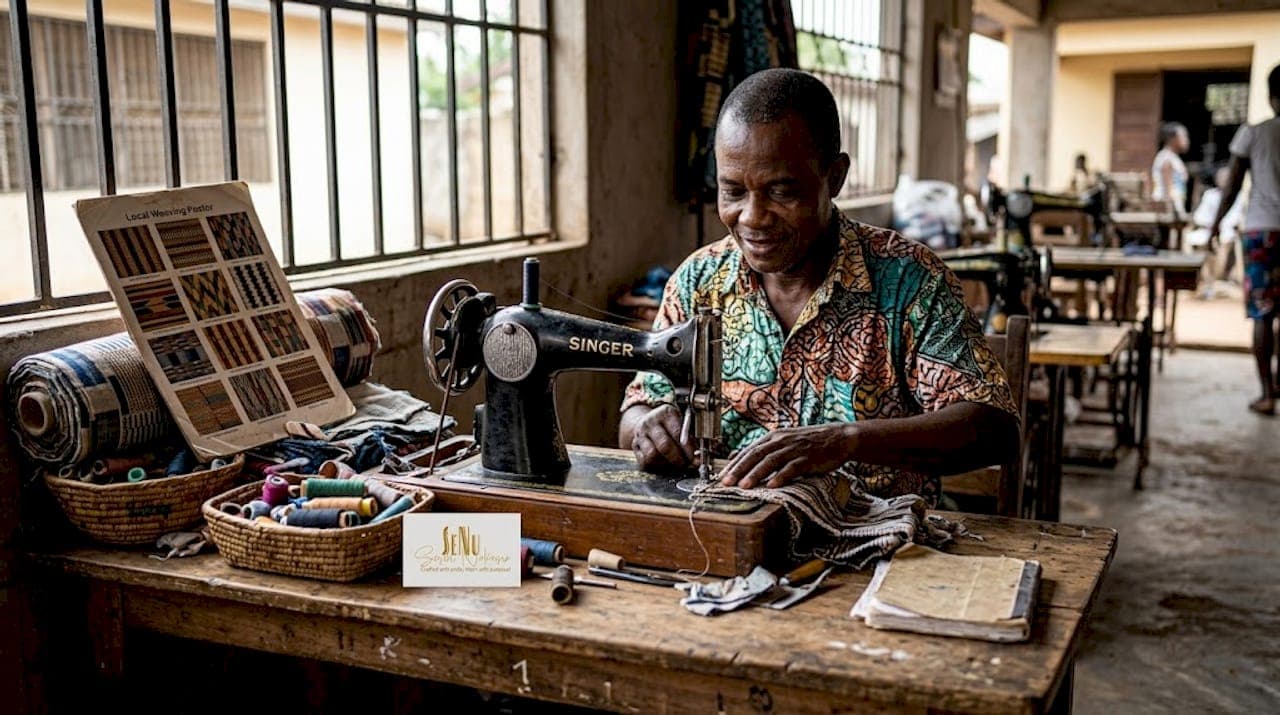
When you choose a piece rooted in West African heritage, you are participating in something much larger than a transaction. Ethical fashion brands operating in this space build direct partnerships with local artisans, creating pathways to stable income, professional growth, and cultural pride. This model stands in sharp contrast to the anonymous, exploitative supply chains that dominate mass fashion.
Brands like Studio 189 and Della have shown what responsible partnerships look like in practice. They provide direct employment, structured skills training, and mentorship programs that help artisans refine and evolve their craft. Della, at the height of its operations, employed over 90 artisans in Ghana alone, offering them consistent income and professional recognition in a market where informal labor dominates.
Beyond wages, these brands invest in preserving traditional techniques that risk disappearing without support. Kente weaving, a centuries-old practice from Ghana, and indigo dyeing, practiced across West Africa, are not just beautiful aesthetics. They are living cultural documents. When artisans are paid fairly to practice them, those traditions survive and thrive.
If you want to support empowering West African artisans, look for brands built on the following mechanisms:
- Direct employment contracts that guarantee fair wages and consistent work
- Skills development programs focused on both traditional and contemporary techniques
- Transparency reports that show who made each piece and under what conditions
- Limited production runs that prioritize quality and artisan wellbeing over volume
- Cultural education initiatives that document and teach heritage craft methods
Pro Tip: Ask a brand where their artisans are based, how they are compensated, and whether they publish production transparency data. Brands with genuine heritage apparel insights will answer these questions openly and proudly.
Every stitch in an ethically made West African garment carries the spirit of a legacy. When you choose with intention, you are not just wearing culture. You are helping write its next chapter.
With this foundation laid, let's examine the key role US consumers play in shaping and sustaining this movement.
The influence of US consumers and diaspora on ethical West African style
The United States is the single largest market for African clothing globally. US buyers represent 28.5% of all African clothing purchases, with an extraordinary 89.2% year-over-year growth rate. That is not a niche trend. That is a market signal powerful enough to reshape how entire industries operate.
Much of this demand is driven by the African diaspora, a community that carries deep emotional and cultural ties to West African heritage. For diaspora communities, wearing authentic West African designs is an act of identity, resistance, and pride. They are not shopping for a trend. They are seeking a connection, and they are willing to invest in brands that honor that connection authentically.
| Market | Share of African clothing buyers | Key driver |
|---|---|---|
| United States | 28.5% | Diaspora demand, cultural identity |
| United Kingdom | ~18% | Large West African diaspora |
| France | ~12% | Francophone African communities |
| Canada | ~8% | Growing multicultural market |
| Germany | ~6% | Afrofashion events and communities |
US consumers, whether diaspora or culturally curious, are choosing ethical West African brands for a clear set of reasons:
- Cultural authenticity: They want pieces that genuinely reflect West African traditions, not imitations
- Artisan empowerment: They care about who made their clothing and under what conditions
- Storytelling: Each garment carries history, and buyers want to wear that history
- Quality over quantity: Handcrafted pieces outlast fast fashion, making them a wiser investment
- Social impact: Their purchase directly supports communities thousands of miles away
Pro Tip: When exploring fashion empowerment stories, look for brands that actively collaborate with diaspora designers and community leaders. This collaboration ensures cultural authenticity flows in both directions, honoring heritage while speaking to modern identity.
Now that we've seen how consumers shape the industry, it's important to understand what sets ethical production models apart from fast fashion.
Decentralized production and transparency versus fast fashion
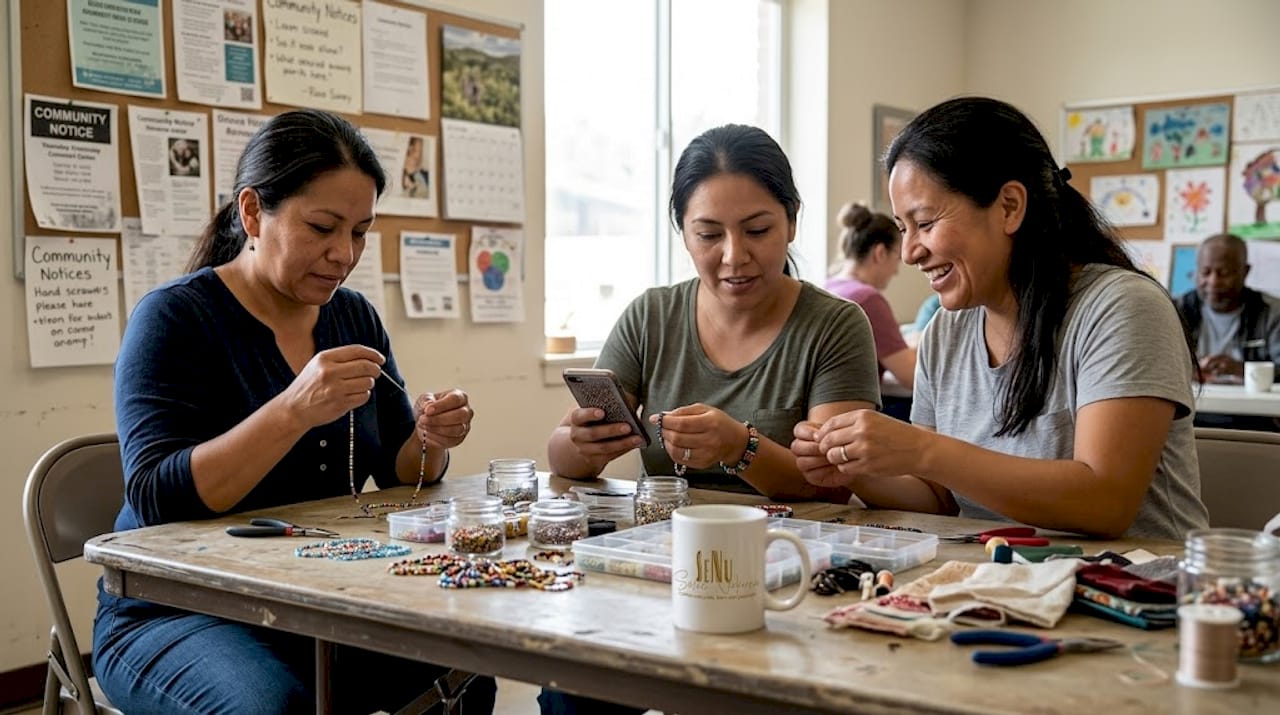
Decentralized production refers to a model where garments are made by distributed networks of artisans and small workshops rather than large centralized factories. In West Africa, this often means Ghanaian tailors crafting custom outfits in community-led hubs where relationships, accountability, and pride in craft govern quality. The result is a supply chain that is inherently more transparent and humane.
Fast fashion runs on the opposite logic. Speed and volume drive every decision, pushing wages down and erasing the individual from the process entirely.
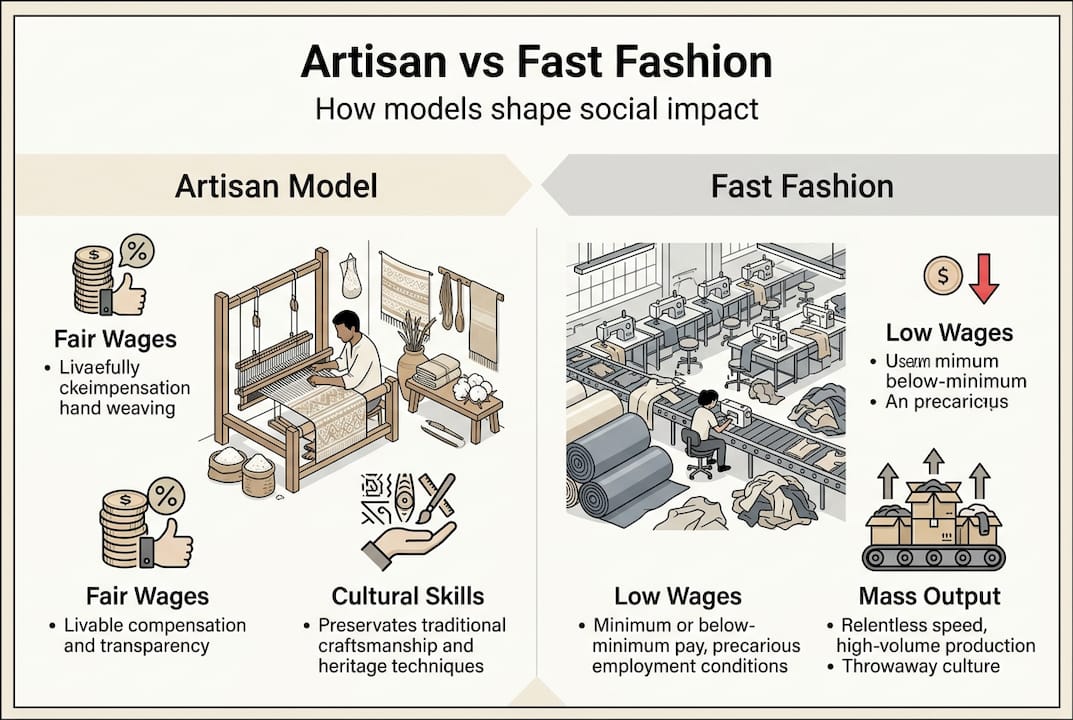
| Factor | Artisan model | Fast fashion |
|---|---|---|
| Wages | Fair, above local average | Often below living wage |
| Transparency | High, artisan-facing | Low, multi-layer subcontracting |
| Production time | Weeks to months | Days to weeks |
| Scalability | Limited by artisan capacity | Near unlimited |
| Environmental impact | Low, often natural materials | High, synthetic and chemical-heavy |
| Cultural value | High, tradition embedded | None |
Here is how an artisan-crafted piece typically reaches you as a US consumer:
- Design collaboration between the brand and artisan community, honoring both modern taste and traditional craft
- Material sourcing from local weavers and natural dye producers, keeping economic value within the community
- Handcrafting by skilled artisans using techniques refined over generations
- Quality review at the community hub level, where peer accountability replaces corporate oversight
- Limited-batch packaging and ethical logistics that minimize waste and maintain transparency
- Delivery to the US consumer, often with documentation of the artisan who created the piece
"The Kantamanto market in Accra recirculates roughly 25 million used garments monthly, a vivid reminder of how much waste fast fashion generates and why the artisan model offers a more sustainable path forward."
The artisan model does have real limitations. Scaling is difficult, costs are higher, and production timelines are longer. But as this luxury supply chain analysis confirms, these constraints are also what give artisan-made pieces their integrity and lasting value. Supporting artisan production is a choice to value depth over speed, and modern West African style is proving that depth resonates.
Yet, while the artisan model offers many benefits, real-world challenges threaten its future. Let's address these obstacles next.
Challenges and solutions for scaling ethical West African fashion
The road ahead for ethical West African fashion is not without obstacles. Cheap imports collapse local textile trade, flooding markets with low-cost garments that undercut artisans before they can compete. Infrastructure gaps, inconsistent electricity, limited access to capital, and weak intellectual property protections all compound the difficulty of scaling artisan-driven production.
The impact of cheap imports on local economies is well documented. Artisans who once thrived through generational craft are now forced to compete with machine-made replicas that sell at a fraction of the cost. This erodes not just income but cultural confidence and continuity.
"Ghana has set a bold policy target of building a $2 billion fashion and textile industry by 2033, signaling that government and industry leaders recognize ethical fashion as an economic engine, not just a cultural statement."
But solutions are emerging, and many of them are driven by the same artisan communities facing the greatest pressure:
- Policy advocacy pushing for tariffs on mass-produced imports that replicate traditional West African designs
- Digital training programs that help artisans market directly to global buyers, reducing reliance on intermediaries
- Craft cooperatives that pool resources, share tools, and collectively negotiate fair pricing with brands
- Intellectual property registration initiatives that protect traditional motifs and techniques from unauthorized reproduction
- Consumer education campaigns that help buyers distinguish authentic artisan work from cultural imitation
As a consumer, your choices carry real weight. When you choose culture-inspired fashion crafted by verified artisans, you signal to the market that authenticity has value. When you share those choices and stories, you amplify that signal. Preserving cultural identity through fashion is not passive. It is an active, ongoing act of solidarity.
Understanding these complex challenges sets the stage for a deeper perspective on why ethical fashion's role in social impact is more than just a trend.
Why ethical West African fashion is a movement, not a trend
Here is a perspective worth sitting with: the fashion industry often frames artisan-made clothing as a luxury niche, something for buyers with extra income and a taste for the exotic. We believe that framing is both inaccurate and harmful.
Ethical West African fashion is not a premium option for a select few. It is a different way of understanding what clothing is for. When you invest in a handcrafted piece, you are not paying more for the same thing. You are paying for something fundamentally different: a garment with a human story, a community behind it, and a cultural legacy woven into every thread.
Consumer choices actively reshape retail standards. As more buyers demand transparency, fair wages, and cultural respect, brands that ignore those values lose ground. The growth we are seeing in US demand is not a passing moment. It reflects a deeper shift in how people want to relate to what they wear. Fashion storytelling and ethical choices are becoming inseparable, and that is a change worth celebrating and accelerating. Every purchase is a vote for the world you want to live in.
Support West African artisans with your next purchase
If you are ready to take action, here's how you can support West African artisans and showcase culture through your wardrobe.
At Sena Nukunu, every piece in our collection is crafted with purpose. You can shop artisan dresses that carry the beauty of West African heritage into your everyday life, or browse collections featuring vibrant matching sets, statement jackets, and timeless ready-to-wear designs. We also offer custom design services for those who want a piece made uniquely for them. Each purchase directly supports artisan livelihoods and keeps cultural traditions alive. When you shop with intention, your wardrobe becomes a story worth telling.
Frequently asked questions
How can I tell if a brand truly empowers West African artisans?
Look for brands that disclose their artisan partnerships, offer fair wage transparency, and highlight traditional craft methods like Kente weaving and indigo dyeing. Brands like Studio 189 and Della set the benchmark by providing transparent artisan employment and training.
Why are ethically made West African clothes more expensive?
They reflect fair wages for artisans and time-intensive handcrafting, unlike fast fashion which relies on rapid mass production. Traditional methods require significantly more time and skill than automated factory cycles.
What role do US consumers play in supporting artisan fashion?
US buyers drive demand, with 28.5% of African clothing purchases globally, boosting artisan incomes and preserving cultural heritage in communities across West Africa.
What challenges are most urgent for ethical West African fashion?
Major hurdles include competition from cheap imports and scalability constraints that limit artisan-led brands from reaching wider markets while maintaining quality and fairness.
How does buying ethical West African clothing create social impact?
You directly support fair wages, employment, and cultural preservation for artisan communities. Ethical fashion empowers artisans by connecting their craft to global markets that truly value it.