TL;DR:
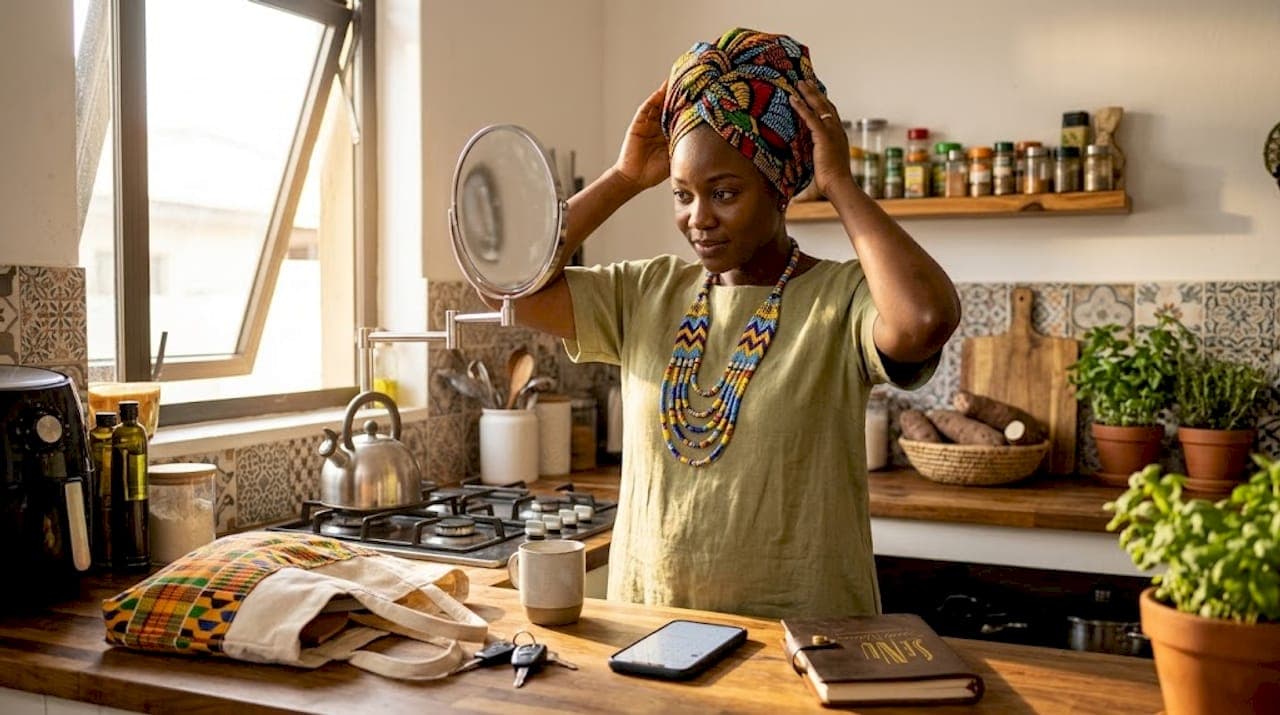
- Accessories in West African fashion carry cultural and social significance beyond decoration. Ethical choices prioritize handcrafted, sustainable pieces that support artisan communities. Pairing accessories thoughtfully enhances cultural expression and personal style while honoring traditions.
You've found the perfect kaftan or boubou, the fabric is stunning, the fit is regal, and then you pause, wondering which accessories will complete the look without diminishing its meaning. This is a moment many of us know well. Choosing the wrong pieces can flatten a vibrant outfit, while the right ones can transform it into a living, breathing statement of heritage and pride. In this guide, we'll walk you through how to select ethical West African accessories that honor craftsmanship, celebrate cultural identity, and elevate every look you wear with intention and beauty.
Table of Contents
- Why accessories matter for cultural outfits
- Building your ethical accessory toolkit
- Step-by-step: How to pair accessories with your outfit
- Troubleshooting: Common accessorizing mistakes and how to fix them
- A new perspective: Why authentic accessorizing makes a difference
- Explore vibrant West African accessories with Sena Nukunu
- Frequently asked questions
Key Takeaways
| Point | Details |
|---|---|
| Start with essentials | Belts, statement beads, headties, and sandals are the foundation of West African accessory styling. |
| Prioritize ethically made pieces | Choose accessories that support artisan co-ops and use sustainable materials for real impact. |
| One statement piece rule | Let one bold accessory shine to balance authenticity and style. |
| Avoid over-accessorizing | Too many statement pieces can clutter your look and distract from cultural meaning. |
| Support authentic craftsmanship | Look for sources that guarantee handmade, artisan-crafted accessories for true heritage value. |
Why accessories matter for cultural outfits
Accessories are not an afterthought. They are the punctuation at the end of a powerful sentence. When you dress in West African cultural fashion, every element you add carries meaning, from the way a belt cinches a flowing silhouette to the way a headtie frames your face and signals identity. Understanding this is the foundation of accessorizing with purpose.
Cultural outfits rooted in West African fashion statements are designed with community, story, and ceremony in mind. The accessories chosen to accompany them should reflect that same depth. A statement necklace is not just decorative; it may reference the social standing, region, or spiritual tradition of the wearer. A woven raffia bag is not just functional; it is a craft passed down through generations.
Here are the staple accessories that define West African cultural looks:
- Belts and sashes: Essential for giving shape to wide, flowing garments like the boubou or kaftan, and often crafted in leather or woven fabric
- Statement jewelry: Includes Krobo beads from Ghana, massive gold necklaces, and brass cuffs, each carrying deep cultural symbolism
- Headties, gele, and scarves: Worn as a mark of identity, occasion, and elegance across West African cultures
- Woven raffia bags and leather sandals: Handcrafted staples that complete a look while supporting traditional artisan trades
"Every accessory you choose tells a story. The goal is to make sure that story is true to the traditions it draws from and meaningful to the person who wears it."
Modern interpretations of classic pieces are valid and exciting. A Krobo bead necklace worn with a contemporary wrapped dress still honors its origins. The key is understanding heritage's role in fashion before you begin layering.
Building your ethical accessory toolkit
Now that you know what role accessories play, let's get specific about the best ethical options available. Not all accessories are created equal, and in a market filled with mass-produced imitations, knowing what to look for matters more than ever.
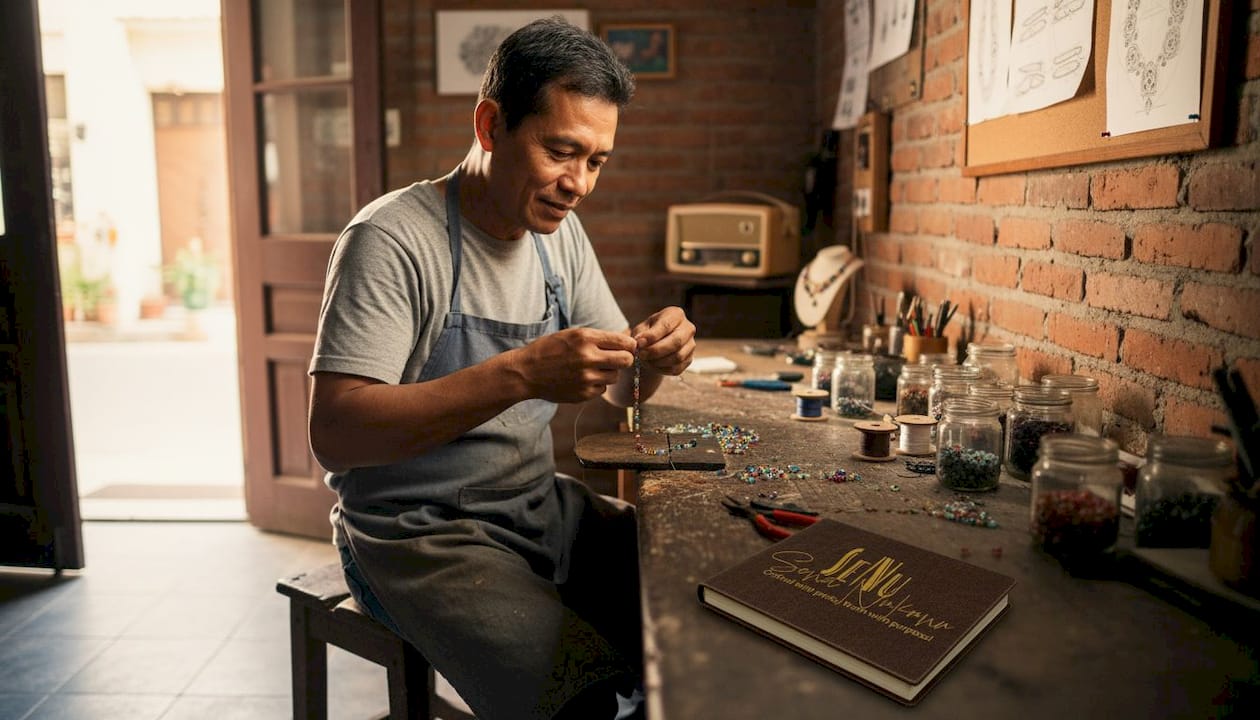
Ethical accessories prioritize craftsmanship, fair compensation, and sustainable sourcing. Brands like Oriaku Studio, for example, pay fair wages with 20% profit share to their artisans, and Krobo beads from Ghana are made using recycled glass, making them both culturally significant and environmentally conscious.
Here is a comparison of key ethical accessories and what makes them stand out:
| Accessory | Material | Ethical quality | Cultural origin |
|---|---|---|---|
| Krobo beads | Recycled glass | Handmade by Ghanaian artisans | Ghana |
| Oriaku brass pieces | Reclaimed brass | Fair wages, profit-sharing model | Nigeria |
| Coral alternatives | Sustainable resin or stone | Eco-friendly, non-extractive | West Africa (broad) |
| Woven raffia bags | Natural raffia fiber | Artisan co-op produced | Cameroon, Senegal |
| Leather sandals | Vegetable-tanned leather | Small-batch, artisan-made | Mali, Ghana |
Here is how to build your toolkit step by step:
- Start with beads. Krobo beads are a foundational piece. Seek sellers who confirm Ghanaian origin and handmade production.
- Add a brass or gold-toned statement piece. Look for brands transparent about their sourcing and worker conditions.
- Choose a woven or natural-fiber bag. This anchors the look in tradition without overpowering the outfit.
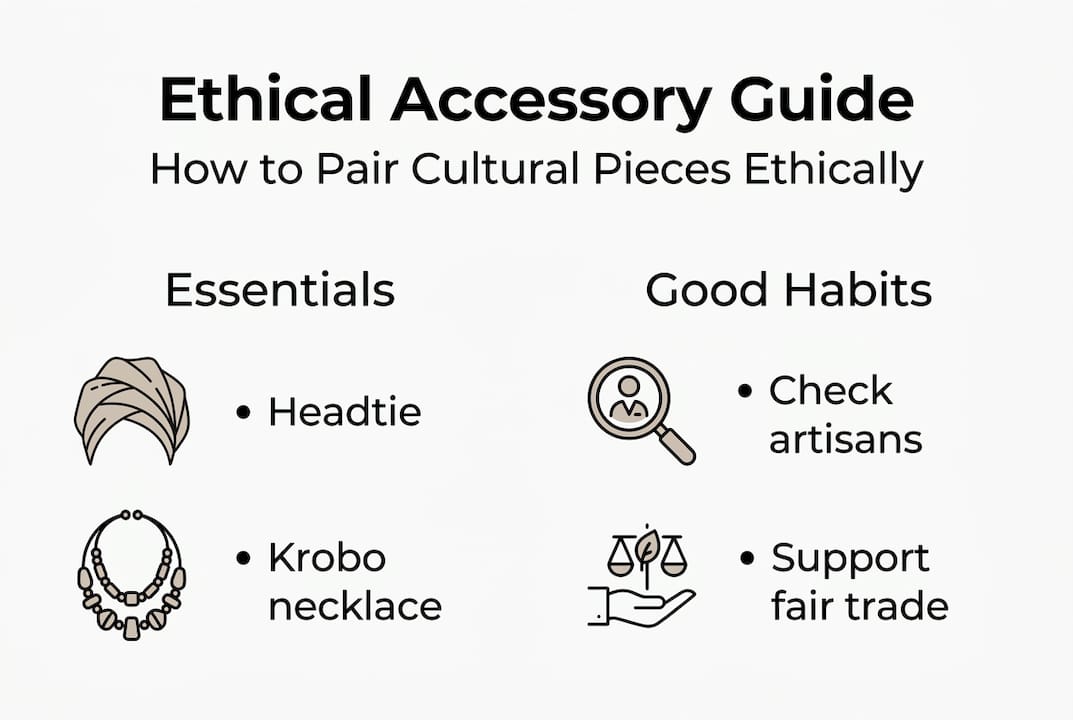
- Select a headtie or scarf. Even a simply tied gele adds cultural authenticity and elegance.
- Finish with handcrafted sandals. Vegetable-tanned leather or hand-woven styles complete the full cultural aesthetic.
Understanding handmade fashion's importance helps you make choices that go beyond aesthetics, choices that actually invest in living artisan traditions.
Pro Tip: Before purchasing, check whether the brand or seller provides information about the artisans who made the piece. Transparency is one of the clearest signs of an ethically run accessory business. You can also explore sustainable trends in West African fashion to discover brands already leading the way.
Step-by-step: How to pair accessories with your outfit
With ethical accessories in mind, here is your step-by-step guide to perfect pairings. The process is simpler than it looks, and it starts with one very important decision.
- Choose your foundation outfit first. Whether it is a bold Ankara kaftan, a flowing boubou, or a fitted adire set, your outfit sets the tone for everything else.
- Identify your focal accessory. This is your one standout piece, a dramatic gele, a chunky Krobo bead necklace, or a hand-stamped brass cuff. One statement accessory per outfit is the golden rule.
- Coordinate your metals and textures. Gold tones work beautifully with warm-toned fabrics like kente and brown adire. Silver and brass pair well with cooler indigo or white fabrics.
- Balance patterns with simplicity. If your outfit features a busy Ankara print, keep accessories minimal and let the fabric breathe. If you are wearing a solid or subtly patterned piece, go bolder with jewelry or headwear.
- Add functional pieces last. Belts and bags should complement, not compete. A woven bag in a neutral tone can tie a vibrant outfit together without stealing focus.
Here is a quick comparison to guide your pairing decisions:
| Outfit style | Best focal accessory | Supporting pieces |
|---|---|---|
| Bold Ankara print | Simple gold cuff | Neutral woven bag, flat sandals |
| Flowing boubou | Dramatic gele or headwrap | Minimal earrings, leather sandals |
| Solid adire set | Chunky Krobo bead necklace | Thin brass bangles, raffia bag |
| Kente fabric piece | Statement belt | Small gold earrings, strappy sandals |
Pro Tip: Use the step-by-step African outfit guide as a reference when building a new look from scratch. Having a visual framework makes it easier to stay intentional.
Troubleshooting: Common accessorizing mistakes and how to fix them
Mistakes can happen even with the right accessories. Here is how to sidestep the most common ones and keep your look cohesive and culturally respectful.
The most frequent errors include:
- Wearing too many statement pieces at once. A dramatic gele, a chunky necklace, and stacked brass bangles together can overwhelm an outfit and the eye. Choose one focal point and let the rest support it quietly.
- Clashing materials or tones. Mixing plastic costume jewelry with handwoven fabric, for example, sends conflicting visual and cultural messages. Keep materials in a similar family.
- Off-theme accessories. A sleek modern handbag can clash with a traditional boubou. Try a woven or embroidered bag instead to maintain the cultural cohesion of your look.
- Purchasing inauthentic artisan pieces. This is a real concern. Krobo beads have been imitated widely, but authentic ones are produced by Ghanaian artisans using a powder technique unchanged for over 300 years.
"Authenticity is not just about appearance. It is about the hands that made the piece, the traditions behind it, and the communities that benefit when you choose with care."
To spot authentic artisan accessories, ask these questions before buying: Does the seller name the artisan or community? Is the production method described? Are materials listed clearly? Ethical sellers almost always say yes to all three.
Layering without crowding is another skill worth developing. You can wear earrings and a bracelet together, but keep both understated if your necklace is bold. The goal is harmony, not competition. A culture-inspired fashion statement speaks loudest when it is thoughtfully composed, not loudly stacked.
Quick fix for clashing combinations: remove one item at a time and assess the look again. Usually, the problem resolves itself when you subtract rather than substitute.
A new perspective: Why authentic accessorizing makes a difference
Here is something the trend cycles will never tell you: the most impactful accessory you can wear is one that keeps a tradition alive. When you invest in a pair of Krobo bead earrings or a hand-stamped brass cuff from a verified artisan, you are not just completing an outfit. You are sustaining a livelihood, honoring a lineage, and adding your own chapter to a much longer story.
Ethical brands like Khoi and AFRIQUE KOD in Ghana and Nigeria, alongside Oriaku, are proof that supporting West African artisans does not require compromise on beauty or style. These designers produce pieces with intention, and that intention shows in every detail.
We believe that skipping fast fashion in favor of artisan-made accessories is not a sacrifice. It is an upgrade. You get a piece with a real story, made by real hands, that will last far longer than any trend. Explore modern West African style perspectives to see how this philosophy plays out in real fashion choices today.
Explore vibrant West African accessories with Sena Nukunu
You now have the knowledge to accessorize your cultural outfits with intention and pride. The next step is finding pieces that live up to that vision. At Sena Nukunu, we curate ethically crafted fashion and accessories rooted in West African heritage, designed to help you wear your story with confidence.
Every piece in our collection is chosen with craftsmanship and cultural respect in mind. Whether you are looking to complete a special occasion look or build a wardrobe that celebrates your roots daily, we are here for that journey with you. Explore vibrant styles that honor tradition, see all collections for curated looks, or get a latest style sneak peek before anyone else does.
Frequently asked questions
What are the most important accessories for a West African outfit?
The most important are belts to define shape, statement jewelry like Krobo beads, headties, woven bags, and leather sandals. Each adds a layer of cultural meaning beyond decoration.
How can I tell if an accessory is ethically made?
Check if it is handmade, if materials are clearly listed, and if the seller mentions artisan or fair trade co-ops. Transparent sourcing is always a strong indicator of ethical production.
How do I choose just one statement accessory?
Pick one bold focal point like a headtie or chunky Krobo necklace, then keep everything else minimal and supportive of that single focal piece.
Can I mix modern fashion with traditional African accessories?
Absolutely. Balance is the key; use classic accessories to ground your modern look and avoid letting competing statement pieces fight for attention at the same time.