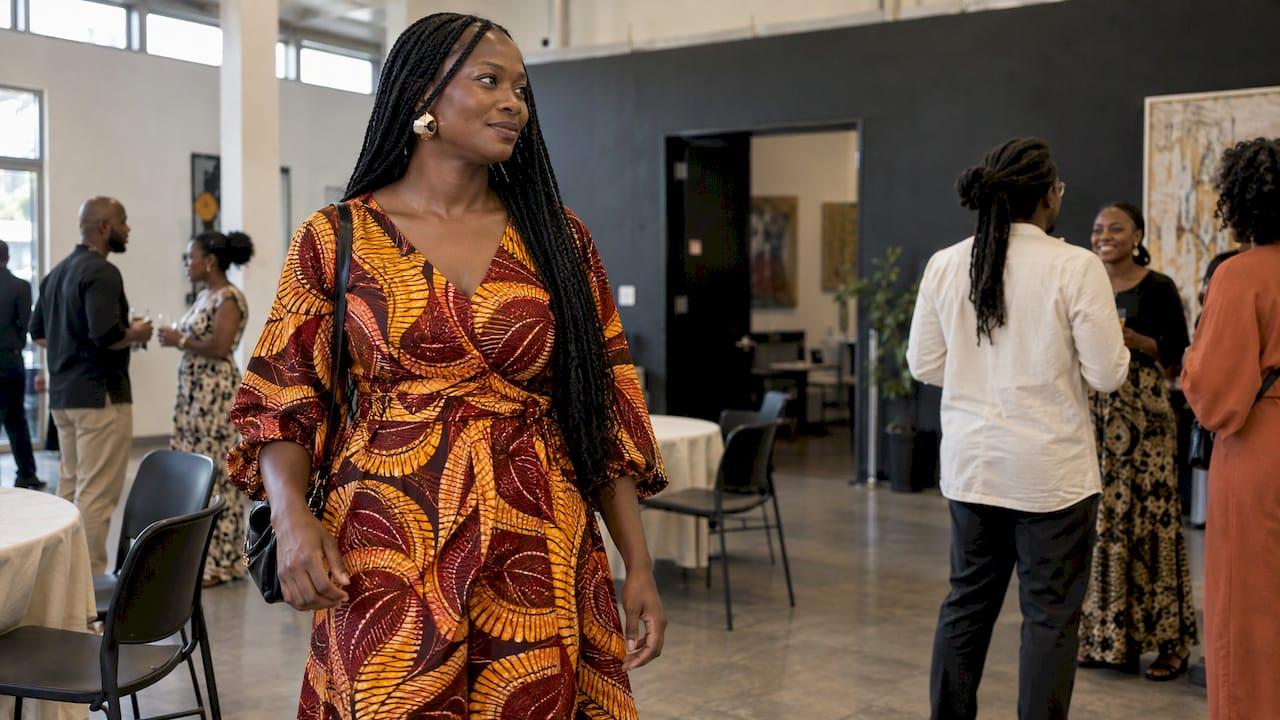
African attire etiquette comes down to three habits: learn what the garment means, dress for the occasion and the host, and choose pieces whose makers and origins are clear. Do those three things and you can wear agbada, kaftans, wrap dresses and printed sets with confidence, whether you are heading to a wedding, the office or a weekend dinner. At Sena Nukunu, we design West African ready-to-wear and custom pieces for men and women, including dresses, kaftans, agbada sets, jackets and matching sets, made through ethical manufacturing in limited quantities. This guide gives you the etiquette that goes with them.
TL;DR
- Learn the story first: what the cloth, color or pattern means, and where it comes from. "It looks nice" is not enough preparation.
- At weddings and celebrations, follow the couple's dress code, color palette or fabric request, and ask the host family if you are unsure.
- For everyday wear, start with one standout piece and let it speak for itself instead of stacking many elements.
- Never wear another culture's clothing as a costume, and never copy sacred or protected patterns such as kente.
- Buy from makers who credit the origin of their designs and the people who made them.
Table of Contents
- Why etiquette matters: African dress is not one thing
- Before you wear it: what to learn about a garment
- Wedding and celebration etiquette
- Everyday etiquette: wearing African style at work and in life
- What is considered disrespectful
- Ask, learn, credit: a short routine
- Choosing pieces you can wear with pride
- Our perspective
- Find your piece
- FAQ
- Sources
Why etiquette matters: African dress is not one thing
Africa has 55 countries and more than 800 linguistic groups, and dress traditions follow each group's own social, religious and political history. A Yoruba wedding outfit, an Ashanti ceremonial cloth and an Ewe weaving tradition are different things with different rules.
That is the first etiquette point: do not treat "African attire" as a single costume category. When you say "I'm wearing a Ghanaian kaftan" or "this is a Nigerian aso oke set" instead of "my African outfit," you show you know the difference.
Cloth carries meaning. The V&A's guide to African fashion explains that African textiles embody place, heritage, memory and personal and political histories, and that these traditions are living practices that artisans keep reinventing for contemporary tastes. The Metropolitan Museum of Art describes African cloth as embedded in local value systems, used to clothe the body, to protect physical and spiritual well-being, and to convey wealth and authority.
So when you put on a robe or a printed set, you are joining a conversation that is centuries old. Etiquette is simply how you join it well.
If you want a deeper grounding before you shop, our guide to West African textile traditions walks through the cloths you are most likely to meet.
Before you wear it: what to learn about a garment
NPR's 2018 reporting on when it is acceptable to wear another culture's clothing makes a simple point: you should learn what a garment, print or symbol means within its culture and what it may mean when an outsider wears it. A quick checklist helps.
- Name the garment. Is it an agbada, a kaftan, a buba and iro, a dashiki, a boubou? Each has a region, a history and typical occasions.
- Name the cloth. Is it handwoven, printed, dyed or embroidered? Techniques differ, and so does their weight in a culture.
- Know the colors. Colors often carry meaning. Our guides to color in West African clothing and color symbolism in African patterns are a good start.
- Know who made it. A piece with a clear maker and origin is a piece you can speak about with pride.
- Know the occasion. Some cloths are tied to ceremonies, rites of passage or status. Wear them where they fit.
The kente example
Kente is the clearest case. The Smithsonian explains that kente is handwoven silk and cotton from Ghana, that its colors and patterns tell stories, that designs are used for specific occasions, and that they are protected by law in Ghana. The same piece notes that appropriate handwoven cloth may be worn at events such as graduations and funerals.

It also draws a useful line. Diana Baird N'Diaye, a Smithsonian cultural specialist, distinguishes respectful use of handwoven Ghanaian kente from copying actual kente patterns as generic fashion. Abstract designs inspired by kente should say clearly where the inspiration comes from and should not reproduce real patterns.
If kente interests you, read how to tell Ashanti and Ewe kente apart and why kente's history matters now. Knowing the difference is part of wearing it well.
Wedding and celebration etiquette
Weddings are where most readers first ask this question, and the answer is practical rather than mysterious.
Follow the couple's instructions. A guide to Nigerian wedding guest attire says guests should follow the stated dress code, theme, color palette or fabric instructions. Many couples choose an aso ebi, a coordinated fabric for family and friends. If you are asked to wear it, wear it. If you are not, do not try to match the family.
Traditional or elegant Western both work. The same guide says traditional Nigerian attire may be appropriate, as may elegant American clothing that meets the required formality. You are never obliged to wear African dress, and no one expects a guest to arrive in a perfect replica of the wedding party.
Know the classics. The guide lists agbada, iro and buba, gele, lace, coral beads and gold jewelry among popular Nigerian wedding attire. For men, an agbada set brings volume, length and ceremony. For women, a head wrap, a structured dress or a coordinated set can carry the occasion.
Do not outshine the couple. Avoid white or ivory unless the invitation asks for it, avoid colors the couple has reserved for the wedding party, and skip anything that competes with the bride or groom.
Ask the host. NPR's report advises asking the most relevant representatives, such as the host family, whether participation is welcome, instead of deciding on the culture's behalf that a garment is acceptable. C. Thi Nguyen, quoted in that piece, argues that permission should come from relevant representatives of the culture or event. A short text to the couple or a family member is enough: "I'd love to wear traditional attire. Is that welcome, and is there a color I should avoid?"
A simple wedding plan
| Situation | What to do |
|---|---|
| The invitation names a fabric or color | Wear exactly that, or ask how to get it |
| The invitation names a formality only | Choose African attire or elegant Western wear that meets it |
| You are unsure about a traditional outfit | Ask the host family before you buy |
| You are in the wedding party | Follow the couple's full instructions, including head wraps and jewelry |
For men planning a ceremony look, our men's agbada ensembles and heritage pieces are designed for exactly these occasions, and for women the women's collections include dresses and sets for celebrations.
Everyday etiquette: wearing African style at work and in life
You do not need an occasion to wear African attire. The Root's discussion of appropriation and appreciation offers a rule that works for everyday dress: choose one African fashion item or category, such as a bag, a blouse or bracelets, and let it speak for itself. Combining too many elements, it says, can be culturally confusing. It also encourages you to learn the history behind your style choices.
In practice:
- At the office: Pair a structured jacket or a bold-print blouse with neutral trousers or a skirt. One statement element is enough.
- At dinner or a gallery opening: A kaftan or a matching set works as a single complete outfit. Keep accessories quiet.
- On the weekend: A printed dress with simple sandals lets the fabric lead.
- For men: A kaftan set with clean shoes reads as polished and deliberate. Save the full agbada for ceremony and celebration.
If you want ideas for building a wardrobe piece by piece, see our list of must-have African-inspired pieces, and our notes on why African prints are popular.
The 3-3-3 rule and other shortcuts
Readers often ask about wardrobe shortcuts like the 3-3-3 rule (three tops, three bottoms, three pairs of shoes). It is a packing idea, not a cultural rule, but it fits African style well: a few strong, well-made pieces that you can combine and repeat beat a closet of costume-like outfits.
What is considered disrespectful
People often search for what is disrespectful in African culture. There is no single answer because cultures differ, but the research points to consistent patterns.
Costume use. NPR's report says cultural-heritage scholars treat permission and context as central. Wearing another culture's clothing may be appropriate when invited by the relevant family or community, for solidarity. Wearing it to mock, offend, assert power, or as a Halloween costume is problematic. Erich Hatala Matthes, quoted there, treats context and purpose as ethically significant: invitation and solidarity are different from mockery or costume.
Copying protected or sacred patterns. As the Smithsonian explains, designers should not copy actual kente patterns for abstract fashion versions and should be clear about their inspiration. Buyers can apply the same standard: ask where a design comes from.
Treating a continent as a single culture. Mixing a Maasai-style bead collar, a Ghanaian cloth and a Nigerian head wrap in one outfit flattens very different traditions. One piece, well understood, is better.
Wearing ceremonial pieces out of context. Cloth once used to convey authority or mark a rite of passage deserves the occasion it was made for. The Met notes that African cloth has long been used to convey wealth and authority, so wear those pieces with that weight in mind.

Skipping the credit. When someone compliments your outfit, name it. Say what it is, where the tradition comes from and who made it.
Ask, learn, credit: a short routine
- Ask the host or a friend from the culture when you are unsure.
- Learn the garment's name, region and meaning.
- Credit the tradition and the maker when you wear and talk about it.
It takes five minutes, and it changes how you carry the clothes.
Choosing pieces you can wear with pride
Etiquette starts at the point of purchase. A piece made with clear origin, fair practice and care gives you something real to say when someone asks about it.
When you shop, look for:
- Named origins. The garment is described as West African in inspiration and identified by type, such as agbada, kaftan or matching set.
- Ethical manufacturing. Clear commitment to how and by whom the clothes are made.
- Limited quantities. Small runs make a piece feel personal and keep it from becoming a trend item.
- Fit for your occasion. A ceremonial agbada set, a comfortable everyday dress and a work jacket are different purchases.
The V&A's guide reminds us that cloth traditions remain living practices that artisans reinvent for contemporary tastes. Choosing clothing that blends tradition with modern cuts is part of that story, not a departure from it.
Our perspective
Sena Nukunu began with a belief that West African fashion is heritage, not a passing trend. Every piece we make is meant to carry craftsmanship, cultural storytelling and respect for the artisans behind it.
That is why we think etiquette begins with curiosity. When you know the story of a kaftan, an agbada or a matching set, you wear it differently: with more confidence and more care. Our pieces are made through ethical manufacturing and in limited quantities, so each one has the feeling of something chosen, not something grabbed.
Whether you are celebrating your own heritage or honoring someone else's at their wedding, we invite you to wear the change: learn the meaning, honor the makers and let the clothes speak. Dressing with intention is how legacy travels.
Sena
Find your piece
If you are dressing for a celebration, our Woven Nobility: Kings' Robe collection and our men's agbada ensembles bring ceremony to the room. For women, the Woven Radiance: Queens in Bloom collection and our dresses are made for statement moments, and you can browse every line on our collections page.
Each piece is West African in inspiration, ready to ship, and made in limited quantities with ethical manufacturing from our home in Florida.
FAQ
What is considered disrespectful in African culture when it comes to clothing?
The most common problems are wearing another culture's clothing as a costume, wearing it to mock or offend, and copying protected patterns such as kente. NPR's report on this topic points to permission and context as the key tests. Learn the meaning first, and ask the host family when you are unsure.
Can I wear African attire to a wedding if I am not African?
Yes, when it is welcome. Follow the couple's dress code, theme or fabric request, and ask the host family if you are unsure. Elegant Western clothing that meets the formality is also fine, so you never need to wear traditional dress to be a good guest.
How do I wear African clothing for everyday occasions without overdoing it?
Choose one item, such as a blouse, a bag or a kaftan, and let it carry the outfit. Combining many elements can be confusing culturally and visually. Learn the history behind what you wear so you can speak about it.
What should I learn before wearing kente?
Kente is handwoven silk and cotton from Ghana, and its colors and patterns tell stories tied to occasions. Its designs are protected by law in Ghana. Wear genuine handwoven cloth for suitable occasions, and avoid garments that copy actual kente patterns without credit.
Sources
- Africa fashion: cloth of a continent, V&A
- How to Read African Textiles, The Metropolitan Museum of Art
- Africa, Sub-Saharan: History of Dress, Encyclopedia.com
- When Is Kente Cloth Worn and More Questions From Our Readers, Smithsonian Magazine
- When Is It OK To Wear Another Culture's Clothing?, NPR
- Ankara, Ankhs and the Ongoing Appropriation vs. Appreciation Argument, The Root
- What to Wear to a Nigerian Wedding: A Guide to Nigerian Wedding Guest Attire