TL;DR:
- Color in West African textiles is a complex language that encodes social, spiritual, and cultural meanings through specific hues. The symbolism of colors varies by tradition and occasion, often combined with patterns and techniques to convey layered messages. Efforts like Ghana’s 2025 Geographical Indication and UNESCO recognition protect authentic meaning from commercialization and imitation.
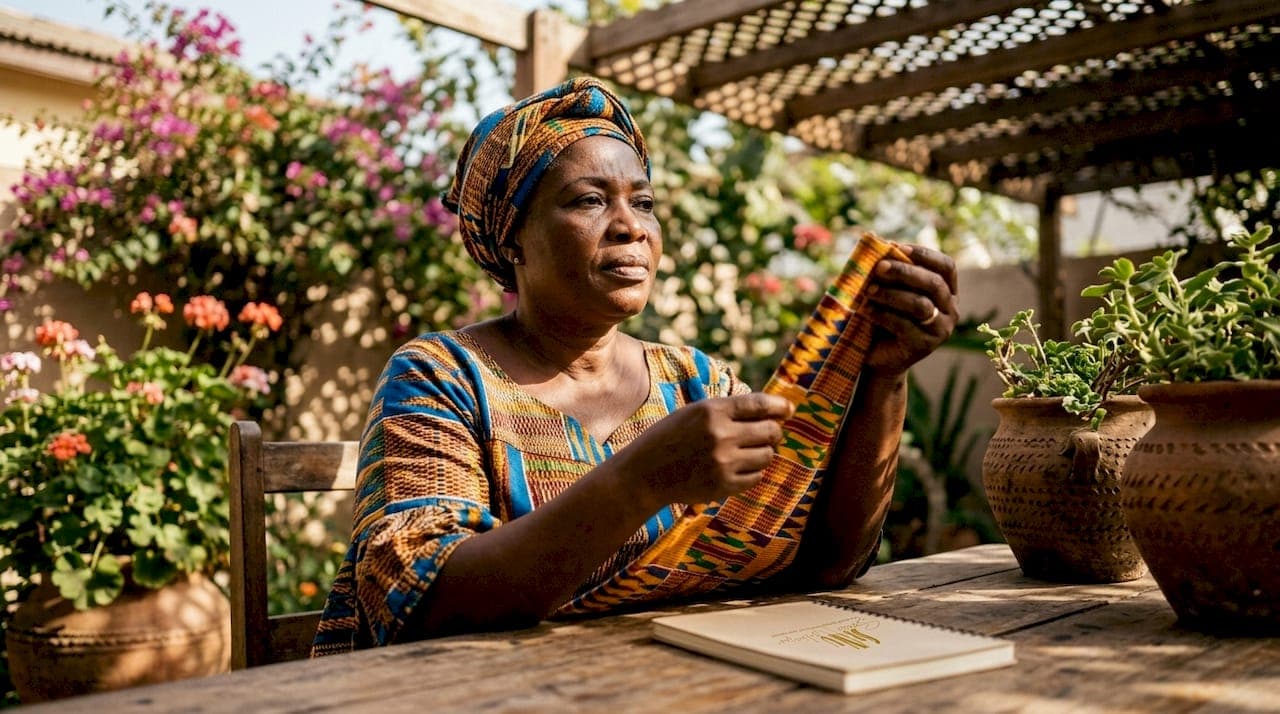
Color in West African clothing is a sophisticated language, not a decorative choice. Each hue carries specific meanings tied to social status, spiritual belief, historical memory, and communal identity. The role of color in West African clothing spans traditions from the Asante courts of Ghana to the Yoruba ceremonies of Nigeria, where textiles function as what scholars call "wearable texts." UNESCO recognized Kente weaving as Intangible Cultural Heritage in december 2024, confirming what West African communities have always known: these cloths speak. Understanding their color symbolism requires moving past surface aesthetics and into the grammar of an ancient visual system.
What are the symbolic meanings of key colors in West African textiles?
Color symbolism in West African textiles is not universal. It is locally constructed and must be interpreted alongside technique, motif, religion, and ceremony. That said, certain colors carry widely recognized meanings across major traditions, particularly within Kente and Bogolan cloth.
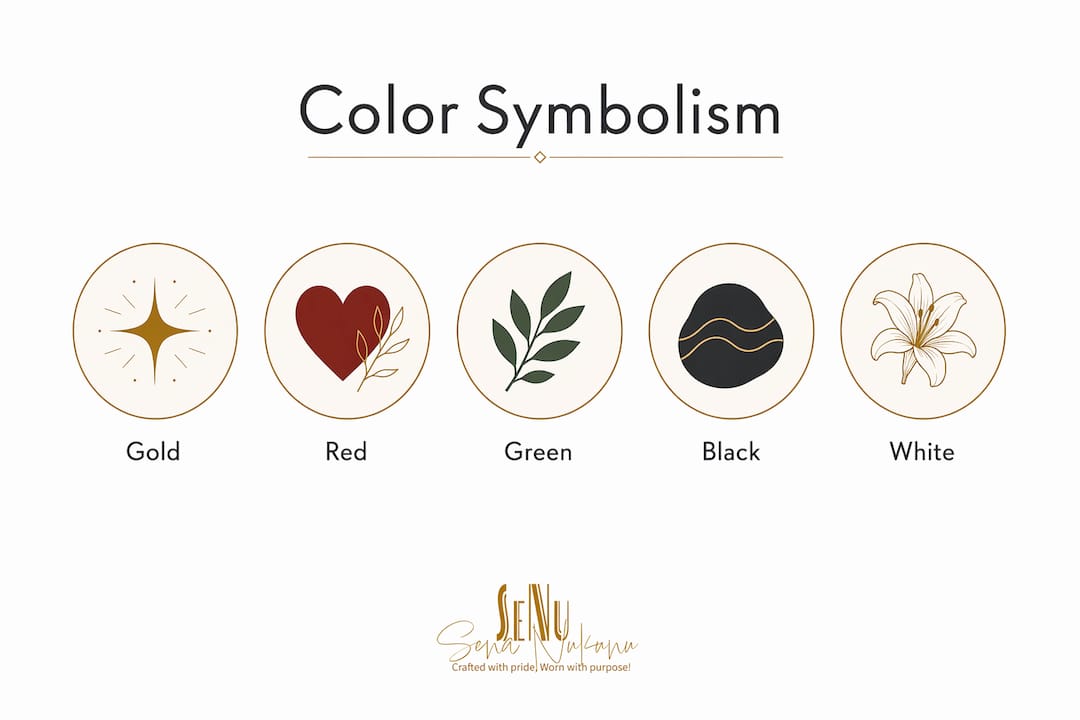
The core color meanings in Kente and related traditions include:
- Black: Spiritual energy, maturity, and connection to ancestors. Black is not primarily a mourning color here. It signals depth of experience and spiritual authority.
- Red: Political passion, sacrifice, and vitality. Red appears in cloths worn during moments of high social stakes, including conflict commemoration and leadership transitions.
- Gold and yellow: Royalty, wealth, and spiritual purity. Gold is the color of the Asante court and signals divine favor and material abundance.
- Green: Renewal, fertility, and the richness of the land. Green connects the wearer to agricultural cycles and new beginnings.
- Blue: Peace, harmony, and the spiritual realm. Blue appears frequently in cloths associated with healing and calm transitions.
- White: Purification, joy, and festive celebration. White is worn at naming ceremonies and moments of communal rejoicing.
- Purple: Femininity and feminine power. Purple is traditionally associated with women and worn to signal grace and authority.
- Maroon: Healing and connection to Mother Earth. Maroon grounds the wearer in ancestral soil and restorative energy.
These color meanings are not casual choices. They are deeply embedded in cultural texts and social functions, passed down through generations of weavers, chiefs, and community elders. Bogolan cloth from Mali, for example, uses fermented mud and plant dyes to create earthy tones that encode hunting success, female rites of passage, and protection from spiritual harm. The color is inseparable from the process that creates it.
How does color combine with pattern and occasion to create layered meaning?
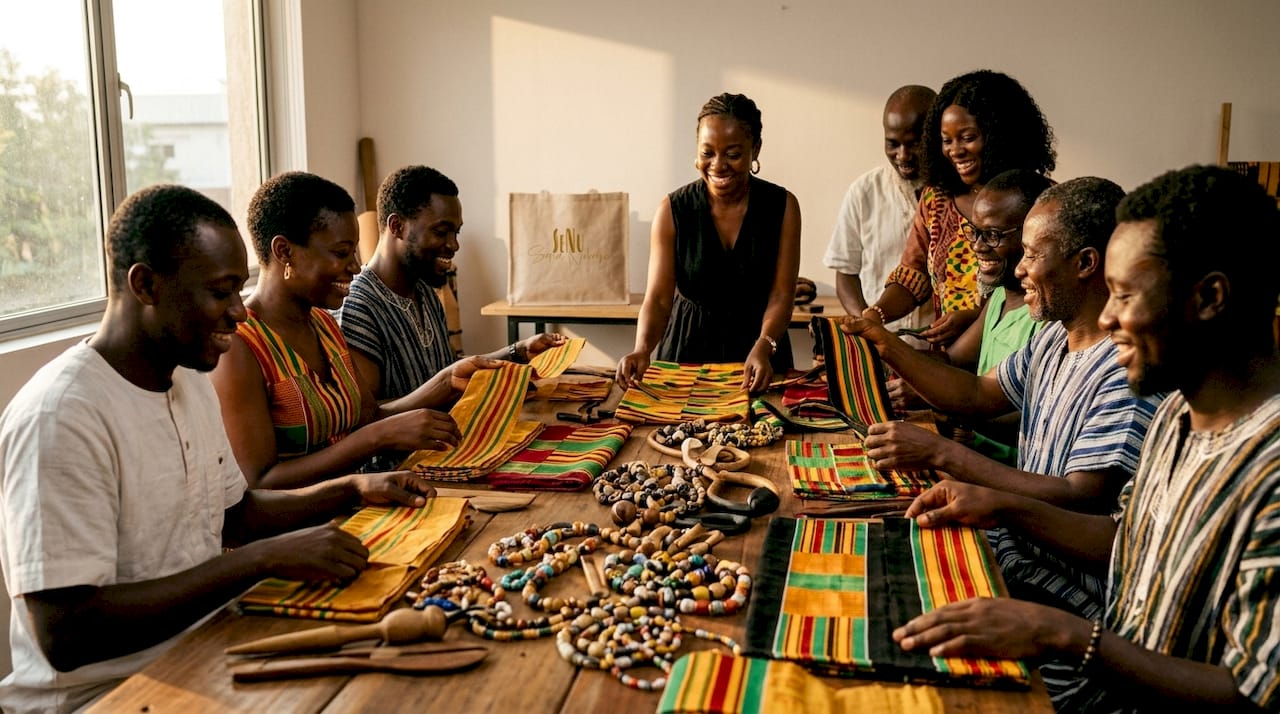
Color is the most visible element of a West African textile, but it is the smallest part of the full message. Kente patterns encode proverbs, historical events, and philosophical ideas through named designs. The color sets the emotional register; the pattern delivers the specific content.
Each named Kente pattern carries a meaning that a socially literate viewer can read. A pattern called "Sika Futuro," meaning "gold dust," signals wealth and prosperity when woven in gold and black. The same pattern in a different color combination shifts the message entirely. This is why reducing Kente to a color palette misses the point. The cloth is a sentence, and color is just one word in it.
Occasion determines which cloths are appropriate. Coronations call for gold-heavy Kente with patterns tied to royal lineage. Funerals in many Akan communities require subdued tones, often red and black, to honor the gravity of the moment. Marriages bring out white and gold to signal joy and abundance. Wearing the wrong cloth to the wrong event is not a fashion mistake. It is a social statement, and communities notice.
Pro Tip: When studying or wearing West African textiles, always research the specific ethnic tradition and occasion context. A color that signals celebration in one community may signal mourning in another.
Handwoven cloths carry different symbolic weight than factory-printed imitations. The technique itself is part of the meaning. A handwoven Kente strip, produced on a narrow-band loom by a trained Asante weaver, carries the artisan's knowledge and community authorization. A printed fabric using the same colors and patterns does not carry that authority, even if it looks similar to an untrained eye.
What social functions does color serve in West African clothing traditions?
Color in West African attire organizes communities, not just wardrobes. The most structured example is the Aso-Ebi system in Yoruba culture, where color-coordinated fabrics function as a social map of relationships during ceremonies. Every attendee's fabric signals their degree of closeness to the host family.
The social functions of color in West African clothing traditions include:
- Marking kinship proximity. In Aso-Ebi ceremonies, the host family wears one fabric, close relatives wear another, and community members wear a third. Color and fabric type communicate relationship status without a word spoken.
- Signaling social roles. Chiefs, elders, priests, and warriors each have color associations that communicate their function within the community. Wearing those colors without the corresponding role is a social transgression.
- Declaring solidarity. Coordinated colors at naming ceremonies, weddings, and festivals declare collective support for the host family. The visual unity is a public statement of community bonds.
- Marking life transitions. Color choices at naming ceremonies, initiations, and funerals mark the individual's movement from one social stage to another. The community witnesses and validates the transition through shared color recognition.
- Encoding political identity. In the courts of Benin, Oyo, Dahomey, and Asante, textiles like Aso-Oke and Kente functioned as stable social technologies encoding the wearer's status and political allegiance through color and pattern.
Pro Tip: If you attend a West African ceremony as a guest, ask the host family whether Aso-Ebi fabric has been designated. Wearing the wrong color or fabric can unintentionally misrepresent your relationship to the family.
The Yoruba Aso-Ebi system is particularly sophisticated. It makes the community structure legible to every attendee, functioning less like fashion and more like a seating chart made visible through cloth. This is clothing as governance, not decoration.
How do modern protections shape the meaning of West African textiles?
Ghana's 2025 Geographical Indication for Kente is the clearest contemporary example of color symbolism being legally protected. The GI protection distinguishes authentic handwoven Kente from factory-produced imitations, recognizing that cultural meaning is tied to traditional production processes and artisan communities, not just color or pattern design.
| Feature | Authentic handwoven Kente | Factory-printed imitation |
|---|---|---|
| Production method | Narrow-band loom, trained artisan | Industrial printing process |
| Cultural authorization | Community and lineage knowledge | None |
| Color meaning integrity | Preserved through tradition | Flattened or absent |
| Economic benefit | Supports Ghanaian weavers | Bypasses artisan communities |
| Legal status (2025) | Protected under Ghana's GI | Not authorized to use Kente name |
Experts caution against "cultural flattening," the process by which African textiles are reduced to mere color palettes, stripped of their function as communication structures with historical and philosophical content. When a Kente-inspired print is sold without context, the buyer receives color without meaning. The cloth becomes decoration rather than text.
UNESCO's recognition of Kente weaving as Intangible Cultural Heritage in december 2024 reinforced the global case for protecting these traditions. That recognition carries weight beyond symbolism. It creates international pressure to support authentic production and resist commodification. For fashion enthusiasts and researchers, it is a reminder that the colors they admire carry obligations, not just aesthetics.
How can you engage respectfully with West African color symbolism today?
Respectful engagement with West African color symbolism starts with cultural literacy, not just visual appreciation. The colors you see in a Kente cloth or Bogolan textile are entry points into a much larger system of meaning. Treating them as decoration alone is the first mistake.
Practical steps for informed engagement include:
- Learn the regional context. Color meanings vary significantly across West Africa. Gold means royalty in Asante tradition. It may carry different associations in Malian or Senegalese contexts. Never assume continent-wide uniformity.
- Research the textile tradition. Kente, Bogolan, Adire, and Kuba cloth each have distinct histories, techniques, and color systems. Understanding which tradition you are engaging with sharpens your interpretation.
- Support authentic artisans. Purchasing from producers who support West African artisans preserves the economic foundation that keeps these traditions alive. Factory imitations undercut the communities that hold the knowledge.
- Ask before wearing. In communal settings, color choices carry social implications. If you are attending a West African ceremony, ask your host about appropriate attire before selecting colors independently.
- Study the patterns alongside the colors. A guide to contemporary West African motifs can help you understand how pattern and color work together to create meaning, rather than treating color as the whole story.
- Engage with culturally grounded fashion platforms. Senanukunu curates West African-inspired fashion with attention to cultural storytelling and ethical production, offering a starting point for fashion enthusiasts who want meaning alongside beauty.
The impact of color on fashion in West Africa extends into the global marketplace. As West African textiles gain international visibility, the risk of oversimplification grows. Cultural literacy is the best protection against reducing a sophisticated visual language to a trend.
Key Takeaways
Color in West African clothing functions as a structured communicative system, not decoration, encoding social status, spiritual meaning, and historical identity through specific hues, patterns, and occasion-based conventions.
| Point | Details |
|---|---|
| Color carries specific meaning | Each hue in West African textiles signals a defined social, spiritual, or historical message. |
| Pattern completes the message | Color sets the register; named patterns deliver the specific cultural content. |
| Occasion determines appropriateness | The same cloth carries different meanings at a coronation, funeral, or naming ceremony. |
| Aso-Ebi maps community | Coordinated colors in Yoruba ceremonies signal relationship proximity to the host family. |
| Legal protections now exist | Ghana's 2025 GI and UNESCO's 2024 recognition protect Kente's authentic color meanings from imitation. |
Color as language: what years of studying West African textiles taught me
Most people who encounter West African textiles for the first time see color. That is the natural first response. The golds are luminous, the reds are commanding, and the greens feel alive. But stopping at color is like reading the first letter of a word and calling it a sentence.
What I have come to understand is that West African textile traditions represent some of the most sophisticated communication systems ever developed in cloth. The Aso-Ebi system alone is a masterwork of social engineering. It makes an entire community's relational structure visible in a single room, without a program or a seating chart. That is not fashion. That is architecture made from fabric.
The misconception I encounter most often is the idea that African color symbolism is intuitive or universal. It is neither. It is learned, regional, and deeply tied to specific communities and lineages. When someone wears gold because it "feels royal," they are borrowing a conclusion without understanding the argument. The meaning lives in the tradition, not the color itself.
What gives me real hope is the growing movement to protect these traditions legally and economically. Ghana's 2025 Geographical Indication for Kente is not just a trade policy. It is a declaration that meaning matters, that the knowledge embedded in a handwoven cloth belongs to the community that created it. Every time you choose an ethically made garment rooted in authentic tradition, you participate in that declaration.
The global audience for West African fashion is growing. The responsibility that comes with that growth is to learn the language, not just admire the colors.
— Sena
West African color traditions, brought to life through Senanukunu
Every piece in the Senanukunu collection carries the spirit of a tradition where color means something. The brand's curated selection of West African-inspired dresses and statement sets draws on authentic textile traditions, honoring the cultural meaning of color through thoughtful design and ethical production.
Senanukunu was built in Florida with a clear purpose: to make culturally rich West African fashion accessible to women who want their clothing to tell a real story. Each piece is crafted in limited quantities, supporting artisan communities and preserving the integrity of the traditions behind the colors. When you wear Senanukunu, you wear a legacy. Visit Senanukunu to find your piece of that story.
FAQ
What does the color gold mean in West African clothing?
Gold represents royalty, wealth, and spiritual purity in West African textile traditions, particularly within Asante Kente cloth. It is the color most closely associated with divine favor and leadership.
Is color symbolism the same across all of West Africa?
Color symbolism is locally constructed and varies significantly by region, ethnic group, and occasion. A color that signals celebration in one community may carry a different meaning in another.
What is the Aso-Ebi system and how does color work in it?
The Aso-Ebi system is a Yoruba practice of coordinating fabrics and colors at ceremonies to signal degrees of relationship to the host family. Different colors and fabrics mark different levels of kinship and community roles.
How does Ghana's 2025 Kente GI protect color symbolism?
Ghana's 2025 Geographical Indication distinguishes authentic handwoven Kente from factory imitations, protecting the cultural meanings embedded in traditional color use and weaving techniques.
Why is pattern as important as color in West African textiles?
Named patterns in cloths like Kente encode proverbs, historical events, and philosophical ideas. Color sets the emotional tone, but the pattern delivers the specific cultural message, making both elements necessary for full interpretation.