TL;DR:
- African textile colors tell stories about identity, spirituality, and social ties rather than serving for decoration alone.
- Different hues, such as red for vitality or gold for royalty, have culturally specific meanings shaped by context and tradition.
Every color in African textile tradition carries a story. Red speaks of life and sacrifice. Gold announces royalty. Black honors the wisdom of those who came before. Color symbolism in African patterns is not decoration — it is a structured visual language, as deliberate and layered as spoken words, encoding identity, spirituality, and social belonging into every thread.
Here is what the major colors communicate across African cultures:
- Red: Life, vitality, blood, and ancestral connection. Among the Yoruba, red (called Pupa) represents the life force, and in Uganda, red and black tones appear in bark cloth used for ceremonies.
- Yellow/Gold: Royalty, wealth, prosperity, and fertility. In Ashanti culture, gold signals spiritual purity and high status, while in Berber tradition, yellow evokes the warmth of the sun.
- Green: Growth, renewal, and connection to the land. It is the most optimistic color in the palette, associated with new beginnings across many West African communities.
- Black: Maturity, spiritual depth, and ancestral wisdom. The Yoruba use black (Mmere Dane) to symbolize maturity and wisdom, often in funerals and commemorations. Outsiders frequently misread it as mourning alone, but it carries far more dignity than that.
- White: Purity, spirituality, and transcendence. In Yoruba traditions, white connects the wearer to the divine and to ancestral realms.
- Blue: Peace, protection, and harmony. In Yoruba culture, indigo blue signals spirituality, while in Berber communities, blue represents protection from harm.
Color meanings are always context-dependent. The same hue worn at a wedding carries a different weight than at a funeral. Understanding African fabric color symbolism means reading the occasion, the community, and the intention together, not the color alone.
Table of Contents
- How color symbolism in African patterns works through motifs and design
- Why cultural context shapes the meaning of every color and pattern
- How Senanukunu carries West African color traditions into contemporary fashion
- Key Takeaways
How color symbolism in African patterns works through motifs and design
African patterns are not background texture. They are arguments, prayers, and aphorisms made visible, chosen with the same care a speaker chooses words.
Adinkra symbols from the Akan people of Ghana are among the most codified examples of this visual philosophy. Each mark compresses an entire concept into a single form:
- Sankofa: A bird turned backward while flying forward, meaning it is not wrong to return for what you forgot. Wearing it is a statement about how you move through your own life.
- Gye Nyame: Declares the supremacy and omnipresence of God. One of the most total statements in any visual language.
- Duafe: The wooden comb, representing feminine virtue and the discipline of self-care.
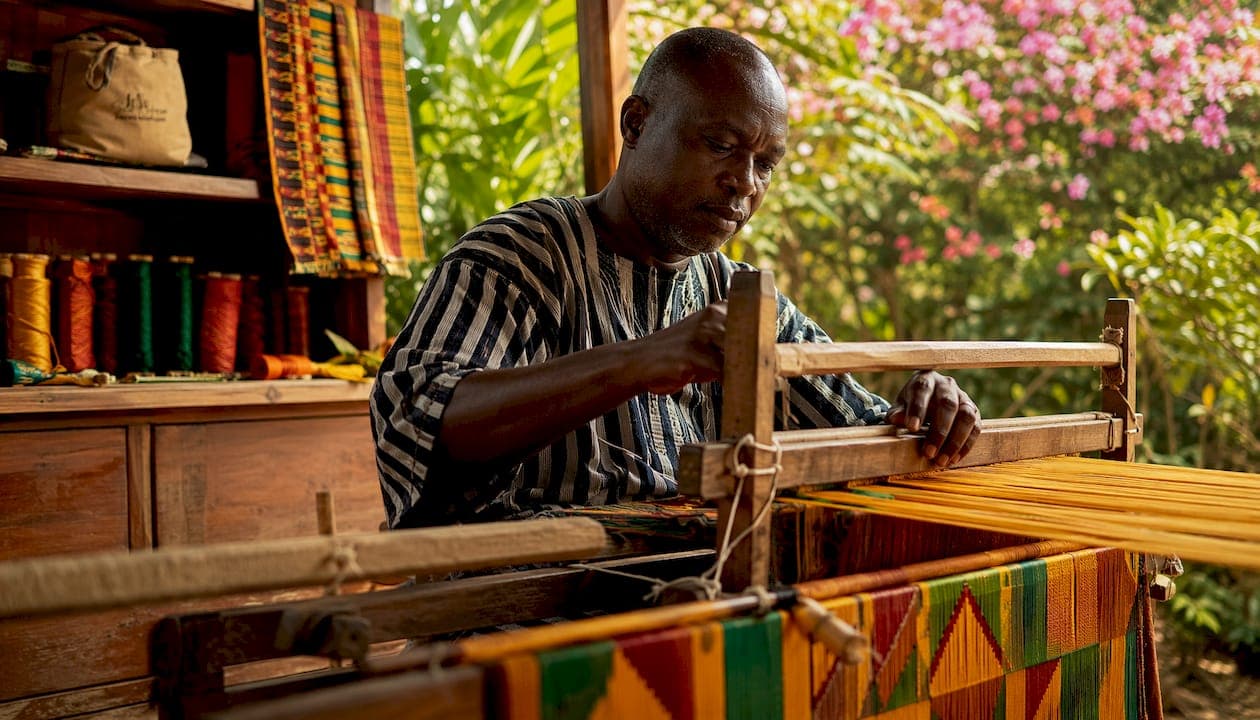
Kente cloth from Ghana uses geometric patterns to communicate social status, values, and occasion. The specific arrangement of gold, green, and red strips in a Kente weave is never accidental. Each configuration has a name and a meaning, and wearing the wrong pattern to the wrong occasion is a social statement in itself.
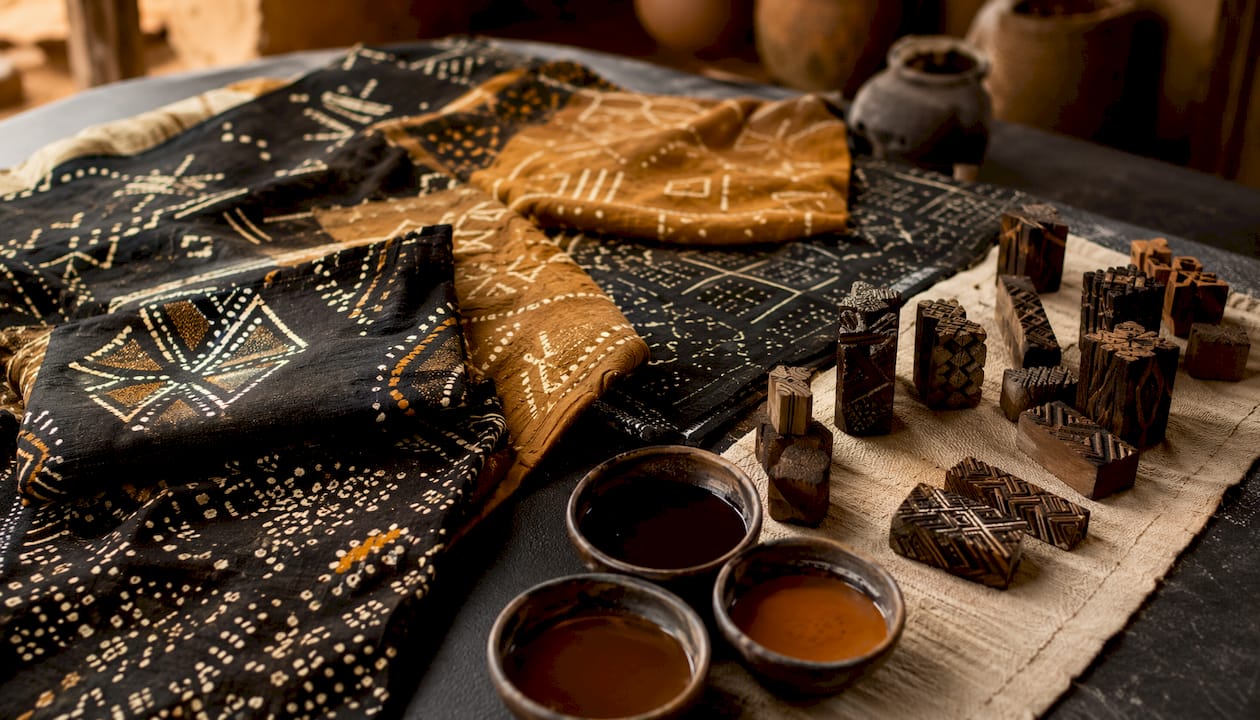
Bogolanfini, the Malian mud cloth, tells its stories through earthy ochres, deep blacks, and cream whites drawn from fermented mud and plant dyes. The symbols on Bogolanfini traditionally marked hunters, warriors, and women at significant life transitions. The earth tones are not aesthetic choices — they are the material itself, carrying the memory of the land.
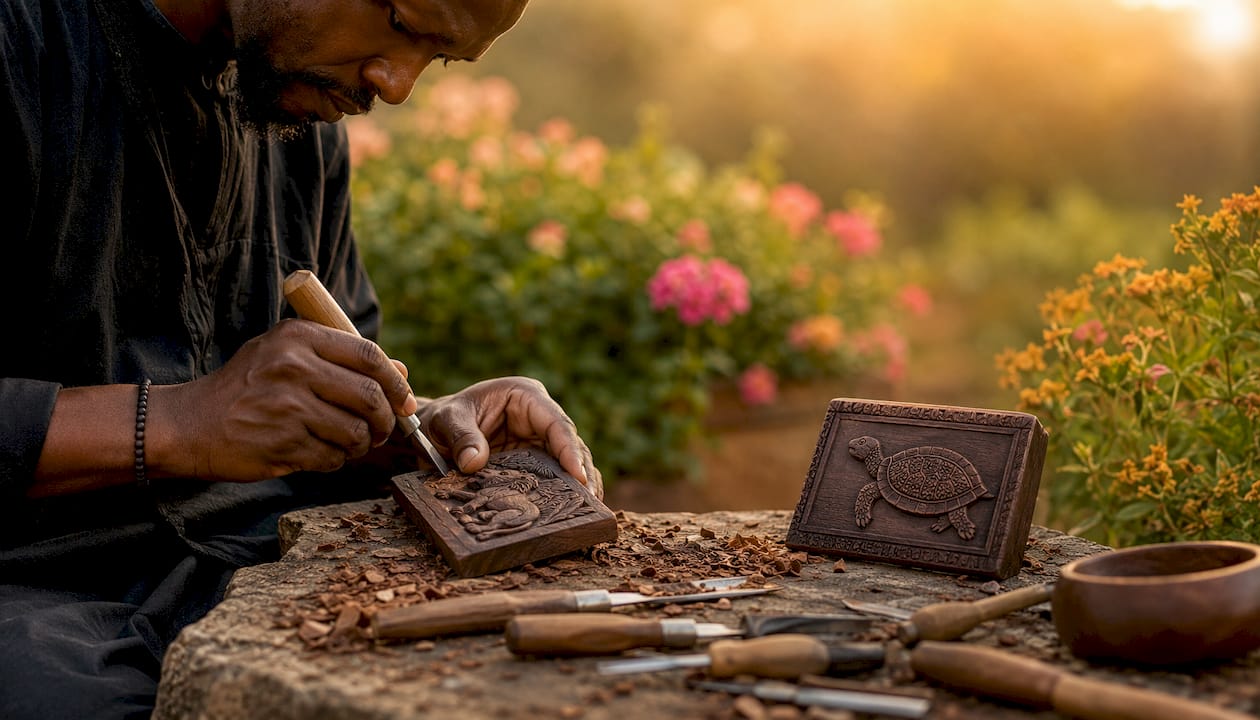
Animal and plant motifs carry their own symbolic weight. The lion signals courage. The tortoise represents patience and a long view. Diamond shapes in the Cameroon Grassfields refer to frogs, standing for fertility and increase. These are not illustrations — they are claims about what the wearer values or aspires to carry into a ceremony, a day, a life.
Pro Tip: When you encounter an African textile with animal or geometric motifs, look up the specific cultural origin before assuming a universal meaning. A spiral in one tradition signals continuity; in another, it may reference a specific ancestral story.
Why cultural context shapes the meaning of every color and pattern
Color in African art operates as a structured system of signs, shaped by cultural knowledge and creative intent, not by universal rules. The same red that signals sacrifice in one community may represent joy in another. This is why generalizing color meanings across the entire continent flattens a tradition that is genuinely diverse.
Regional variations worth knowing
| Culture | Color | Meaning |
|---|---|---|
| Ashanti (Ghana) | Gold/Yellow | Royalty, spiritual purity, high status |
| Yoruba (Nigeria) | Indigo Blue | Spirituality, connection to the divine |
| Berber (North Africa) | Blue | Protection from harm |
| Akan (Ghana) | Black | Maturity, ancestral wisdom |
| Zulu (South Africa) | Red/Black | Ceremony, identity, social belonging |
| Uganda | Red and Black | Traditional bark cloth for ceremonial use |
The academic construct of a universal red, white, and black triad assigned to Central Africa is, as the Courtauld Institute's research shows, an oversimplification that obscures far more dynamic and culturally specific traditions. Authentic color symbolism requires attention to local history and community practice.
Color as ceremony and social language
When a room full of people at a Ghanaian gathering wears matching cloth, the coordination is not aesthetic. It is a declaration: we belong to the same story. Specific patterns are chosen for births, weddings, and funerals, and in many cultures, funeral fabrics are among the most carefully considered of all. What you wear to send someone off is not chosen lightly.
The materiality of color also carries meaning. Natural dyes, fermented mud, and plant pigments connect color perception to touch, smell, and the physical act of creation. The process of making the color is part of the symbolism, not separate from it.
How traditional meanings persist today
Contemporary African artists and designers continue to use color as a communicative resource, carrying symbolic conventions forward while adapting them to new forms. Adinkra symbols appear in minimalist fine jewelry, still philosophically intact. Kente's geometric rigor influences architectural design. Bogolanfini's hand-rendered marks show up on clothing that carries the same mud-and-memory quality the tradition was built on. The significance of color in tribal designs has not faded — it has traveled, finding new wearers who are genuinely in conversation with what these marks mean.
How Senanukunu carries West African color traditions into contemporary fashion
Senanukunu, a Florida-based platform dedicated to authentic West African fashion, does something specific and meaningful: it brings the visual language of traditional color symbolism into ready-to-wear pieces designed for everyday life in the United States.
The brand's curated collection reflects a deep respect for the cultural weight each color carries:
- Dresses and sets incorporate the gold, green, and deep earth tones that signal prosperity, growth, and ancestral connection in West African tradition.
- Statement pieces draw on Adinkra-inspired motifs and Kente-influenced geometric patterns, wearing their cultural meaning openly rather than treating it as surface decoration.
- Limited-quantity production honors the artisan tradition of deliberate, purposeful making, where each piece is crafted with care rather than mass-produced.
- Ethical manufacturing supports the artisans whose knowledge of these traditions is the source of the work itself.
Every piece Senanukunu offers is a form of cultural storytelling. The Nyame Nti Embroidered Kaftan, for example, takes its name directly from Adinkra tradition, carrying that philosophical weight into a contemporary silhouette. Wearing it is not just a style choice. It is a statement about legacy, about what you choose to carry with you.
The brand's editorial blog deepens this conversation, exploring why African prints resonate so powerfully in contemporary fashion and what the motifs and colors actually mean. For readers who want to build a wardrobe with cultural intention, understanding smart fashion choices alongside the symbolic meanings behind each piece creates a genuinely richer relationship with what you wear.
Pro Tip: Before purchasing an African-inspired piece, explore the cultural origin of its colors and motifs. Senanukunu's blog is a strong starting point for understanding the specific West African traditions behind each design.

Senanukunu's dress collection is a place to begin, whether you are drawn to the deep golds of Ashanti royalty, the earthy tones of Bogolanfini, or the vibrant greens that speak of renewal and life. Every color you choose carries a conversation with it.
Key Takeaways
Color symbolism in African patterns functions as a structured visual language where each hue, motif, and textile tradition encodes identity, spirituality, and social belonging specific to its cultural community.
| Point | Details |
|---|---|
| Colors carry specific cultural meanings | Red signals vitality and sacrifice; gold signals royalty; black honors ancestral wisdom, not just mourning. |
| Meanings are context-dependent | The same color shifts meaning across communities, occasions, and regions — no single continental rule applies. |
| Patterns are semantic, not decorative | Adinkra, Kente, and Bogolanfini each use motifs as compressed philosophy, prayers, and social declarations. |
| Regional variation is significant | Yoruba, Ashanti, Berber, Zulu, and Ugandan traditions each assign distinct meanings to the same colors. |
| Contemporary fashion preserves this language | Brands like Senanukunu carry traditional color symbolism into modern apparel with cultural integrity intact. |