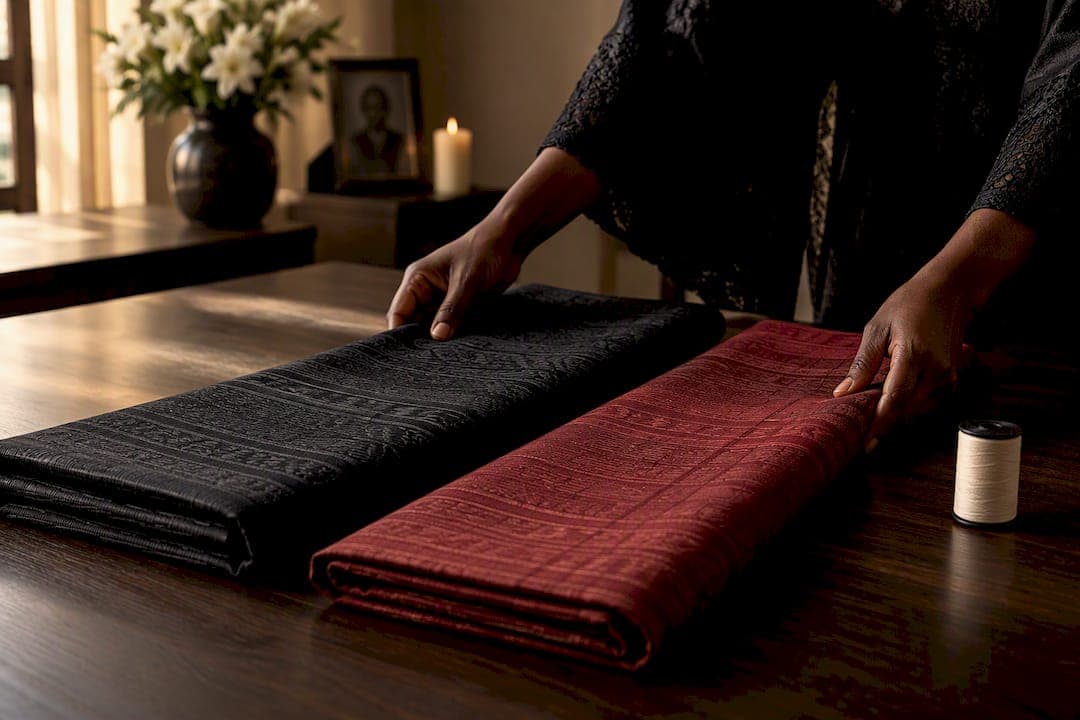
When in doubt, follow the family's stated color or aso ebi request. If none is given, choose conservative black or a muted traditional piece, cover your shoulders and knees and pack a headwrap or shawl for church or ritual segments. This guidance draws from authentic West African dress traditions, providing a reliable starting point rather than a sales pitch.
TL;DR:
- Wearing the family's requested color or fabric is essential; if unspecified, choose black, muted tones, and cover shoulders and knees.
- Black signifies mourning for distant relatives or well-wishers, while red and black together indicate close family grief in Ghanaian tradition.
- Nigerian funerals often favor white, cream, or light blue, depending on religion and ethnicity, with styles ranging from wrappers to agbada.
- Men can wear traditional agbada or kaftan, or a dark Western suit, with minimal embellishment and shoes suitable for outdoor terrain.
- Jewelry should be modest, and accessories like headwraps or shawls serve both respectful and practical purposes.
Table of Contents
- Understanding African Funeral Attire and Its Color Grammar
- Women's Funeral Attire: Respectful Styles and What to Avoid
- Men's Funeral Attire: Traditional and Western Options
- Aso Ebi and Eyie Ntomaa: What Family Fabric Requests Really Mean
- Where to Buy or Commission Funeral-Appropriate African Attire
- Sena Nukunu's Cultural Grounding in Funeral-Appropriate Dress
- Regional and Ethnic Variations Across the Continent
- How Funeral Clothing Traditions Have Evolved Over Time
- Why Accessories and Jewelry Carry Real Weight at Funerals
- How Modern Fashion Trends Are Reshaping Traditional Funeral Dress
- Author Perspective: Clothing as a Public Act of Respect
- How Sena Nukunu Can Help You Find the Right Piece
- Sources
- FAQ
Understanding African Funeral Attire and Its Color Grammar
African funeral attire carries meaning long before anyone reads an obituary. In Ghanaian tradition, red paired with black signals intimate grief, usually reserved for immediate family. Black worn alone marks mourning for more distant relatives and well-wishers, while white celebrates the life of someone who lived to an advanced age, typically 70 or older, or signals the final Sunday of rites when the transition is considered complete.
Nigerian funeral dress codes shift the palette entirely. Rather than black, many aso ebi selections lean on white, cream, ash grey, or light blue, and the right choice depends heavily on the deceased's religion and ethnic background.
Silhouettes vary just as much as color:
- Kaba and slit — a fitted top and wrap skirt, common across Ghana
- Wrapper and blouse — looser, layered, often in cotton or lace
- Kaftan — flowing, unstructured, worn by both women and men
- Agbada — a wide-sleeved robe set for men, dressed up or down with embellishment
- Tailored Western suit — accepted at many diaspora and urban funerals
Pro Tip: Ash grey often works as a respectful middle ground when you're unsure whether black or white fits the occasion, but confirming with the family beats guessing every time.
Women's Funeral Attire: Respectful Styles and What to Avoid
A kaba and slit in a muted tone, a fitted knee-or-longer dress, or a wrapper and blouse combination all read as appropriate for most West African funerals. Lace works too, as long as it stays in ash grey, black, or another subdued shade rather than a bright celebration print.
Head coverings matter more than many first-time attendees realize. A gele or duku is close to standard at church-based funeral services, and modesty extends beyond the head. Across many African funeral traditions, covering the shoulders and knees is close to a universal expectation, regardless of country of origin.
What to leave at home:
- Loud, celebratory prints meant for weddings or parties
- Flashy or oversized jewelry that draws attention away from the ceremony
- Sheer fabrics or plunging necklines
- Anything you cannot comfortably stand or sit in for several hours
Shoes deserve real thought. Ceremonies often run long, move between indoor and outdoor spaces, and end at a graveside with uneven ground. A low heel or flat you have already broken in beats a new pair you are testing for the first time. If you want a modesty-first outfit built the right way from the start, a West African wedding guest look uses many of the same principles, just in a different color story.
Men's Funeral Attire: Traditional and Western Options
An agbada set or a kaftan reads as appropriate at most traditional African funerals, particularly when the family has requested cultural dress or when the deceased held a prominent community role. A dark, tailored Western suit works just as well, especially at diaspora funerals or services held in a Western church setting where a full agbada might feel out of place.
Draped cloth, sometimes called kuntunkuni in parts of Ghana, still shows up in some traditions as a marker of deep mourning. Where it appears, keep embellishment minimal. Muted embroidery or a subtle trim is fine; gold thread and bright accent panels are not.
Footwear should match the terrain, not just the outfit. Many services move outdoors for burial, and comfortable flat or low-profile shoes hold up far better than dress shoes on grass or dirt.
- Agbada or kaftan for cultural or family-hosted funerals
- Dark tailored suit for Western or mixed-tradition services
- Minimal embellishment on any draped or robed piece
- Stable shoes built for standing and walking outdoors
Aso Ebi and Eyie Ntomaa: What Family Fabric Requests Really Mean
Eyie ntomaa, the Akan term for funeral cloth, is often chosen by the bereaved family and carries a name and a meaning tied to the deceased. Wearing it signals that you belong to the inner circle of mourners; the pattern itself becomes a public code others can read at a glance.
Aso ebi works similarly in Nigerian practice, functioning as a coordinated fabric that marks family, close friends, or a specific social group attending the funeral. If you receive fabric or a color instruction, three steps keep you on solid ground:
- Buy and tailor the exact fabric if it's provided. Inner-circle attendees are expected to have it made up promptly.
- Match the color family if the fabric itself isn't available to you. A close shade in a similar weight of cloth reads as respectful effort.
- Confirm which ceremony segment requires it. Multi-day funerals often reserve aso ebi for one specific day, not the entire event.
If the request arrives too late to tailor anything, bring a ready-made piece in the same color family and say so plainly to the hosts. A brief, honest explanation lands far better than showing up in the wrong palette and hoping no one notices.
Where to Buy or Commission Funeral-Appropriate African Attire
Retail is the fastest route when time is short. Curated West African ready-to-wear collections, specialty boutiques, and online marketplaces all carry pieces suitable for funerals, but shipping and production windows vary widely, so check delivery estimates before you commit to a date.
Custom tailoring gives you the most control over fit and fabric, particularly for aso ebi or eyie ntomaa pieces cut from family-provided cloth. Ask any tailor about turnaround time upfront, and if the funeral is days away rather than weeks, ask specifically about rush service and whether it changes the price.
- Ready-to-wear collections for quick, reliable sizing
- A local or online tailor for custom aso ebi or eyie ntomaa pieces
- Headwrap specialists if you need a gele or duku tied or pre-styled
- Rush tailoring when the timeline is under two weeks
Before you buy, look for signals of real craftsmanship. A product page that names its fabric origin, describes the artisans involved, and offers a clear return policy tells you more than a generic description ever will. Vague sourcing claims with no provenance are a signal to look elsewhere.
Sena Nukunu's Cultural Grounding in Funeral-Appropriate Dress
Guidance on African burial attire carries more weight when it comes from a source rooted in the culture itself. Culturally grounded brands with affiliations to authentic West African fashion, ethical manufacturing, and artisan-made ready-to-wear pieces give styling recommendations a foundation beyond generic fashion advice.
The categories most relevant to funerals sit across a few product lines: structured dresses and sets built with modesty in mind, agbada ensembles for men, and headwraps that work for church-based services. None of it requires guessing at unfamiliar terms, since festive versus somber African dress follows patterns that a culturally grounded brand already understands. That grounding matters more than a catalog ever could
Regional and Ethnic Variations Across the Continent
Ghanaian and Nigerian customs get the most attention in English-language guides, but funeral dress traditions shift meaningfully by ethnic group and region. Among the Akan people of Ghana, mourning dress choices depend on the age and status of the deceased and the nature of the death, which is why a death by illness in old age and a sudden death of someone younger call for different attire even within the same ethnic tradition.
Yoruba funerals in Nigeria often center on aso ebi in bright, unified colors rather than black, treating the funeral almost as a celebration of a life well lived. Igbo funeral customs, by contrast, frequently retain darker, more somber palettes for the immediate mourning period before shifting to lighter tones during later celebratory rites.
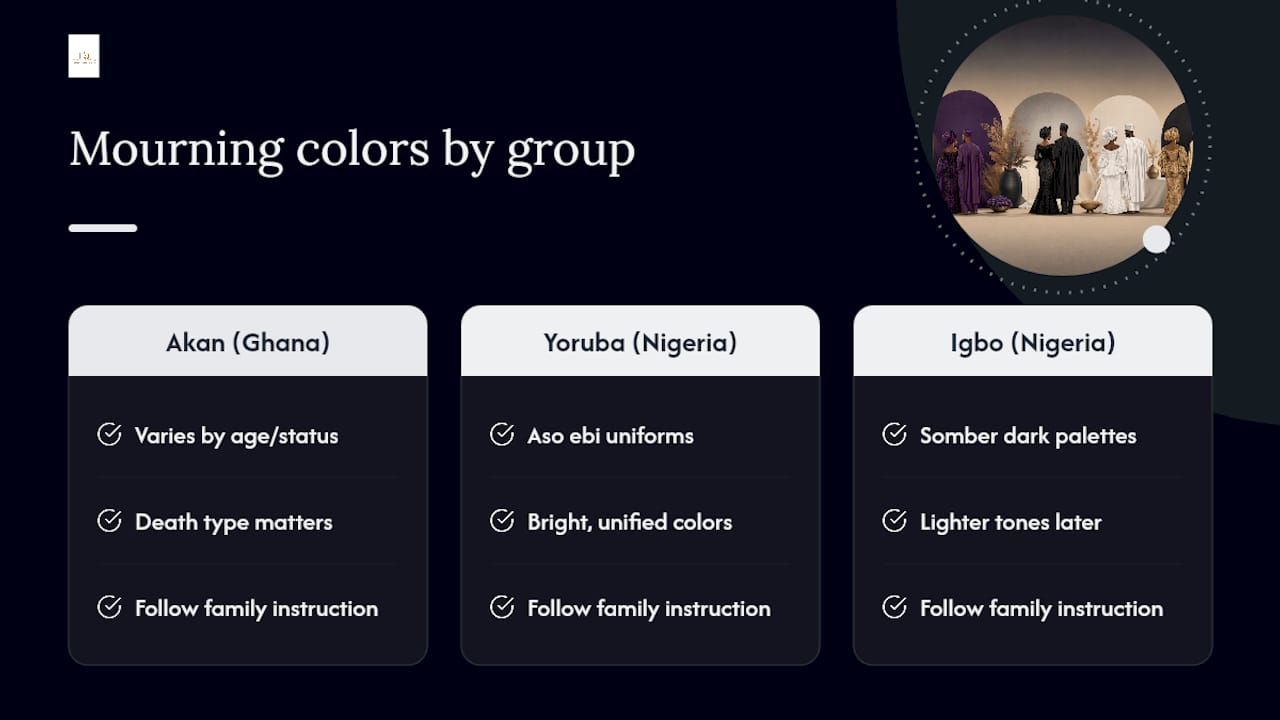
East African communities, including many Ethiopian and Kenyan traditions, tend to favor white or plain, unadorned cloth over the red or patterned fabrics common in West Africa. Southern African funeral customs, particularly in Zulu and Xhosa tradition, often incorporate specific ceremonial cloths and beadwork tied to the mourning family's clan rather than a single national color code.
The throughline across every region is the same: no single rule covers the whole continent, and the family's specific instruction always outranks a general guideline you read online.
How Funeral Clothing Traditions Have Evolved Over Time
Funeral attire in West Africa was never static, even before global fashion trends reached the region. Historically, cloth choice and pattern names carried deep, localized meaning passed down within specific families and communities, with eyie ntomaa functioning as a visible record of relationships that everyone at the funeral could read without a single word spoken.
Colonial-era trade introduced new textiles, including imported cotton prints and lace, which West African communities adapted into existing mourning frameworks rather than replacing them outright. Wax prints, now closely associated with celebratory West African fashion, gained ground in funeral wardrobes too, particularly for lighter, later-stage mourning events.
The 20th century brought tailored Western suits into many urban funerals, especially in Nigeria and Ghana's growing cities, layering Western formalwear onto older color codes rather than erasing them. Diaspora communities in the United States and United Kingdom have shaped the tradition further, blending church-based Western funeral customs with inherited color and fabric rules from home countries.
What has stayed constant across every shift is the underlying function: clothing as a public, readable signal of grief, relationship, and respect. Multi-day Ghanaian funerals still combine mourning, economic activity, and public ceremony much as they did generations ago, even as the fabrics and silhouettes themselves keep changing.
Why Accessories and Jewelry Carry Real Weight at Funerals
Jewelry choices at African funerals are rarely just an afterthought. Beadwork, in particular, holds specific meaning in several traditions, marking status, family lineage, or the wearer's relationship to the deceased in ways that go well beyond decoration.
Restraint is the operating principle almost everywhere. Small, simple pieces, a modest necklace, understated earrings, a plain bracelet, read as appropriate across most traditions. Large, ornate, or attention-drawing jewelry tends to clash with the somber tone of the day, even when the piece itself is beautiful.
Headwraps and shawls function as accessories and as practical tools at once. A gele or duku completes a modest look while also serving as a marker of the wearer's respect for the setting, particularly in church segments. Layering a shawl over a sleeveless dress solves a modesty problem instantly, without requiring a full outfit change between the wake and the burial.
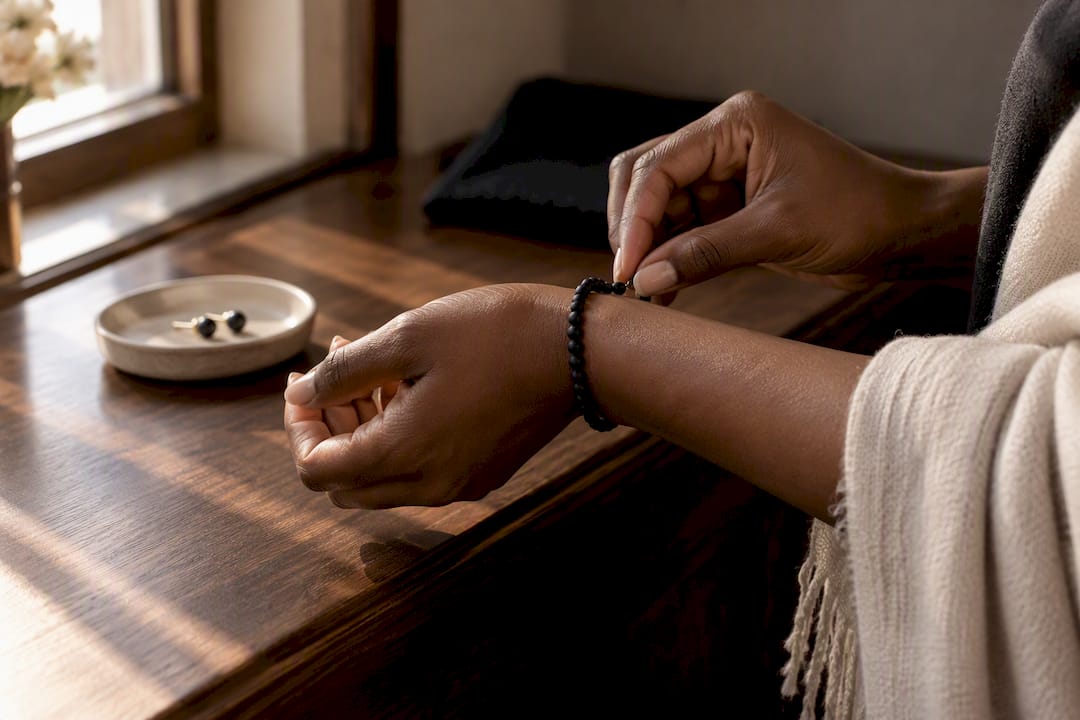
Watches, belts, and bags matter less symbolically but still deserve a second look. A bag in a bright, mismatched color can undercut an otherwise careful outfit, so keeping accessories within the same muted color family as the main garment is the safer call.
How Modern Fashion Trends Are Reshaping Traditional Funeral Dress
Younger generations across West Africa and its diaspora are reworking traditional funeral silhouettes without abandoning them outright. A kaba and slit cut in a more fitted, contemporary line, or an agbada styled with modern tailoring details, shows up increasingly at urban funerals alongside older, more classic cuts.
Social media has accelerated this shift. Funeral fashion, once documented mainly in family photo albums, now circulates more widely, which has pushed some families toward more coordinated, photo-ready aso ebi choices than in past decades.
Fabric innovation plays a role too. Lighter, more breathable versions of brocade and lace have entered funeral wardrobes, particularly for outdoor, multi-hour ceremonies in hot climates. None of this has replaced the older color grammar. Red and black still mean what they have always meant in Ghanaian tradition, and aso ebi still functions as a marker of belonging in Nigerian practice. What has changed is the tailoring, the fabric weight, and the willingness to blend Western silhouettes with inherited symbolism, rather than treating the two as separate wardrobes.
Author Perspective: Clothing as a Public Act of Respect
What you wear to a funeral is never really private. It tells the family, at a glance, how close you stood to the person who died, and whether you took the time to learn what that relationship required of you. The instinct to treat traditional dress as costume, something to wear once for the photo and never think about again, misses the point entirely. These fabrics carry names, histories, and family stories.
Learning the difference between aso ebi and eyie ntomaa, between a celebration white and a mourning black, is an act of respect toward the artisans and families who built these traditions long before fashion trends discovered them.
— Sena
How Sena Nukunu Can Help You Find the Right Piece
Finding funeral-appropriate pieces on a tight timeline gets easier when you're shopping somewhere the fabric, cut, and cultural context are already understood, not something you have to explain from scratch. Certain collections lean into that advantage: ready-to-wear West African pieces made in limited quantities by artisans who understand the difference between celebration cloth and mourning cloth.
The Women's Collections include fitted dresses and sets that work in muted, modest tones for funeral wear, while Men's Agbada Ensembles cover the traditional robe silhouette without requiring a separate trip to a tailor. If you need something for a service happening soon, checking sizing details and lead times on product pages is advisable, since limited-quantity pieces can move quickly and rush requests may depend on prior notice. The collections page is the best place to start browsing sets like Woven Nobility and Woven Radiance, and if a piece needs adjustment, reach out early to ask about customization before you check out.
Sources
For deeper reading on the traditions covered here, GhanaWeb's breakdown of Ghanaian funeral colors explains the red, black, and white system in detail, while CelebrateThem's Nigerian funeral guide covers aso ebi practices and dress codes by region.
- Colors of Ghanaian funeral attire explained | GhanaWeb
- What to Wear to a Nigerian Funeral: Dress Code Guide (2026) · CelebrateThem Journal
- Ghanaian funeral fashion: the most serious fashion event in West Africa | Omiren Styles
- Discover Ghanaian Funeral Traditions and Clothes: A Vibrant Celebration of Life | Madison Manor
- Traditional mourning dress of the Akans of Ghana (academic study) | ProQuest
FAQ
What is the African tradition for funerals that last seven days?
Multi-day funerals, common in Ghana, spread mourning across several ceremonies, from a wake to a formal burial to celebratory rites on the final day. Clothing often changes by day, with darker tones early on and lighter colors like white appearing toward the end of the mourning period once the transition is considered complete.
What happens when someone dies in many African traditions?
Death typically triggers a period of communal mourning that includes family meetings to select funeral cloth or aso ebi, public wake services, and a formal burial, often spread over several days. Clothing decisions, particularly the choice of eyie ntomaa or aso ebi, are usually settled early so family and close friends have time to prepare.
What are traditional African American funeral customs?
African American funeral traditions often blend Western church formalwear, typically dark, tailored suits and modest dresses, with elements inherited from West African and Southern Black church practice, including expressive homegoing celebrations. Dress codes usually lean conservative and dark, though some homegoing services embrace brighter tones to celebrate a life well lived.
What is not acceptable to wear to an African funeral?
Bright, celebratory prints meant for parties or weddings, flashy jewelry, sheer fabrics, and revealing cuts are generally considered inappropriate. White should be avoided unless the family has specifically requested it or the deceased was of advanced age, since wearing white outside that context can send the wrong message.
Does Sena Nukunu sell funeral-appropriate African attire?
Sena Nukunu offers ready-to-wear dresses, sets, kaftans, and agbada ensembles in muted tones suitable for funeral occasions, alongside headwrap options. Current pricing and available sizes are listed directly on the collections page.