
TL;DR:
- Inclusive fashion emphasizes creating clothing that respects cultural identities and diverse bodies.
- Ethical models empower artisans through fair wages, skills training, and long-term partnerships.
- West African heritage is reshaping global fashion with authentic, community-driven craftsmanship.
Fashion has always told a story, and for too long, that story has left out entire communities, cultures, and bodies. The good news? That is changing in powerful ways. Inclusive fashion is not a passing trend or a marketing slogan. It is a movement reshaping the entire industry from the inside out, opening markets, elevating artisans, and celebrating heritage that deserves a global stage. When fashion truly includes everyone, it becomes more creative, more resilient, and more meaningful for both the people who make it and the people who wear it.
Table of Contents
- What does 'fashion for all backgrounds' really mean?
- Why inclusive and ethical fashion empowers artisans and communities
- How West African heritage reshapes global fashion
- The challenges and opportunities for truly inclusive fashion
- Why inclusivity in fashion must go beyond the surface
- Celebrate true heritage and style with ethical fashion
- Frequently asked questions
Key Takeaways
| Point | Details |
|---|---|
| Inclusive design drives innovation | Designing for diverse backgrounds leads to creative solutions that benefit everyone. |
| Artisanship preserves heritage | Ethical production empowers artisans and safeguards cultural traditions from mass-market loss. |
| True inclusivity requires action | Brands and consumers must move beyond symbolism to create real empowerment and cultural respect. |
| Global fashion benefits from West Africa | West African craftsmanship and culture enrich fashion’s aesthetics and ethical standards worldwide. |
What does 'fashion for all backgrounds' really mean?
Inclusive fashion is often misunderstood as simply adding a few larger sizes or casting a diverse runway. In practice, it goes so much deeper than that. Fashion for all backgrounds means creating clothing that adapts to diverse bodies, respects cultural identities, honors religious expressions, and meets the real needs of people who have historically been ignored by mainstream design. It means listening before cutting, asking before appropriating, and celebrating before commercializing.
Think about what happens when a brand genuinely designs with a community rather than for it. The result is not just a product. It is a bridge between tradition and the modern world, between the maker and the wearer, between local wisdom and global appreciation. This is precisely what West African fashion has always embodied at its core.
Diverse design needs drive genuine innovation in ways that uniform approaches simply cannot. When designers consider modest wear, adaptive clothing for people with disabilities, and the rich variety of body shapes that exist across cultures, they are forced to solve real problems creatively. That creative pressure produces garments that are better made, more thoughtful, and more beautiful for everyone. As one industry analysis noted, inclusivity in fashion makes brands more relatable, drives innovation through diverse design needs, and accesses underserved markets like the $500 billion plus-size sector projected by 2033.
"When we make space for every background in fashion, we do not dilute the art. We expand it."
The cultural and market benefits of this approach are significant and well documented. Consider what inclusive practices actually produce:
- Deeper brand loyalty among communities who feel genuinely seen, not merely tokenized
- Broader market reach that opens revenue streams previously ignored by mainstream labels
- Richer design vocabularies drawn from centuries of tradition and cultural practice
- Stronger community economies through partnerships with artisans at the source
- Greater sustainability because small-batch, culturally rooted production avoids the waste of mass manufacturing
Understanding sustainable fashion principles rooted in West African practice reveals that inclusivity and ethical responsibility are deeply linked. You cannot truly include all backgrounds without also honoring the economic realities of the people who create the clothing.
Why inclusive and ethical fashion empowers artisans and communities
Inclusion is not just about the wearer. It is equally about the maker. Ethical fashion models that genuinely include artisan communities create a ripple effect of empowerment that reaches far beyond the garment itself. Fair wages, skills training, cooperative structures, and long-term partnerships transform not just individual lives but entire villages and regions.
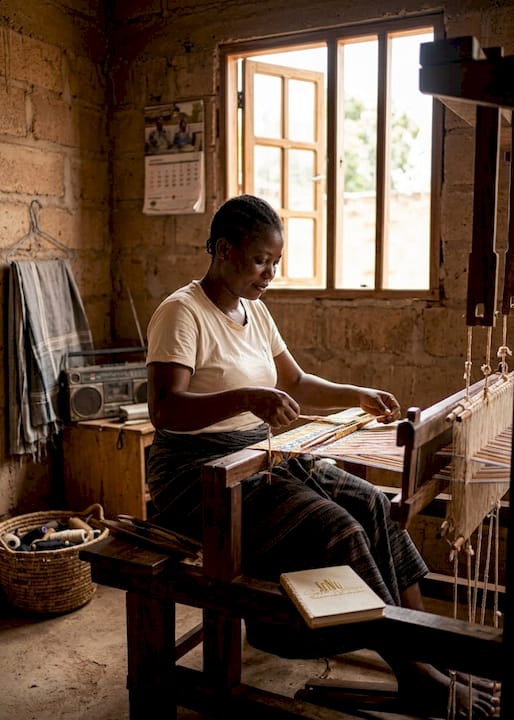
The numbers tell a striking story. The Ethical Fashion Initiative (EFI) empowers West African artisans in Côte d'Ivoire and Burkina Faso through weaving cooperatives like Bomizambo, supporting 1,950 artisans, including 1,442 in Burkina Faso and 508 in Benin, with training in production, ESG standards, and international market access. These are not abstract statistics. They represent weavers, dyers, embroiderers, and sewers whose skills now command recognition on a global stage.
| Region | Artisans supported | Key focus areas |
|---|---|---|
| Burkina Faso | 1,442 | Weaving, ESG training, market access |
| Benin | 508 | Cooperative production, quality standards |
| Côte d'Ivoire | Multiple hubs | Cultural preservation, international trade |
| Ghana | Growing sector | Apparel SMEs, women's economic empowerment |
Co-creation is another cornerstone of genuine ethical fashion. Rather than extracting patterns and techniques without credit, ethical brands work alongside artisans to develop designs that carry authentic cultural meaning. Small-batch production models honor this process by ensuring that each piece receives the time and attention it deserves. This stands in sharp contrast to fast fashion's race to the bottom, where speed and cheapness erase the human story entirely.
Long-term partnerships matter enormously in this space. A brand that dips into West African aesthetics for one seasonal collection, then moves on, is not supporting artisans. It is exploiting them. Real empowerment comes from sustained relationships, consistent orders, and shared storytelling that gives artisans credit and visibility for their knowledge and skill.
When you support artisan fashion, you participate in something far larger than a purchase. You contribute to a living tradition, to a family's income, and to the preservation of techniques that took generations to develop.
Pro Tip: When evaluating whether a brand genuinely supports artisans, look for specific details. Does the brand name the artisans or cooperatives it works with? Does it disclose wages and production conditions? Does it share the cultural context behind its designs? Vague claims of being "ethically made" without specifics are often a signal that the partnership is superficial rather than structural.
Key practical impacts of ethical, inclusive fashion on communities include:
- Women's economic independence through fair-wage work in weaving and sewing cooperatives
- Cultural knowledge preservation as traditional dyeing and weaving techniques are taught and practiced
- Youth engagement when younger generations see viable livelihoods in traditional craft
- Community infrastructure investment as cooperatives generate local revenue
- International visibility for artisan communities whose work reaches global markets
Exploring trends empowering West African artisans shows how this momentum is growing year after year, with more consumers and designers choosing partnerships that genuinely elevate makers rather than erase them.
How West African heritage reshapes global fashion
West African fashion is not a regional curiosity. It is a global creative force that is actively reshaping how the world thinks about design, ethics, and cultural ownership. From the bold geometric energy of kente cloth to the rich indigo traditions of adire fabric, West African heritage carries centuries of artistic sophistication that speaks directly to contemporary audiences hungry for meaning in their clothing.
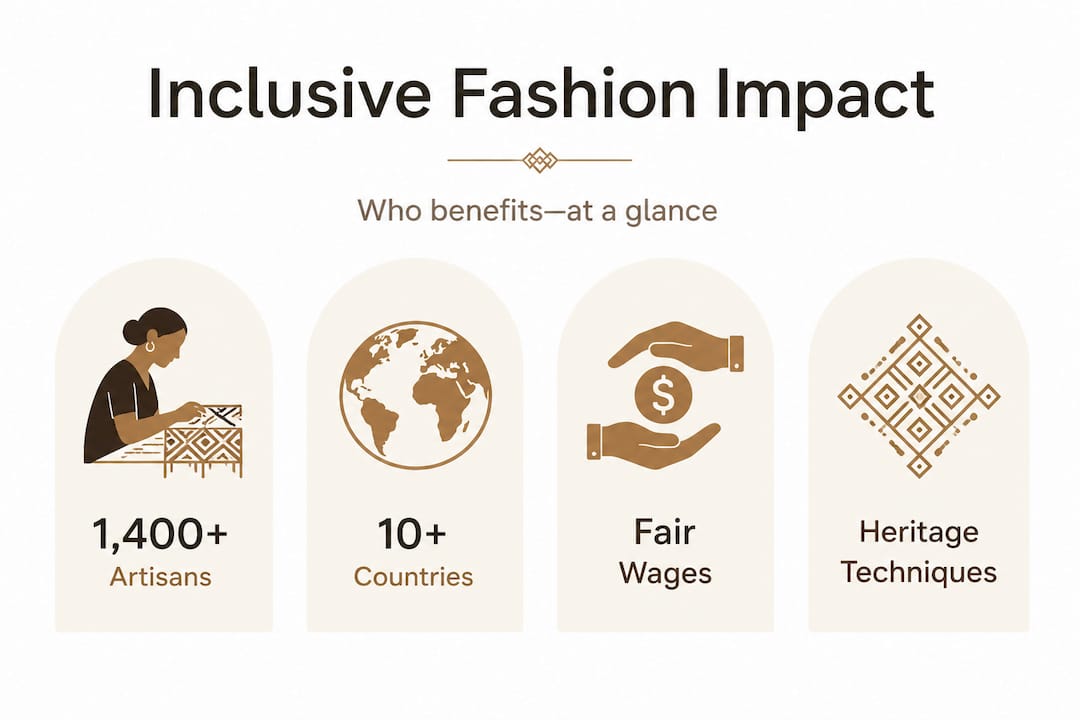
The influence is visible everywhere once you start looking. International designers have drawn from West African silhouettes, prints, and textile traditions for decades. But what is changing now is the demand for authentic, source-connected engagement rather than borrowed aesthetics stripped of context.
Decentralized artisan models in West Africa, as seen in labels like Iamisigo and NKWO, partner with community hubs for transparent, quality-controlled production, empowering local makers and protecting cultural intellectual property amid growing global interest. This approach offers a compelling alternative to the centralized mega-factory model that dominates global fast fashion.
"West Africa's artisan communities are not waiting to be discovered. They are building their own platforms, on their own terms, with their own stories intact."
Here is how the two production models compare side by side:
| Factor | Artisan-centered West African model | Mass global manufacturing |
|---|---|---|
| Production scale | Small-batch, intentional | High-volume, rapid |
| Cultural transparency | Named artisans, shared stories | Anonymous labor |
| Environmental impact | Lower waste, natural materials | High waste, synthetic inputs |
| Quality control | Craft-based, hands-on | Automated, standardized |
| Community benefit | Direct income and skill-building | Distant, diffuse benefit |
| Cultural ownership | Protected, credited | Risk of appropriation |
Protecting cultural intellectual property is a critical issue as West African fashion gains global traction. Here are the key steps involved in responsible cultural engagement:
- Seek direct consent from artisan communities before using cultural motifs or techniques in commercial designs
- Credit the source publicly and prominently, naming the tradition, region, or cooperative that inspired the work
- Establish fair revenue sharing so that commercial success directly benefits the originating community
- Build long-term relationships that go beyond one-season collaborations and create genuine mutual investment
- Educate the consumer about the cultural significance of what they are wearing, turning every garment into a conversation
When you explore authentic cultural fashion, you begin to see that a piece of clothing can carry an entire history. Every color choice, every weaving pattern, every drape tells a story that mass production simply cannot replicate. This is the heart of what makes West African heritage so powerful and so worth protecting.
Understanding craftsmanship and ethics together reveals that beauty and responsibility are not in conflict. They are, in fact, inseparable when fashion is done with care.
The challenges and opportunities for truly inclusive fashion
Real inclusion is hard work, and the fashion industry still has a long way to go. Acknowledging this honestly is essential, because the gap between symbolic gestures and structural change remains significant. Progress is real, but so are the obstacles standing between where the industry is today and where it needs to be.
Research on Ghanaian apparel SMEs shows that while these businesses acknowledge ethical labor practices, implementation remains uneven. The potential to empower women through skills training is clear, but stronger enforcement mechanisms are needed to ensure that inclusivity is lived rather than merely stated. This tension between aspiration and action runs throughout the global fashion industry.
The key challenges holding back genuine inclusivity include:
- Market pressure to cut costs, which consistently works against fair wages and small-batch production
- Tokenism, where one diverse model or one "African-inspired" collection substitutes for real structural change
- Lack of systemic reform in trade policies that disadvantage small artisan producers in global markets
- Cultural appropriation without credit, where aesthetics are borrowed but communities receive nothing in return
- Inconsistent consumer awareness, meaning shoppers often cannot distinguish genuine ethics from greenwashing
Yet the opportunities are equally significant, and the movement is growing with genuine energy and purpose:
- Adaptive sizing and inclusive cuts that honor body diversity across cultural contexts
- Authentic co-creation that gives artisans creative agency rather than just labor roles
- Stronger international enforcement of cultural intellectual property rights
- Consumer-driven accountability as educated shoppers increasingly demand transparency
- Digital platforms that connect artisan communities directly to global buyers, cutting out exploitative middlemen
Pro Tip: As a consumer, you have real power in this space. Before purchasing from a brand that claims to celebrate African heritage, ask one simple question: can I find the names of the people who made this? If the answer is no, dig deeper before buying.
Exploring handmade fashion ethics helps you understand why the process of making a garment matters as much as the finished product. And understanding fashion empowerment for women across both West Africa and the U.S. shows how the stakes of getting this right extend far beyond aesthetics.
Why inclusivity in fashion must go beyond the surface
Here is something the industry does not say often enough: diversity without depth is decoration. We have all seen the campaigns, the carefully curated runways, the seasonal collections with names drawn from African languages. These gestures can be meaningful. But they can also mask the absence of real structural commitment to the communities being celebrated.
Our honest perspective, built from close engagement with West African artisan communities and ethical fashion principles, is this: the most important shift in fashion does not happen on a runway or in a marketing campaign. It happens in the agreement a brand signs with a cooperative, in the wage that gets paid on time, and in the credit line that names the weaver alongside the designer.
The EFI's work with artisans demonstrates exactly this principle in practice. By empowering artisans economically through jobs, fair wages, and skills training, and by preserving irreplaceable techniques like natural dyeing and hand weaving, the initiative counters the erasure that mass production inflicts on cultural knowledge. The expert guidance here is clear and direct: long-term partnerships over optics, every time.
Consumers are not passive in this story. The choices you make about where to spend your fashion budget are votes for the kind of industry you want to see. When you choose a garment connected to a named artisan, a specific cooperative, and a transparent production process, you are participating in a different economy entirely, one built on respect rather than extraction.
The cultural heritage lessons embedded in West African fashion tradition offer a blueprint that the entire global industry could learn from. Patience, craftsmanship, community, and pride are not inefficiencies to be optimized away. They are the source of the value itself.
Celebrate true heritage and style with ethical fashion
Every garment in our collection carries a story worth wearing. At Sena Nukunu, we believe that fashion should be a celebration of culture, not a performance of it. The artisans behind our pieces bring generations of knowledge and precision to every stitch, and each limited-quantity design honors that legacy with care and intentionality.
If this article has resonated with you, the most meaningful next step is a simple one: let your wardrobe reflect your values. Explore our collection of unique artisan dresses that blend West African heritage with modern silhouettes designed for real life. Browse our beautifully crafted artisan blouses that pair storytelling with versatility. Or simply discover vibrant styles across our full curated selection, all made with ethical purpose and cultural pride at the center of every design decision.
Frequently asked questions
How does inclusive fashion benefit wearers and makers?
Inclusive fashion creates more accessible clothing for diverse bodies and cultures while providing fair jobs and training for artisans. Inclusivity in fashion drives innovation and accesses underserved markets, while EFI supports artisans with structured training and international market access.
What makes West African fashion unique in the global industry?
West African fashion blends centuries-old techniques and vibrant designs, emphasizing artisan empowerment and cultural storytelling over mass production. West Africa's decentralized models empower local makers and protect cultural intellectual property in ways that global fast fashion cannot replicate.
How can consumers identify genuinely inclusive, ethical brands?
Look for brands working with artisans long-term, providing transparent sourcing, and directly supporting cultural communities with named partnerships and fair wages. EFI partners with cooperatives for transparent, quality-controlled production as a model of what genuine accountability looks like.
What are the biggest challenges to real inclusivity in fashion?
Systemic barriers, token gestures, and uneven ethical implementation remain the most persistent obstacles requiring action from both consumers and brands. Ghanaian apparel SMEs acknowledge ethics but demonstrate that stronger inclusivity enforcement is still urgently needed across the sector.