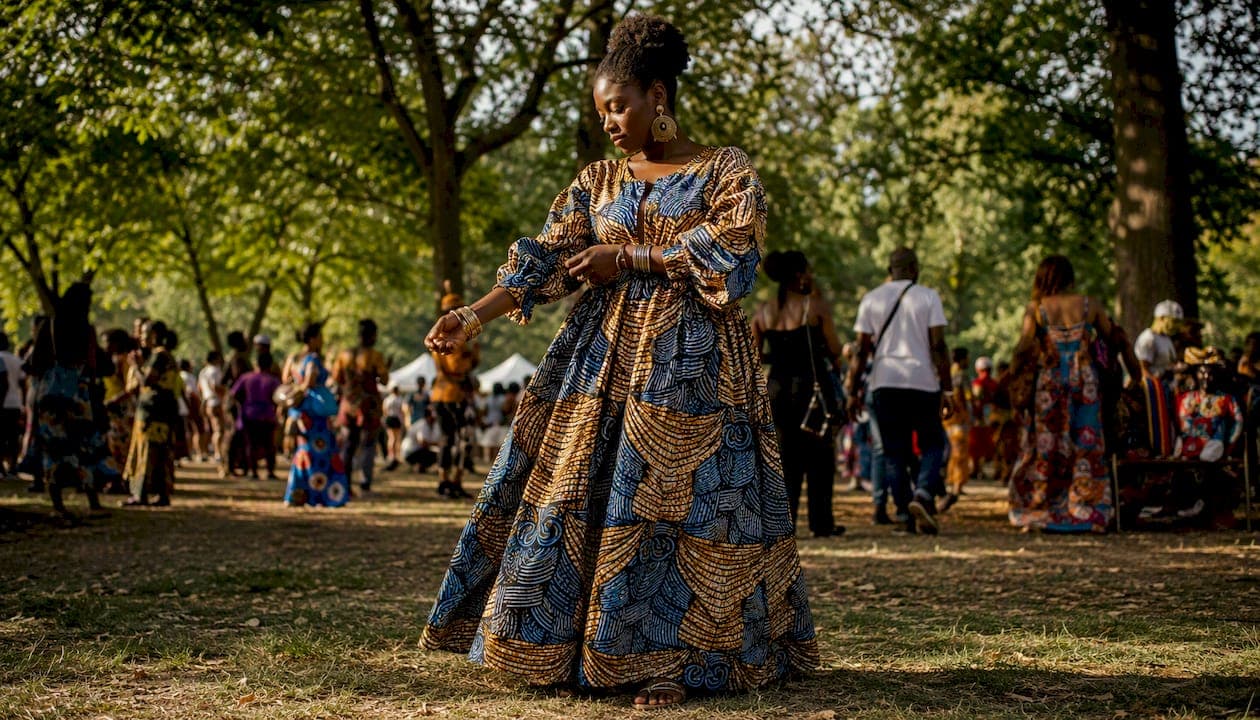
Wear provenance-driven pieces, learn their meanings, and buy directly from artisan-led supply chains. These three actions are the foundation of cultural empowerment through clothing, and you can start today. As the V&A documents, textiles in West Africa carry history and social meaning — specific patterns communicate heritage, status, and identity in ways that words rarely can. Start with Senanukunu for curated, provenance-driven pieces rooted in that legacy.
Start here — what you can do today:
- Choose one anchor piece with a documented origin (a handwoven kente strip cloth, a bogolan tunic, or an Ankara dress from a named maker).
- Ask the seller where the fabric was woven and who made it before you buy.
- Learn one cultural association tied to your piece — its region, occasion, or symbolic meaning.
- Care for it by hand-washing and air-drying to preserve color and structure.
- Wear it as a complete ensemble, not a single novelty item layered over unrelated pieces.
- Return to the same maker or boutique for your next purchase to build a lasting relationship.
Pro Tip: Keep a small notebook or phone note with the provenance details of each piece you own. Knowing the story makes wearing it more intentional — and helps you share it with others.
Key Takeaways
Wearing West African heritage fashion with intention, provenance knowledge, and consistent care is the most direct form of cultural empowerment available to shoppers in the U.S. today.
| Point | Details |
|---|---|
| Start with anchor pieces | Choose one provenance-documented piece — kente, bogolan, Ankara, Adire, or raffia — before building further. |
| Ask provenance questions | Request the maker's name, region, material, and dye method from every seller before purchasing. |
| Dress in ensembles | Cultural meaning emerges from how pieces combine, not from a single item worn in isolation. |
| Care extends the legacy | Hand-wash, air-dry, and repair rather than replace — garment longevity is both sustainable and culturally respectful. |
| Senanukunu as your resource | Senanukunu offers ethically made, limited-quantity West African heritage pieces with commission services for U.S. shoppers. |
Table of Contents
- What are the best tips for cultural empowerment through your wardrobe?
- How do you shop ethically and support the artisans who made your clothes?
- Which West African textiles should you know, and how do you wear them respectfully?
- How do you style cultural pieces for daily life, the office, and special occasions?
- How does caring for your garments become an act of cultural preservation?
- What should you budget, and where do you buy West African fashion in the U.S.?
- How do you learn more and connect with West African maker communities?
- Why clothing is the most honest route to cultural empowerment
- Senanukunu brings these tips to life with curated, provenance-driven pieces
- Sources
What are the best tips for cultural empowerment through your wardrobe?
Building a wardrobe that honors West African heritage starts with restraint, not abundance. Fewer, carefully chosen anchor pieces communicate identity far more clearly than a closet full of trend-driven items. The Smithsonian's National Museum of African Art confirms that ensembles, not isolated garments, produce the richest cultural messages — meaning the relationship between your pieces matters as much as each piece itself.
Think in outfit formulas rather than individual items:
- Daily wear: A tailored Ankara wrap skirt paired with a fitted white blouse and leather sandals reads as polished and culturally intentional without feeling costumed.
- Professional settings: A structured bogolan jacket over a monochrome dress or tailored trousers brings heritage into the office with authority. For detailed guidance on African wear at networking events, Senanukunu's blog covers the nuances well.
- Celebrations: A full kente or Adire ensemble with a matching headwrap and statement jewelry is the appropriate register for weddings and naming ceremonies.
When integrating Western pieces, proportion and deliberateness matter. A heritage jacket over jeans works when the jacket is the clear focal point. A wrapper skirt with a blazer works when the wrapper's print is given visual space. Crowding a heritage piece with competing patterns or logos erases its signal.
Pro Tip: In U.S. contexts, scale your pattern choice to the setting. Larger, bolder prints read well outdoors and at events; smaller, tighter repeats translate more easily into professional environments.
How do you shop ethically and support the artisans who made your clothes?
Provenance is the most important question a culturally literate buyer can ask. Knowing whether a fabric is handwoven, which community produced it, and how the maker was compensated protects you from counterfeits and ensures your money reaches the right hands.
Ask sellers these questions before purchasing:
- Where was this fabric woven or printed, and by whom?
- Can you name the cooperative, workshop, or individual artisan?
- What materials and dye methods were used?
- What is the production lead time, and does that reflect handcraft?
- How is the price structured — what portion goes to the maker?
Red flags in product descriptions:
- "African print" with no country or region specified.
- "Inspired by" language without a named origin.
- Machine-perfect uniformity in supposedly handwoven cloth.
- Prices that undercut what hand-labor genuinely costs.
The Ethical Fashion Initiative's mentoring work across Burkina Faso and Benin shows that transparency and traceability are the markers of designers who are export-ready and ethically grounded. Buyers who ask for documentation — a maker's name, a cooperative certificate, a fabric origin label — reward that investment. Long-term purchasing relationships, not one-off buys, create the most stable artisan incomes. Returning to the same maker or boutique season after season is one of the most concrete ways to support artisan livelihoods.
For a practical checklist on evaluating handmade garments, Senanukunu's handcrafted fashion checklist is a useful companion resource.
Which West African textiles should you know, and how do you wear them respectfully?
Oxford's research encyclopedia confirms that West African textiles span materials from raffia and bark to silk and cotton, each carrying distinct regional and ceremonial roles. Here are the five textiles you need to know:
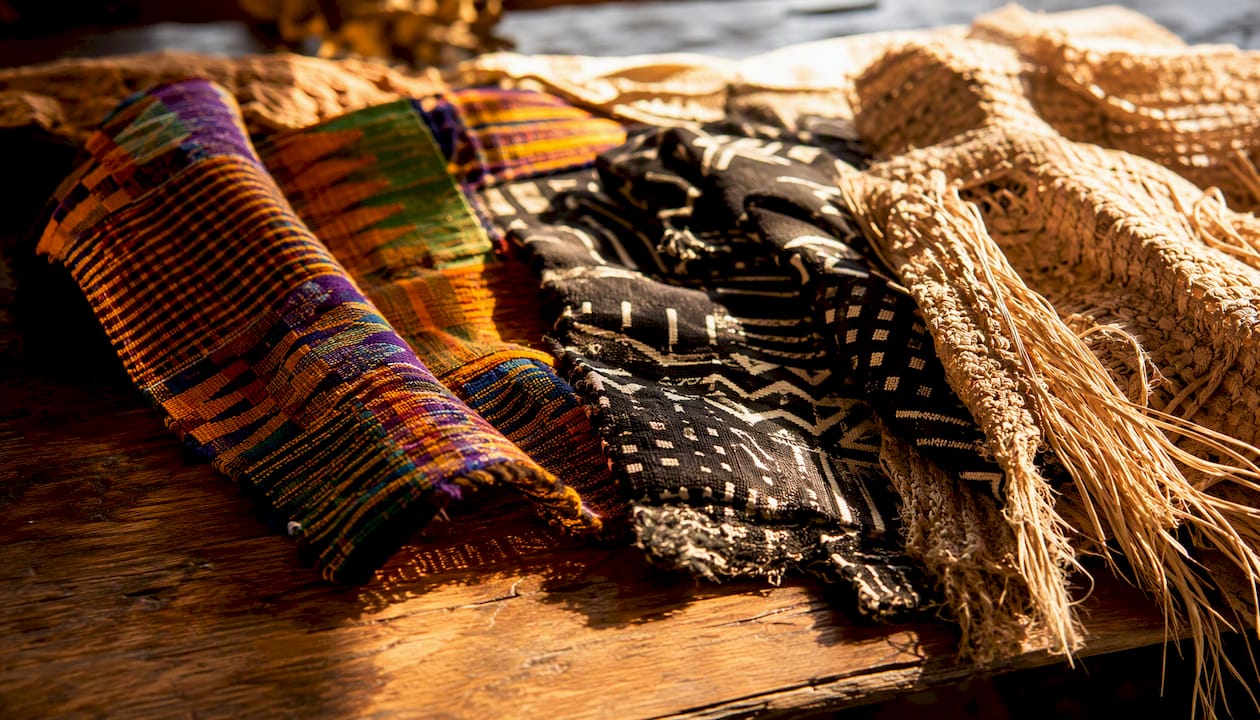
| Textile | Origin and character | Common associations | Respectful use |
|---|---|---|---|
| Kente | Strip-woven silk or cotton, Ghana and Côte d'Ivoire | Royalty, achievement, celebration | Weddings, graduations, formal ceremonies; ask about specific color meanings |
| Bogolan (mudcloth) | Hand-dyed cotton with fermented mud, Mali | Strength, protection, transition | Everyday and fashion wear; originally tied to rites of passage |
| Ankara / wax print | Machine-printed cotton, widely adopted across West Africa | Community, modernity, self-expression | Versatile; named prints carry specific messages — ask before wearing publicly |
| Adire | Resist-dyed indigo cloth, Yoruba (Nigeria) | Creativity, identity, craft heritage | Everyday and celebratory; honor the dyeing tradition by sourcing from Yoruba makers |
| Raffia | Woven palm fiber, widespread across West Africa | Ceremony, prestige, ancestral connection | Often ceremony-specific; confirm occasion appropriateness with the maker |
Ethnographic scholarship documents that named wax-print designs can carry community-specific meanings — a print worn in one town may communicate a social message its wearer never intended. Before wearing a named print to a public event, ask what it means in its community of origin.
Pro Tip: When you buy a piece, photograph the label or ask the seller to write down the textile name, region, and any known design meaning. This record becomes part of the garment's story.
How do you style cultural pieces for daily life, the office, and special occasions?
Context shapes how cultural signals land. The same Ankara fabric reads differently as a fitted sheath dress at a gallery opening than as a wrap skirt at a Saturday market — and both are right when worn with intention.
Three contexts, three approaches:
- Daily wear: Keep the silhouette simple. A well-cut Ankara midi dress with flat sandals and minimal jewelry lets the fabric speak. Avoid over-accessorizing; one strong piece is enough.
- Professional settings: A bogolan or Adire blazer over tailored trousers is a confident, office-appropriate choice. Pair with neutral shoes and understated earrings. The cultural signal is clear without competing with the professional context.
- Celebrations: Full ensembles — matching wrapper, blouse, and gele headwrap — are the appropriate register for weddings and naming ceremonies. Kente is particularly associated with achievement and joy; wearing it to a graduation or wedding honors that meaning.
For accessorizing, ethical West African accessory pairings follow the same provenance logic as garments. Brass jewelry from Ghanaian smiths, beaded pieces from Nigerian artisans, and leather sandals from Malian cobblers all extend the cultural conversation your outfit begins.
Dos: Layer for U.S. weather (a tailored coat over a kente dress works beautifully in winter). Match headwrap fabric to your ensemble's dominant textile. Ask a community elder or maker if a ceremonial piece is appropriate for your occasion.
Don'ts: Wear ceremony-specific pieces as casual fashion without understanding their context. Mix competing heritage prints without a deliberate reason. Treat a headwrap as purely decorative if you are attending a ceremony where it carries specific meaning.
How does caring for your garments become an act of cultural preservation?
Every time you hand-wash a bogolan tunic instead of machine-washing it, you are extending the life of a piece that took days to make. West African designers commonly instruct clients to hand-wash and air garments to preserve structure and color — a practice that also keeps pieces out of landfills and reduces reliance on fast fashion.
Care routine for handwoven and wax-printed textiles:
- Hand-wash in cool water with a gentle, pH-neutral detergent.
- Never wring; press water out gently and roll in a clean towel.
- Air-dry flat or on a padded hanger, away from direct sunlight to prevent fading.
- Store folded in breathable cotton bags, not plastic, to prevent mildew.
- For kente strip cloth, store flat rather than hanging to preserve the woven structure.
When a seam loosens or a hem frays, repair it rather than retire the piece. A skilled tailor who understands the textile can reinforce a bogolan seam or re-hem an Ankara dress without compromising its integrity. Ghana's repair and remanufacturing traditions show that community-based textile repair is both a livelihood and a cultural act. Seeking out a tailor from the diaspora community who knows these fabrics is itself a form of sustainable fashion practice.
What should you budget, and where do you buy West African fashion in the U.S.?
Price is a signal of process. A handwoven kente length that took a master weaver several days to produce cannot ethically cost what a mass-produced print costs. Understanding what each tier covers helps you shop with confidence.
When commissioning a custom piece:
- Confirm the lead time upfront (four to eight weeks is common for made-to-order).
- Pay a deposit of 30–50% and get the deliverables in writing.
- Provide precise measurements and ask about the alteration policy.
- Request fabric swatches before committing to a full garment.
Where to start in the U.S.: diaspora boutiques in cities with large West African communities (Atlanta, Houston, New York, Washington D.C.) often carry authenticated fabrics and can connect you with tailors. Verified online shops with named provenance labels are a strong second option. Community markets and cultural festivals are excellent places to meet makers directly and ask provenance questions face to face.
How do you learn more and connect with West African maker communities?
Knowledge deepens the meaning of every piece you wear. Start with museum collections: the Smithsonian's National Museum of African Art in Washington D.C. and the Brooklyn Museum both hold significant West African textile collections with interpretive materials you can study in person or online.
Practical learning steps:
- Visit a West African fabric market in your city and handle cloth before buying — feeling the weight and weave of authentic handwoven kente versus a machine print is an education in itself.
- Follow West African designers and cooperatives on social media and attend their virtual maker talks.
- Read the V&A's textile essays and the Oxford Research Encyclopedia entries on West African cloth for historical grounding.
- Attend cultural festivals such as PANAFEST diaspora events, African Heritage Month markets, and community naming ceremonies when invited.
When engaging makers at markets or events, come with genuine curiosity rather than bargaining instincts. Ask about the weaving process, the region, and the occasion the piece was made for. That conversation is where artisan fashion support becomes real — not just a transaction, but a relationship.
Pro Tip: Join a local African cultural association or diaspora community group. Many organize fabric-sourcing trips, sewing circles, and educational workshops that connect you directly with makers and their knowledge.
Why clothing is the most honest route to cultural empowerment
Most conversations about cultural empowerment stay abstract. Clothing does not. When you put on a piece of kente or wrap yourself in Adire, you are making a visible, daily commitment to a living tradition — one that sustains weavers, dyers, and tailors whose craft has endured for centuries. What strikes me most, having worked with West African heritage fashion, is how often people underestimate the economic weight of a single purchase. Buying one authenticated, provenance-documented piece from an artisan-led supply chain does more for cultural continuity than any number of symbolic gestures. The social impact of artisan fashion is not theoretical — it shows up in a weaver's ability to pass their craft to the next generation.
Senanukunu was built on exactly this conviction: that fashion-conscious shoppers in the U.S. deserve access to pieces that are beautiful, ethically made, and culturally honest. Every limited-quantity piece in the collection carries that intention. Wear it with knowledge, care for it with respect, and return to the maker. That cycle is what cultural empowerment actually looks like in practice.
Senanukunu brings these tips to life with curated, provenance-driven pieces
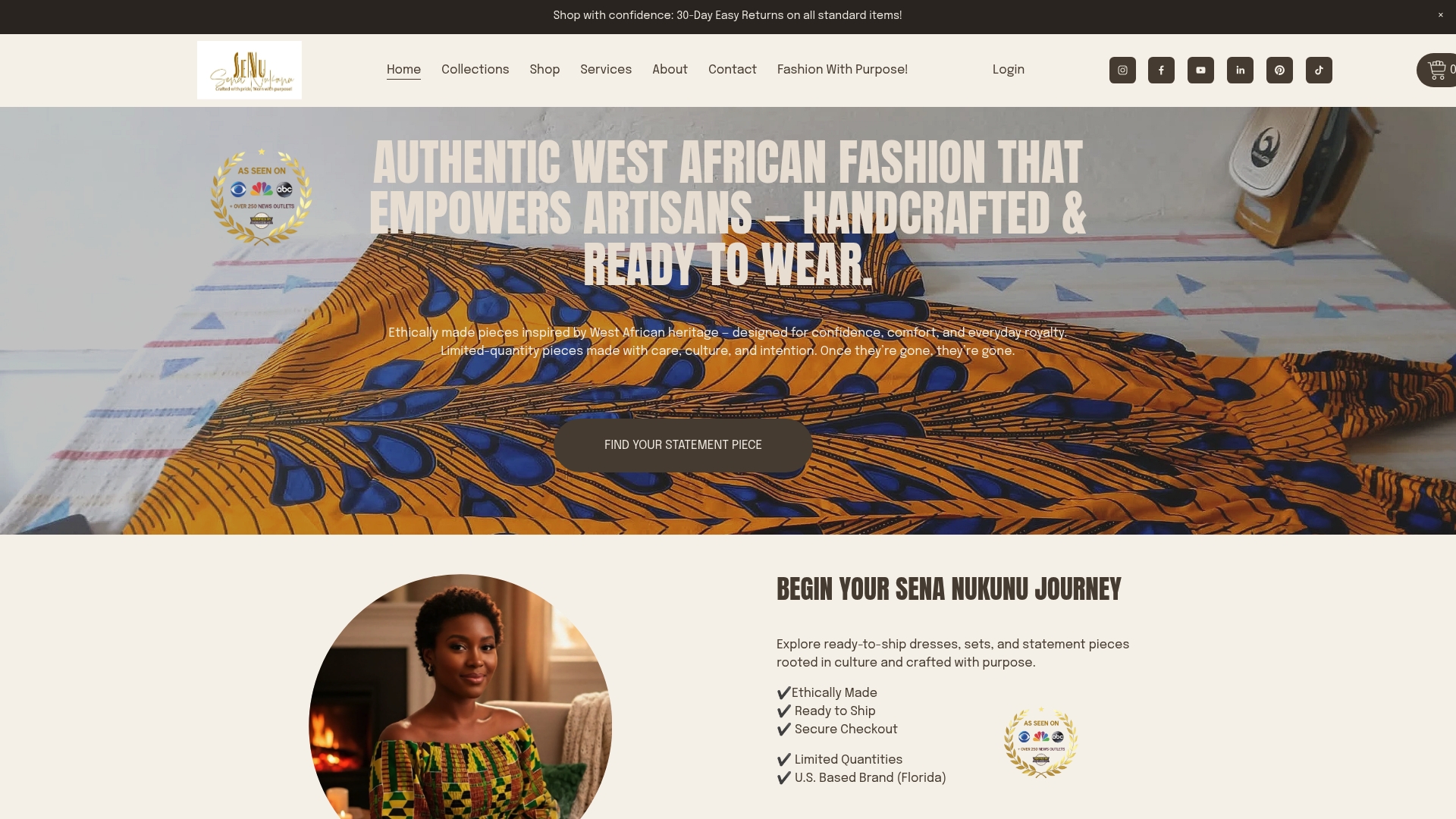
Senanukunu is the direct path from these tips to your wardrobe. Every piece in the collection is made in limited quantities with ethical manufacturing, documented provenance, and the kind of artisanal craftsmanship that justifies hand-washing and keeping for decades. You will find ready-to-wear anchor pieces — dresses, kaftans, matching sets, and statement jackets — alongside a commission and tailoring service for shoppers who want a custom fit and a specific fabric. Browse the full collection to find your first or next anchor piece, or go straight to the dress category for ready-to-ship options that arrive with the story already attached.
Sources
The sources below back the claims in this article and offer deeper context on West African textiles, ethical sourcing, and cultural meaning.
- Cloth of a continent: Africa, fashion
- Names, Cloth and Identity: A Case From West Africa
- Coaching the next generation of designers in West Africa — Ethical Fashion Initiative
- Textiles in West Africa — Oxford Research Encyclopedia of African History
- How to Shop African Fashion: The Complete Guide for the Culturally Literate Consumer — OMIREN STYLES
- Ethical Sourcing in Africa: What Global Buyers Need to Know in 2026 — Airi Handmade