TL;DR:
- Fast fashion has increased production while clothing wears decrease, harming communities and the environment.
- Building a conscious wardrobe involves prioritizing quality, cultural depth, and transparency.
- Supporting West African artisans through direct purchasing, ethical brands, and care practices sustains heritage craftsmanship.
The clothes you wear tell a story, and right now, that story is moving faster than ever. Clothing production doubled over the past two decades while the number of times we actually wear each item dropped by 40%. That gap between production and purpose has real consequences for our planet and for the skilled artisan communities whose livelihoods depend on a fashion system that values craft over speed. This guide will walk you through practical, meaningful steps to build a wardrobe that honors West African heritage, supports artisan makers, and reflects the values you actually stand for.
Table of Contents
- Understand the impact of your wardrobe
- Build a conscious wardrobe: Quality over quantity
- Shop for sustainable and ethical materials
- Extend garment life: Secondhand, repair, and care
- Support West African artisans and ethical initiatives
- The hidden complexity behind sustainable fashion choices
- Discover vibrant, artisan-crafted sustainable fashion
- Frequently asked questions
Key Takeaways
| Point | Details |
|---|---|
| Choose quality pieces | Selecting versatile, durable clothing reduces waste and supports ethical production. |
| Prioritize eco-friendly materials | Certified sustainable fibers and ethical sourcing empower communities and lessen environmental impact. |
| Support artisan initiatives | Buying from brands that partner with West African artisans helps preserve heritage and empowers women. |
| Extend garment life | Secondhand shopping, repair, and proper care keep clothes usable longer and minimize landfill impact. |
Understand the impact of your wardrobe
Every purchase you make is a vote, and it lands somewhere in a global supply chain that connects your closet to cotton fields, weaving studios, and family workshops across West Africa and beyond. Understanding what that connection looks like is the first step toward making it a positive one.
The scale of fashion's footprint is genuinely staggering. Consider a few key numbers:
| Fashion impact area | Scale of the problem |
|---|---|
| Clothing production rate | Doubled in 15 years |
| Average wears per item | Dropped 40% |
| UK clothing waste alone | 300,000 tonnes binned per year |
| Garment workers below poverty line | Estimated 80% globally |
| Fashion's share of global CO2 | Up to 10% annually |
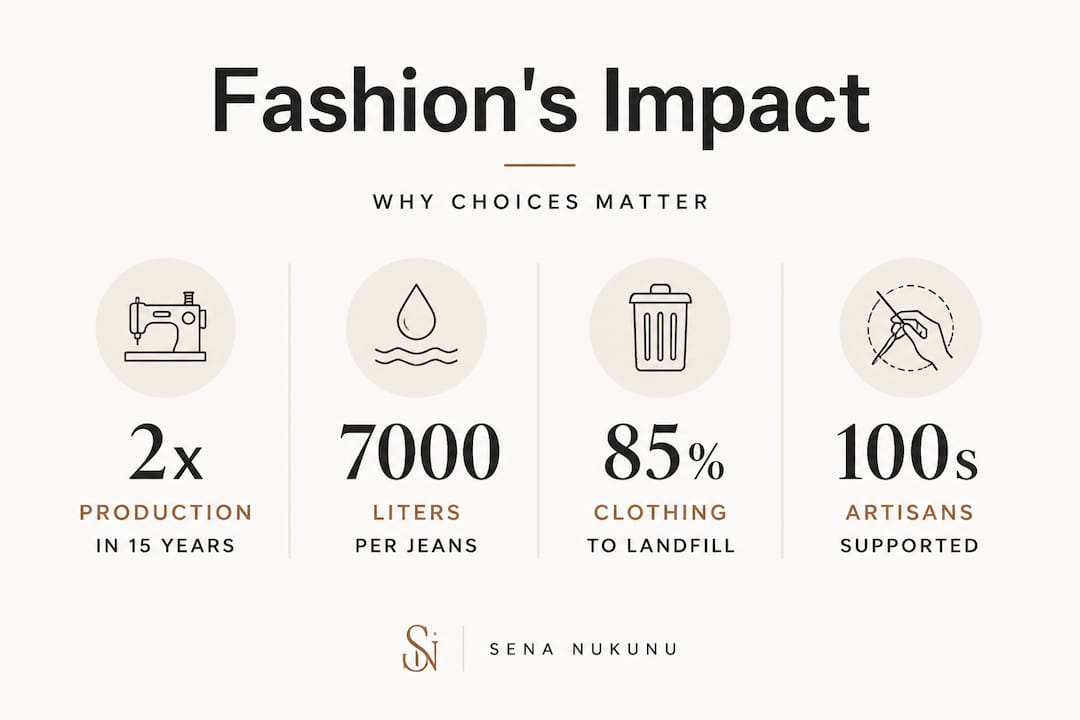
These are not abstract statistics. They represent mountains of discarded fabric, communities without fair income, and a cycle of production that treats both people and materials as disposable. When you understand what sustainable fashion means at its roots, you begin to see that every choice is genuinely consequential.
West African artisan communities sit at a particularly vulnerable point in this system. They carry generations of textile knowledge, from hand-loomed kente cloth to hand-printed adire, yet global fast fashion trends often replicate their patterns without credit or compensation. The West African sustainable trends gaining momentum right now offer a real alternative: fashion rooted in cultural legacy, made with skill, and sold with transparency.
"When you choose slow fashion over fast fashion, you are not just reducing waste. You are actively redirecting value back into the hands of the people whose artistry makes the world more beautiful."
Here are the core problems overconsumption creates:
- Environmental waste: Synthetic fibers sit in landfills for centuries.
- Water depletion: Conventional cotton farming consumes enormous freshwater reserves.
- Artisan displacement: Mass production undercuts the pricing that supports handmade work.
- Cultural erasure: When designs are copied without attribution, living traditions lose their visibility and economic power.
Build a conscious wardrobe: Quality over quantity
Now that you understand the stakes, it is time to rethink how you build your wardrobe for maximum impact. The shift from quantity to quality is not just practical wisdom, it is a form of cultural respect.
Prioritizing quality, versatile pieces that last across seasons is one of the most effective ways to reduce your personal footprint. Heritage-inspired clothing naturally supports this approach because it is designed with intention, not trend cycles. A beautifully made matching set in rich wax print fabric, for example, can move from a weekend gathering to a professional setting with nothing more than a change of accessories.
Here is a practical comparison to help you evaluate your options:
| Fast fashion purchase | Conscious wardrobe choice |
|---|---|
| Low upfront cost | Higher initial investment, lower long-term cost |
| Worn 5-7 times on average | Worn 30+ times across years |
| Trend-specific, becomes dated quickly | Timeless design with cultural depth |
| Often unethically produced | Transparent supply chain, fair wages |
| Synthetic or low-grade materials | Natural, durable, or ethically certified fabrics |
| No artisan connection | Directly supports skilled makers |
To build a conscious wardrobe, follow these steps:
- Audit what you already own. Pull everything out, identify what you actually wear, and notice what has been sitting untouched. This honest inventory shapes smarter future purchases.
- Define your style anchors. These are pieces that reflect who you are, not just what is trending. Heritage-inspired silhouettes, bold prints, and artisan-made statement items serve this purpose beautifully.
- Set a "one in, one out" rule. Before adding anything new, commit to responsibly rehoming something else. This keeps your wardrobe intentional and manageable.
- Invest in versatile, trans-seasonal pieces. A well-made palazzo pant or wrap dress in a vibrant African print works across climates and occasions, maximizing cost-per-wear.
- Research before you buy. Spend time understanding where a brand sources its materials and who makes the clothing. The handcrafted quality behind truly artisan-made pieces is visible when you know what to look for.
Pro Tip: When evaluating whether a piece is worth the investment, ask yourself: "Would I wear this 30 times?" If the answer is yes, it belongs in your wardrobe. If you are hesitating, it probably does not.
Shop for sustainable and ethical materials
After prioritizing quality, your next step is to become savvy about what your clothing is actually made from. The fiber inside your garment determines its environmental cost, its durability, and in many cases, the conditions under which it was produced.
Eco-friendly materials to look for include organic cotton, recycled polyester, Tencel (a wood pulp-derived fiber with low water use), hemp, and linen. Each carries its own set of benefits. Hemp, for example, grows with minimal water and no pesticides. Tencel biodegrades cleanly. Organic cotton avoids the chemical load of conventional farming. These materials can coexist beautifully with West African textiles like handwoven cotton strips and naturally dyed fabrics, which are sustainable by heritage and by practice.
Certifications to recognize and trust:
- GOTS (Global Organic Textile Standard): Covers the full supply chain from fiber to finished garment.
- Fair Trade Certified: Ensures fair wages and safe working conditions.
- OEKO-TEX Standard 100: Tests for harmful substances in every component.
- Responsible Wool Standard: Covers humane treatment and land management.
- B Corp Certification: Indicates a brand meets high overall social and environmental standards.
When shopping for ethical African attire, these certifications are a starting point, but they work best alongside direct brand transparency. Ask brands where their fabric comes from, who dyes it, and how their artisans are compensated. A brand that cannot answer these questions clearly is worth reconsidering.
Statistic callout: The global organic cotton market is growing steadily, yet conventional cotton still accounts for nearly 25% of all insecticides used worldwide despite covering less than 3% of global farmland. Choosing organic is not a small decision.
Pro Tip: If you love a particular fabric but cannot find certified options, look for brands that partner directly with artisan cooperatives in sourcing regions. These relationships often carry ethical weight that certification programs alone cannot fully capture.
Extend garment life: Secondhand, repair, and care
Having chosen quality materials, it is just as critical to treat your clothes with care to avoid waste. The most sustainable garment is one you already own and keep wearing, so extending the life of what is in your closet is just as important as what you buy next.
Shopping secondhand, vintage, or through rental programs dramatically reduces the environmental demand for new production. A secondhand piece of heritage-inspired clothing carries not just its original craftsmanship but also the story of its previous wearer, adding layers of meaning that fast fashion simply cannot replicate.
Practical ways to extend garment life:
- Wash less frequently and use cold water to protect fibers and color vibrancy.
- Air dry instead of tumble drying to prevent shrinkage and fabric breakdown.
- Store carefully, folding knits and hanging structured pieces on padded hangers.
- Use a microfiber filter on your washing machine to reduce plastic pollution from synthetic blends.
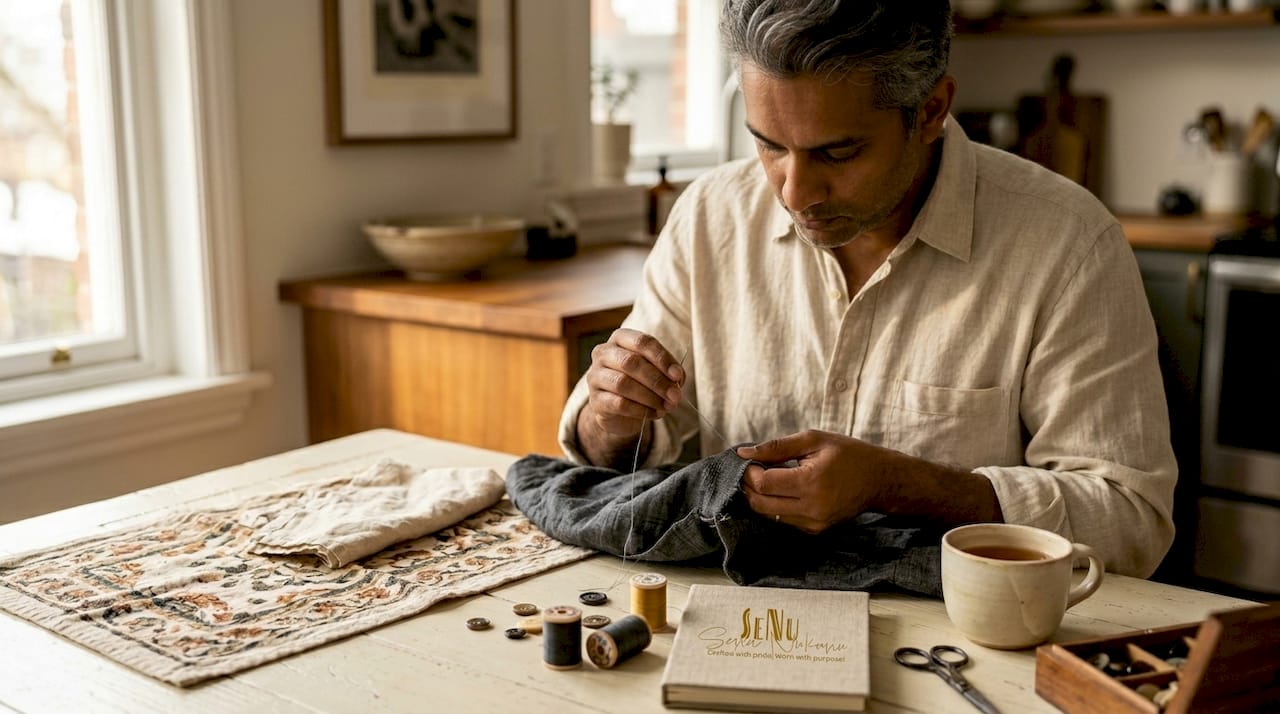
- Learn basic mending, replacing buttons, reinforcing seams, and patching small tears before they become irreparable.
When a garment needs more than a basic repair, seek out skilled local tailors or repair cafes. This habit directly mirrors the spirit behind ethical handmade fashion: honoring the labor and care embedded in every piece.
Follow these steps to build a repair habit:
- Create a mending basket. When something needs attention, place it there immediately rather than letting it languish in a drawer.
- Set a monthly mending session. Treat it as self-care. Put on music, sit with your pieces, and restore them with intention.
- Invest in a small sewing kit. Needles, thread in core colors, spare buttons, and iron-on patches cover the majority of minor repairs.
- Rent before you buy for occasions. Formal events, celebrations, and seasonal parties are ideal moments to rent rather than purchase something worn once.
- Resell or donate thoughtfully. When you are ready to let something go, pass it to someone who will genuinely use it rather than dropping it in a fast-fashion donation bin where it may still end up in a landfill.
These care practices are not just environmental strategies. They are a way of honoring the artisan who made what you are wearing, acknowledging that their time, skill, and culture deserve more than a single season of use.
Support West African artisans and ethical initiatives
With personal habits established, you can actively champion ethical efforts and artisan brands in ways that ripple outward into communities and economies. This is where individual choices become collective power.
The Ethical Fashion Initiative, a joint program of the International Trade Centre, the United Nations, and the World Trade Organization, has worked with partners like Ferragamo to connect luxury brands with West African women artisans in Burkina Faso, providing training, fair wages, and global market access. This model proves that heritage craftsmanship and global fashion can coexist on ethical terms.
Here is how you can actively support artisan communities:
- Buy directly from artisan-led brands. Fewer intermediaries mean more of your money reaches the maker.
- Share and amplify. Follow, comment on, and share the work of artisan designers and cooperatives across social media. Visibility translates to sales.
- Ask about supply chains. Hold brands accountable by asking specific questions about where and how their pieces are made.
- Gift with purpose. Choose artisan-made pieces as gifts, and share the story behind them. Every conversation about heritage craft expands its audience.
- Support initiatives formally. Donate to or advocate for organizations that fund artisan training programs and market access for West African makers.
"When you support African artisans, you are not buying a product. You are participating in a living legacy, one that stretches back through generations and reaches forward into futures you will never see."
Additional ways to deepen your impact:
- Research brands that practice supporting artisan heritage through transparent sourcing.
- Attend cultural fashion events and markets that feature West African designers.
- Educate yourself on the textile traditions behind what you wear, from kente's symbolic patterns to bogolan's storied mud-dyeing process.
- Champion craftsmanship and ethics in conversations with friends and family who are curious about conscious fashion.
The hidden complexity behind sustainable fashion choices
Here is something the clean, optimistic messaging around sustainable fashion rarely says plainly: there is no perfect choice. Not one fabric, not one certification, not one brand is completely without trade-offs. And understanding that honestly is what separates genuinely mindful fashion from performative greenwashing.
Recycled materials, for instance, reduce the demand for virgin resources, which is genuinely valuable. But recycled synthetics may carry social and labor risks in their processing facilities, and they can still shed microplastics with every wash. Organic cotton uses fewer chemicals than conventional cotton but often requires more land and water. Even Fairtrade certification, powerful as it is for social equity, does not always address environmental concerns equally well. No single fiber is the ideal answer across every dimension.
What this means for you is that the most meaningful sustainable fashion choices are shaped by your own values and priorities. If social equity and artisan empowerment matter most to you, prioritize Fairtrade-certified brands and those partnering directly with West African cooperatives. If minimizing chemical pollution is your primary concern, GOTS-certified organic fibers and natural dyes become your guiding stars. If cultural legacy and cultural storytelling in fashion are at the heart of your identity, then choosing brands that work directly with heritage artisans is both a cultural and ethical act.
We believe the most resilient approach is a holistic one. Hold multiple values at once. Ask complex questions. Accept that some choices involve real trade-offs and make them thoughtfully rather than avoiding them. The goal is not perfection but progress, and every intentional purchase moves the needle in a direction that matters.
Discover vibrant, artisan-crafted sustainable fashion
Ready to explore styles that embody everything you have learned? Here is where to start.
At Sena Nukunu, we believe every garment should carry purpose, beauty, and the spirit of a living tradition. Our pieces are designed to reflect West African heritage with pride and crafted through ethical partnerships that put artisans at the center of every decision.
When you explore vibrant styles at Sena Nukunu, you will find ready-to-wear pieces designed for real life, built to last, and rooted in cultural meaning. Browse our artisan collections to discover matching sets, statement dresses, and bold silhouettes made with intention. If you are looking for a standout piece that balances elegance with cultural depth, the shop green palazzo is a beautiful place to begin your journey.
Frequently asked questions
What are the most sustainable fabric choices?
Opt for organic cotton, Tencel, hemp, recycled polyester, and linen certified by GOTS, Fair Trade, or OEKO-TEX for the strongest combination of environmental and ethical benefit.
How can I support West African artisans directly?
Shop from brands partnered with the Ethical Fashion Initiative or independent artisan collectives, and prioritize brands with transparent supply chains that show exactly who makes your clothing and how they are compensated.
Does buying secondhand really help sustainability?
Yes, extending garment life through secondhand purchases reduces landfill waste and lowers the demand for new manufacturing, making it one of the highest-impact individual choices available to conscious shoppers.
How can I tell if a brand is ethically made?
Look for third-party certifications like GOTS, Fair Trade, or OEKO-TEX alongside transparent supply chain disclosures, clear commitments to fair wages, and direct relationships with artisan communities rather than anonymous manufacturing networks.
Recommended
- Sustainable fashion trends empowering West African artisans
- How to support artisan fashion and West African heritage
- Discover Impactful Ways to Support African Artisans
- Sustainable fashion explained: meaning, principles & West African inspiration
- Discover Artisan Jewelry: Unique, Ethical & Custom – Bel Viaggio Designs, LLC