TL;DR:
- Authentic African fashion icons integrate cultural storytelling, ethical practices, and artisan engagement to preserve heritage. They balance tradition with modern global relevance, fostering sustainable communities and meaningful impact. Supporting such icons ensures the continuation of authentic craftsmanship and cultural legacy across Africa.
There is a particular frustration that comes with loving African fashion deeply but struggling to find icons who actually walk the talk. You want designers and communities who carry cultural heritage with intention, produce ethically, and create pieces that feel timeless rather than trendy. The inspiring African fashion icons worth your attention are the ones who weave all three together, where every garment tells a story grounded in real artisanship, real communities, and real respect for tradition. This guide gives you the framework to identify them, and then takes you straight to the figures and ecosystems earning that title.
Table of Contents
- Criteria for identifying inspiring African fashion icons
- Thebe Magugu: Afro-modernist visionary reshaping South African style
- Chuks Collins: redefining cross-cultural African fashion
- Bobo-Dioulasso: a thriving craft ecosystem anchoring African fashion heritage
- ifa crafted: ethical, design-led heritage craft transformation
- Comparing African fashion icons: impact, heritage, and ethics table
- Our perspective: the icon you follow shapes the culture you build
- Wear the culture, support the community
- Frequently asked questions
Criteria for identifying inspiring African fashion icons
Not every designer who uses African prints qualifies as a true icon of the culture. The word "icon" carries weight, and for those of us who care about culture and ethics in African attire, it demands more than aesthetic appeal. A genuine icon demonstrates measurable commitment across three dimensions: cultural authenticity, ethical production, and stylistic innovation with global reach.
Here is how to evaluate any African style influencer or designer against these dimensions:
- Artisan engagement — Do they work directly with craftspeople, or is the connection to "Africa" purely visual? Icons who support artisan fashion embed artisans into their creative process, not just their supply chain.
- Cultural storytelling — Are the materials, silhouettes, and motifs rooted in specific cultural traditions, or are they generic "African-inspired"? Authentic icons can name the community, the textile, and its meaning.
- Ethical production — This goes beyond mission statements. Design-led heritage craft platforms that are structured improve income, confidence, and belonging among artisans in measurable ways.
- Modern relevance — True icons balance tradition with contemporary global appeal, making African fashion leaders in the worldwide conversation, not just regional figures.
When you assess any designer or community against these four points, the noise clears quickly. Some of the most influential African fashion figures are not runway names at all. They are artisan ecosystems, community-led collectives, and hybrid designers who live between cultures. Here is what that looks like in practice.
Thebe Magugu: Afro-modernist visionary reshaping South African style
Thebe Magugu is one of the most celebrated iconic African designers working today, and his trajectory explains exactly why. Born in Kimberley, South Africa, he won the LVMH Prize in 2019, becoming the first African designer to receive the honor. He did not take that recognition and relocate to Paris. He stayed rooted in South Africa, building his brand's identity around the country's layered cultural history and its contradictions.
His work is what we call Afro-modernism: a design language that treats African heritage not as decoration but as intellectual architecture. A garment from his label might carry references to apartheid-era bureaucracy, botanical illustration, or ancestral ritual, all rendered in precise tailoring with luxury fabrics. Recently, Thebe Magugu brought his Afro-encyclopedic vision to Cape Town with a concept store and gallery, merging the English grandeur of the Mount Nelson Hotel's architecture with African sensuality and craft.
What makes him a true icon for those who care about African designer culture and style:
- He collaborates with fellow South African creatives, photographers, and artists, so collections feel like cultural conversations rather than solo exhibitions.
- His ancestral-to-contemporary aesthetic treats history as living material, not nostalgia.
- He appeals to both global luxury buyers and local audiences who see themselves reflected in his work.
- His concept store functions as a gallery and community space, not just a retail point.
Pro Tip: When following any best African fashionista or designer, look at where they build and who they build with. Magugu's refusal to leave South Africa is not a statement about nationalism. It is a commitment to keeping the creative and economic value of his work inside the continent.
With a framework to identify true icons, let's explore a designer who carries that same cross-cultural ambition from a West African lens.
Chuks Collins: redefining cross-cultural African fashion
Chuks Collins grew up between Nigeria and the United Kingdom, and that dual inheritance is not just biographical detail. It is the engine of his entire design philosophy. His work marries the precision and structure of British tailoring with Nigerian cultural references, producing pieces that feel simultaneously global and deeply rooted. He is exactly the kind of African fashion leader who expands what the tradition can hold.
Chuks Collins rebranded in 2015 and has since dressed international celebrities while building infrastructure for the next generation of African designers through incubator programs that have engaged five designers at a time. That second part matters enormously. Many designers in his position stop at personal success. Collins uses his platform to expand the continent's creative infrastructure.
His brand stands apart because of several clear commitments:
- Purposeful storytelling — Every collection engages personal and cultural history, making fashion a medium for processing identity rather than simply displaying it.
- Sustainability at the core — Materials and production choices reflect a conscious awareness of impact, not as a marketing angle but as a foundational value.
- Community cultivation — His incubator model actively addresses the talent gap in African fashion by mentoring emerging designers, creating a multiplying effect on the continent's creative economy.
- Cross-cultural fluency — His work speaks to diaspora audiences who live between African and Western cultural contexts, a massive and underserved community in global fashion.
The West African artisan social impact created by designers who mentor and build programs like his cannot be overstated. One person's success, when channeled back into community, becomes a generation's opportunity.
Moving from individual designers, we turn to one of the most remarkable artisan communities shaping African fashion's cultural backbone and economic foundation.
Bobo-Dioulasso: a thriving craft ecosystem anchoring African fashion heritage
Bobo-Dioulasso, Burkina Faso's second-largest city, is not a designer. It is something more enduring. It is a living, breathing icon of African textile heritage, recognized by UNESCO as a Creative City of Crafts and Folk Art, and its artisan community represents everything that fashion trends in Africa should aspire to preserve.
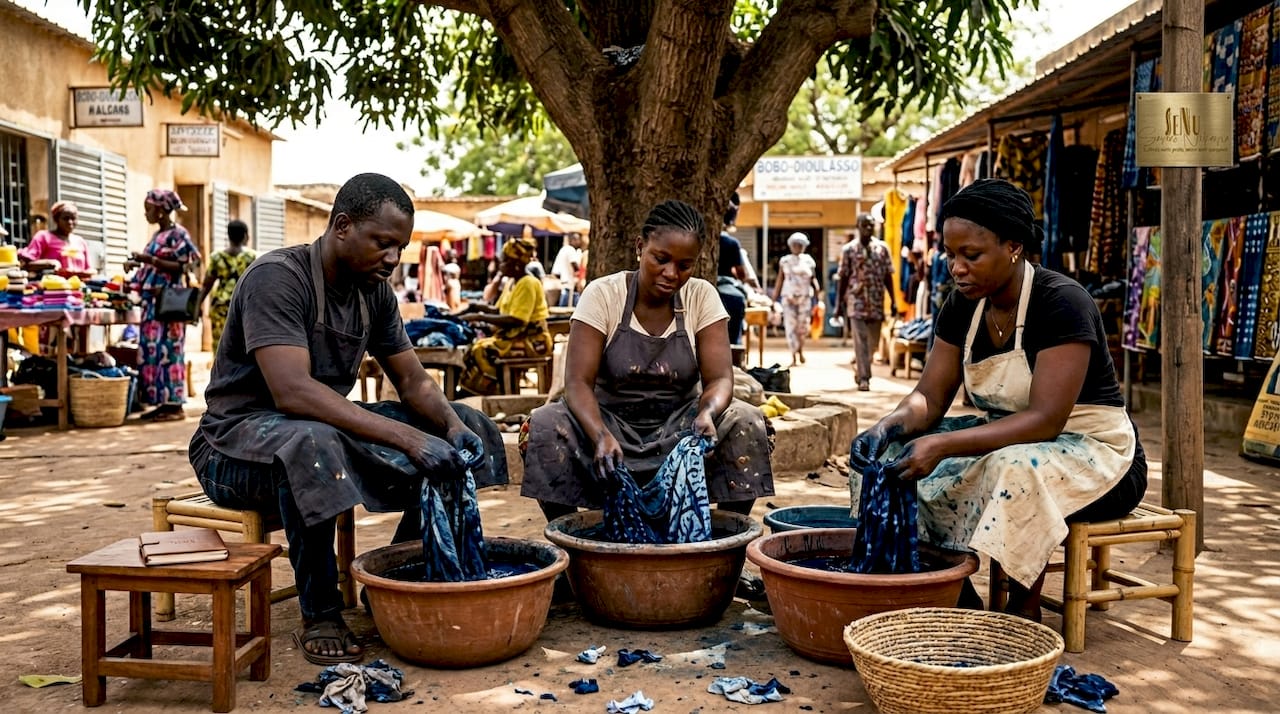
The city's defining textile is koko dunda, a hand-dyed fabric produced through an intricate process that carries the weight of local identity, intergenerational knowledge, and social resilience. This is not craft for tourism. It is a primary economic engine. More than 3,000 artisans, predominantly women, produce koko dunda textiles, accounting for over 50% of local value creation and 80% of employment in the city.
| Indicator | Bobo-Dioulasso craft sector |
|---|---|
| Active artisans | 3,000+ |
| Gender composition | Predominantly women |
| Share of local employment | ~80% |
| Share of local value creation | 50%+ |
| UNESCO recognition | Creative City of Crafts and Folk Art |
The numbers tell part of the story, but the cultural dimension runs deeper. When you support African artisans who work within ecosystems like Bobo-Dioulasso, you are not buying fabric. You are participating in a transmission of knowledge that spans centuries.
"Every piece of koko dunda carries the hands, the history, and the identity of the women who created it. Supporting this craft means choosing culture over convenience."
The city hosts large cultural events that reinforce its role as a regional craft and fashion hub, drawing attention from designers, buyers, and cultural organizations across the continent and beyond. These events are not mere celebrations. They are market access moments for artisans who rely on visibility to sustain their livelihoods. Understanding sustainable fashion trends means recognizing that communities like this one are setting the standard, not following it.
Pro Tip: If you want to understand African fashion authentically, trace a textile back to its source community before you trace it back to a designer's label. The community is always the first author.
Besides established communities, structured initiatives prove that intentional design programs can amplify both craft heritage and artisan wellbeing.
ifa crafted: ethical, design-led heritage craft transformation
ifa crafted represents a newer but powerful model of what ethical fashion leadership can look like when it is built around outcomes rather than optics. Their project methodology is deliberately structured to bridge the gap between traditional craft and contemporary market expectations through co-design, meaning artisans are creative collaborators, not passive producers.
Their results speak directly to what ethical fashion leadership should require. ifa crafted engaged 82 artisans over nine months in 2025, producing seven craft collections with measurable positive artisan outcomes across income, confidence, and sense of belonging within the creative economy. Those are not vague impact claims. They are tracked, transparent, and replicable.
Their model followed a clear sequence:
- Co-design — Collections were developed with artisans, honoring traditional techniques while aligning with contemporary market demands.
- Business-to-business first — Securing volume orders through wholesale channels provided artisans with income stability before direct-to-consumer sales began.
- Direct-to-consumer expansion — Once volume was established, retail channels opened, increasing artisan visibility and brand equity.
- Outcome measurement — Income, confidence, and community belonging were tracked as core success metrics, not afterthoughts.
| Metric | ifa crafted outcome |
|---|---|
| Artisans engaged | 82 |
| Duration | 9 months (2025) |
| Collections produced | 7 |
| Key outcomes | Income, confidence, belonging |
| Model type | Co-design, B2B then D2C |
Pro Tip: When evaluating any empowering West African artisan initiative, ask for specific numbers. How many artisans? Over what period? What changed for them? Transparency at this level is the mark of genuine ethical practice, not marketing language.
With a comparison in hand, let's look at how these icons measure up side by side.
Comparing African fashion icons: impact, heritage, and ethics table
| Icon / Community | Artisan engagement | Cultural storytelling | Ethical practices | International reach |
|---|---|---|---|---|
| Thebe Magugu | Collaborates with local creatives | Deep, historically grounded | South Africa-rooted production | Global luxury market |
| Chuks Collins | Incubator for emerging designers | Personal and cultural narrative | Sustainability-focused design | International celebrity reach |
| Bobo-Dioulasso artisans | 3,000+ artisan community | Koko dunda textile heritage | Gender-empowering employment | UNESCO recognition |
| ifa crafted | 82 artisans co-designed | Heritage craft collections | Transparent, measured outcomes | B2B and D2C global model |
This table makes one pattern clear: the most celebrated African designers culture and ethics consistently show up in multiple columns, not just one. A designer with global reach but no artisan engagement is not an icon in the fullest sense. A community with deep heritage but no ethical framework for economic empowerment leaves value on the table. The icons worth following are the ones who hold the whole picture together.
Our perspective: the icon you follow shapes the culture you build
Here is something the "who are African style icons" conversation rarely surfaces: following an icon is a cultural act, not just a consumer one. When you direct your attention, your purchases, and your platform toward specific designers and communities, you are casting a vote for what African fashion becomes. Most readers understand this abstractly. Very few act on it specifically.
We have seen a troubling pattern in how African fashion gets celebrated globally. The icons who receive the most coverage are often the ones most legible to Western fashion media. Silhouettes that nod to African heritage but fit neatly into European luxury frameworks get the most press. That is not coincidental. It is structural bias at work. The designers and communities doing the deepest cultural work are frequently the least visible in mainstream coverage.
This matters because visibility shapes supply. When buyers, retailers, and media celebrate only the most assimilated African fashion figures, they inadvertently starve the more rooted, artisan-driven work of the market access it needs to survive. The result is a version of African fashion that looks globally polished but loses its most irreplaceable quality: the living connection to the communities and traditions that generated it in the first place.
Our honest view is that the most inspiring African fashion icons are often not the ones with the most followers. They are the ones whose work you cannot separate from the community behind it, where you cannot buy the garment without also knowing something true about the hands, the place, and the story that made it. That specificity is what turns fashion into legacy.
Wear the culture, support the community
At Sena Nukunu, we build every piece with exactly that standard in mind. We are a West African fashion platform rooted in Florida, and we exist because we believe that cultural pride and ethical craftsmanship should be accessible to women who want both.
Our ready-to-wear collection features dresses, matching sets, and statement pieces that carry the spirit of West African heritage into your everyday life. Each limited-quantity piece is crafted with care, produced with purpose, and designed to make you feel regal without requiring a compromise on values. When you choose Sena Nukunu, you are not just buying clothing. You are choosing to wear a story worth telling.
Frequently asked questions
Who are some leading African fashion designers blending tradition with modern style?
Designers like Thebe Magugu and Chuks Collins are widely recognized for fusing African heritage with contemporary innovation, bringing Afro-modernist aesthetics and cross-cultural tailoring to global audiences.
How do ethical African fashion initiatives support artisan communities?
Programs such as ifa crafted engage artisans directly in co-designed collections and market access pathways, producing measurable improvements in income, confidence, and community belonging over defined project periods.
What role do artisan communities play in African fashion heritage?
Communities like those in Bobo-Dioulasso sustain traditional textile crafts that generate over 80% of local employment, preserving cultural identity at a scale that individual designers simply cannot replicate on their own.
What makes someone a true African fashion icon rather than just a popular designer?
A genuine icon demonstrates commitment across artisan engagement, cultural storytelling, ethical production, and modern relevance, not just one or two of those dimensions. Popularity without cultural accountability is influence, not iconhood.
How can fashion enthusiasts support inspiring African fashion icons in a meaningful way?
Follow designers and communities who publish transparent artisan impact data, purchase from brands that name their craft origins specifically, and amplify voices from artisan ecosystems that rarely reach mainstream fashion coverage.