TL;DR:
- Family influences deeply shape individual fashion choices through values, traditions, and cultural storytelling. In African cultures, family elders actively direct attire selections, connecting clothing to lineage and community identity. Recognizing these influences enhances intentional dressing rooted in heritage, ethics, and personal legacy.
Most people believe that fashion is purely personal, a matter of individual taste shaped by social media feeds and celebrity looks. But research tells a far more intimate story. Parental modeling ranks highest in influencing adolescent decision-making, including fashion choices, outweighing both peer pressure and digital trends. The clothes your family wore, the textiles they commissioned, and the values they attached to dress all live in your wardrobe today, whether you realize it or not. For those of us rooted in African heritage, this truth runs especially deep, and understanding it is the first step to dressing with real intention and pride.
Table of Contents
- Why family matters more than you think in fashion
- Cultural heritage and family: The heart of African fashion
- Family dynamics: Support, dysfunction, and shopping habits
- Reverse socialization: When children inspire parents
- Crafting identity through family and ethical fashion
- Why the influence of family on fashion is more radical than you think
- Discover styles inspired by heritage and family values
- Frequently asked questions
Key Takeaways
| Point | Details |
|---|---|
| Family is a fashion guide | Parents and elders shape style choices through modeling, communication, and tradition. |
| Heritage preserves identity | Commissioned custom textiles and cultural rituals help sustain community bonds and personal expression. |
| Support impacts shopping habits | Supportive families reduce compulsive buying and steer towards ethical, meaningful choices. |
| Children can inspire change | Reverse socialization lets younger members influence family fashion towards sustainability and ethics. |
Why family matters more than you think in fashion
With the stage set for a deeper look into family's impact, let's break down just how central your roots really are to your wardrobe.
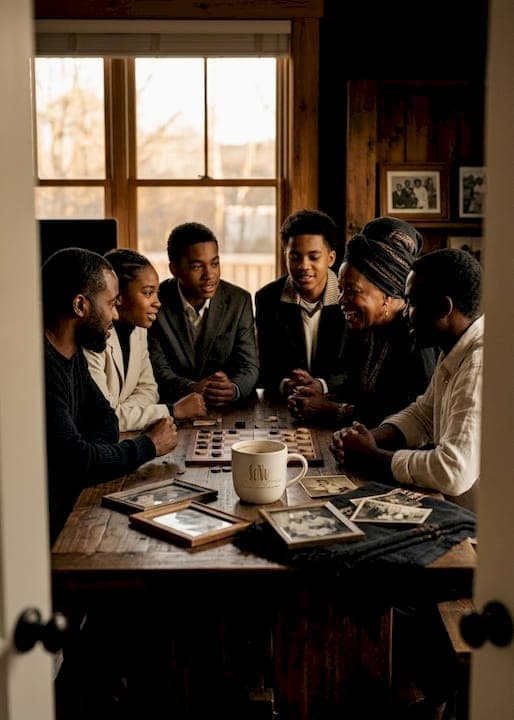
We live in an era that celebrates individual expression above almost everything else. Scroll through any style platform and you'll find a thousand voices telling you to "define your own aesthetic." What those voices rarely mention is that your aesthetic was already being shaped long before you had a Pinterest board. It was shaped at the dinner table, at family gatherings, at Sunday services, and at celebrations where the dress code was never written down but was always understood.
"Family serves as the primary modeler of fashion choices through direct behaviors, values transmission, and cultural encoding, functioning as the first and most enduring influence on how individuals relate to clothing."
That quote captures something most mainstream fashion conversations miss entirely. Your parents, grandparents, siblings, and extended family did not just hand down heirlooms. They handed down a way of seeing clothing, a sense of what dress means, what it communicates, and why it matters.
Research measuring the strength of different influences found that parental modeling scored a striking mean of 4.72 out of 5 in shaping adolescent fashion decisions. That number is higher than peer influence, higher than social media, and higher than advertising. It means that the most powerful fashion editor in your life has probably always been your mother, your aunt, or the elder who showed up to every family event draped in something magnificent.
Here's what that influence actually looks like in practice:
- Daily dress modeling: Watching a parent choose quality fabric over fast-fashion shortcuts teaches children to value craftsmanship, often without a single word being spoken.
- Values transmission: Families that dress modestly, boldly, or ceremonially pass those values on as lived experience, not abstract lessons.
- Cultural encoding: The colors, cuts, and textiles a family gravitates toward become a kind of visual language that children absorb and carry forward.
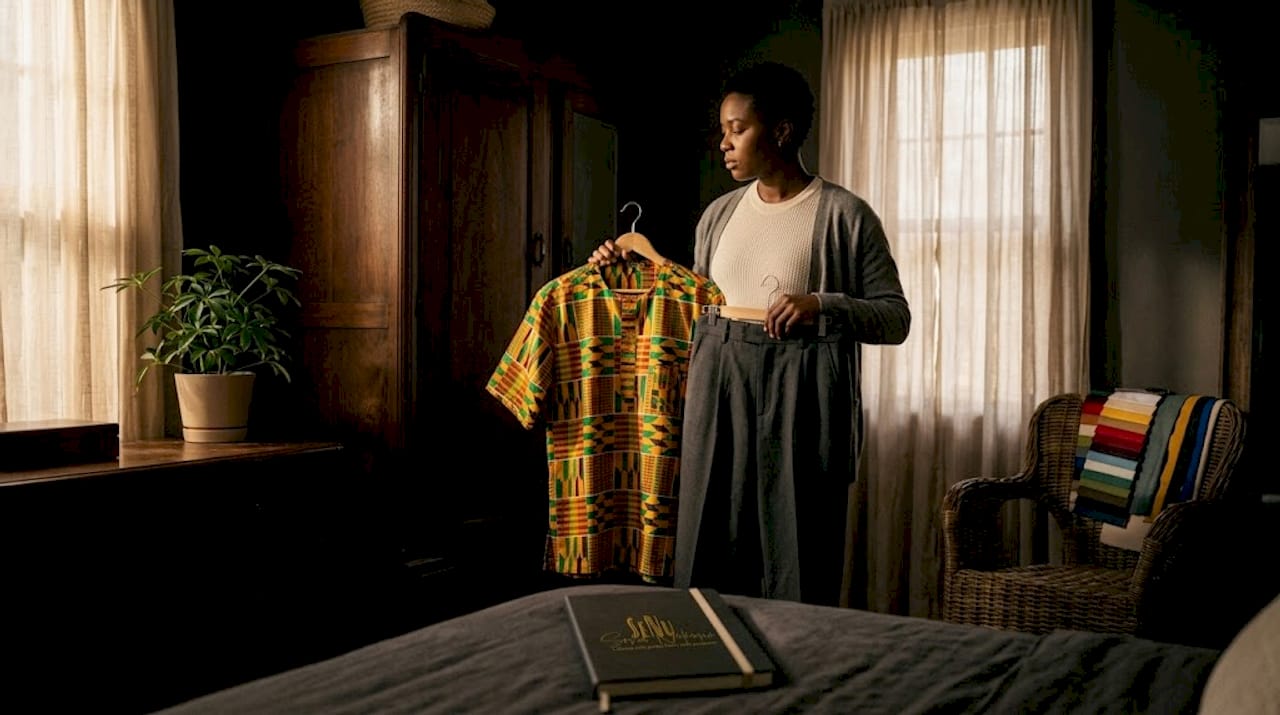
Exploring African heritage apparel through this lens transforms the way you understand your own closet. Every piece you reach for carries a lineage, and that lineage began at home.
Cultural heritage and family: The heart of African fashion
After understanding the universal influence of family, let's illustrate how this plays out uniquely in cultures where heritage is literally the fabric of fashion.
In many African traditions, family and fashion are so deeply intertwined that separating them would be like separating a kente cloth from its meaning. Family elders, customs, and traditions actively shape women's apparel choices, particularly in communal settings like weddings, funerals, naming ceremonies, and harvest festivals. These are not just occasions for dressing up. They are moments where the entire family's identity, status, and values are expressed through what is worn.
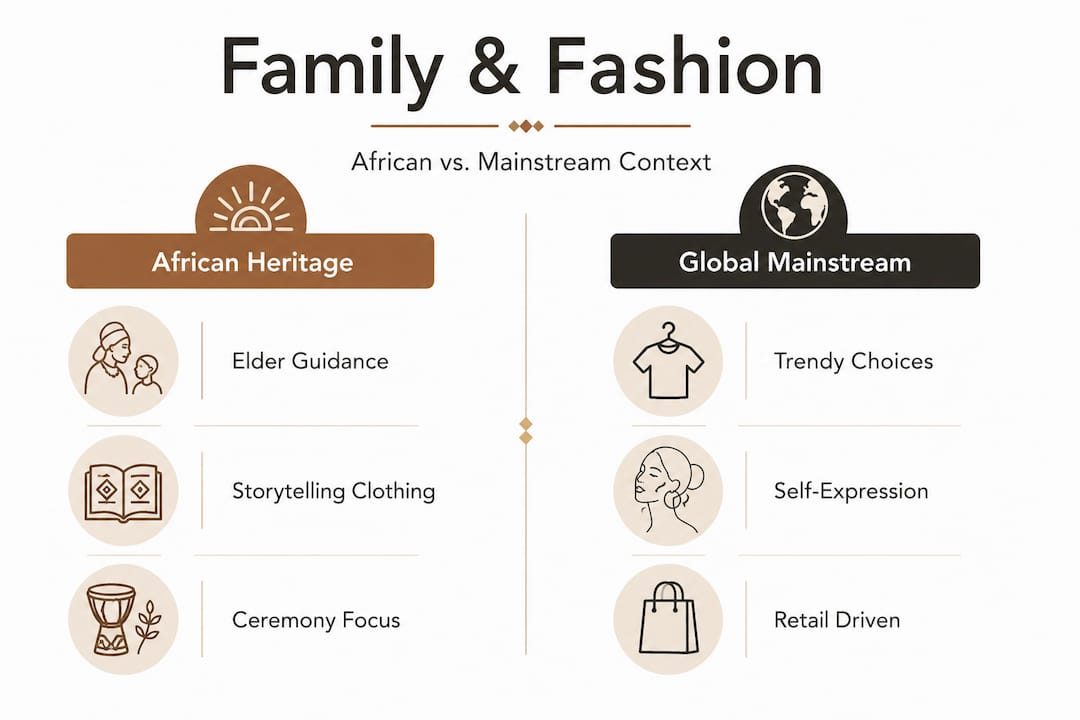
| Fashion influence | African cultural context | Global mainstream context |
|---|---|---|
| Elders' role | Active, directive, and respected | Largely passive or absent |
| Occasion dressing | Governed by family and community tradition | Mostly individual preference |
| Textile selection | Often tied to lineage and symbolism | Primarily aesthetic and trend-driven |
| Ethical sourcing | Embedded in artisan relationships | Increasingly consumer-driven but newer |
| Family commissioning | Common practice for ceremonies | Rare, mainly in couture circles |
This table reveals something important. In African contexts, family is not a background influence; it is the creative director. Grandmothers consult on fabric choices. Uncles weigh in on color. The family as a whole may commission a textile that reflects their specific lineage, turning a piece of clothing into a living archive of who they are and where they come from.
Pro Tip: When attending a family ceremony, ask your elders about the significance of specific colors or patterns in your family's tradition. What you learn will deepen not just your style but your sense of self.
This tradition of family-driven fashion is one reason why ready-to-wear African attire carries such weight. It is not merely convenient clothing. It is culturally resonant, ethically rooted, and often a bridge between generations. Understanding how cultural heritage shapes fashion in West Africa helps you appreciate that every vibrant print, every intricate embroidery, and every boldly draped garment tells a family story.
Family dynamics: Support, dysfunction, and shopping habits
Now, let's examine how family functioning, beyond just culture and tradition, can make or break a healthy relationship with fashion.
Not all family influences on fashion are equal. Research makes a clear and sometimes uncomfortable distinction: the quality of your family environment shapes not just what you wear but how you relate to buying clothes. Studies show that family functioning negatively correlates with fashion orientation and compulsive shopping behavior in female students. In simpler terms, when family support is strong, compulsive or impulsive fashion consumption goes down. When that support is absent or strained, fashion can become a coping mechanism rather than a form of self-expression.
| Family environment | Fashion behavior | Shopping pattern |
|---|---|---|
| Highly supportive | Thoughtful, values-aligned choices | Intentional, deliberate purchasing |
| Moderately supportive | Mixed, partly trend-driven | Occasional impulse buys |
| Low support or dysfunctional | Fashion as emotional compensation | Compulsive, high-frequency shopping |
This data is not meant to place blame. It is meant to illuminate. If you have ever found yourself reaching for something new during a stressful period at home, you are not weak; you are human. But awareness of that pattern is powerful.
Here are four steps to recognize and redirect family-driven shopping habits:
- Pause before purchasing. Ask yourself whether this is a want rooted in joy or a need rooted in stress. The answer changes everything.
- Trace the trigger. If shopping spikes during family tension, that pattern is worth noting. Fashion should empower, not numb.
- Anchor your choices to values. Families with strong cultural identity tend to choose pieces with meaning. Let that be your compass.
- Build a capsule of intentional pieces. A smaller collection of garments that truly reflect your heritage and identity satisfies far more than a closet full of impulse purchases.
Those who navigate African diaspora style trends understand this instinctively. Bold, ethical, and culturally resonant style is not about owning more. It is about owning pieces that carry weight, beauty, and meaning.
Reverse socialization: When children inspire parents
Having explored traditional and functional family roles, let's shed light on the modern twist: the power of youth to sway household fashion values.
For centuries, the flow of fashion influence within families ran in one direction: from elders to youth. Parents taught children how to dress. Grandparents modeled the significance of ceremonial attire. That dynamic still exists and remains deeply meaningful. But something fascinating has shifted in recent years, and it deserves attention.
Reverse socialization is now a recognized pattern in family fashion dynamics. It describes the process where children, particularly teenagers and young adults, influence their parents' fashion values and choices, especially around sustainability and ethical production. Gen Z, in particular, enters households with a heightened awareness of where clothing comes from, who made it, and what its true cost is.
Interestingly, this is not always a smooth or simple process. Research from a broader study on generational fashion behavior shows that Gen Z navigates a paradox between fast fashion consumption and sustainable ideals. Yet even within that tension, their influence on household purchasing decisions is measurable and growing.
Here is how this reverse influence tends to appear in families:
- A teenager researches a brand's labor practices and shares what they find at the dinner table, prompting a parent to reconsider their usual choices.
- A young adult returning home introduces their family to choosing ethical, culturally inspired fashion, sparking a household-wide shift.
- Children in heritage-focused families ask questions about traditional dress that reignite their parents' pride and reconnect the whole family to their roots.
Pro Tip: If you are passionate about ethical or culturally meaningful fashion, share one specific piece or brand with a family member this month. Not a lecture, just a conversation. You may be surprised how quickly values travel in both directions.
This two-way dynamic makes family one of the most powerful levers for creating lasting, ethical change in how we all approach getting dressed.
Crafting identity through family and ethical fashion
To put these dynamics into action, let's explore how families channel their heritage and values into their wardrobes, impacting identity and community.
There is a practice in many African cultures that the modern fashion world is only beginning to appreciate: families commission custom textiles not just as garments, but as acts of identity-making and lineage archiving. In the work of brands like Osei-Duro and Emmy Kasbit, family commissioning of custom cultural textiles is recognized as a way to preserve heritage, sustain artisanal skills, and create wearable records of cultural memory. Every commissioned piece holds names, events, and stories that a photograph alone cannot capture.
This is not an abstract ideal. It is a deeply practical act with meaningful outcomes:
- Heritage preservation: Custom textiles keep regional weaving, dyeing, and embroidery traditions alive by creating ongoing demand for skilled artisans.
- Identity formation: Wearing a piece your family commissioned connects you to something larger than personal style. It connects you to lineage.
- Ethical consumption: When families invest in artisan-made, ethically produced pieces, they vote with their spending for a fashion system that honors people and culture.
- Community support: Commissioning from local or diaspora artisans keeps wealth circulating within cultural communities, strengthening them from the inside.
The African outfit guide approach to dressing, rooted in intention and cultural storytelling, reflects exactly this mindset. When you dress with purpose, every garment becomes more than fabric. It becomes a declaration of who you are and where you come from.
Ethical fashion brands that understand this reality do not just sell clothing. They offer a way for families to participate in something timeless, something that honors craftsmanship, celebrates resilience, and carries a legacy forward with every wear.
Why the influence of family on fashion is more radical than you think
Most style conversations begin and end with the individual. What's your personal brand? What does your wardrobe say about you? These are valid questions, but they quietly erase something foundational. They strip away the communal, the ancestral, and the inherited, leaving behind a version of style that feels untethered, commercially driven, and ultimately hollow.
We believe that family's influence on fashion is not a relic of tradition. It is one of the most radical and sustaining forces in ethical, culturally grounded dressing today. As research consistently confirms, family functions as the primary modeler of fashion behavior, shaping values and choices at a depth that no algorithm can match.
When families are dismissed from the fashion conversation, what gets lost is not just nostalgia. What gets lost is the ethical architecture that guides intentional dressing. It is the elder who insists on quality. It is the parent who explains why a particular pattern matters. It is the child who asks where the fabric was made and by whom. Remove those voices, and fashion becomes purely transactional.
Reconnecting to tradition and empowerment in style is not a backward step. It is a deeply forward-facing one. Families that pass down cultural fashion literacy are equipping the next generation with something no trend cycle can offer: a sense of self that is rooted, resilient, and radiantly expressed.
The most stylish thing you can do today might not be buying something new. It might be calling your grandmother and asking what she wore to the most important day of her life.
Discover styles inspired by heritage and family values
For those inspired to weave family legacy into your wardrobe, here's where you can start.
At Sena Nukunu, we believe that every stitch carries the spirit of a story, and that story begins at home. Our collections are crafted to honor the timeless traditions of West African heritage while speaking to the modern, fashion-conscious individual who wants their clothing to mean something real.
Whether you are building a wardrobe that reflects your roots, searching for a statement piece that honors your lineage, or looking for ethically made attire that your whole family can feel proud of, we have something created with you in mind. Explore vibrant styles that blend cultural pride with contemporary elegance, and discover the latest styles from our newest limited-quantity arrivals. Every piece is made with care, purpose, and deep respect for the craftsmanship that connects generations.
Frequently asked questions
How does family modeling influence fashion choices in African contexts?
Family members, especially elders, model traditional attire during ceremonies, festivals, and daily life, establishing a living standard for culturally respectful and beautiful dressing. In African cultures, these influences are active and directive rather than passive, making family the most powerful fashion guide a person can have.
Can children impact their parents' clothing choices?
Yes, and the effect is growing. Children frequently introduce ethical and culturally meaningful fashion ideas to their families through conversation, research, and personal example, creating genuine change in household shopping habits. Reverse socialization is now a recognized pattern, particularly around sustainable fashion values.
What happens when family support is lacking?
Without strong family support, individuals are more likely to develop compulsive shopping patterns, using fashion as an emotional outlet rather than an intentional form of self-expression. Family functioning negatively correlates with compulsive fashion consumption, meaning the stronger the family bond, the more grounded and deliberate a person's style choices tend to be.
Does commissioning custom attire preserve cultural heritage?
Absolutely. Families who commission custom textiles from ethical artisan brands actively sustain both the craft and the culture behind it, creating garments that serve as wearable family archives. Family commissioning of textiles is recognized as one of the most meaningful ways to keep artisanal traditions alive across generations.