
A tight limited-edition fashion checklist does one thing above all else: it transforms a beautiful garment into a verifiable, collectible piece that commands premium pricing, protects your brand's integrity, and gives buyers a reason to trust you long after the drop sells out. This guide covers every phase of that process, from the first concept sketch to post-launch resale monitoring, so you can execute with confidence and craft.
Here are the eight essential areas this checklist covers:
- Research and audience planning — define your buyer, access model, and edition size before anything else
- Edition cap and scarcity commitment — set a production number and hold to it, publicly
- Authenticity and provenance — numbered tags, Certificate of Authenticity (COA), and a provenance medium (NFC, QR, or on-chain token)
- Prototype and quality assurance — size set approval, hand-finishing review, and materials sign-off
- Pricing and scarcity strategy — cost-per-piece, artisan premium, and edition-size markup
- Marketing and launch plan — prelaunch list, early access tiers, influencer seeding, and release cadence
- Operations and fulfillment — lead-time buffers, serialized packing, returns policy, and buyer registration
- Legal and risk checks — FTC disclosure, IP clearance, and advertising-claim compliance
Pro Tip: Print this checklist and pin it to your production wall. The designers who skip even one area, usually authenticity or legal review, are the ones who face trust erosion or restock pressure six months after launch.
Table of Contents
- What does "limited edition" actually mean in fashion?
- Why do limited-edition drops work so well for brands?
- The core limited edition fashion checklist: research to launch
- How do you make a limited-edition piece genuinely collectible?
- How should you price a limited-edition piece?
- What marketing tactics actually work for a limited drop?
- How do you handle operations and fulfillment for a limited run?
- What legal risks should U.S. designers know about?
- What does a 90-day timeline and budget look like?
- How Senanukunu executed a limited-edition drop
- Key Takeaways
- Why provenance and craftsmanship are non-negotiable for limited runs
- Senanukunu: handcrafted, limited-quantity pieces with real provenance
- Useful sources and templates
What does "limited edition" actually mean in fashion?
The phrase gets used loosely, so let's be precise. A true limited-edition fashion piece carries three non-negotiable elements: a strictly capped production number that the brand commits to publicly, unique physical identifiers (numbered tags, a signed COA) that tie each piece to the edition record, and a provenance medium that makes the scarcity verifiable and permanent.
Three formats are commonly confused with genuine limited editions:
- Capped production run — the real thing: a fixed number produced once, never reissued, with serialized identifiers on every piece
- Made-to-order closed batch — orders accepted for a defined window, then production closes; no fixed serial count, but still a legitimate scarcity model when terms are clear
- Marketing-limited restock — a standard SKU relabeled as "limited" with no production cap or provenance record; this is the format that erodes collector trust fastest
Collectors and serious buyers treat a limited edition as a contract. The brand's explicit, public guarantee not to reproduce the run is what drives urgency and secondary-market value. When that guarantee is vague or later broken, the damage to brand equity is disproportionate to any short-term revenue gain.
Concrete scarcity signals that buyers look for include the total edition count, a matching serial number on the garment and COA, a maker statement, and clearly published details about total units produced and variant breakdown. If your release cannot show all four, it is not yet a true limited edition.
Why do limited-edition drops work so well for brands?
Limited editions work because verifiable scarcity combined with purposeful storytelling increases urgency, willingness to pay, and secondary-market interest simultaneously. That is a rare combination in fashion, where most pricing levers pull in only one direction.
The mechanisms behind that outcome:
- Scarcity psychology — a fixed, publicly stated edition count creates genuine urgency; buyers who know a number will not be restocked act faster and accept higher prices
- Higher gross margin potential — small-batch, artisan-made pieces carry a cost structure that justifies premium pricing, and the scarcity premium compounds on top of that
- PR and earned-media lift — a well-executed drop with a strong provenance story generates editorial coverage and social conversation that paid advertising rarely matches
- Stronger collector loyalty — buyers who own a numbered piece feel a personal stake in the brand's story; they become advocates, not just customers
Collectors treat a limited-edition drop as a contract of scarcity. Brands' explicit guarantees not to reproduce a run are the primary drivers of urgency and secondary-market value. When that promise holds, resale prices rise and brand trust compounds. When it breaks, both collapse.
Anchoring a drop in a genuine brand mission, whether that is cultural storytelling, ethical craftsmanship, or artisan partnership, transforms a transaction into an emotional connection. That emotional layer is what separates a piece that appreciates in secondary-market value from one that simply sells out once and disappears. Provenance preserves that value: a numbered tag and a signed COA give the next owner the same confidence the first buyer had.
The core limited edition fashion checklist: research to launch
Follow these steps in order. Skipping ahead, especially past prototype approval or authenticity setup, is the single most common reason limited drops underdeliver on both quality and trust.
Phase 1: Research and planning (weeks 12–10 before launch)
- Define your buyer and access model. Who is this piece for, and how will they get access? Raffle, preorder, members-only early access, or open drop? Your access model shapes every downstream decision.
- Research market and trend context. Study comparable drops in your category. What edition sizes are credible for your audience? What price range holds secondary-market interest?
- Set your edition size. Commit to a number before sampling begins. Changing it later, even upward, undermines the scarcity promise.
- Confirm materials sourcing. Identify artisan partners, fabric sources, and any specialty materials. Lock in lead times now.
Phase 2: Prototype and QA (weeks 9–6)
- Develop and approve samples. Full size set, not just a sample size. Every colorway, every variant.
- Conduct hand-finishing and materials review. Inspect stitching, seams, hardware, and fabric hand-feel against your quality standard.
- Sign off on authenticity elements. Confirm tag placement, COA design, and provenance medium (NFC chip, tamper-proof QR, or on-chain token) before production begins.
Phase 3: Production and authenticity (weeks 5–3)
- Begin small-batch production. Communicate lead times with your artisan partners. Build in buffer time for hand-finishing.
- Serialize inventory. Assign and record serial numbers before pieces leave the production floor.
- Print and sign COAs. Each COA should match its garment's serial number. Designer signature is non-negotiable.
- Apply provenance medium. Embed NFC tags or attach tamper-proof QR codes linked to your registry.
Phase 4: Marketing and prelaunch (weeks 3–1)
- Build and segment your prelaunch list. Separate VIP/early-access buyers from general list. Communicate the edition size and provenance story clearly.
- Seed influencers with FTC-compliant disclosure agreements. Confirm all paid or gifted relationships are disclosed per U.S. FTC guidelines.
- Schedule editorial and PR outreach. Target weekday-morning release windows (Tuesday–Thursday) when high-demand drops perform best.
Phase 5: Launch and post-launch (launch day through week +8)
- Execute the drop. Stick to your announced time and access rules. No last-minute changes to edition size or access tiers.
- Send buyer registration and care instructions. Every buyer should receive a registration link and care guide within 24 hours of purchase.
- Monitor resale and brand mentions. Track secondary-market listings for counterfeit activity and pricing signals.
- Run post-launch analytics. Conversion rate, sell-through speed, resale price trajectory, and customer feedback all feed your next drop.
Typical lead times per phase:
| Phase | Activity | Typical Lead Time |
|---|---|---|
| Research and planning | Trend research, edition sizing, sourcing | 2–3 weeks |
| Prototype and QA | Sampling, size set, finishing review | 3–4 weeks |
| Production | Small-batch artisan production | 4–8 weeks |
| Authenticity finishing | Serialization, COA printing, NFC/QR | 1–2 weeks |
| Marketing and prelaunch | List building, influencer seeding, PR | 3 weeks |
| Fulfillment and shipping | Pick, pack, ship, buyer registration | 1–2 weeks |
Note that bespoke and artisan production consistently adds time compared with mass retail. Build a two-week contingency buffer into every phase that involves hand-finishing or specialty materials.
Pro Tip: Under a tight budget, protect authenticity and QA spending first. Cut marketing spend before you cut COA printing or NFC tags. A piece that cannot be verified loses its premium permanently.
How do you make a limited-edition piece genuinely collectible?
Include at least three verifiable provenance elements on every piece: physical numbering, a signed COA, and a provenance medium. Together, these three create a chain of custody that holds value across resale and time.

Physical numbering and tag placement
Number every piece in the format "X/[total edition size]" (for example, 23/150). Place the numbered tag on the interior back neck or inside the hem, where it is permanent and visible during authentication. The number must match the COA and your serialized inventory database exactly.
COA template elements
A complete COA includes:
- Edition name and number (e.g., "Piece 23 of 150")
- Designer name and signature (hand-signed, not printed)
- Date of production and collection name
- Materials description (fabric content, country of origin, artisan partner name)
- Provenance medium reference (NFC chip ID or QR code URL)
- Brand seal or embossed stamp
Provenance is the item's chain of custody: who made it, when, from where, and whether that path is verifiable. A COA that includes the artisan partner's name and a scannable provenance medium gives the next owner the same confidence the first buyer had. That continuity is what makes a piece collectible rather than merely expensive.
Provenance mediums: NFC, QR, and on-chain tokens
Provenance mediums now commonly include embedded NFC tags, tamper-proof QR codes, and on-chain tokens that resolve to issuer-backed metadata. NFC tags are the strongest choice for high-value pieces because they cannot be photographically copied; tamper-proof QR codes work well for mid-range editions where cost is a factor. On-chain tokens add a permanent, decentralized ownership record for collector-grade releases.
Pair every physical marker with a digital registry entry. Your serialized inventory database should include the serial number, production date, artisan partner, materials record, and buyer registration data. Photographic evidence of the making process, workshop images or short video, adds another layer of maker proof that supports authentication and strengthens your brand story simultaneously.
For more on what responsible production signals look like to buyers, the Senanukunu guide on signs of responsibly made fashion covers the verification signals that conscious buyers actively seek.
How should you price a limited-edition piece?
Price for margin and narrative together. Set a base that fully covers your cost-per-piece in a small run, then add a scarcity premium calibrated to your edition size and provenance strength. The smaller the edition and the stronger the provenance, the higher the premium the market will support.
Pricing considerations for small-batch runs:
- Cost-per-piece in small runs — artisan labor, specialty fabric, hand-finishing, and quality inspection all cost more per unit at low volumes; never anchor your price to mass-retail cost benchmarks
- Authenticity material costs — COA printing, NFC tags, numbered labels, and premium packaging add a real per-unit cost that must be factored in
- Artisan premium — if your production involves named artisan partners, their craft commands a premium that is also part of your brand story
- Deposit vs. full-pay preorder — a deposit model (typically 30–50% upfront) reduces your cash-flow risk on artisan production; preorders offer guaranteed allocation but require clear refund terms communicated before purchase
- Edition size and markup relationship — a smaller edition justifies a higher scarcity premium; a larger edition requires a stronger storytelling rationale to hold the same price point
Sample pricing structure by edition size:
| Edition Size | Cost-per-Piece (Artisan) | Scarcity Premium | Suggested Retail Range |
|---|---|---|---|
| small batch | High (hand-finishing intensive) | High | premium pricing |
| — | Moderate | Moderate | artisan premium |
| — | Moderate | Lower | artisanal cost premium |
These multipliers are directional, not fixed. Your brand equity, provenance strength, and storytelling quality all shift the ceiling. A piece with a named artisan partner, a signed COA, and an NFC-linked registry can hold a higher multiple than the table suggests, because the verifiable story is part of what the buyer is purchasing.
What marketing tactics actually work for a limited drop?
A staged prelaunch that mixes exclusivity with clear provenance messaging drives both conversion and trust. Buyers who understand why a piece is limited, and can verify it, convert faster and complain less after the drop closes.
Prelaunch tactics (weeks 3–1 before launch):
- Segment your email list into VIP/early-access and general tiers; give VIPs 24–48 hours of exclusive access before the public drop
- Share maker process content: workshop photos, artisan introductions, fabric sourcing stories; this content builds emotional investment before the sale opens
- Seed a small number of influencers with the piece and a clear FTC-compliant disclosure agreement; gifted pieces must be disclosed as such in every post
- Send editorial and press outreach at least two weeks before launch with high-resolution provenance imagery (COA, numbered tag, maker portrait)
Launch mechanics:
- Release on a Tuesday, Wednesday, or Thursday morning; high-demand capsule drops consistently perform better on weekday mornings, partly because bot activity is lower and genuine buyers are more attentive
- Announce the exact edition size and sell-through count in real time if your platform supports it; visible scarcity accelerates conversion
- Never use "limited restock" language unless you are genuinely restocking a different colorway or variant, and disclose the distinction clearly
Post-launch community care:
- Send every buyer a registration link, care instructions, and a digital copy of their COA within 24 hours
- Share a "sold out" announcement that thanks buyers by name (or number) and confirms the edition is permanently closed; this reinforces the scarcity contract
Sample social and marketing calendar:
| Day | Activity | Channel |
|---|---|---|
| 3 weeks before launch | Announce drop date, edition size, and provenance story | Email, Instagram |
| Day –14 | Maker process content (workshop video, artisan feature) | Instagram Reels, TikTok |
| Day –7 | VIP early-access invitation sent | Email (VIP segment) |
| Day –3 | Influencer seeding posts go live (disclosed) | Instagram, TikTok |
| Day –1 | Final reminder, provenance imagery | Email, Stories |
| Launch day | Drop opens, real-time sell-through updates | Website, Email, Social |
| Day +1 | Buyer registration and care guide sent | |
| Day +7 | "Edition closed" announcement, community thank-you | Email, Social |
Pro Tip: U.S. FTC rules require that any influencer who receives free product or payment must disclose that relationship clearly in every post, not just in a bio link or buried caption. Use "#ad" or "#gifted" at the start of the caption, not the end. Non-disclosure exposes both the influencer and your brand to FTC enforcement.
How do you handle operations and fulfillment for a limited run?
Plan operations to protect limited inventory, minimize returns, and deliver a premium unboxing and registration experience. Every operational decision, from how pieces are stored to how they are packed, either reinforces or undermines the collectible positioning you built in production.
Operations and fulfillment checklist:
- Lead-time buffers — add at least two weeks of contingency to every artisan production phase; hand-finishing and specialty materials rarely run on schedule
- Manual QA before packing — inspect every piece individually against your quality standard before it enters a shipping box; no batch-pass shortcuts on a numbered edition
- Serialized storage — store pieces in serial-number order and pull them in sequence; this prevents packing errors that mismatch a garment's serial to its COA
- Tamper-evident packaging — use sealed boxes or bags that show visible evidence of opening; this protects both the buyer and your brand against return fraud
- COA and registration workflow — include the physical COA inside the package and send a digital registration link by email; give buyers 30 days to register before the registry closes
- Returns policy for limited runs — be explicit: most limited-edition pieces are final sale once the COA is registered; state this clearly at checkout and in your terms, and offer exchange (not refund) for manufacturing defects only
Pro Tip: Choose packaging that is both sustainable and presentation-worthy. Recycled kraft boxes with a fabric ribbon and a tissue-wrapped garment cost less than a rigid gift box but photograph beautifully and align with the ethical production story you have already told. For more on balancing sustainability with premium presentation, the Senanukunu guide on ethical packaging in fashion is worth reading before you finalize your packaging spec.
What legal risks should U.S. designers know about?
Be conservative and transparent with every scarcity and provenance claim. The U.S. Federal Trade Commission (FTC) and intellectual property law create real exposure for brands that overstate exclusivity, fail to disclose paid endorsements, or launch collaborations without clear IP agreements.
Red flags that create legal and reputational risk:
- Reissuing a "never to be reproduced" edition without public disclosure; this breaks the scarcity contract and can constitute deceptive advertising under FTC guidelines
- Inconsistent serial numbers or COAs that do not match your inventory records; a buyer who discovers a mismatch will publicize it
- Deceptive scarcity claims ("only 3 left!" when inventory is not actually that low) violate FTC truth-in-advertising standards
- Paid or gifted influencer posts without clear disclosure; the FTC's endorsement guidelines apply to every post, every platform, every time
- Launching a collaboration without a signed IP agreement that specifies who owns the design rights, the edition records, and any derivative works
Practical legal notes for U.S. designers:
- Register trademarks for your brand name and any signature design elements before a high-profile drop; the U.S. Patent and Trademark Office (USPTO) process takes time, so start early
- For artist collaborations, use a written agreement that covers design ownership, edition size approval, royalty or flat-fee terms, and what happens if either party wants to reissue
- Keep your advertising claims specific and verifiable: "Edition of 150, never to be reissued" is a defensible claim if your records support it; "ultra-rare" with no edition count is not
Pro Tip: Before any drop with a retail price above $500 per piece or a collaboration with a named artist, consult a U.S. fashion or IP attorney. A one-hour consultation costs far less than defending an FTC complaint or a copyright dispute. The Volunteer Lawyers for the Arts (VLA) network offers low-cost legal resources for independent designers.
This article is general information, not legal advice. Confirm current FTC rules and IP requirements with a qualified U.S. attorney for your specific situation.
What does a 90-day timeline and budget look like?
A 90-day prelaunch calendar with clear checkpoints reduces risk and ensures authenticity measures are in place before the drop opens. The table below is a plug-and-play starting point; adjust owner names and dates to your team.
Timeline: Day –90 to Day +60
| Milestone | Timeframe | Owner | Acceptance Criteria |
|---|---|---|---|
| Edition concept and sizing confirmed | Day –90 | Creative director | Edition number locked, access model decided |
| Materials sourced, artisan partners confirmed | at least 12 weeks before launch | Production lead | All fabrics and artisan agreements signed |
| Samples approved (full size set) | 9 to 10 weeks before launch | QA lead | All sizes pass hand-finishing review |
| COA designed and printed | late prototype and QA phase | Brand manager | Serial range printed, designer signature applied |
| NFC tags or QR codes minted/linked | Day –50 | Tech/ops lead | Each tag resolves to correct registry entry |
| Production begins | prototype approval phase | Production lead | Artisan schedule confirmed, buffer time built in |
| Inventory serialized and stored | close to launch | Ops lead | Every piece matched to COA and registry |
| Prelaunch list segmented, VIP invites sent | 3 weeks before launch | Marketing lead | VIP segment confirmed, email sequence live |
| Influencer seeding complete | Day –7 | Marketing lead | All disclosure agreements signed and live |
| Launch day | launch day | All | Drop live, sell-through tracked in real time |
| Buyer registration and care guide sent | Day +1 | Ops lead | buyers should receive registration link promptly |
| Post-launch analytics review | Day +30 | Brand manager | Conversion, sell-through, resale data compiled |
| Edition closed announcement | Day +60 | Brand manager | Public confirmation that edition is permanently closed |
Budget line items to plan for:
- Prototyping and sampling (materials, artisan time, revisions)
- Small-batch production (artisan labor, hand-finishing, QA)
- Authenticity materials (numbered tags, COA printing, NFC chips or QR labels)
- Premium packaging (boxes, tissue, ribbon, tamper-evident seals)
- Marketing (photography, influencer gifting, email platform, paid social)
- Fulfillment (shipping, insurance, returns handling)
- Legal review (IP clearance, collaboration agreements)
- Contingency (10–15% of total budget)
Where to cut vs. where not to compromise:
- Never cut: authenticity materials, QA inspection, legal review for collaborations
- Cut carefully: paid social spend (organic and email often outperform for limited drops), packaging complexity (sustainable kraft can be as premium as rigid boxes)
- Cut freely: excess sample rounds (one well-briefed sample round beats three rushed ones), overproduction of marketing assets
For ethical sourcing guidance that feeds directly into your budget planning, Senanukunu's resource on sustainable fashion choices that empower artisans covers how to structure artisan partnerships and cost them responsibly.
How Senanukunu executed a limited-edition drop
The most important lesson from Senanukunu's approach to limited-edition releases is this: the checklist elements that most designers treat as optional, provenance documentation, maker statements, and buyer registration, are the ones that generate the most post-launch trust and repeat collector interest.
For a recent small-batch drop from Senanukunu's West African-inspired collections, the team followed the full checklist outlined above. The edition was capped at a deliberately small number of pieces, each carrying a numbered interior tag, a hand-signed COA with the artisan partner's name and production date, and a tamper-proof QR code linked to a buyer registry. The pricing reflected the true cost of artisan hand-finishing plus a scarcity premium calibrated to the edition size, and the prelaunch campaign led with the maker story rather than the product alone.
The result was a sell-through that completed within the first launch window, with zero returns and a measurable lift in repeat buyer inquiries for the next drop. The COA and numbered tag were cited by buyers as the details that made the purchase feel meaningful rather than transactional.
The cultural storytelling that anchors Senanukunu's drops, rooted in West African heritage and artisan partnership, is not a marketing layer added after production. It is built into the design brief, the sourcing decisions, and the provenance documentation from day one. That integration is what makes the pieces collectible rather than simply exclusive. For more on how fashion storytelling works in practice, the Senanukunu guide on fashion storytelling examples shows how cultural context becomes a tangible part of the product.
Key Takeaways
A successful limited-edition drop requires verifiable scarcity, artisan-quality production, and a transparent provenance record built in from day one, not added as an afterthought.
| Point | Details |
|---|---|
| Lock the edition size early | Set your production cap before sampling begins and never revise it upward without public disclosure. |
| Three provenance elements minimum | Every piece needs a numbered tag, a signed COA, and a provenance medium (NFC, QR, or on-chain token) to be genuinely collectible. |
| Price for margin and narrative | Small-batch artisan costs justify premium pricing; a strong provenance story supports a higher scarcity multiplier. |
| Stage your prelaunch | Segment your list, seed influencers with FTC-compliant agreements, and release on a weekday morning for best results. |
| Senanukunu as a model | Senanukunu's drops combine numbered tags, signed COAs, maker storytelling, and buyer registration to build collector trust and sell-through in a single launch window. |
Why provenance and craftsmanship are non-negotiable for limited runs
The conventional wisdom in limited-edition fashion is that scarcity alone sells. I disagree, and the evidence from every drop we have studied and executed points in a different direction. Scarcity without verifiable provenance is just a marketing claim. It creates a one-time transaction, not a collector relationship.
What actually builds lasting value is the combination of a real production constraint and a transparent record of how the piece came to exist. When a buyer can hold a garment, scan a tag, and read the name of the artisan who finished it, the purchase becomes something more than a fashion decision. It becomes a form of cultural participation. That is the insight behind every provenance measure in this checklist: not compliance, but connection.
The designers who treat COAs and numbered tags as administrative overhead are missing the point. Those elements are the physical language of trust. And in a market where "limited edition" has been diluted by marketing-only scarcity claims, the brands that can prove their scarcity will always outperform the ones that merely assert it.
Senanukunu's commitment to West African artisan partnerships and ethical production is not separate from the provenance work. It is the provenance work. Every maker statement, every signed certificate, every workshop photograph is a thread in the same story, one that connects the person who made the piece to the person who wears it, across cultures and across time.
Senanukunu: handcrafted, limited-quantity pieces with real provenance
If you are a designer or brand owner ready to execute a limited-edition drop with genuine artisan quality and verifiable provenance, Senanukunu offers a direct path from concept to collectible.
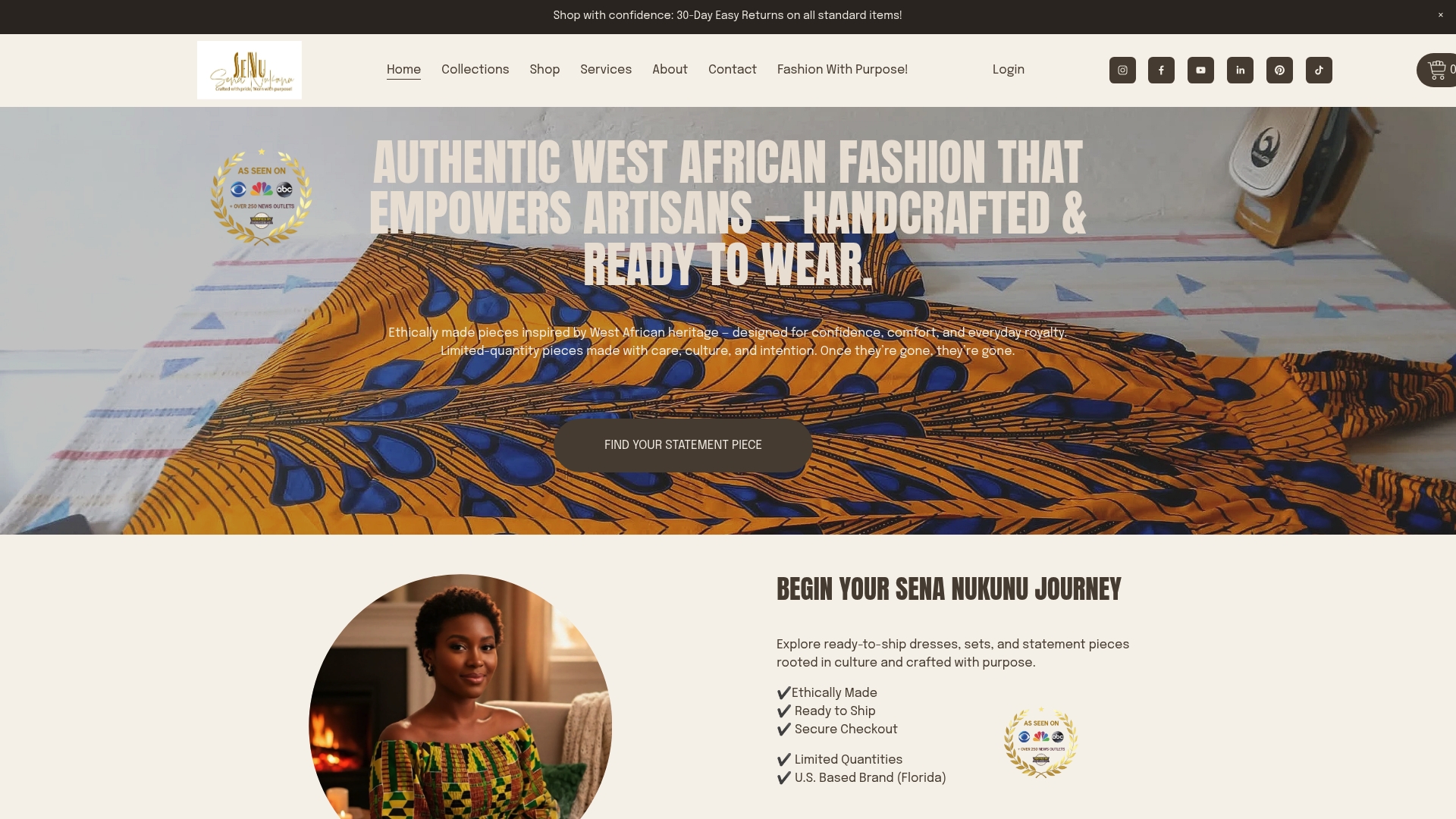
Senanukunu's West African-inspired collections are produced in limited quantities with hand-finishing, numbered tags, signed COAs, and ethical artisan partnerships built into every piece. The brand's approach covers the full checklist: design collaboration rooted in cultural storytelling, small-batch production coordination with named artisan partners, provenance setup (COA, serialization, and buyer registration), and premium fulfillment that honors the piece from packing to delivery.
Whether you are planning your first limited drop or refining an existing collection, explore Senanukunu's services to see how the brand supports designers who want to build collector trust from the ground up. Ready to see the standard in action? Browse the collections and experience what verifiable craftsmanship looks like in practice.
Useful sources and templates
Authenticity and provenance:
- Authenticity Checklist for Limited-Edition Collabs and Designer Drops — step-by-step provenance verification flow covering serials, COAs, NFC tokens, and maker proof
- The Collector's Playbook: How to Spot Truly Limited-Edition Streetwear — buyer-side checklist for edition counts, numbered tags, and maker statements
- How to Authenticate Limited-Edition Streetwear — practical authentication checklist covering tags, stitching, provenance, and red flags
Timing and operations:
- Limited Drops and Collector Fashion: Timing and Authenticity — release timing patterns, preorder models, and artisan lead-time guidance
Senanukunu internal resources:
- Authentic Apparel: How to Recognize and Celebrate Real Craftsmanship — guidance on showcasing maker involvement and building authenticity stories
- Your Guide to Sustainable Fashion Choices That Empower Artisans — ethical sourcing and artisan partnership models for small-batch production
- How Fashion Creates Social Impact: The West African Artisan Model — artisan partnership frameworks and social impact proof points
Download: Use the timeline and budget table in this article as a printable planning template. Copy the checklist steps into your project management tool (Notion, Asana, or a printed sheet) and assign owners and due dates before production begins.