
TL;DR:
- Ethical fashion packaging uses recyclable, compostable, or biodegradable materials and includes clear disposal instructions. Certifications like FSC, GRS, RCS, ASTM D6400, or BPI verify sustainability claims and help consumers identify genuine eco-friendly options. Properly designed, right-sized packaging reduces environmental impact and builds consumer trust through transparency.
Ethical packaging in fashion refers to packaging solutions designed to minimize environmental harm by using recyclable, compostable, or biodegradable materials and by optimizing design to reduce waste. It is the standard industry term for what many shoppers call "eco-friendly packaging," and it covers everything from the polybag protecting your dress to the tissue paper inside the box. Packaging contributes roughly 10% to a garment's overall carbon footprint, a figure most consumers never see. That makes packaging one of the most accessible places to create real change, for brands and shoppers alike.
What is ethical packaging in fashion?
Ethical packaging in fashion is defined by three core principles: material choice, design efficiency, and end-of-life clarity. A brand practicing it selects materials that can be recycled, composted, or reused, then designs packaging to use as little of those materials as possible, and finally tells the customer exactly how to dispose of it. When all three principles work together, the result is a package that protects the garment without burdening the planet.
The industry recognizes two broad categories of responsible materials. The first is recyclable materials, including mono-material polyethylene (PE), polypropylene (PP), and FSC-certified paperboard. Mono-material packaging is easier to sort and process at recycling facilities than multi-layer laminates, which is why leading brands now specify it by name. The second category is compostable and bio-based materials. TIPA Compostable Packaging, for example, produces flexible films that behave like conventional plastic but break down in industrial composting facilities. ECOVIA® uses patented modified PLA/PBAT formulations made from pre-consumer garment cotton waste, and bio-based packaging now achieves shelf stability of up to 3 years, resolving a durability concern that once held the category back.
Design strategy matters as much as material choice. Right-sizing, meaning cutting box or mailer dimensions to fit the actual product, is one of the most effective tools available. Right-sizing packaging reduces total weight by 10–25%, cutting freight and warehouse costs with a return on investment within 1–3 months. That is a financial argument, not just an environmental one. Reducing the number of layers and components, removing unnecessary inserts, and standardizing sizes across a product line all compound those savings.

Pro Tip: When evaluating a brand's packaging claims, look for certification labels like GRS (Global Recycled Standard), RCS (Recycled Claim Standard), ASTM D6400, or BPI (Biodegradable Products Institute). These third-party marks verify what a brand states on the box.
| Material type | Key benefit | Limitation |
|---|---|---|
| Mono-material PE/PP polybags | Widely recyclable at drop-off points | Requires clean, dry sorting by consumer |
| FSC-certified paperboard | Curbside recyclable, widely available | Heavier than film; higher shipping weight |
| PLA/PBAT bio-based film (e.g., ECOVIA®) | Compostable; made from agricultural waste | Requires industrial composting facility |
| TIPA compostable flexible film | Performs like conventional plastic | Not suitable for home composting |
| Recycled paper mailers | Low weight; curbside recyclable | Less moisture protection than poly |
| Reusable dust bags (cotton or linen) | Zero waste; doubles as product storage | Higher upfront material cost |
How do global regulations shape sustainable fashion packaging?
Regulations are now the single strongest force pushing fashion brands toward greener packaging. The EU Packaging and Packaging Waste Regulation (PPWR) sets binding targets that phase in between 2026 and 2030. EU regulations starting in 2026 mandate that plastic packaging contain a minimum of 35% recycled content for non-contact-sensitive plastics, 30% for PET, and 10% for other plastics. These thresholds apply directly to polybags, mailers, and film packaging, the exact materials most fashion brands use every day.
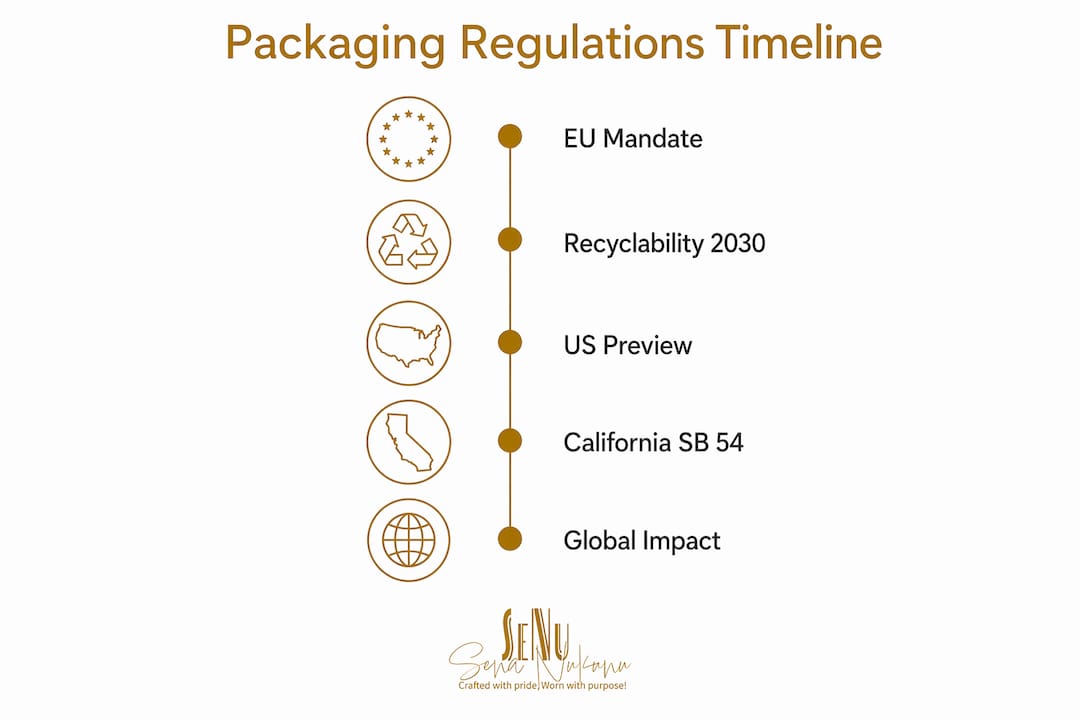
The PPWR also requires that all packaging placed on the EU market be recyclable by 2030. Brands selling into Europe must redesign packaging that cannot meet that standard or face market access restrictions. Labeling requirements are part of the same regulation. Brands must include clear disposal instructions on packaging, specifying whether an item goes to curbside recycling, a drop-off point, or an industrial composting facility. That requirement matters because a package's sustainability depends on local waste management infrastructure. A polybag labeled recyclable but sent home without guidance often ends up in a landfill.
For U.S.-based brands, the PPWR is a preview of where domestic regulation is heading. California's SB 54 already mandates that all single-use plastic packaging be recyclable or compostable by 2032. Brands that build compliant supply chains now avoid costly redesigns later. Consumer trust also rises when packaging carries specific, verifiable claims rather than vague green language.
Are sustainable packaging options actually cost-effective?
The most persistent myth about green packaging is that it always costs more. Sustainable packaging can reduce costs by minimizing material consumption and shipping weight, and layer reduction with size standardization are the primary savings drivers. A brand that right-sizes its mailers and removes a decorative insert can recover the premium paid for recycled-content material within a single shipping season.
Durability is a legitimate concern, particularly with compostable materials. Early PLA films degraded on warehouse shelves within months, which made them impractical for fashion brands with longer inventory cycles. That problem is largely solved for certified formulations like ECOVIA®, which achieve multi-year shelf stability. The challenge that remains real is scale. Smaller fashion brands struggle to balance the higher cost of eco-materials with durability, and scaling affordable solutions requires collaboration across brands, retailers, and policymakers.
The other cost that brands underestimate is reputational. Vague "eco-friendly" or "green" claims trigger consumer skepticism and legal scrutiny. Greenwashing accusations have resulted in regulatory action against fashion brands in the EU and the U.S. The cost of defending a misleading claim far exceeds the cost of getting the packaging right in the first place.
Pitfalls to avoid when evaluating packaging claims:
- "100% eco-friendly" with no certification. This phrase has no legal definition and no third-party verification.
- Compostable labels without facility type. "Compostable" means nothing without specifying home or industrial composting.
- Recycled content claims without percentages. "Made with recycled materials" could mean 1% or 90%.
- Biodegradable without a timeframe. All materials biodegrade eventually. The claim is meaningless without a standard like ASTM D6400.
- Sustainable packaging shipped in oversized boxes. Excess void fill and dimensional weight undermine any material-level gain.
Pro Tip: Ask brands directly for their packaging certifications before purchasing. A brand committed to conscious fashion practices will share that information without hesitation.
How can consumers identify truly ethical packaging?
Consumers hold more power than they realize. The certifications on a package tell you exactly what a brand has verified and what it has not. FSC on paperboard confirms the fiber came from responsibly managed forests. GRS or RCS on a polybag confirms the recycled content percentage has been audited. ASTM D6400 or BPI on a film confirms it meets industrial composting standards. If none of those marks appear, the brand's sustainability claim rests on nothing verifiable.
Disposal instructions are the second signal. A brand that genuinely cares about end-of-life impact tells you where to send the packaging, not just what it is made of. Regional specificity matters here. A brand shipping to Florida should note that many Florida counties accept plastic film at grocery store drop-off points, not curbside. That level of detail separates a brand doing the work from one using packaging as a marketing prop. Sustainable fashion trends rooted in community and craft tend to carry that same attention to detail into packaging choices.
Steps to take when shopping for eco-conscious brands:
- Check for named certifications. Look for FSC, GRS, RCS, ASTM D6400, or BPI on the package or the brand's website.
- Read the disposal instructions. If none exist, the brand has not thought through end-of-life.
- Assess packaging size relative to the product. Excessive void fill and oversized boxes signal waste, regardless of material.
- Look for reuse potential. A cotton dust bag or sturdy paper box that serves a second purpose reduces net waste.
- Search for specific recycled content percentages. "30% post-consumer recycled content" is a credible claim. "Eco-friendly packaging" is not.
- Verify claims independently. GRS and FSC both maintain public databases where you can confirm a brand's certification status.
Understanding what ethical fashion means at the production level helps you apply the same critical lens to packaging. Brands that are transparent about their garment supply chains tend to be equally transparent about their packaging choices.
Key Takeaways
Ethical packaging in fashion requires verified materials, efficient design, and clear disposal guidance working together, not any single element alone.
| Point | Details |
|---|---|
| Packaging has real carbon impact | Packaging contributes roughly 10% of a garment's carbon footprint, making it a meaningful sustainability lever. |
| Right-sizing saves money and emissions | Reducing packaging dimensions by 10–25% cuts freight costs and delivers ROI within 1–3 months. |
| Certifications are non-negotiable | Look for FSC, GRS, RCS, ASTM D6400, or BPI to verify any sustainability claim a brand makes. |
| Local infrastructure determines real impact | Recyclable or compostable packaging only works if your local waste system can process it correctly. |
| Vague claims signal greenwashing | Specific percentages and third-party certifications build trust; buzzwords like "eco-friendly" without evidence do not. |
What I have learned watching packaging evolve
The shift I find most telling is not the arrival of bio-based films or EU mandates. It is the growing number of brands that now treat packaging as part of the garment's story rather than an afterthought. When I first started paying close attention to this space, "sustainable packaging" usually meant a kraft paper mailer with a leaf logo and no further explanation. That was the whole effort.
What I have come to believe is that the most credible packaging choices are often the least glamorous. A right-sized recycled-content polybag with a clear disposal instruction printed on the inside flap does more real good than a beautifully branded compostable box that ends up in a landfill because the customer had no industrial composting access. The gap between packaging potential and packaging reality is still wide, and it closes only when brands communicate honestly and consumers ask better questions.
The regulation piece genuinely excites me. The EU's PPWR targets give brands a concrete deadline and a specific number to hit, which removes the ambiguity that allowed greenwashing to thrive. I expect U.S. regulation to follow, and I think that is a good thing. Voluntary commitments move slowly. Binding thresholds move supply chains.
My honest advice: stop rewarding beautiful packaging and start rewarding honest packaging. The brand that ships your dress in a plain, certified, right-sized mailer with a recycling instruction is doing more for the planet than the brand that wraps it in layers of branded tissue and calls it sustainable.
— Sena
Senanukunu's commitment to fashion with purpose
At Senanukunu, every piece in our collection carries the spirit of West African craftsmanship, and that same care extends to how we think about packaging and ethical production. We believe that wearing fashion rooted in cultural pride should never come at the planet's expense. Our commitment to ethical practice runs from the artisan's hands to the moment your order arrives at your door. If you are ready to wear pieces that honor both heritage and responsibility, explore our collections and find styles that speak to who you are. Discover the full range of vibrant, purposeful fashion at Senanukunu.
FAQ
What does ethical packaging in fashion mean?
Ethical packaging in fashion means using recyclable, compostable, or biodegradable materials and designing packaging to minimize waste and environmental impact. It also requires clear disposal instructions so consumers can process packaging correctly.
Which certifications should I look for on fashion packaging?
Look for FSC (Forest Stewardship Council) on paper products, GRS or RCS on recycled-content plastics, and ASTM D6400 or BPI on compostable films. These third-party marks confirm that a brand's sustainability claims have been independently verified.
Does sustainable packaging cost more than conventional packaging?
Not necessarily. Right-sizing packaging dimensions reduces total weight by 10–25%, cutting shipping costs enough to offset premium material costs within 1–3 months. Layer reduction and size standardization are the key savings drivers.
Why does local recycling infrastructure matter for packaging?
A package labeled recyclable or compostable only achieves its environmental benefit if local waste systems can process it. Without access to industrial composting or plastic film drop-off points, even certified packaging ends up in a landfill.
How do I spot greenwashing on fashion packaging?
Greenwashing appears as vague terms like "eco-friendly" or "green" with no certification, no recycled content percentage, and no disposal instructions. Credible brands name specific certifications and state exact recycled content figures on their packaging.