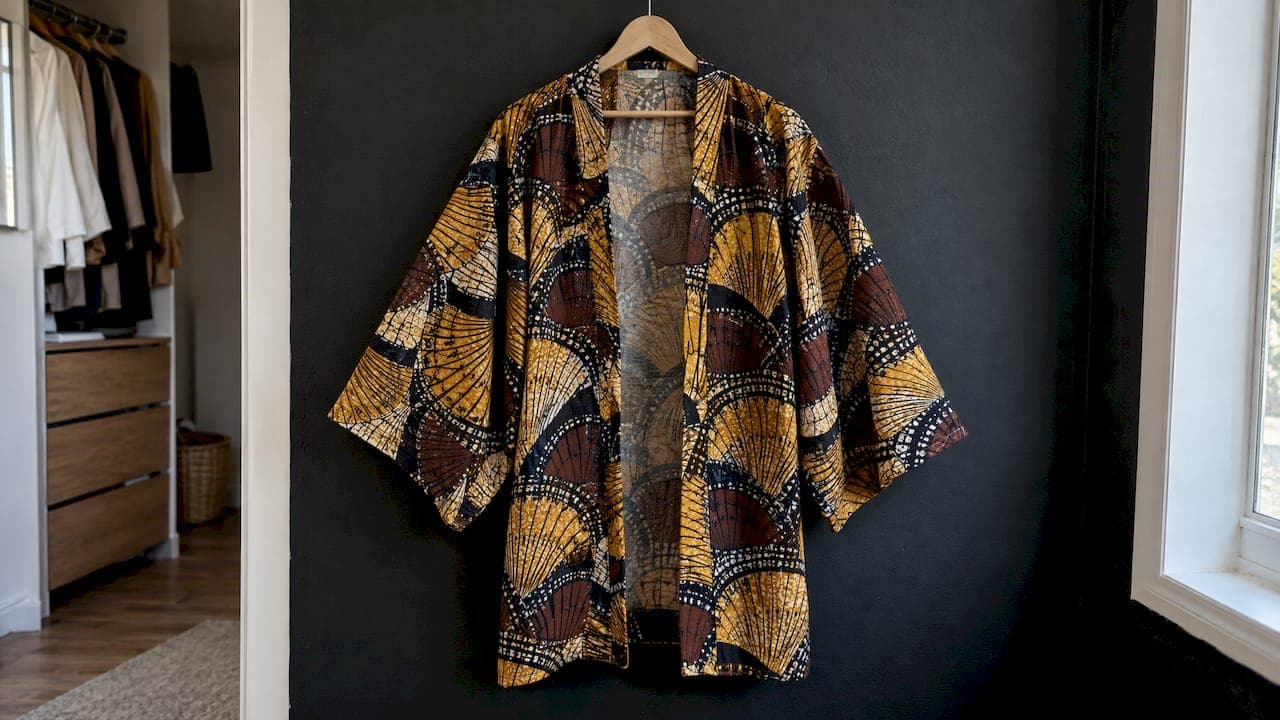
An African print kimono jacket takes the wide-sleeved, T-shaped silhouette of the Japanese kimono and makes it in vibrant West African textiles such as Ankara wax print, usually as an open-front layer you wear over everyday clothes. The best ones have clean seams, a fabric the seller can name, and a print that works with what you already own. Below, we walk you through how to choose one, how to wear it from the office to a celebration, and how to keep it beautiful for years.
TL;DR
- An African print kimono jacket is an open-front, wide-sleeved layer made from textiles like Ankara, Adire, Aso Oke or Akwete, not a sash-tied formal robe.
- Check real garment measurements, seam quality, fabric weight and whether the seller can say where and how the piece was made.
- Style it as a statement layer over a plain base, and keep shoes and bags neutral so the print leads.
- Air-dry in the shade, use a cool iron on the reverse side, and treat stains quickly.
- Our kimono jackets are made in limited quantities with artisanal craftsmanship, so each piece feels personal.
Table of Contents
- What an African Print Kimono Jacket Really Is
- Fabrics and Prints to Look For
- How to Choose: Fit, Fabric Quality and Ethical Production
- How to Style Your Kimono Jacket
- Caring for Your Jacket
- Thinking of Sewing Your Own?
- Find Your Kimono Jacket at Sena Nukunu
- Frequently Asked Questions
- Sources
What an African Print Kimono Jacket Really Is
The name can be confusing, so let us start there. A traditional Japanese kimono is a full-length garment, tied with a sash and worn for formal ceremonies. An African print kimono jacket is a different, modern creation. Researchers describe it as a hybrid garment that keeps the kimono's T-shaped, wide-sleeved silhouette while using African textiles, and it is typically an open-front, versatile outer layer for everyday or occasion wear.
That borrowing is not new. Fashion scholars point out that the kimono has always been a malleable garment, reshaped by designers in many countries across the twentieth and twenty-first centuries. The same research on African kimono-inspired design notes that blending motifs from different origins joins a global fashion conversation, and that it calls for thoughtful attention to appreciation rather than appropriation. When the cloth, the story and the hands behind the garment are African, the jacket becomes a bridge between cultures rather than a costume.
In practice, you will see a few common shapes:
- The duster: long, flowing and open, falling to the knee or below.
- The short jacket: cropped near the hip, easy over dresses and high-waisted trousers.
- The belted style: an open front that can be cinched at the waist for definition.
- The occasion kimono: made in richer cloth, such as kente-inspired weaves, for weddings and celebrations.
Fabrics and Prints to Look For
The fabric decides how your jacket drapes, how it feels at the end of a long day and how it ages. According to the same academic paper, kimono-style jackets can be made from Ankara, Adire, Aso Oke, Akwete, lace, silk, satin, chiffon or organza. Here is how to think about the main options.
| Fabric | Look and feel | Best for |
|---|---|---|
| Ankara (African wax print) | Bold, colorful patterns; mostly cotton, though blends exist | Everyday wear, office layering, travel |
| Adire | Indigo-toned, resist-dyed patterning with a handcrafted character | Casual and creative settings |
| Aso Oke | Hand-woven, structured, rich in texture | Weddings, ceremonies, statement pieces |
| Akwete | Woven, patterned cloth with strong visual rhythm | Celebrations and gifts |
| Silk, satin, chiffon, organza | Fluid and light, used in contemporary kimono styles | Evening events and dressy occasions |
African wax prints are colorful, patterned fabrics made primarily from cotton, although blends and synthetics are also used. A cotton-forward piece is usually the most breathable and the easiest to wear across seasons. A blend may hold its shape or wrinkle less, so ask which you are getting.
If you are curious about how fabric choice shapes any printed garment, this overview of choosing materials for printed clothing is a helpful companion to the textile basics above.
Want to understand why these prints carry so much meaning? Our guide on why African prints are popular explores the cultural stories behind the patterns.
How to Choose: Fit, Fabric Quality and Ethical Production
A kimono jacket is forgiving by design, but a few checks separate a piece you will wear weekly from one that hangs in the closet.
Fit
Size labels vary from brand to brand. A practical buying guide advises you to check actual measurements rather than size labels. For a kimono jacket, look for:
- Shoulder and sleeve width: a relaxed drop is part of the shape, but the sleeves should not swallow your hands.
- Length: decide first if you want a duster or a hip-length jacket, then compare the listed length with a jacket you already own.
- Bust and hip room: because the front is open, there is no closure to strain, yet the garment should still sit smoothly when you move.
Fabric and construction
When you shop for a kimono, look closely at the stitching and the cloth. Buying advice suggests you inspect seams for neat stitching, consider the weight and feel of the fabric, and check that the print and palette suit your existing wardrobe. A few quick tests help:
- Hold the seam up to the light. Even, tight stitches are a good sign.
- Check that the print lines up where panels meet at the front opening and the sleeves.
- Feel the weight. A lightweight cotton drapes and breathes, while a heavier woven cloth gives structure.
- Look at the hem and the inside finish, which tell you how the piece was handled.
Ethical production
The word "ethical" can mean almost anything, so ask for specifics. Scientific American's beginner's guide suggests that you decide whether a garment fits, works in your wardrobe and will last, then look for specific information about durability, production and material claims rather than trusting vague labels like "green" or "natural." The buying guide mentioned earlier adds that a good seller should be able to name the fabric, explain where it was made and describe its cultural reference.
Those are fair questions to put to us, too. We make our pieces in limited quantities, with artisanal craftsmanship and ethical manufacturing at the heart of the brand, and you can read more about how that supports makers in our piece on sustainable fashion trends empowering West African artisans.
How to Style Your Kimono Jacket
The secret is to let the jacket be the star. Stylists describe the kimono as a versatile "third piece": a clean, slimmer base makes the outer layer look intentional, and defining the waist with a belt or a tuck makes the whole outfit feel more polished.
For everyday wear
Pair the jacket with a fitted tee or tank, straight jeans and white sneakers or flat sandals. The plain base keeps the print from competing with the rest of your outfit. In cooler weather, add a turtleneck underneath and ankle boots.

For the office
For work, one styling guide recommends a tee or sleeveless top with slim trousers, and pointed flats or loafers. Add a belt to shape the waist and the look moves comfortably into a meeting room. If you work in a business casual setting, our business casual African wear style guide offers more ideas for building a professional wardrobe with African textiles.
For weddings and celebrations
This is where richer fabric and a bolder print shine. Wear a kente-inspired or heavily patterned kimono over a solid-color dress or a slim jumpsuit in a shade pulled from the print. Gold jewelry and a structured clutch finish the picture. For example, our Virtuous Celebration kente-inspired kimono jacket was designed with occasions like these in mind.
Mixing prints with confidence
If you love pattern on pattern, there are a few simple rules. A guide to modern African print styling says mixing works best when the patterns share a color, differ in scale, or pair a complex African print with a classic stripe or polka dot, and it recommends keeping shoes and bags neutral. That means a large-scale print jacket over a fine-striped top is a safe place to begin.
Quick outfit formulas
- Weekend: kimono jacket, white tee, dark jeans, sneakers.
- Office: kimono jacket, sleeveless shell, slim trousers, loafers, belt at the waist.
- Dinner: kimono jacket over a black slip dress, heeled sandals, statement earrings.
- Wedding guest: kente-inspired kimono, solid midi dress in a matching tone, gold accessories.
- Travel: lightweight cotton duster over leggings and a tank, comfortable flats.
Caring for Your Jacket
Good care protects the color, the cloth and the story it carries. A few habits go a long way.
- Dry in the shade. General care advice is to air-dry in the shade to prevent fading from direct sunlight and to avoid wringing the fabric out.
- Iron gently. Use a cool iron or a steamer on the reverse side to release creases.
- Store thoughtfully. Hang the jacket on a padded hanger, or fold it loosely, to avoid stretching the shoulders.
- Act on stains quickly. University extension guidance says to treat stains promptly and to avoid hot water on stains of unknown origin.
For fabric-specific routines, see our guides on how to care for African fabrics and wax print stain care for Ankara. When in doubt, follow the care label on your specific piece, since fabrics and finishes differ.
If you want your wardrobe to last across generations, our cultural fashion preservation tips are worth a read.
Thinking of Sewing Your Own?

Many people love the idea of making a kimono jacket from a favorite length of wax print, and the construction is friendlier than it looks. One popular tutorial uses one yard of Ankara and drafts a loose fit from the bust measurement. You cut two body pieces and two sleeves, sew the shoulders, side and sleeve seams, set in the sleeves, add bias tape along the front opening and hem the jacket.
The process teaches you a great deal about how a garment is built, which makes you a sharper shopper afterward. It also helps you appreciate the hours of skilled work in a finished piece where the print is matched, the seams are clean and the finish is consistent.
Our Perspective: Wear the Heritage
When we look at a kimono jacket in African print, we see more than a trend. We see a conversation between traditions, carried in cloth that was made with intention. The shape travels across cultures, but the textile, the color and the craft are what give it a voice.
That is why we design in limited quantities. Every stitch, every pattern placement and every finishing detail passes through hands that care about the result, and we believe that care is visible when you put the piece on. A jacket like this should feel like confidence and comfort at once, a regal layer you can wear to a board meeting, a family gathering or a wedding.
Our advice is simple. Choose the piece that makes you stand a little taller, ask questions about where and how it was made, and care for it so that it can be worn and loved for years. When you buy this way, your purchase supports artisans and keeps cultural storytelling alive.
Sena
Find Your Kimono Jacket at Sena Nukunu
If you are ready to wear one, explore our ready-to-ship kimono jackets, each crafted in limited quantities with West African heritage at its core. You might begin with the Kdodo kimono jacket, the Urban Mosaic kimono jacket or the Dzidula kente kimono.
Browse the full women's collection to pair your jacket with a dress, or visit our collections page to see every line, including matching statement sets.
Frequently Asked Questions
Is an African print kimono jacket cultural appropriation?
Research on kimono-inspired African design notes that blending motifs from different origins is part of a global fashion dialogue, but it asks for careful consideration of appreciation versus appropriation. The kimono shape has been reinterpreted by designers worldwide for generations. Buying from makers who use authentic African textiles and can explain the cultural reference keeps the focus on respect and craft.
What can I wear under a kimono jacket?
A plain, slim base works best: a fitted tee, a tank, a sleeveless top or a simple dress. Because the jacket is open at the front, the layer underneath shows, so choose a solid color pulled from the print. For work, add slim trousers and a belt to define the waist.
How do I wash an Ankara kimono jacket?
Follow the care label first, since fabrics and finishes differ. As general guidance, avoid wringing, dry the jacket in the shade so the colors do not fade, and use a cool iron on the reverse side. Treat stains quickly and skip hot water on stains you cannot identify. Our Ankara stain care guide goes into more detail.
Can I wear a kimono jacket to a wedding?
Yes. Choose a richer fabric or a kente-inspired design, and pair it with a solid-color dress or jumpsuit in a tone from the print. Keep accessories simple and metallic so the jacket stays the focal point.
Sources
- Academic paper on kimono-inspired African fashion design
- New fashion orientations: the tailoring of kimono
- African Clothing: A Practical Guide to Buying, Fit and Care
- The Modern Kimono Jacket: How to Choose, Style and Care
- A Beginner's Guide to Ethical and Sustainable Fashion, Scientific American
- Batik Kimono Styling: 7 Office-to-Weekend Outfits
- 5 modern ways to incorporate African prints into your everyday wardrobe
- Tricks for Removing Halloween Treat Stains, USU Extension
- How to Make an Easy-Sew DIY Kimono Jacket