TL;DR:
- To preserve West African–inspired garments, wash gently in cold water and store in breathable bags. Proper care, including shade drying and document keeping, extends garment life and honors cultural craftsmanship. Complex repairs should be entrusted to specialists with experience in traditional African textiles.
Preserve your West African–inspired pieces by identifying fiber and trim first, then washing cold and gently, shade-drying, pressing inside out with a cloth, storing clean in breathable bags, and documenting each garment's story. These are consumer-level heritage clothing maintenance tips for wearable pieces you love and wear — not museum-grade archival conservation. Senanukunu's artisan-made garments, crafted in limited quantities with authentic fabrics, deserve exactly this kind of intentional care. Cold or lukewarm water and gentle detergent are your first line of defense against fading and cracked wax prints.
Table of Contents
- How should you wash and treat stains on West African garments?
- How do you dry, iron, and steam without damaging prints or trims?
- How should you store and display West African–inspired pieces?
- When should you repair a garment yourself, and when should you call a tailor?
- How do you build a lasting wardrobe of West African–inspired pieces?
- Key Takeaways
- Why care practices are an act of cultural stewardship
- Senanukunu: ethically made pieces worth preserving
- Useful sources and further reading
How should you wash and treat stains on West African garments?
Step-by-step wash sequence
- Inspect for stains and treat them before washing (see below).
- Separate by color; never wash a new piece with light-colored garments.
- Turn the garment inside out and place in a mesh laundry bag if machine washing.
- Handwash: fill a basin with cold or lukewarm water, add a small amount of mild liquid detergent for delicates, submerge gently, and swish for two to three minutes. Rinse twice in cold water.
- Machine wash: use a cold or 30°C setting, gentle cycle, and mild detergent; keep the spin speed low.
- Never wring. Press water out gently between your palms or roll in a clean towel.
Spot treatment
Blot, never scrub. Press a clean white cloth against the stain to lift it. For protein stains (food, sweat), a small amount of enzyme-based detergent diluted in cold water works well. A 50/50 white vinegar and water solution can lift light mineral or tannin stains. Always test on a hidden seam first, and rinse thoroughly.
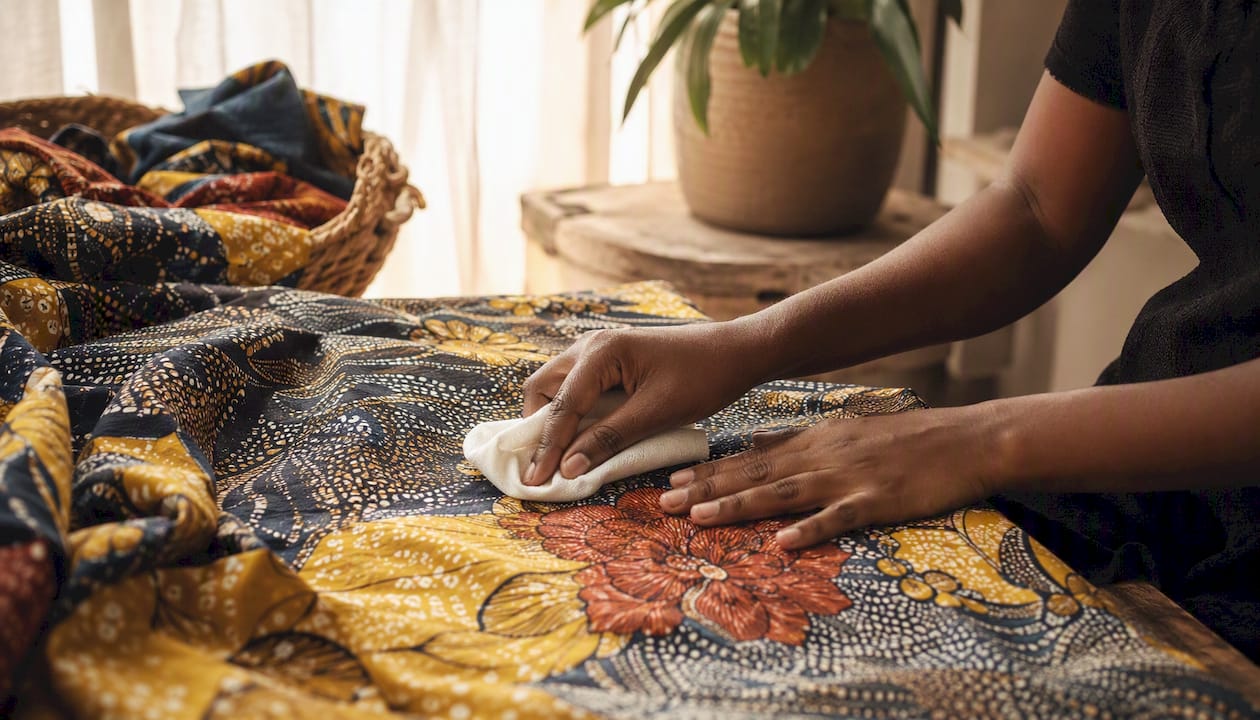
Pro Tip: Abrasive scrubbing breaks wax-print surface coatings permanently. One firm scrub can leave a dull, cracked patch that no amount of re-washing will fix.
Some garments should never be washed at home. Aso-oke, heavily embroidered pieces, brocade, and antique or heirloom garments belong with a specialist dry cleaner who has experience with traditional African textiles. Ask before you drop off: "Have you worked with wax-print or hand-embroidered West African fabrics?"
How do you dry, iron, and steam without damaging prints or trims?
- Shade air-dry always. Direct sunlight accelerates color loss; even an hour of strong sun can dull a vibrant Ankara print.
Pro Tip: Reshape a slightly damp garment by hand before it dries completely. Smoothing seams and hems while the fabric is still pliable means you rarely need to iron at all.
How should you store and display West African–inspired pieces?
Store every garment clean and dry — oils, sweat, and food residue attract pests and set stains permanently over time.
Storage dos:
- Use breathable cotton garment bags or fold with acid-free tissue between layers.
- Place cedar blocks or lavender sachets in your storage space to deter moths and silverfish.
- Store in a cool, dry area away from exterior walls where humidity fluctuates.
- Check stored pieces monthly for moisture, pest activity, or fabric shifts.
Storage don'ts:
- Never use plastic dry-cleaning bags for long-term storage; they trap moisture and cause mildew.
- Avoid wire hangers for structured pieces; they distort shoulders over months.
- Never store in direct sunlight or near a heat source.
For short-term display, limit exposure to any light source to a few weeks at most, rotate displayed pieces, and keep embellished garments away from direct sunlight. A shadow box or covered display case protects beadwork and metallic threads from dust and UV.
When should you repair a garment yourself, and when should you call a tailor?
When to call a specialist
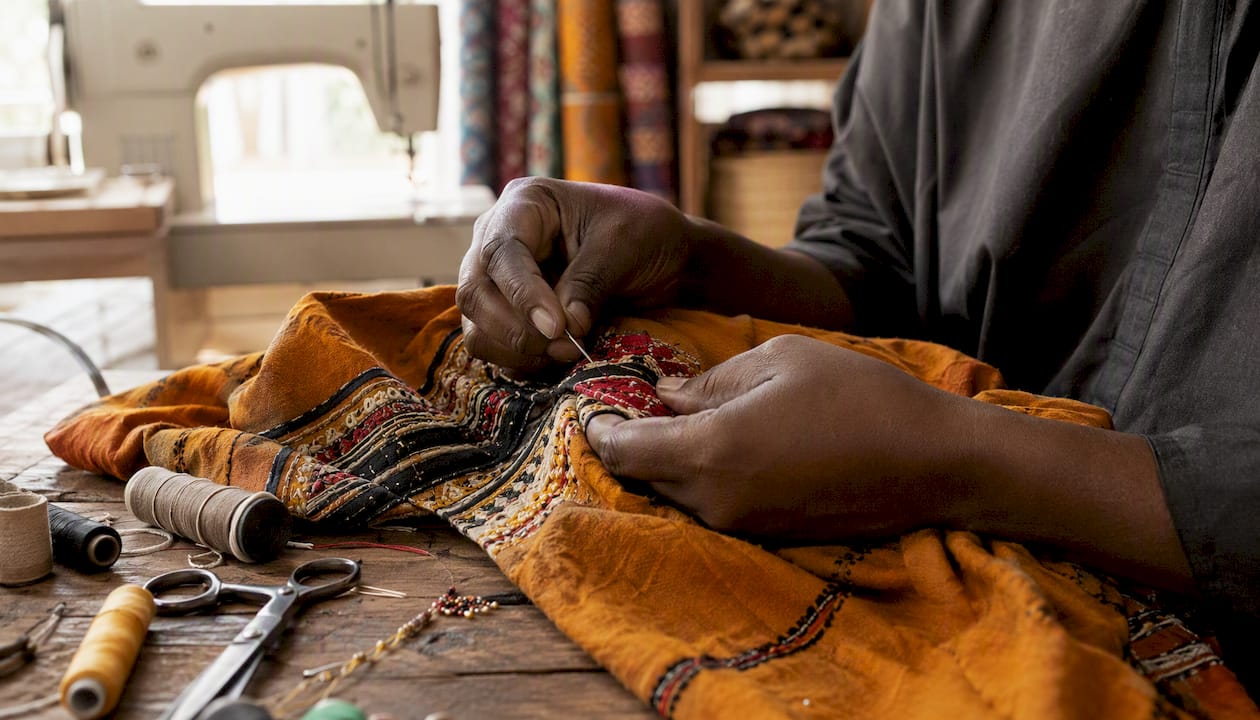
Rebuilt linings, resized structured agbada sets, heavy embroidery repair, or any garment with significant beadwork needs a tailor experienced with West African textiles. Ask to see examples of similar work before committing.
Typical U.S. repair costs: basic hemming runs $10–$30, seam reinforcement $15–$40, and bead or embellishment repair starts around $25 and rises with complexity. Prices vary by city and shop, so get a quote before leaving the garment.
How do you build a lasting wardrobe of West African–inspired pieces?
A thoughtfully built cultural wardrobe outlasts a closet full of fast fashion by years.
Checklist for choosing durable pieces:
- Strong, even seams with no loose threads at stress points
- Quality lining in structured garments
- Authentic fabric with consistent pattern registration (a sign of quality wax print)
- Repairability: buttons, not glued trim; sewn embellishments, not heat-bonded
Rotation and rest rules:
- Rest a garment at least two days between wears to allow fibers to recover.
- Aim to launder only when genuinely needed; rotating pieces and limiting washes is one of the most effective habits for extending garment life.
- Track rotation in a simple note or photo log.
Cost-per-wear thinking: divide the purchase price by the number of times you realistically expect to wear a piece. A $180 ethically made dress worn 30 times costs $6 per wear. A $40 fast-fashion alternative worn five times costs $8 per wear and ends up in a landfill. Quality, when cared for, wins on every metric that matters.
Key Takeaways
Caring for West African–inspired garments means pairing gentle, cold-water cleaning with shade drying, breathable storage, and deliberate cultural storytelling to keep both the fabric and its meaning alive.
| Point | Details |
|---|---|
| Cold water and no bleach | Wash Ankara and wax prints in cold or lukewarm water; bleach destroys color and wax finish permanently. |
| Shade-dry and press inside out | Air-dry away from sunlight and iron on the reverse with a pressing cloth to protect prints and trims. |
| Store clean in breathable bags | Use cotton garment bags with cedar or lavender; never store in plastic or while damp. |
| Document provenance | Record origin, maker, cultural context, and care notes for every piece you own. |
| Senanukunu for ethically made pieces | Senanukunu's limited-quantity, artisan-crafted garments are built to be cared for and worn for years. |
Why care practices are an act of cultural stewardship
There is a tendency in fashion writing to treat garment care as a purely practical matter — a checklist you run through to avoid shrinkage. With West African–inspired clothing, that framing misses something profound. Every time you choose cold water over hot, shade over sun, a specialist cleaner over a rough machine cycle, you are making a decision that extends the life of a piece that carries real cultural weight. The artisan who wove that aso-oke strip, or printed that Ankara cloth, put skill and tradition into every inch of it. Caring for it well is a form of respect for that labor.
What most care guides overlook is the storytelling dimension. A garment whose provenance is documented, whose maker is named, and whose cultural meaning is understood does not just last longer physically — it remains meaningful across generations. That is the real goal of sustainable fashion practices as they apply to heritage clothing: not just preservation of fiber, but preservation of story.
Senanukunu was built on exactly this belief. The brand's commitment to artisan support and ethical sourcing means that every piece you buy comes with a story worth keeping. Care for it accordingly.
Senanukunu: ethically made pieces worth preserving
Senanukunu offers limited-quantity, artisan-crafted West African–inspired dresses, kaftans, agbada sets, and statement pieces made with authentic fabrics and strong, repairable construction — the kind of garments these care practices are designed for. Each piece ships ready to wear, with the quality seams and genuine textiles that respond well to the cold-wash, shade-dry, and breathable-storage routine described throughout this guide.
If you are ready to invest in pieces that carry both beauty and meaning, browse the full collection and find a garment worth documenting, rotating, and wearing for years to come.
Useful sources and further reading
- How to Maintain African Print Cloth Ankara - SVABRICS
- How to wash African print clothing and African wax print fabric | Kitenge
- How to Care for Your African Fabrics for Long-Lasting Beauty – Africana Textiles
- Caring for African Fabrics: Keep Your Prints Looking New - JNathan Jewels
- Best Way To Wash And Store Traditional African Attire
This article provides general garment-care and cultural-stewardship information. For complex repairs, heirloom pieces, or garments with specific care requirements, consult a specialist textile cleaner or a tailor experienced with West African fabrics.