
TL;DR:
- Business casual African wear combines traditional textiles like Ankara and Adire with tailored Western styles to create professional yet culturally expressive outfits. Proper fabric choice, tailored fit, and minimal cultural prints help balance heritage with workplace appropriateness across various industries. This style empowers professionals to showcase their identity confidently while maintaining a polished, intentional appearance.
Business casual African wear is defined as the fusion of traditional African textiles like Ankara, Adire, and Bogolan with modern Western tailoring to create office-appropriate attire that honors cultural identity. This style sits at the intersection of heritage and professionalism, giving you a way to walk into any boardroom, conference, or networking event without leaving your roots at the door. Understanding what is business casual African wear means knowing which fabrics, cuts, and styling rules make the difference between a cultural statement and a polished professional look. This guide covers everything from fabric selection to outfit formulas for men and women, so you can dress with both pride and purpose.
What is business casual African wear?
Business casual African wear is the professional dress standard that blends cultural textiles with structured tailoring, typically combining 15–25% cultural prints with 75–85% neutral, structured pieces. The result signals both individuality and corporate professionalism without sacrificing either. Think of it as Afro-fusion workwear: a category that Nigerian professionals, Ghanaian creatives, and African diaspora professionals across the United States have refined into a recognizable and respected aesthetic.
The style draws from a rich textile tradition. Ankara wax cotton, Adire (the Yoruba indigo-dyed fabric), Bogolan (the Malian mud cloth), and Aso-oke (the hand-woven Nigerian ceremonial textile) all appear in professional wardrobes when cut and styled correctly. The key distinction from casual African attire is structure. A loose, flowing boubou is traditional and beautiful. A fitted Ankara blazer paired with tailored charcoal trousers is business casual attire with a cultural signature.
African professional style is evolving beyond European dress codes, allowing professionals to define workplace standards that incorporate heritage respectfully. That shift is not just cultural. It reflects a broader global conversation about what professionalism actually looks like.
What fabrics, prints, and design elements define this style?
Fabric is the foundation of every African work outfit. The choice of textile determines whether a garment reads as polished or casual, durable or delicate, office-ready or weekend wear.
The most common fabrics in business casual African wear include:
- Ankara wax cotton: Bold, graphic prints in geometric or floral patterns. Pure Ankara can be stiff, so blended cotton-silk fabrics and high-density wax prints are preferred for professional wear because they maintain a crisp silhouette and resist wrinkling during long workdays.
- Adire: Yoruba indigo-resist-dyed fabric with organic, flowing patterns. Lighter in weight and more subtle in color, making it ideal for blouses, linings, and accent pieces.
- Bogolan (mud cloth): Earthy, geometric patterns in brown, black, and cream tones. Its muted palette translates naturally into professional settings without requiring much styling adjustment.
- Aso-oke: A hand-woven textile traditionally used for ceremonial dress. In professional contexts, it appears as belts, pocket squares, or trim details rather than full garments.
Design elements matter as much as fabric choice. Cultural motifs, such as kente-inspired geometric blocks or Adinkra symbols, carry meaning and history. Color palettes in business casual African wear tend to favor deeper, richer tones (navy, forest green, burgundy, gold) over neon brights, which read as too casual for most office environments. Structured silhouettes, clean seams, and minimal embellishment keep the look professional.
Pro Tip: When shopping for African print fabric blends, look for a thread count above 200 and a cotton-silk or cotton-polyester blend. These fabrics hold their shape through a full workday and resist the creasing that pure wax cotton develops by midday.
How does tailoring separate business casual from casual African attire?
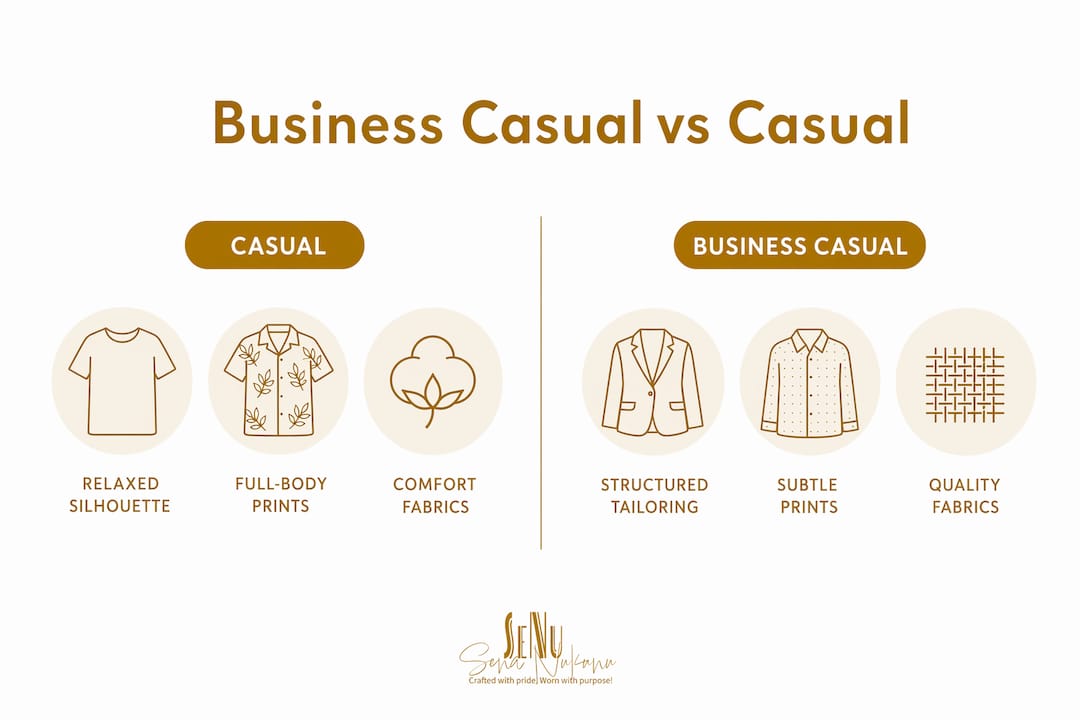
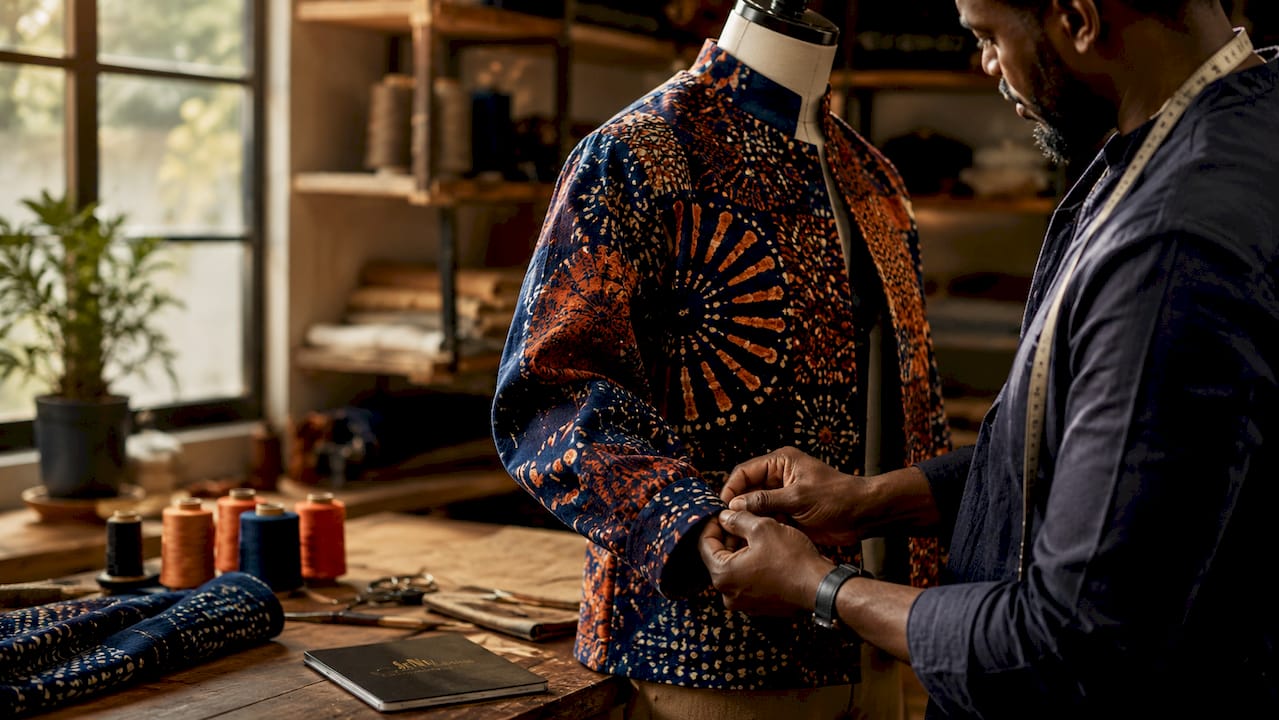
Tailoring is the single most important factor in distinguishing business casual African wear from casual ethnic attire. A well-cut garment communicates intentionality. A loose or poorly fitted one, regardless of how beautiful the print, reads as informal.
The table below shows the key differences between casual African wear and business casual African wear:
| Feature | Casual African wear | Business casual African wear |
|---|---|---|
| Silhouette | Relaxed, flowing, loose | Structured, fitted, tailored |
| Hemline | Variable, often floor-length | Knee-length or below for women |
| Fabric finish | Raw edges, soft drape | Reinforced seams, crisp finish |
| Print coverage | Full-body bold print | 15–25% print, rest in neutrals |
| Footwear pairing | Sandals, open-toed flats | Closed-toe heels, loafers, oxfords |
| Accessories | Layered, ceremonial | Minimal, intentional |
Off-the-rack African print garments almost always require adjustment. Waistlines need taking in, sleeve lengths need shortening, and shoulder seams need repositioning to achieve the structured fit that office settings demand. Budget an additional 20–30% for tailoring when purchasing African print pieces for professional use. That investment transforms a beautiful fabric into a genuinely professional garment.
The 1-statement-piece rule is the most reliable styling principle in corporate Afro-fusion attire. Pair one bold African print item with solid, neutral Western basics. An Ankara blazer works with a white fitted shirt and black tailored trousers. A Bogolan midi skirt pairs with a cream silk blouse and nude block-heeled pumps. The print carries the cultural identity; the neutrals carry the professionalism.
Pro Tip: Before purchasing an African print piece for office wear, hold it against a neutral blazer or trouser in the store. If the combination reads as cohesive rather than competing, the piece will work in a professional context.
What are the best outfit options for men and women?
Practical outfit formulas make the difference between knowing the theory and actually getting dressed with confidence. Here are the most reliable options for both men and women in professional settings.
Men's business casual African wear
- Tailored kaftan with trousers: A structured, knee-length kaftan in Ankara or Bogolan worn over slim-fit tailored trousers. The kaftan must be fitted at the shoulders and chest, not boxy.
- Ankara-accented blazer: A solid navy or charcoal blazer with an Ankara-lined interior or Ankara elbow patches, paired with neutral chinos and leather loafers.
- African print pocket square: The most conservative entry point. A solid suit or blazer with an Ankara or Adire pocket square introduces cultural identity without disrupting a traditional office dress code.
- Aso-oke belt: A hand-woven belt worn with tailored trousers and a monochrome shirt. Subtle, intentional, and deeply rooted in West African textile tradition.
Women's business casual African wear
- Sheath dress with bolero: An Ankara sheath dress cut to knee length, paired with a structured bolero jacket in a complementary neutral. This combination meets most business casual dress codes while making a clear cultural statement.
- Midi skirt with monochrome top: A Bogolan or Adire midi skirt paired with a fitted, solid-color blouse in white, black, or camel. Hemlines at or below the knee keep the look office-appropriate.
- High-waisted Ankara trousers: Tailored, wide-leg or straight-cut Ankara trousers with a tucked-in neutral blouse and closed-toe block heels. This is one of the most versatile African work outfits in a professional wardrobe.
- Adire-lined blazer: A structured blazer with Adire fabric lining, worn open over a fitted dress or with tailored trousers. The print is visible but controlled.
Footwear and hemline rules apply universally. Open-toed shoes and distressed denim are prohibited in most 2026 business casual codes. Closed-toe heels, leather loafers, and structured flats are the correct choices for African-inspired office wear. Accessories should be minimal: one statement piece of jewelry, a structured bag, and a watch or cuff.
In which workplaces and occasions is this style appropriate?
Not every office environment embraces Afro-fusion attire at the same level, and reading your workplace culture correctly is as important as choosing the right outfit.
-
Creative and tech industries are the most receptive environments for bold African work outfits. Companies in advertising, media, design, and technology tend to have flexible dress codes that welcome culturally inclusive attire. A full Ankara co-ord set or a structured Bogolan blazer fits naturally in these spaces.
-
Corporate offices with diversity and inclusion policies increasingly recognize Afro-fusion workwear as professional dress. In these environments, the 1-statement-piece rule and cultural minimalism (a subtle Aso-oke belt or an Adire pocket square) allow you to express identity without drawing unwanted attention to your attire rather than your work.
-
Conservative professional settings such as law firms, finance, and government offices require the most restraint. Cultural minimalism is the right approach here: an Ankara-lined blazer, a Bogolan pocket square, or Adire-print cufflinks introduce heritage without disrupting the formality of the environment.
-
Networking events and conferences offer more flexibility than daily office wear. These occasions allow for bolder choices, such as a full Ankara sheath dress or a tailored kaftan, because the social nature of the event shifts the dress code slightly toward expressive rather than strictly formal.
-
Casual Fridays and cultural celebrations are the most open occasions for traditional African business wear. Heritage days, Juneteenth events, and office cultural celebrations are natural settings for more expressive Afro-fusion pieces that might be too bold for a regular Tuesday.
The guiding principle across all environments is intentionality. Every piece you wear should be chosen deliberately, tailored correctly, and styled with the same care you bring to your work. Professionals who support ethical manufacturing and local artisans in their clothing choices bring an additional layer of purpose to their professional presence, one that colleagues and clients increasingly notice and respect.
Key takeaways
Business casual African wear succeeds when traditional textiles like Ankara and Adire are combined with precise tailoring, the 1-statement-piece rule, and workplace-appropriate hemlines and footwear.
| Point | Details |
|---|---|
| Define the proportion | Keep cultural prints at 15–25% of the outfit; pair with 75–85% neutral, structured pieces. |
| Invest in tailoring | Budget an extra 20–30% for tailoring adjustments when buying off-the-rack African print garments. |
| Apply the 1-statement-piece rule | Pair one bold African print item with solid neutral basics to maintain professional polish. |
| Match the environment | Use cultural minimalism in conservative offices; reserve bolder Afro-fusion looks for creative sectors and events. |
| Choose fabric wisely | Select blended cotton-silk or high-density wax prints for crispness and comfort through long workdays. |
Why I believe this style is one of the most powerful things you can wear to work
I have watched professionals hesitate at the door of their own cultural identity, worried that an Ankara blazer or an Adire midi skirt might cost them credibility in a room full of navy suits. That hesitation is understandable. Western dress codes have dominated professional spaces for generations, and the pressure to conform is real.
But here is what I have come to believe deeply: professionalism is measured by expertise and conduct, not by how closely your wardrobe mirrors a European tradition. The professionals who wear Afro-fusion attire with intention and precision are not making a compromise. They are making a statement that their identity and their competence are not in conflict.
The styling principles in this guide, the tailoring investment, the 1-statement-piece rule, the fabric choices, are not about minimizing your culture to fit a corporate mold. They are about presenting your culture with the same care and precision you bring to every other aspect of your professional life. There is a difference between shrinking and refining. Refining is what great tailoring does. It takes something already beautiful and makes it undeniable.
If you are considering Afro-fusion business attire for the first time, start with one piece. An African-inspired wardrobe staple worn with confidence will do more for your professional presence than a perfectly pressed suit worn without conviction.
— Sena
Discover your professional style at Senanukunu
If you are ready to build a wardrobe that carries both cultural pride and professional authority, Senanukunu is where that journey begins. Every piece in the collection is crafted with intention, rooted in West African heritage, and designed to move through a full workday with grace and structure.
From tailored African-inspired dresses cut to office-appropriate lengths to statement sets that honor the artisans behind every stitch, Senanukunu offers a curated selection of ready-to-wear pieces that meet the standard of business casual African wear without asking you to leave your story behind. Explore the full collection at Senanukunu and find the piece that speaks to who you are and where you are going.
FAQ
What is the difference between casual and business casual African wear?
Casual African wear features relaxed, flowing silhouettes and full-body prints, while business casual African wear uses structured tailoring, knee-length hemlines, and limits cultural prints to 15–25% of the overall outfit.
Which African fabrics work best for office settings?
Blended cotton-silk Ankara, Bogolan, and Adire fabrics work best for office wear because they maintain a crisp, structured silhouette and resist wrinkling through long workdays.
How do I wear African prints to a conservative office?
Apply cultural minimalism: introduce heritage through subtle accents like an Ankara-lined blazer, an Aso-oke belt, or an Adire pocket square rather than full-print garments.
Do I need to tailor off-the-rack African print clothing?
Yes. Off-the-rack African print garments almost always require professional tailoring adjustments to waistlines, sleeve lengths, and shoulder seams, typically adding 20–30% to the purchase cost.
Is business casual African wear appropriate for networking events?
Networking events and conferences allow for bolder Afro-fusion choices than daily office wear, making them ideal occasions for structured Ankara sheath dresses, tailored kaftans, or co-ord sets in traditional prints.