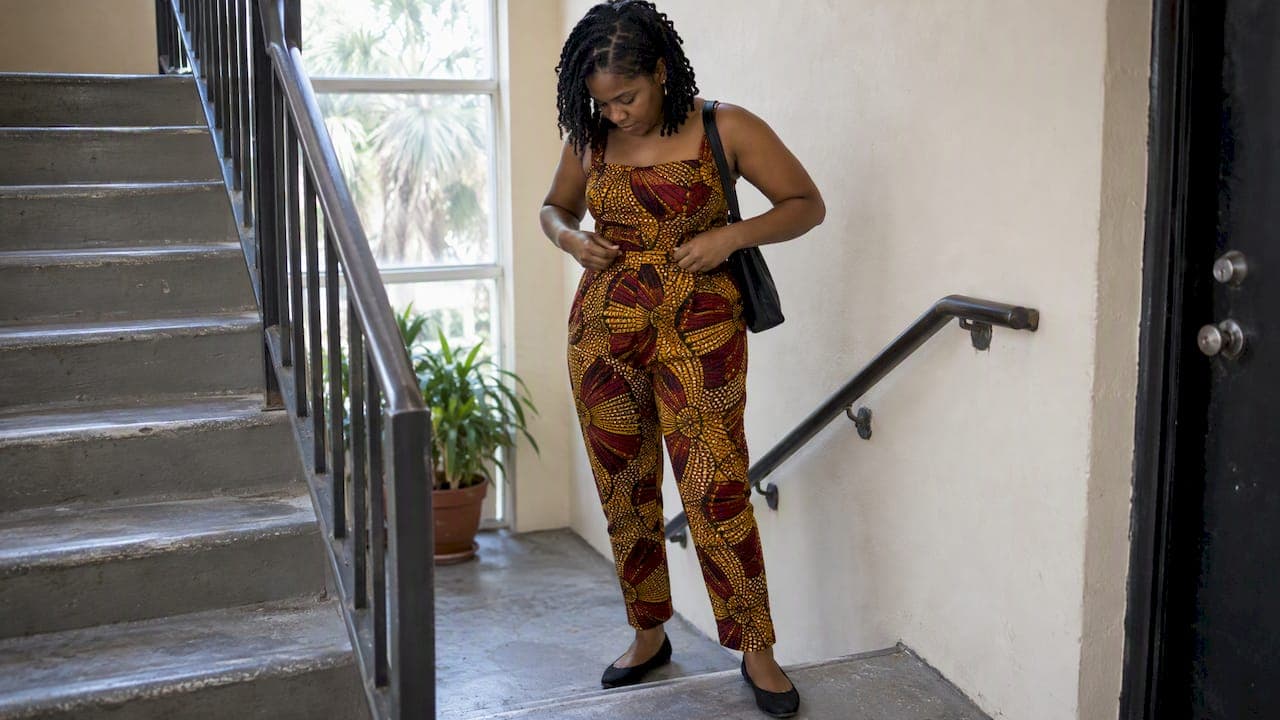
An African print jumpsuit is a complete outfit in one piece: a bold, story-rich fabric, a silhouette that moves with you, and nothing left to coordinate. Style it with gold jewelry and pointed-toe pumps for an evening, layer a denim jacket over it for errands, or add a blazer and turtleneck when the weather cools. This guide covers how to build the look, how to choose a cut that flatters you, what to know about the fabric and the people who make it, and how to care for it so the color lasts.
TL;DR
- A jumpsuit works from morning to midnight: change the shoes, the jewelry and the outer layer, and the same piece suits a brunch, an office day or a celebration.
- Let the print lead. Keep accessories neutral or complementary, and choose one statement element, not three.
- "Ankara," "Dutch wax," "African wax print" and "Kitenge" mostly describe the same printed cotton, so shop by construction, fit and maker, not just the name.
- Ethical matters: look for brands that are open about artisans, fair pay and limited production.
- Hand wash cold, skip bleach, dry in the shade and iron on low to medium, inside out.
Table of Contents
- Why the African print jumpsuit keeps coming back
- Know your fabric before you choose your cut
- Jumpsuit silhouettes and who they flatter
- Wrap dress or jumpsuit? Using wrap ideas in both
- Eight ways to wear an African print jumpsuit
- What to wear on top of a printed jumpsuit
- Choosing a maker you can feel good about
- Our perspective: wear the story, not just the print
- Find your jumpsuit at Sena Nukunu
- Caring for your jumpsuit so the color lasts
- Are jumpsuits still in style?
- FAQ
- Sources
Why the African print jumpsuit keeps coming back
Some pieces ask you to build an outfit around them. A jumpsuit asks nothing of you except to put it on. That convenience is a big part of why jumpsuits are called a staple for vacation wear and formal social events, a complete look that carries you from day into night.
The other part is what the fabric says. African fashion is in a fusion moment, with designers pairing Ankara, Kente and mud cloth with modern, sometimes asymmetrical silhouettes, and asserting an identity that holds both local tradition and global influence. A jumpsuit is a natural canvas for that idea: the tailoring is contemporary, the print carries the legacy.
For many of the people we dress, that is the point. A jumpsuit lets you walk into a boardroom, a wedding weekend or a family dinner looking polished and unmistakably yourself.
Know your fabric before you choose your cut
The printed cotton most people picture when they think of African print has several names. The V&A museum notes that Ankara is a printed cotton cloth made through the layering of polychromatic dyes, also known as African wax or Dutch wax, and fashionable in West and East Africa since the late 19th century. In East Africa you will often see it called Kitenge.
Its history is layered too. The cloth began with nineteenth-century attempts to replicate Indonesian batik by machine, then was shaped by African consumers, local sellers and European manufacturers to suit regional tastes. Today much of the production has moved to Africa, and the fabric has become a strong signifier of identity. Some designs carry proverbs or political slogans that vary by region, so a pattern can be a sentence as much as a decoration. If you want to go deeper into the meaning, our guide to why African prints are popular walks through it.
What this means when you shop:
- Weight and drape. Wax print cotton holds shape well, which suits structured wide-leg legs and defined shoulders. Softer, more fluid weaves suit wrap and halter styles.
- Print scale. Large motifs make a dramatic statement across a wide-leg silhouette. Smaller, tighter patterns read calmer and are easier to layer.
- Color intensity. The depth of color comes from the dye layering, which is exactly what harsh washing damages, so check the care guidance before you buy.
Jumpsuit silhouettes and who they flatter
The same fabric looks very different depending on the cut. Here is how we think about the main shapes.
| Silhouette | What it does | Best for | Style it with |
|---|---|---|---|
| Wide-leg, sleeveless | Adds drama and movement, elongates the line | Evening events, weddings, cocktail hours | Gold jewelry, pointed-toe pumps |
| Wrap-front or tie-waist | Defines the waist, adjustable through the day | Many body types, travel, long days | Flat sandals, a structured clutch |
| Halter or smocked top | Light, airy, shows off shoulders | Warm weather, vacation, daytime parties | Sneakers or sandals, small earrings |
| Tapered or straight leg | Clean and tailored | Office, networking, dinners | A blazer, loafers or block heels |
| Convertible or multiway | Several necklines from one piece | Packing light, mixing looks | Depends on the neckline you choose |
A quick fit test: sit, reach overhead and take a full stride. A jumpsuit has no waistband to forgive a short torso or a tight hip, so the rise matters more than any size label. Tie-waist and wrap constructions are forgiving because you set the fit yourself.
Wrap dress or jumpsuit? Using wrap ideas in both
Many readers who look for jumpsuits also ask about Ankara wrap dresses, and the two share a logic. A wrap closes with ties at the waist, so you decide how snug it sits and which way the neckline falls. That adjustability is why wrap styles travel so well and photograph so beautifully in a big print.
Some wrap designs go further and convert: the same tie can become a halter, a crossover or a one-shoulder line. If you want one piece that does many jobs, look for a wrap or convertible construction with long enough ties and a fabric that does not slip when knotted. Our Golden Peacock wrap gown shows how a wrap silhouette can feel regal while remaining easy to wear.
If you are choosing between the two, a simple rule helps. Pick the dress when you want to feel formal with the least effort. Pick the jumpsuit when you want to move, travel or keep your legs covered without losing any drama.

Eight ways to wear an African print jumpsuit
Styling advice from the Ankara world keeps coming back to one principle: balance the bold print with neutral or complementary accessories so the whole look stays polished. Here is how that plays out.
For formal events and celebrations
- The gala look. Wide-leg, sleeveless, gold jewelry and pointed-toe pumps, a pairing frequently recommended for formal occasions. Add a sleek bun or a head wrap in a solid color that picks up one shade from the print.
- The wedding guest. Choose a print with deep jewel tones, add a metallic clutch and a light shawl for the ceremony. Keep earrings as the single bold accessory.
- The rehearsal dinner. A tailored tapered jumpsuit with block heels is comfortable for standing, mingling and dancing.
For everyday and work
- The weekday professional. Layer a neutral blazer over the jumpsuit, tuck in a simple belt if the cut allows, and finish with loafers or low pumps.
- The errand runner. A denim jacket over the jumpsuit with flat sandals or sneakers is an easy casual formula. The denim cools down the print without hiding it.
For cooler weather
- The cardigan layer. Pull a cozy cardigan in a neutral over the jumpsuit and add boots.
- The turtleneck trick. A fitted turtleneck beneath a sleeveless jumpsuit turns a summer piece into a winter one.
- The structured blazer. A sharp blazer over a wide-leg jumpsuit makes a strong, modern silhouette for colder offices and dinners.
If you enjoy mixing patterns, such as a print jumpsuit with a patterned scarf, read our guide to mixing African prints with cultural respect first. And for a deeper look at how cut and proportion carry meaning, see our cultural guide to African silhouette fashion.
What to wear on top of a printed jumpsuit
Because the print already speaks, the layer on top should support it. Solid neutrals such as black, cream, camel and denim blue are safe. A cropped jacket keeps the waist visible, and a longer open duster adds length to a shorter frame. Avoid layering a second loud print unless you are deliberately mixing, and in that case keep one color in common.

Choosing a maker you can feel good about
A jumpsuit is a purchase, and for many of us it is also a statement about what we want to support. Designer Kahindo Mateene says that ethical African fashion rests on real social impact through collaboration: sourcing locally in Africa and creating sustainable jobs by paying artisans and tailors livable wages. Buying directly from a brand with that approach is a way of supporting the preservation of sewing techniques and local livelihoods.
Some questions worth asking any brand before you buy:
- Who makes the garment, and where?
- Are artisans and tailors paid a livable wage?
- Is production limited, or churned out at scale?
- Does the brand share the cultural story behind the print?
- What are the shipping, sizing and return terms?
The same thinking applies across categories. If you are curious how responsible sourcing shows up in other kinds of clothing, this piece on why ethical standards in clothing manufacturing matter takes the question to children's wear.
A wider shift is happening here too. Founders in this space encourage shoppers to choose higher-quality pieces made for their body over fast fashion that tends to lack durability and cultural authenticity. A well-made jumpsuit worn fifty times is a better story than a cheap one worn twice.
If you are ordering custom
Tailors in this tradition work to your body, not to a standard US size chart. The same Detroit profile notes that custom, handcrafted pieces made by artisans in Africa can mean a turnaround of roughly four to six weeks including shipping. So measure carefully, ask what measurements the maker needs, and order well before the wedding, reunion or trip you are dressing for.
Our perspective: wear the story, not just the print
We started Sena Nukunu to celebrate West African heritage, and we are rooted in Florida. Everything we offer is built on the same belief: clothing should carry confidence, comfort and a sense of regal style, and the people who craft it should be honored along the way.
That is why we favor limited quantities. A small run means each piece gets care, and it means you are less likely to see your outfit on someone else across the room. It also keeps us close to the artisans and the ethical manufacturing we stand for.
When we think about a jumpsuit, we think about the woman who needs to look powerful at a meeting at nine and radiant at a celebration at seven. One piece, many moments. We design with that rhythm in mind, blending traditional artistry with modern fashion so you can wear your heritage as easily as you wear your confidence.
Our advice is simple. Choose a print that means something to you, a fit that lets you move, and a maker who is open about how the garment was made. Everything else is accessories.
— Sena
Find your jumpsuit at Sena Nukunu
If you are ready to try the look, start with our Ahenfie Keys African print jumpsuit or the Adinkra Tide jumpsuit. Both are ready-to-wear pieces in our limited-quantity approach, made with ethical manufacturing and artisanal craftsmanship. To see the wider range of dresses, sets and statement pieces, browse the women's shop or our collections. If you would rather wear a coordinated set, our two-piece sets offer another way to get that effortless, finished feeling.
For more on how we think about ready-to-wear and ethics, our guide to ready-to-wear African attire tells the story in more detail.
Caring for your jumpsuit so the color lasts
Wax print gets its depth from layers of dye, so gentle care keeps it rich. Based on Ankara care guidance:
- Wash: by hand in cold water with a mild detergent.
- Never bleach: it strips the color layers that give the cloth its intensity.
- Dry: hang away from direct sunlight.
- Iron: low to medium heat, preferably inside out, to protect the print.
Wash dark and bright prints separately the first few times, and always check the care label on your specific piece, since blends and linings can change the rules.
Are jumpsuits still in style?
The signs say yes. Jumpsuits are described as a key category in contemporary occasion wear, sitting beside coordinated two-piece sets. Meanwhile, prints are getting more conceptual: the 2026 trend report describes print as something that tells stories. A jumpsuit that carries a meaningful pattern fits that direction, and it will not date quickly because the cut is simple and the cloth has more than a century of history behind it.
FAQ
What can I wear on top of an African print jumpsuit?
A neutral blazer, denim jacket or cardigan works best because it lets the print stay the focus. For cold weather, add a turtleneck underneath a sleeveless style. Keep outer layers solid and let one color from the print guide your accessories.
What are traditional African clothes called?
There is no single name, because styles vary widely by region and people. In West Africa you will hear terms such as agbada, kaftan and boubou, and printed cotton is often called Ankara. Our collection includes agbada ensembles and kaftans alongside women's pieces.
Are Ankara, Dutch wax and Kitenge different fabrics?
They are largely names for the same type of printed cotton, with Kitenge more common in East Africa. The V&A describes Ankara as printed cotton known as African wax or Dutch wax. Quality varies by maker, so judge a garment by its construction and the brand's transparency.
How do I wash an African print jumpsuit?
Hand wash in cold water with a mild detergent, hang it to dry out of direct sunlight, and never use bleach. If it needs ironing, use low to medium heat on the inside. Always follow the care label on your piece.
Can a jumpsuit work for a wedding or celebration?
Yes. Choose a wide-leg or tailored cut in a rich print, then add gold jewelry and heels for a formal feel. Check the dress code with the hosts, and order custom pieces early, since handmade garments can take four to six weeks to arrive.
Sources
- Kitenge Suits for Ladies 2026: Trending Styles
- Latest trends in African fashion 2026, Africa Fashion Tour
- Textile Sample, V&A Explore The Collections
- African Jumpsuit Outfits: 24 Latest Ankara Jumpsuit Styles
- Kahindo Mateene Building Ethical Fashion Brand, OkayAfrica
- Apparel Brand Zapenda Brings Congolese Artisanship to Detroit, Hour Detroit