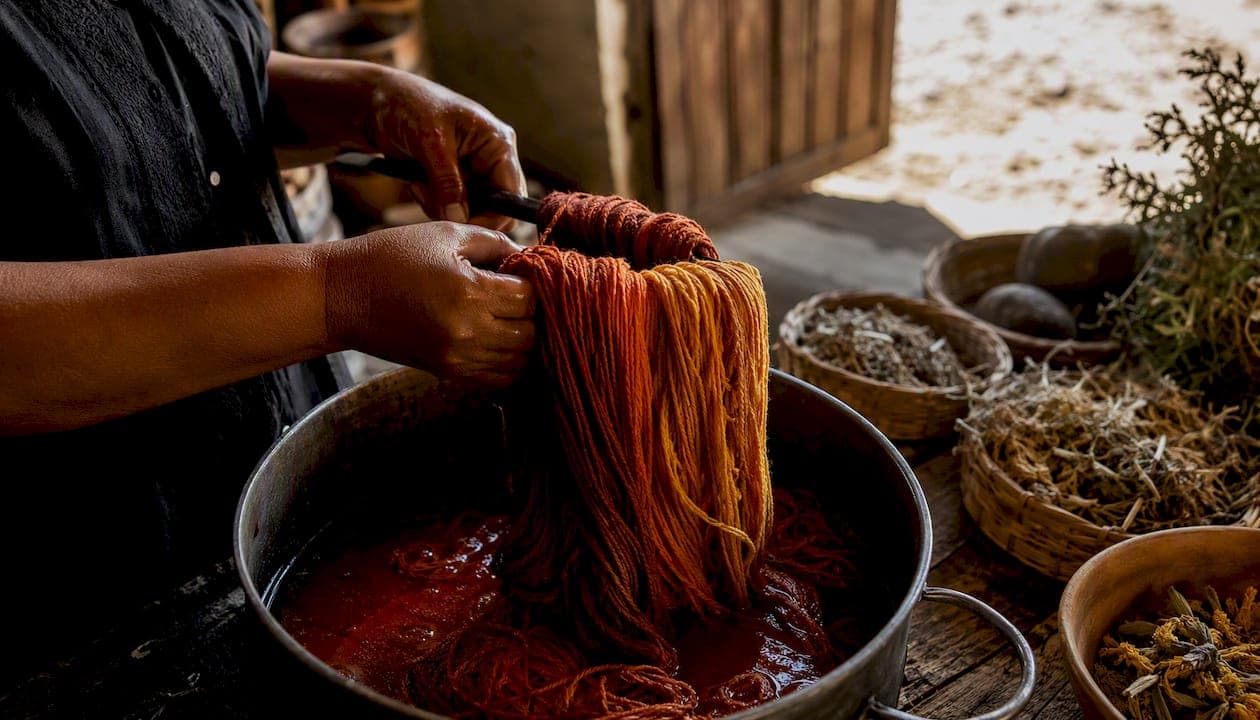
The strongest impactful artisan collaborations share one trait: they leave communities better equipped than they found them. This curated shortlist spans continents, from Shanga's glassblowing exchange with Murano's masters to Ralph Lauren's Gee's Bend residency, and includes Norlha's yak-fiber cooperative in Tibet and Senanukunu's own West African apparel model. Each entry earned its place through documented training, fair pay, or measurable market access, not marketing gloss.
- Shanga — Glass Bridges: From Murano to Shanga: Brought Italian glassblowing tradition to Tanzanian artisans through a partner-funded skills exchange.
- Ralph Lauren x Gee's Bend: Pairs quilt artistry with a donation commitment to justice-focused hunger relief.
- Norlha: Builds a yak-fiber textile economy that keeps nomadic herding families rooted in Tibet.
- Senanukunu: A U.S.-based platform that channels direct sales into West African artisan livelihoods and heritage storytelling.
- Dior x Chanakya Ateliers: A decades-long partnership funding a formal school of craft in Mumbai.
- Prada x Kolhapuri artisans: Turned public accountability into a funded, multi-year training program.
Key Takeaways
Impactful artisan collaborations succeed when they combine fair pay, real skills training, and named credit for the makers, not just a well-photographed product.
| Point | Details |
|---|---|
| Look past the photo | Real impact shows up in training hours, donation percentages, and named institutional partners. |
| Three tiers of value | Business growth, regional development, and long-term artisan capability all matter, per the systematic review. |
| Accountability can fix a bad start | The Prada x Kolhapuri MoU shows public pressure can convert into funded training programs. |
| Buy with intent | Choose sellers who name artisans, publish pricing clarity, and support ongoing relationships over one-off drops. |
| Senanukunu as a model | Senanukunu channels direct sales into ethical, limited-quantity West African apparel production with named craftsmanship values. |
Table of Contents
- Why Impactful Craft Partnerships Matter Beyond Aesthetics
- What Makes a Craft Partnership Genuinely Impactful
- Six Craft Partnerships That Delivered Real Outcomes
- How to Support Artisan Collaborations Right Now
- Sources
Why Impactful Craft Partnerships Matter Beyond Aesthetics
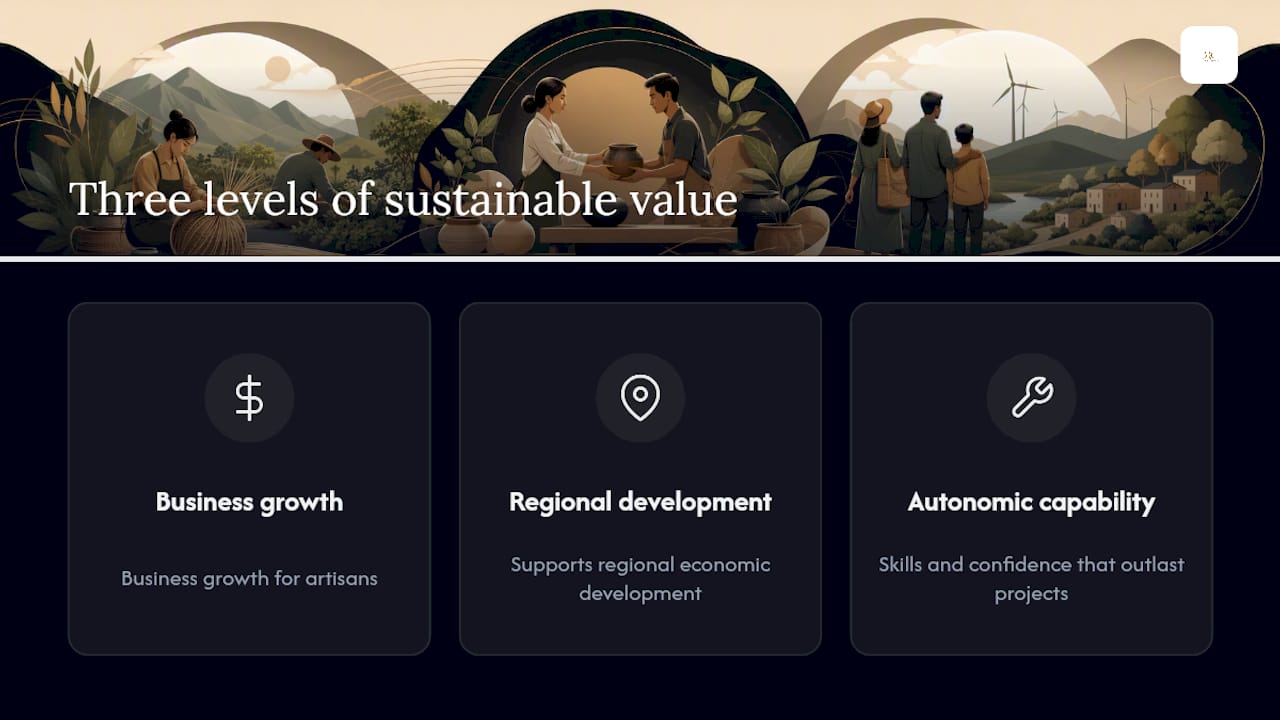
A collaboration earns the word "impactful" when it changes something structural, not just seasonal. A systematic review of designer–artisan collaborations spanning research from 2000 to 2022 identifies three distinct levels of value these partnerships can generate: business growth for the artisans involved, regional economic development, and what researchers call autonomic capability development, meaning artisans gain skills and confidence that outlast any single project.
That third tier is the one most brand collaborations skip. It is easy to commission a beautiful textile and photograph it well. It is much harder to build the kind of relationship where artisans help shape the design process itself, rather than just executing someone else's sketch. The same review flags a recurring barrier: insufficient mutual understanding between designers and makers, which can quietly drain a project of its promised benefit even when the finished product looks stunning.
Statistic Callout: Researchers reviewing two decades of academic literature on designer–artisan partnerships found that sustainable value consistently clusters around three levels: business growth, regional development, and long-term artisan capability, not just one-off sales spikes.
Pro Tip: Before you trust a brand's "collaboration" claim, look for evidence of training, institutional partners, or a named school or program behind it. A collaboration with a real institutional backbone tends to outlast a single product drop.
What Makes a Craft Partnership Genuinely Impactful
Here are the criteria that separate a lasting artisan partnership from a one-season marketing stunt.
- Fair compensation. Look for published pricing breakdowns or donation percentages rather than vague "supports artisans" language.
- Capacity building. Check whether the partnership includes training, apprenticeships, or tool transfer, not just a purchase order.
- Cultural authorship and credit. Artisans and their communities should be named, not folded into an anonymous "inspired by" credit line.
- Long-term market access. A single limited drop is weaker evidence than a repeat relationship or an ongoing collection.
- Environmental responsibility. Materials sourcing and waste practices should be stated plainly, not implied.
- Documented partners or funders. Embassies, foundations, or nonprofits attached to a project add real accountability.
- Measurable outcomes. Workshop hours, donation totals, or training program enrollment numbers beat generic impact statements.
Verification is often as simple as reading the brand's own press page or an independent report closely, rather than taking a campaign photo at face value.
Six Craft Partnerships That Delivered Real Outcomes
Shanga — Glass Bridges: From Murano to Shanga paired Murano's master glassblowers with Tanzanian artisans in Arusha for a hands-on exchange lasting multiple days. The workshop drew support from the Embassy of Italy, the Pentagram Foundation, Effetre Murano, ACN Group, and Air Tanzania, who supplied materials, logistics, and tools. Those donated resources kept building Shanga's glassblowing capacity long after the visiting masters flew home, which is the difference between a photo opportunity and a real skills transfer.
Ralph Lauren x Gee's Bend turned generations of quilting tradition into a limited collection of apparel and home goods, built from upcycled Ralph Lauren fabrics and hand-pieced quilting techniques. The brand pledged 5% of each purchase price to the Equal Justice Initiative's hunger relief programming. Coverage from WWD detailed the collection's scope, showing how a major-brand residency can bring artisan work to a national audience while keeping the artist crediting front and center.
Norlha works with nomadic herding families in the Tibetan Plateau, turning traditionally discarded yak fiber into a fine textile economy. The cooperative model keeps families anchored to their land and pastoral way of life instead of pushing them toward migration for factory work, building a business around a resource that would otherwise go to waste.
Senanukunu operates as a U.S.-based e-commerce platform built around authentic West African ready-to-wear and custom pieces, made in limited quantities through ethical manufacturing partnerships. Rather than licensing a motif for a single season, the model channels direct-to-consumer sales into ongoing artisan relationships, treating craftsmanship as culture rather than a decorative footnote.
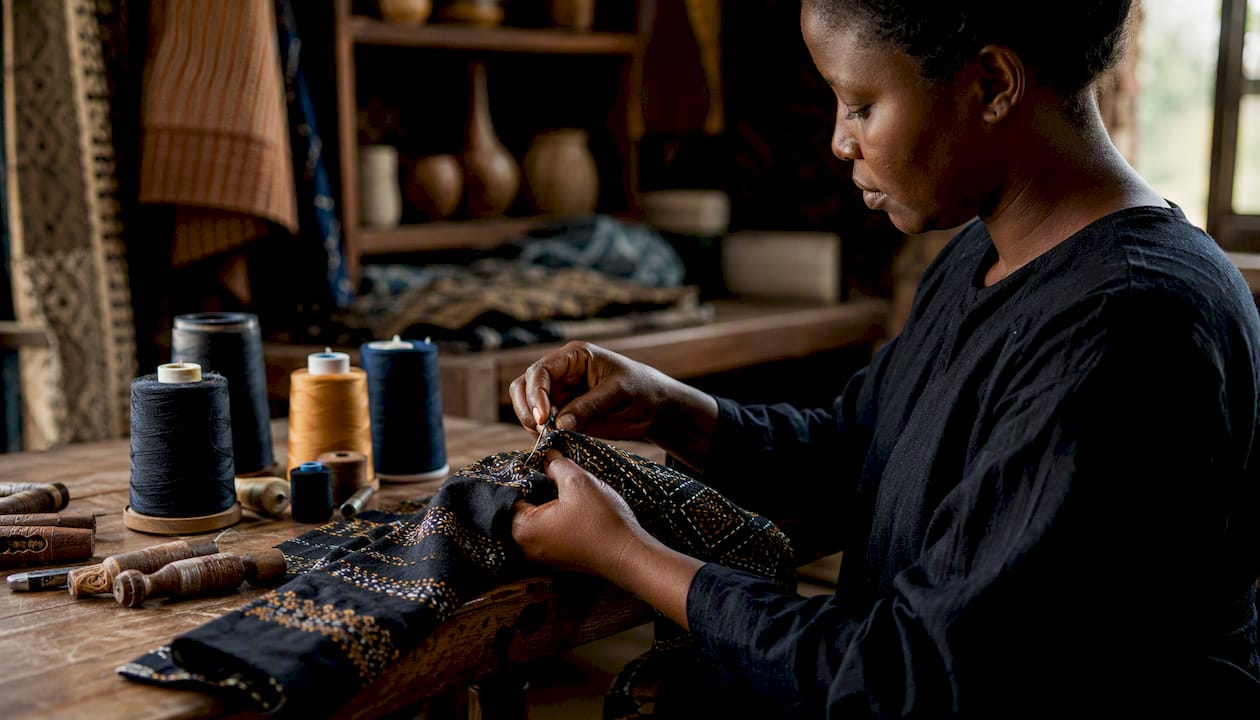
Dior x Chanakya Ateliers represents one of fashion's longer-running partnerships, anchored by the Chanakya School of Craft in Mumbai. According to a review of Indian craft collaborations, the school gives embroidery artisans, many of them women, formal training and steady work across seasons rather than project-by-project gig labor.
Prada x Kolhapuri artisans shows how accountability can rescue a rocky start. After public backlash over unattributed use of Kolhapuri sandal designs, Prada signed a memorandum of understanding with LIDCOM and funded a three-year training program run through NIFT and KILT. The episode is a useful case study in how criticism, handled seriously, can convert into structural support.
How to Support Artisan Collaborations Right Now
If you want to put your money behind these values today, start here.
- Verify the credentials. Confirm the brand names the artisans, community, or region involved, not just a vague "handcrafted" label.
- Buy directly or from verified platforms. Limited runs sold through the maker's own site or a transparent retailer keep more value with the artisans.
- Read the impact statement. A credible brand publishes what happened with training funds or donation percentages.
- Support training funds directly when a brand offers that option alongside product sales.
- Attend exhibitions or trunk shows when collaborations tour, since these often fund travel and materials for visiting artisans.
- Follow artisan collectives on social media and share their own accounts of the work, not just the brand's campaign imagery.
Sena Nukunu's own guide to supporting West African heritage fashion walks through similar questions for shoppers building a more ethical wardrobe.
A note from Senanukunu on why this list matters
Heritage-centered partnerships only work when artisans are paid fairly and credited by name, not folded into a brand's aesthetic. Senanukunu exists as a U.S.-based platform built on that principle: ethical manufacturing, limited quantities, and garments rooted in craftsmanship instead of trend cycles. We built this list because readers deserve proof, not just good intentions.
Shop pieces that carry the same values forward
If the collaborations above have you looking for something you can actually wear, Senanukunu offers a direct route to the same values: limited-run dresses, agbada sets, and statement jackets made through ethical manufacturing rather than mass production.
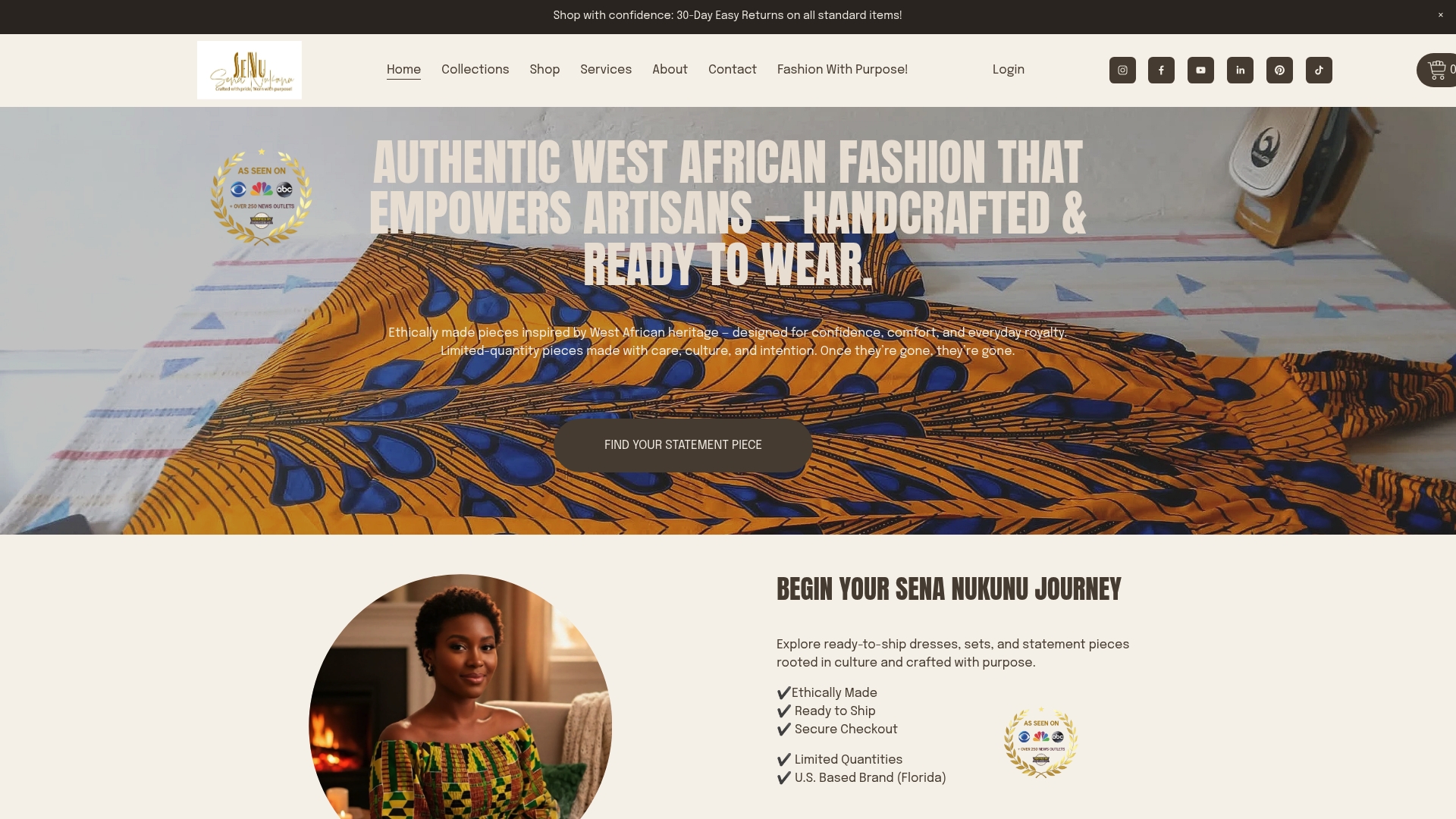
Each collection rotates in small batches, so a piece you love this season may not return in the same fabric or cut again, which keeps the model closer to artisan pacing than fast fashion turnover. The kaftans and matching sets draw on West African heritage design while staying practical for everyday wear or a celebration outfit. Every purchase supports the same kind of long-term artisan relationship the collaborations above were built on, just structured as a retail model instead of a museum exhibit. Browse the current collection at Senanukunu and check what's in stock before a limited run sells out.
Sources
Here are the core sources that substantiate the claims in this article.
- When Venice meets Arusha: a celebration of craft, community & collaboration
- Ralph Lauren x Gee’s Bend
- Ralph Lauren Artist in Residence collaboration gees bend textile artists