TL;DR:
- Authentic artisanal craftsmanship is characterized by products made mainly by human hands, with clear standards evaluated by organizations like Nest's Verified Handcrafted. Recognizing genuine craftsmanship involves examining production methods, materials, and physical details such as inconsistencies and tool marks, while being cautious of machine-made signs like perfect symmetry and uniformity. Transparency about the process and detailed documentation confirm true artisan quality, which differs from ethical or fair-trade production.
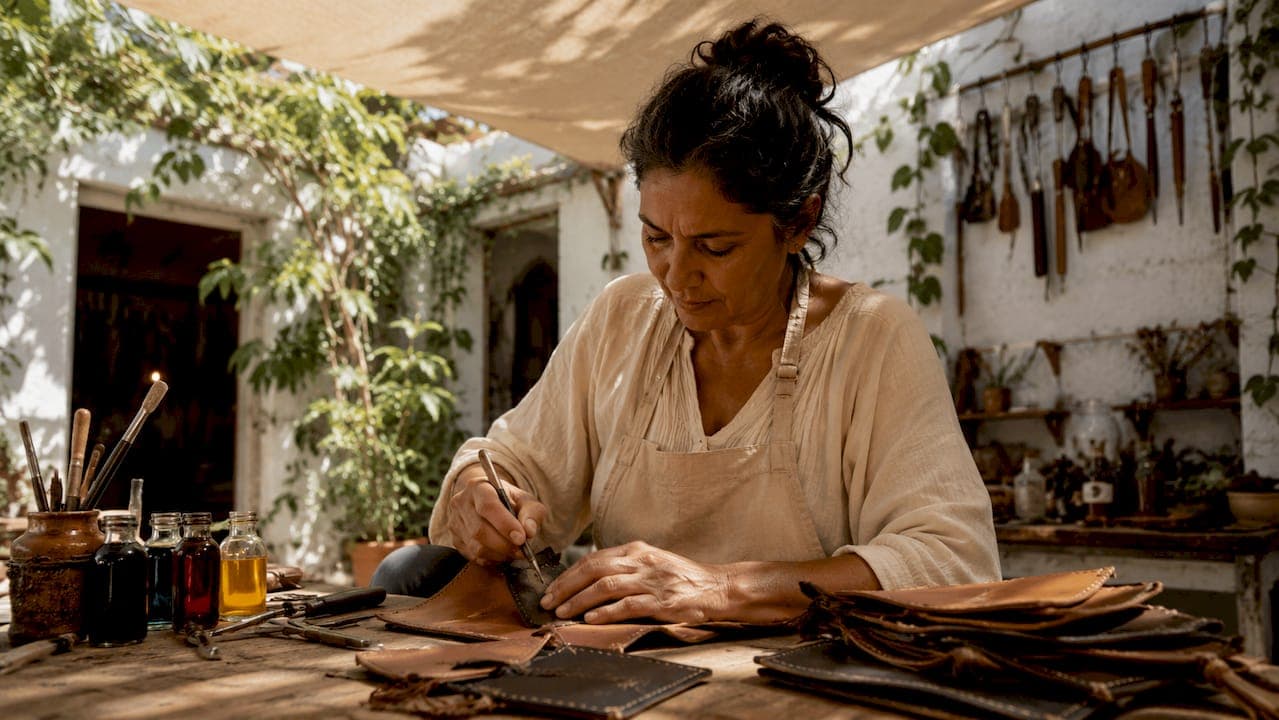
Artisanal craftsmanship is defined as goods produced predominantly by skilled human hands, where the maker's physical involvement shapes every stage of design, construction, and finishing. Knowing the ways to recognize artisanal craftsmanship protects you from paying premium prices for machine-made imitations dressed up with handmade marketing. Certification bodies like Nest's Verified Handcrafted™ program and platforms like Handmade.com have established clear standards that give enthusiasts a reliable framework for evaluation. Whether you are shopping for West African textiles, ceramic jewelry, or hand-carved woodwork, the same core principles apply: examine the production method, the materials, and the physical evidence of human hands.
1. Ways to recognize artisanal craftsmanship through production method
The most reliable way to identify authentic craftsmanship is to understand how the item was made, not just how it looks. Nest's Verified Handcrafted™ mark evaluates the ratio of human skill to machine processing and only endorses items where skilled hands dominate the production process. That standard gives buyers a concrete benchmark: if a machine performs the majority of the work, the item does not qualify as handcrafted.
Signs that confirm a genuine handmade production process include:
- Manual weaving or hand-stitching visible in the construction, where thread paths follow a human rhythm rather than a mechanical pattern
- Tool marks or fingerprint impressions left in clay, wax, or soft metal, showing direct physical contact with the maker
- Slight asymmetries in shape, proportion, or surface that no machine would leave intentionally
- Organic variation between pieces in the same product line, because artisans cannot replicate exact details perfectly
Red flags that suggest machine dominance include perfect symmetry across every unit, identical bead placement in every photo, and zero variation in surface texture. Catalog photo uniformity showing zero variation across items is a direct signal of non-handcrafted production. When every piece in a product range looks pixel-perfect, a machine, not a person, made it.
Pro Tip: Ask the seller for multiple photos of different individual units. Genuine artisanal pieces will show small, natural differences between them.
2. Material characteristics that signal authentic artisan apparel
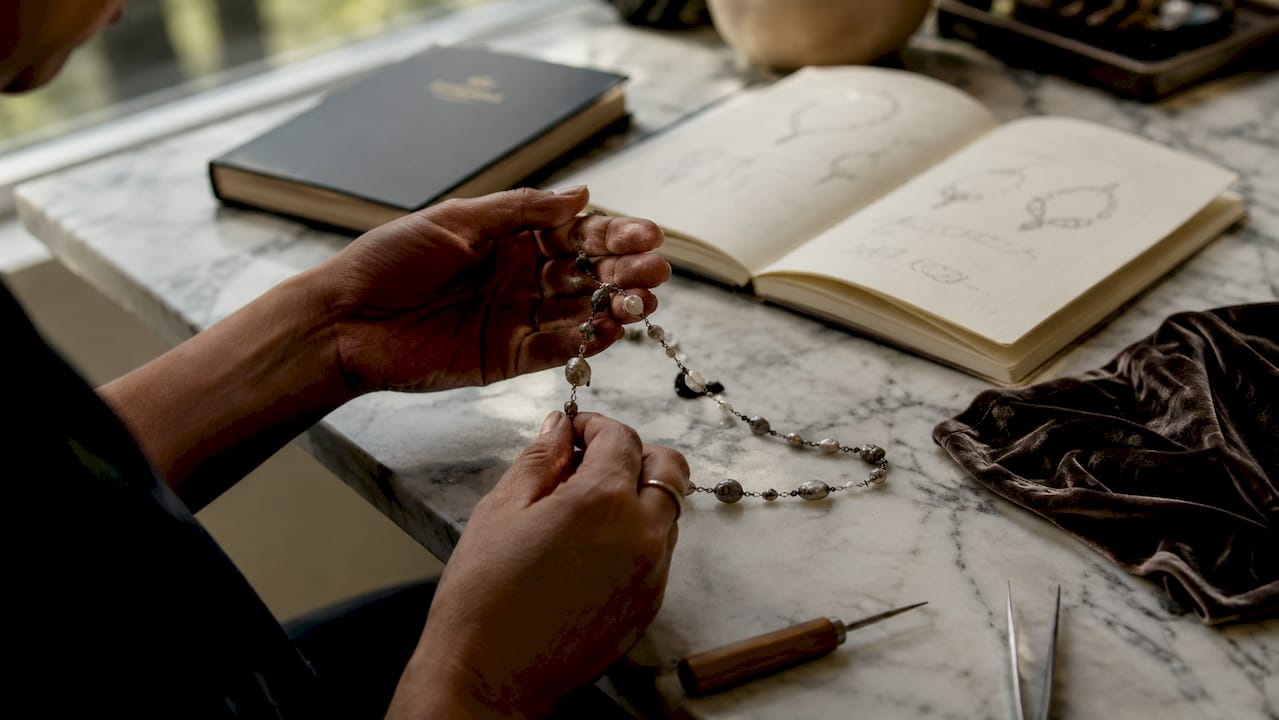
Materials tell the story of how a piece was made and who made it. Authentic handmade goods often use natural fibers such as linen, silk, and cotton, which display subtle texture and weight differences not found in synthetic blends. That texture is not a flaw. It is the physical record of how the fiber was grown, harvested, and processed by human hands.
Key material signs of authentic artisan wear include:
- Natural fibers with slight irregularity in weave density or thread thickness, reflecting hand-spinning or hand-weaving
- Natural dyes that produce color variation across the fabric surface, unlike the flat uniformity of industrial dye baths
- Locally sourced or regionally specific materials like Kente cloth from Ghana or Adire indigo from Nigeria, which carry geographic and cultural identity
- Ceramic glazes with depth and variation, showing hand-application rather than spray coating
Synthetic or perfectly uniform blends are the clearest material red flag. Industrial production standardizes everything. Artisans, by contrast, select materials for their character, and that character shows up as subtle inconsistency in weight, drape, and surface. Listings mentioning precise materials like sterling silver or natural stone, along with process photos, are positive signs of genuine artisanship when shopping online.
3. Visual and tactile signs of handmade details
Your hands and eyes are your best evaluation tools. Small yet consistent variations in weave density or stitch gauge signal authentic handmade textile goods, while visible adhesives or uneven finishing indicate lower quality. The distinction matters: organic variation is a feature, but careless finishing is a flaw.
- Check the reverse side of embroidery. Machine embroidery leaves characteristic stitching patterns and tensions very different from hand-stitched work. The back of a hand-embroidered piece shows irregular thread paths and knotted ends. A machine-made back looks clean, locked, and perfectly uniform.
- Feel the weight distribution. Hand-woven textiles carry weight unevenly across the surface because tension shifts as the weaver works. Machine-woven fabric feels consistent from edge to edge.
- Look for glaze shifts on ceramics. Hand-applied glazes pool in recesses and thin on ridges, creating depth. Spray-applied industrial glazes produce flat, even coverage.
- Examine hand-carved surfaces. Tool impressions in wood or clay follow the direction of the maker's stroke. No two strokes are identical, so the surface has a living quality that machined surfaces lack.
- Inspect seam finishing on garments. Hand-sewn seams often show slight variation in stitch length. That variation is the signature of a person, not a program.
Pro Tip: When evaluating authentic apparel craftsmanship online, zoom into high-resolution photos and look for the reverse side of seams or embroidery. Sellers who photograph these details are proud of what they show.
4. Category-specific standards for signs of authentic craftsmanship
Authenticity criteria are not universal. They depend on product type, which means you need to adjust your evaluation method for each craft category. Handmade.com's definitions make this explicit, and understanding the differences helps you avoid applying the wrong standard.
| Category | What counts as handmade | What disqualifies it |
|---|---|---|
| Jewelry | Hand fabrication, artisan-designed molds, small-batch casting | Simple assembly of commercial components; machine-applied settings |
| Textiles and garments | Hand sewing, weaving, dyeing, or embroidery by the maker | Machine-sewn construction with only hand-applied decoration |
| Woodworking | Crafted by the maker's own tools and skills, power tools allowed | CNC-routed pieces with no maker finishing or design input |
| Ceramics and sculpture | Hand-formed or primarily finished by the maker | Slip-cast production with no hand-finishing or artisan glazing |
| Musical instruments | Hand-assembled and finished by the maker | Factory-assembled bodies with only cosmetic hand-touches |
Jewelry must be predominantly handmade, with small-batch casting allowed only when the mold itself is artisan-designed. Simple assembly of commercial components does not qualify. For textiles, the maker must personally perform the hand sewing, weaving, dyeing, or embroidery. A garment that uses machine-woven fabric but adds hand embroidery sits in a gray area. The embroidery is handmade; the base fabric is not. Knowing that distinction helps you price and value the piece accurately.
Authentic handmade jewelry, garments, and artworks require the maker's personal involvement in design, forging, sewing, dyeing, or finishing. Production steps must be substantive, not cosmetic. A maker who signs a machine-produced piece has not made it handmade by signing it.
5. How transparency and certification confirm genuine artisan quality
Process transparency is one of the most reliable hallmarks of artisan quality. Makers who are proud of their craft share it openly. They post photos of their workspace, describe their tools, name their materials, and explain their process in detail. That openness is not marketing. It is evidence.
Nest's Verified Handcrafted™ mark complements labor condition certifications by explicitly addressing whether skilled human hands produced the item. This separates ethical treatment of workers from production method authenticity. A product can be made in a fair-wage factory by machines. That product is ethically produced but not handcrafted. The two certifications answer different questions, and you need both answers to make a fully informed purchase.
When shopping online, look for listings that include fabrication notes, material sourcing details, and process photos. Vague descriptions like "handmade with love" without specifics are not evidence of authenticity. Specific claims like "hand-dyed with indigo using a resist-print technique" are verifiable and meaningful. You can also read about craftsmanship in fashion heritage to understand how ethical production and cultural legacy intersect in authentic artisan goods.
Key takeaways
Recognizing authentic artisanal craftsmanship requires evaluating production method, material quality, and physical evidence of human hands together, not in isolation.
| Point | Details |
|---|---|
| Production method is the primary test | Look for human-skill dominance using Nest's Verified Handcrafted™ standard as your benchmark. |
| Natural materials carry physical evidence | Linen, silk, cotton, and natural dyes show subtle irregularities that synthetic blends cannot replicate. |
| Reverse-side inspection reveals the truth | Check embroidery backs and seam finishing to distinguish hand-stitching from machine work. |
| Category standards differ significantly | Apply jewelry, textile, woodworking, and ceramics criteria separately, as each has distinct authenticity rules. |
| Transparency is a positive signal | Makers who share process photos, material names, and fabrication notes are demonstrating, not just claiming, authenticity. |
What I have learned about reading craftsmanship beyond the surface
Most buyers focus on the front of a piece. I focus on the back. The reverse side of embroidery, the inside of a seam, the underside of a ceramic bowl: these are the places where a maker cannot hide. A machine leaves a perfect signature. A human leaves a human one.
The single biggest misconception I encounter is that "handmade" and "ethically made" mean the same thing. They do not. A product can be produced in a fair-trade certified facility using automated equipment. It is ethical. It is not handcrafted. Certification logic separates people from method, and buyers who understand that distinction make smarter, more meaningful purchases.
I also caution against relying on a single signal. One asymmetry does not confirm authenticity. One natural fiber does not confirm authenticity. What confirms authenticity is a pattern of evidence: the material, the construction, the variation, the maker's story, and the transparency of the process all pointing in the same direction. Training your eye for quality means learning to read multiple signals simultaneously, not searching for one definitive proof.
The cultural meaning behind a piece is not separate from its quality. When a West African weaver uses a pattern that carries ancestral significance, that meaning is woven into the fabric as surely as the thread. Recognizing that is the deepest form of appreciating artisanal work.
— Sena
Authentic West African artisan fashion at Senanukunu
Senanukunu was built on the belief that every stitch carries the spirit of a legacy. The collections at Senanukunu feature culturally rooted, ethically produced apparel that embodies the hallmarks of artisan quality: natural materials, intricate handwork, and the unmistakable variation that only human hands create.
Each piece is crafted in limited quantities, which means no two runs are identical and every garment reflects the maker's direct involvement. From vibrant artisan dresses to statement sets inspired by West African heritage, the collection is a living record of tradition, resilience, and pride. When you wear Senanukunu, you wear the story of the artisan who made it.
FAQ
What is the best way to verify a product is truly handmade?
Check the ratio of human skill to machine processing using standards like Nest's Verified Handcrafted™ as a guide. Look for process photos, material specifics, and natural variation between individual pieces.
How do I spot authentic hand embroidery versus machine work?
Flip the garment over and inspect the back. Hand embroidery shows irregular thread paths and knotted ends, while machine embroidery leaves a uniform, locked stitch pattern on the reverse side.
Does "ethically made" mean the same as "handcrafted"?
No. Ethical certification addresses worker welfare and labor conditions. Handcrafted certification addresses whether skilled human hands performed the production. A product can be one without being the other.
What materials signal authentic artisanal goods?
Natural fibers like linen, silk, and cotton, along with natural dyes and locally sourced materials, are the strongest material signals. Subtle texture irregularities and weight variation confirm hand selection and treatment.
Are small imperfections a sign of quality or poor workmanship?
Small, consistent variations in stitch gauge, weave density, or glaze application are signs of authentic handwork. Visible adhesives, careless finishing, or uneven construction are signs of poor quality, not authenticity.