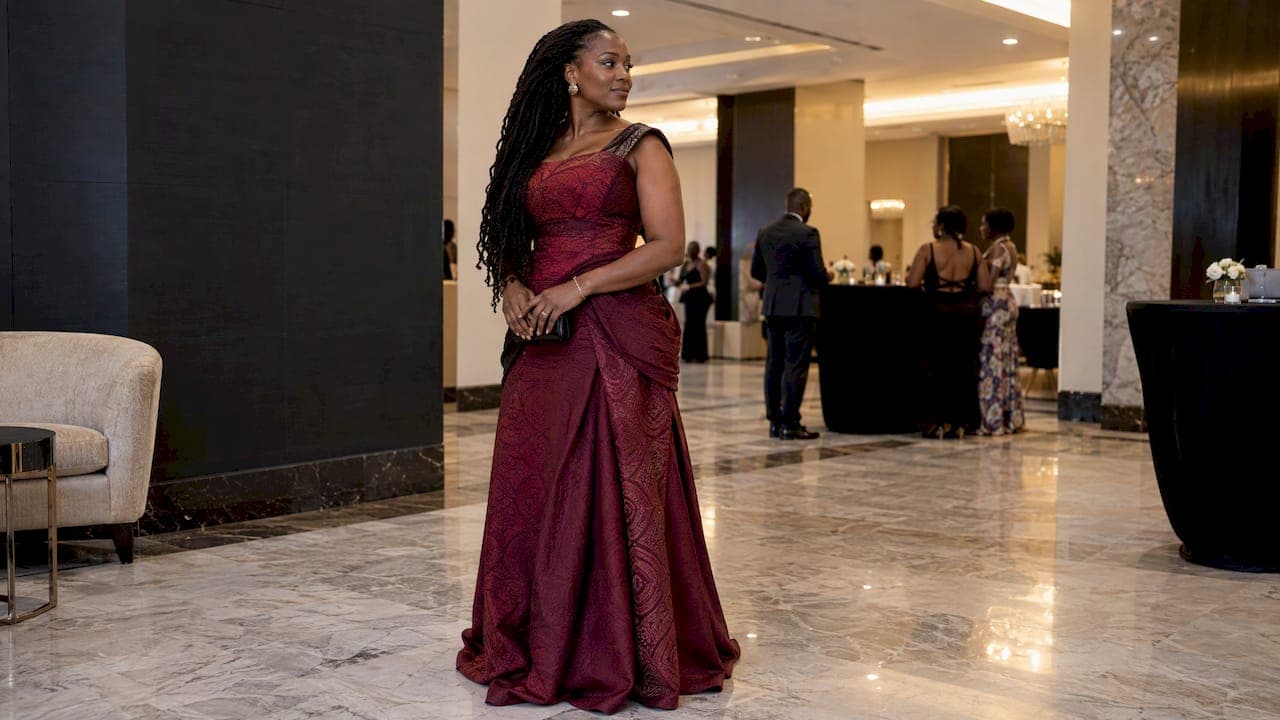
An African evening gown is a formal dress that draws on West African textiles, tailoring and heritage, cut for black-tie events, weddings, galas and milestone celebrations. The best ones pair a commanding silhouette with fabric that tells a story: a hand-finished print, a woven stripe, rich embroidery, or a structured bodice that moves like couture. Below, we walk you through the styles, the fabrics, the fit, the styling and the questions of craftsmanship and cultural respect, so you can choose a gown you will wear with pride for years.
TL;DR
- Choose the silhouette first (mermaid, ball gown, column, or a structured kaftan-inspired gown), then let the fabric and print carry the personality.
- For black-tie settings, pick solid or tone-on-tone richness, structured tailoring and minimal accessories; save bold prints for galas, receptions and cocktail-formal events.
- Look for visible craftsmanship: clean seams, lined bodices, considered pattern placement and honest information about who made the piece and how.
- Anyone can wear African formalwear respectfully: learn the name and meaning of what you wear, and avoid garments that imitate protected cloth such as kente without saying so.
- Limited-quantity, ethically made pieces tend to fit better and carry more meaning than mass-produced copies.
Table of Contents
- What Makes a Gown "African" and Formal at the Same Time
- The Silhouettes That Work for Black Tie and Beyond
- Fabrics, Prints and Details That Signal Formality
- Traditional Names Worth Knowing
- How to Style African Gala Attire
- Wearing African Formalwear With Cultural Respect
- How to Judge Craftsmanship and Ethical Production
- Our Perspective: Formal Wear Should Feel Like a Homecoming
- Shop Formal Pieces Made With Intention
- A Simple Checklist Before You Buy
- FAQ
- Sources
What Makes a Gown "African" and Formal at the Same Time
The phrase covers a huge range. Africa is a continent of thousands of languages, and the clothing names, cuts and customs shift from one region to the next. What unites the strongest formal pieces is intention: textiles chosen for their heritage, silhouettes shaped by tradition and refined by modern tailoring, and details done by hand.
Formality comes from a few things that have nothing to do with the continent of origin. The fabric has body and drape. The garment is lined and finished inside as well as outside. The proportions are deliberate, with a defined waist, a long line, or a dramatic sleeve. When those are in place, a vibrant print can be as formal as satin, and a handwoven stripe can sit comfortably beside a tuxedo.
At Sena Nukunu we think of formalwear as a conversation between past and present. Every stitch carries a legacy, and a gown should let the wearer feel both rooted and radiant.
The Silhouettes That Work for Black Tie and Beyond
Silhouette decides how a gown behaves in a room: how it enters, how it moves on a dance floor, how it photographs. These are the shapes we see readers choose most often.
Mermaid and trumpet gowns
Fitted through the bodice and hips, flaring from the knee, the mermaid is the classic choice for galas and wedding receptions. It shows off a bold print beautifully because the fitted section acts as a canvas. Ask about stretch or boning at the waist, and about whether you can sit and move comfortably, since a dress that restricts you will show it in photographs.
Ball gowns and full skirts
Volume suits ceremonies, engagement parties, proms and grand entrances. A full skirt in a printed cotton blend will feel casual if the skirt is thin, so look for lining, structure or layered organza underneath. Many African-inspired ball gowns are split or high-low in the front, which keeps the drama while letting you walk freely.
Column and sheath gowns
Clean, floor-length and elegant, the column gown is the most versatile. In a solid jewel tone or a tone-on-tone jacquard, it reads as black tie. With a dramatic sleeve, a wrap bodice or a statement neckline, it carries heritage without needing a loud print. If you want to see how three evening shapes translate African-inspired pieces to black tie, our guide to evening silhouettes goes deeper.
Kaftan and boubou-inspired gowns
The boubou is a flowing, wide-sleeved robe worn across West Africa, and it is known by different names in different languages, including mbubb in Wolof and babban riga in Hausa. The grand boubou is explicitly formal wear, often made in richly dyed fabric with detailed embroidery, and women wear a kaftan variant of it in several regions. A gown that borrows this volume and embroidery gives you comfort and grandeur at once, which is why it suits long ceremonies and multi-hour receptions.
Jumpsuits and tailored sets
Not every formal occasion asks for a gown. A wide-leg jumpsuit or a matching top-and-skirt set in organza, brocade or a structured print can be just as polished, and many guests find them easier to travel in and dance in.
Fabrics, Prints and Details That Signal Formality
Fabric does most of the talking. Here is how we think about the common choices.
| Fabric or technique | How it looks and feels | Best for |
|---|---|---|
| Wax-print cotton (often called Ankara) | Vivid, graphic prints with a crisp hand | Receptions, galas with a cultural theme, cocktail-formal; best with structured tailoring or lining |
| Jacquard and brocade | Subtle woven pattern with a rich sheen | Black tie, weddings, formal dinners |
| Organza and tulle overlays | Light, sculptural volume | Ball gown skirts, sleeves, dramatic trains |
| Lace and embroidered fabric | Delicate texture, often with cutwork | Brides' guests, engagements, traditional ceremonies |
| Handwoven strip cloth | Narrow woven bands sewn into a larger textile, with geometric patterns | Trim, jackets, wraps and accents on a gown |
| Beading and hand embroidery | Dimensional detail catching the light | Bodices, necklines, hems |
Two details matter more than most shoppers expect. The first is pattern placement: on a good gown, the print is matched at the seams and the focal motifs fall where you want attention, not at awkward spots. The second is the interior. A lined bodice, clean seam finishing and a stable waistband are what separate a gown from a costume.
Color carries meaning as well as mood. Deep blues, emerald, gold and burgundy read as regal and photograph well in evening light. Black with gold or metallic detail is a dependable choice for strict black-tie invitations.
Traditional Names Worth Knowing
Shoppers often ask what traditional African dresses are called, and the honest answer is that it depends on the language and the region. A few names you will meet in West African formalwear:
- Boubou or grand boubou: the flowing, wide-sleeved robe described above, worn by men and women across West Africa.
- Kaftan: a loose, long garment; in some regions, the women's formal version of the boubou.
- Agbada: the wide, sweeping robe of the Yoruba, worn over matching tunic and trousers. Its relationship to the boubou is close, though the agbada is considered its own distinct garment.
- Kente: handwoven strip cloth with deep meaning in Ghana, discussed below.
- Gele: the sculpted head wrap that finishes many Nigerian celebration outfits.
Learning these words does more than impress. It lets you ask a maker the right questions, and it shows respect for the people who created the tradition.
How to Style African Gala Attire
Styling is where an outfit becomes yours. We keep a few principles in mind.
Let one element lead. If the gown carries a bold print or heavy embroidery, keep jewelry quiet: drop earrings or a single cuff. If the gown is a solid color, a statement necklace, a sculpted head wrap or a dramatic earring can carry the heritage story.
Respect the neckline. High necklines pair with chandelier earrings and an updo; open necklines welcome a collar necklace or a layered bead piece. Avoid fighting the neckline with a necklace that sits on the same line.
Fit is the finish. Accomplished designers are known for precise fit, structure and corsetry: one Dallas-based designer whose work has been worn by well-known entertainers is recognized for intricate beadwork, precise fit and quality. The lesson for any shopper is that a well-fitted mid-priced gown beats an ill-fitting expensive one. Budget for alterations: hem length, strap length and bodice take-in change everything.
Choose shoes before the hem. Have your heels, or your flat sandals, on when the hem is pinned. A gown that skims the floor in heels will drag in flats.

Finish with the details no one can see from far away. Hands, hair and nails are part of the look in photographs. If you are planning a finishing session before a big event, elegant nail styles for formal occasions can help you coordinate color and finish with your gown.
What to wear to which event
- Black-tie gala: floor-length column or mermaid in jacquard, satin or structured solid color; embroidery or beading as the print.
- Wedding guest: a rich print or lace gown that does not compete with the couple; avoid all-white and check whether the couple has asked for a color theme.
- Cultural celebration or naming ceremony: a boubou-inspired gown or a matching set, with a head wrap if it fits the occasion.
- Award ceremony or professional dinner: tailored, high-contrast and clean-lined, with one statement detail.
Wearing African Formalwear With Cultural Respect
A question we hear often is whether someone who is not African can wear an African print dress. The short answer: yes, with knowledge and care. A Smithsonian cultural specialist explains that Americans, especially those of African ancestry, may wear appropriate kente patterns for occasions such as graduations when the cloth is handwoven in Africa, and that designers inspired by kente in abstract prints should disclose that inspiration and should not copy actual kente patterns or pass off prints as authentic cloth.
In practice, that gives shoppers a simple set of habits:
- Ask what the cloth is. Is it handwoven, printed, or a pattern inspired by a tradition? A good seller will tell you.
- Learn the meaning. Some cloths and colors have ceremonial roles. If you are unsure, wear them at celebrations and respect the context.
- Buy from people connected to the culture. Your purchase should support those who carry the knowledge forward.
- Credit, never costume. Wear the gown as formalwear, not as a joke or a theme costume.
If you want to understand what separates kente traditions, our comparison of Ashanti and Ewe kente is a useful starting point, and the story of why kente history matters today explains the recognition the cloth has received.
How to Judge Craftsmanship and Ethical Production
A beautiful photo tells you very little. Here is what we suggest checking before you buy.
- Transparency about who made it. Look for a maker or brand that tells you where and how the piece was produced, not just that it is "handmade."
- Limited quantities. Small runs allow attention to finishing and reduce waste.
- Interior construction. Lining, seam allowances, hidden zippers and boning should be described or visible in detail photos.
- Material honesty. The listing should name the fiber content and say whether the print is woven, printed or embroidered.
- Clear sizing and care. Measurement charts, stretch information and care instructions suggest a brand that expects you to wear the piece, not just photograph it.
There is a bigger story behind these questions. The Brooklyn Museum notes that African designer-activists are at the forefront of sustainability, with examples such as upcycled textiles, local artisan sourcing and traditional weaving, and that many African fashion brands draw on indigenous manufacturing knowledge that respects both environment and people. Designers working on the continent today are bringing that thinking to formalwear: one Ghana-born designer's 2024 collection, for example, applies handwoven Fugu cloth made by artisans in northern Ghana to contemporary silhouettes.
Craft also shows in how designers speak about their heritage. An Eritrean-born designer describes weaving her background into collections through embroidery motifs inspired by traditional special-occasion patterns, and a Dakar-based fashion house is noted for large evening dresses that require hand craftsmanship and artisanal work. These are useful reminders that evening wear and heritage are not opposites.

For more on how ethical production shapes what we make, see our look at sustainable fashion trends empowering West African artisans and our guide to ready-to-wear African attire.
Our Perspective: Formal Wear Should Feel Like a Homecoming
We started Sena Nukunu in Florida because we wanted African heritage to be worn in the rooms where people mark their biggest moments. A wedding, a gala, a graduation dinner or a promotion party deserves clothing that feels both regal and personal.
What we believe is simple. A formal piece should be made in limited quantities, so each one is finished with care. It should be crafted with artisans who are respected and empowered, not anonymous. It should be comfortable enough that you forget about it and stand tall in it. And it should carry a story you can tell when someone asks, "Where is that from?"
We also believe formal African fashion is bigger than a single garment type. Our collections move between women's pieces, men's agbada ensembles and matching statement sets, because celebrations are often shared by couples, families and friends who want to arrive in harmony. When you choose heritage, choose it with your eyes open: ask the questions, learn the names, and wear it with pride.
— Sena
Shop Formal Pieces Made With Intention
If you are ready to find your look, explore our women's collection for ready-to-ship statement pieces and dresses made in limited quantities with ethical production. Dressing as a pair or a family? Browse our themed collections, which include men's agbada ensembles and matching sets, or start at Sena Nukunu to see what is new.
A Simple Checklist Before You Buy
- Confirm the event's dress code and, if it is a wedding, any color requests.
- Choose the silhouette that lets you sit, dance and eat comfortably.
- Check fabric content, lining and the care instructions.
- Plan for alterations and bring your shoes to the fitting.
- Learn what your fabric and style are called and where they come from.
- Coordinate hair, head wrap, jewelry and nails so the gown stays the star.
FAQ
What is an African night gown called?
There is no single name. A loose, flowing nightwear robe may be called a kaftan or a boubou, depending on the region and language, while formal evening versions are usually described by style: a boubou-inspired gown, a kaftan gown or an African print evening gown. If you are shopping, searching by silhouette and fabric will give you better results than searching for one traditional name.
Can a white person wear an African print dress?
Yes, respectfully. Wear it as formalwear rather than costume, buy from makers connected to the culture, and learn what the print or cloth is. Be especially careful with kente and other cloths that have ceremonial or legal protection, and avoid pieces that imitate them without saying so.
What are traditional African dresses called?
Names vary widely across languages and regions. In West Africa you will meet the boubou (also called mbubb in Wolof and babban riga in Hausa), the kaftan, the agbada for men, and kente cloth in Ghana. The head wrap worn with many Nigerian outfits is called a gele.
Can I wear African print to a black-tie event?
Yes, if the construction is formal. Choose a floor-length silhouette, a lined and structured bodice, and a print that is refined or tone-on-tone. When a dress code is strict, a solid jewel tone with embroidery or beadwork is the safest way to bring heritage into black tie.
Sources
- Boubou (clothing), Wikipedia
- When Is Kente Cloth Worn and More Questions From Our Readers, Smithsonian Magazine
- Dream Weavers: The Designers Revolutionizing African Fashion, Brooklyn Museum
- Designer Spotlight: Esé Azénabor-Grembowski, CFDA
- Inside Papa Oppong's Growing Success, CFDA
- In the Romantic World of Nardos, Fabrics Dance, CFDA
- Couture Technique Meets African Craftsmanship, Cero Magazine