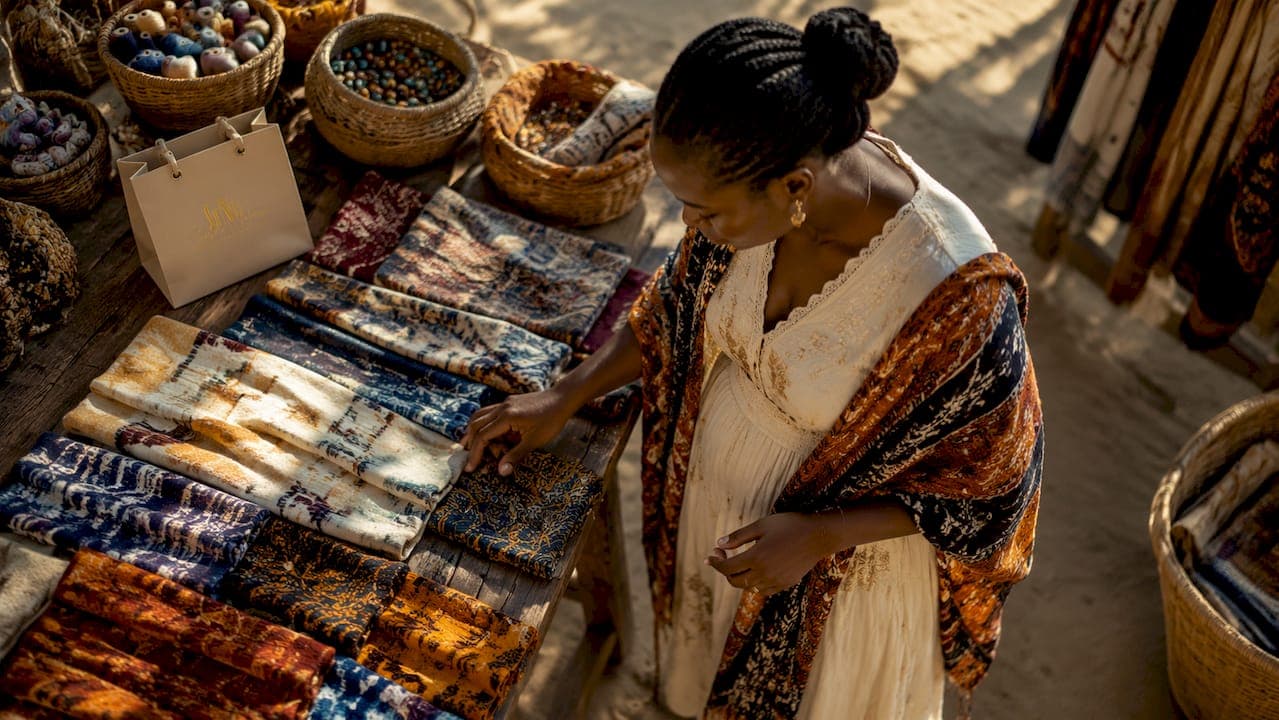
TL;DR:
- Festive African dress serves as a cultural language that conveys identity, status, and heritage through textiles and adornments. It varies across regions, with each tradition using specific fabrics like Kente, Agbada, and beadwork to symbolize social roles and cultural stories. Respectful engagement involves understanding the patterns' meanings, supporting authentic craftsmanship, and avoiding cultural misappropriation.
Festive African dress is defined as a sophisticated system of cultural communication, where textiles, colors, and adornments signal identity, lineage, social rank, and spiritual standing. The term "ceremonial African attire" is the recognized standard in cultural studies, though "festive African dress" captures the celebratory context most readers seek. What defines festive African dress goes far beyond aesthetics. Across 54 countries and thousands of ethnic groups, every garment worn at a celebration carries deliberate meaning. Kente cloth from Ghana, Adire resist-dyed fabric from Nigeria, and Zulu beadwork each function as visual languages, readable by those who know the code.
What defines festive african dress: fabrics, colors, and adornments
The materials and decorative choices in festive African attire are never arbitrary. High-status textiles like Kente and embroidered Agbada robes are reserved specifically for life-cycle rituals such as weddings, naming ceremonies, and harvest festivals. Wearing them at the right occasion signals community membership and cultural knowledge.
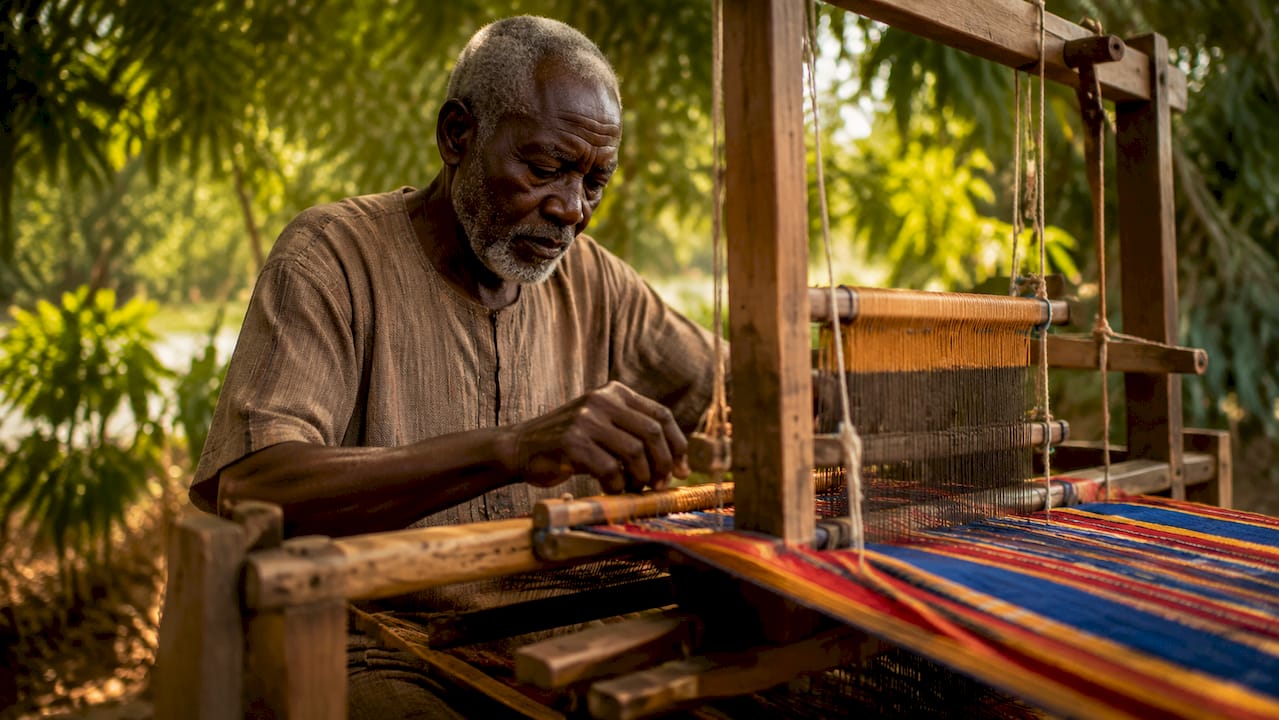
Color carries precise meaning across traditions. In many West African cultures, white signals purity and mourning simultaneously, depending on context. Gold in Kente cloth represents royalty and wealth. Red can signal danger, spiritual power, or sacrifice, depending on the ethnic group and occasion.
Key materials and adornments you will encounter include:
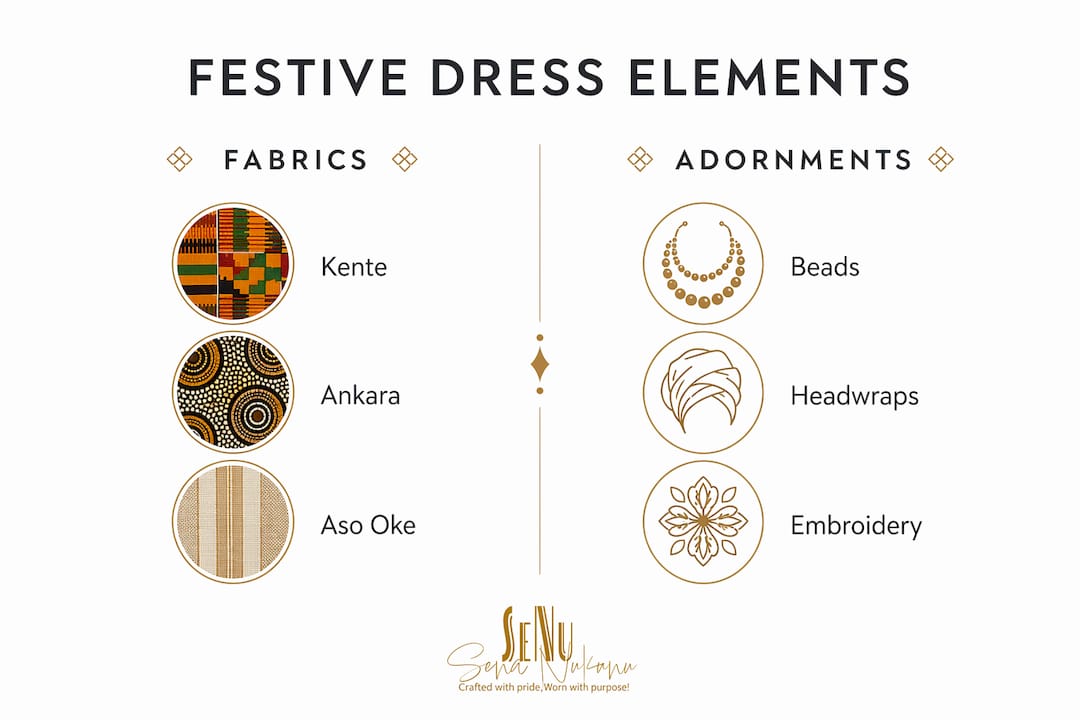
- Kente cloth (Ghana): Handwoven silk and cotton strips assembled into bold geometric patterns. Historically reserved for Asante royalty, each pattern carries a named proverb or historical reference.
- Agbada (West Africa): A flowing embroidered robe worn by men at formal and ceremonial events. The embroidery volume and thread quality communicate social standing.
- Adire (Nigeria): Indigo-dyed Yoruba fabric using resist techniques. Patterns are not decorative alone; they reference proverbs and family histories.
- Beadwork (Zulu, Maasai, and others): Color sequences in beaded jewelry communicate age, marital status, and clan affiliation. A Zulu beaded necklace is not an accessory. It is a coded personal biography.
- Shweshwe (South Africa): A printed cotton fabric with geometric patterns, originally introduced through trade and adopted into Sotho and Xhosa ceremonial dress.
Ankara is a widely accessible machine-printed wax fabric popular across West Africa for everyday and festive occasions alike. Kente, by contrast, remains a more expensive handwoven cloth with specific cultural meanings, historically reserved for royalty. That distinction matters when you are choosing attire for a ceremony.
Pro Tip: When selecting fabric for a celebration, ask the seller or designer about the specific cultural origin of the pattern. A Kente pattern worn at the wrong occasion can communicate the wrong message entirely.
How does festive african dress vary across the continent?
Festive African dress is not a single style but a collection of distinct, regionally rooted traditions shaped by climate, history, and spirituality. No single silhouette or textile represents the whole continent. This is the most common misconception in Western fashion coverage of African dress styles.
Climate shapes garment construction directly. The flowing Grand Boubou of West Africa, made from lightweight cotton or brocade, suits the heat of Senegal and Mali. The Habesha Kemis of Ethiopia, a white cotton dress with intricate woven borders, reflects both the cooler highland climate and the influence of Ethiopian Orthodox Christianity on ceremonial life. The Liputa of the Democratic Republic of Congo uses bold printed fabric wrapped and draped in ways that reflect Central African textile traditions and social customs.
| Region | Garment | Primary Fabric | Cultural Role |
|---|---|---|---|
| West Africa | Grand Boubou | Cotton, brocade | Formal ceremonies, Friday prayers, weddings |
| Ghana (Asante) | Kente cloth | Handwoven silk, cotton | Royal events, graduations, major rites |
| Ethiopia | Habesha Kemis | White cotton with woven borders | Religious celebrations, weddings |
| DR Congo | Liputa | Printed wax cotton | Community celebrations, funerals |
| South Africa | Shweshwe dress | Printed cotton | Sotho and Xhosa weddings, rites of passage |
| East Africa (Maasai) | Shuka with beadwork | Woven wool, glass beads | Coming-of-age ceremonies, community gatherings |
Local weaving and embroidery traditions reinforce regional identity. The Kente weavers of Bonwire in Ghana, the embroiderers of Kano in northern Nigeria, and the bead artists of KwaZulu-Natal in South Africa each carry craft knowledge passed across generations. That knowledge is not just technical. It is historical and spiritual.
Pro Tip: If you are attending a celebration tied to a specific ethnic group, research the textile traditions of that group rather than defaulting to a general "African print." The effort is noticed and respected.
What social functions does festive dress serve at celebrations?
Ceremonial clothing functions as a living museum, preserving heritage and telling communal stories during weddings, funerals, harvest festivals, and rites of passage. The act of dressing for a ceremony is itself a cultural performance, not just preparation for one.
Garments communicate specific personal details that words often do not need to repeat. Age, marital status, and social rank are all visible through specific colors, patterns, and draping styles to those within the cultural context. A widow in certain Ghanaian traditions wears specific cloth to signal her status. A new bride in Yoruba culture wears colors that announce her transition publicly.
The social functions of festive African attire operate on several levels:
- Identity declaration: Garments announce who you are within the community, including your family lineage, age group, and social position.
- Group solidarity through Aso Ebi: This Yoruba tradition of uniform dress at ceremonies signals belonging and loyalty. Aso Ebi has evolved into a measure of affluence, with fabric originality and tailoring quality becoming markers of prestige.
- Spiritual protection and blessing: Many ceremonial garments incorporate colors, patterns, or amulets believed to carry protective or auspicious spiritual meaning.
- Collective memory: Wearing the same textiles as ancestors at the same type of ceremony connects the living to the dead. The garment becomes a thread in a longer story.
- Social competition and aspiration: Aso Ebi groups now compete through fabric quality and tailoring skill, turning collective dress into a platform for individual prestige within the group.
Festive dress is collective rather than individual self-expression. This is the sharpest contrast with Western fashion logic, where personal style is the primary goal. At an African ceremony, your garment speaks for your community first and yourself second.
How to appreciate and interpret festive african dress thoughtfully
African dress textiles function as a non-Western literacy system, where patterned cloths like Kente and Bogolan carry proverbs, historical records, and coded social messages. Reading a garment correctly requires cultural knowledge, not just visual appreciation.
Approaching festive African attire with genuine respect means going beyond admiring the colors. Consider these practices:
- Learn the textile's origin before wearing it. Kente patterns each have names and meanings. Wearing a pattern associated with mourning to a wedding is a real risk for those unfamiliar with the code.
- Understand that incorrect pattern choices can unintentionally convey inappropriate or offensive social or spiritual messages. This is not a minor etiquette issue. It reflects the depth of the literacy system embedded in the cloth.
- Support authentic craftsmanship. Mass-produced prints labeled "African fabric" often strip the cultural meaning from the pattern. Choosing ethically sourced African fashion supports the artisans who carry the knowledge.
- Ask questions directly. Designers and community members who work with these textiles are often generous with context. Curiosity expressed with respect is always welcome.
- Recognize the difference between appreciation and appropriation. Wearing African festive attire at the invitation of a community, or purchasing from brands that work directly with African artisans, is a meaningful form of cultural engagement. Wearing it as a costume without context is not.
Understanding authentic African craftsmanship also means recognizing the labor and skill behind each piece. A handwoven Kente strip takes hours per inch. That time is not just production. It is cultural transmission.
Key takeaways
Festive African dress is a living cultural language, defined by textiles, colors, and adornments that communicate identity, status, and heritage across more than 54 distinct national and ethnic traditions.
| Point | Details |
|---|---|
| Dress as communication | Every textile choice at a ceremony signals identity, rank, and cultural belonging, not personal style alone. |
| Regional diversity is total | No single garment or fabric represents Africa; Kente, Grand Boubou, Habesha Kemis, and Liputa each belong to distinct traditions. |
| Aso Ebi signals solidarity | This Yoruba group dress tradition communicates loyalty and has evolved into a platform for social prestige. |
| Textiles are a literacy system | Patterns like Kente and Bogolan carry proverbs and social codes; choosing the wrong pattern can send the wrong message. |
| Ethical sourcing matters | Authentic festive attire supports artisans and preserves craft knowledge; mass-produced prints often strip cultural meaning from the design. |
Why festive african dress deserves more than admiration
When I first began working with West African textiles, I assumed the visual richness was the point. The colors were extraordinary, the patterns were intricate, and the craftsmanship was unlike anything I had encountered in mainstream fashion. I was wrong about what I was seeing.
The visual richness is the surface. Beneath it is a system of knowledge that took generations to build. Every stitch carries the spirit of a legacy, and that legacy belongs to the communities who created it. What struck me most, after years of working with these traditions, is how much Western fashion culture has trained us to read clothing as personal expression. Festive African dress inverts that entirely. The garment speaks for your lineage, your community, and your moment in a shared history.
The balance between tradition and modern expression is real and ongoing. Contemporary West African designers are not abandoning the codes. They are extending them, finding ways to carry the meaning into new silhouettes and global contexts. That is not dilution. It is the tradition doing what traditions do: surviving by adapting.
My honest encouragement to you is this: do not just wear the cloth. Learn what it says. The conversation it opens is worth far more than the compliment it earns.
— Sena
Discover authentic festive african styles at Senanukunu
If this article has deepened your appreciation for the cultural richness of festive African attire, Senanukunu is where that appreciation becomes something you can wear with pride and purpose.
Senanukunu is a Florida-based platform dedicated to authentic West African fashion, curated with care for cultural integrity and ethical production. Every piece in the vibrant collections is crafted to carry the spirit of West African heritage into your wardrobe, whether you are dressing for a celebration, a statement moment, or everyday confidence. Explore the 2-piece sets designed for festive occasions, or browse the full Senanukunu store to find pieces that honor the traditions behind the cloth.
FAQ
What defines festive african dress?
Festive African dress is defined by its use of culturally specific textiles, colors, and adornments to communicate identity, social rank, and heritage during ceremonies and celebrations. It functions as a visual language rather than purely decorative clothing.
What is the cultural significance of kente cloth?
Kente cloth is a handwoven Ghanaian textile historically reserved for Asante royalty, where each named pattern references a proverb or historical event. Wearing it at the correct occasion signals cultural knowledge and community membership.
What is aso ebi and why does it matter?
Aso Ebi is a Yoruba tradition of wearing uniform fabric at ceremonies to signal group solidarity and loyalty. It has evolved across West Africa into a marker of social prestige, with fabric quality and tailoring skill reflecting the wearer's standing.
How does festive african dress vary by region?
Festive attire across Africa reflects distinct regional histories, climates, and spiritual systems, from the Grand Boubou of West Africa to the Habesha Kemis of Ethiopia and the Liputa of the DR Congo. No single style represents the continent.
How can you avoid misusing african textile patterns?
Learning the named meanings of specific patterns before wearing them is the most direct way to avoid cultural misreading. Selecting incorrect textile patterns for ceremonial occasions can unintentionally convey inappropriate social or spiritual messages.