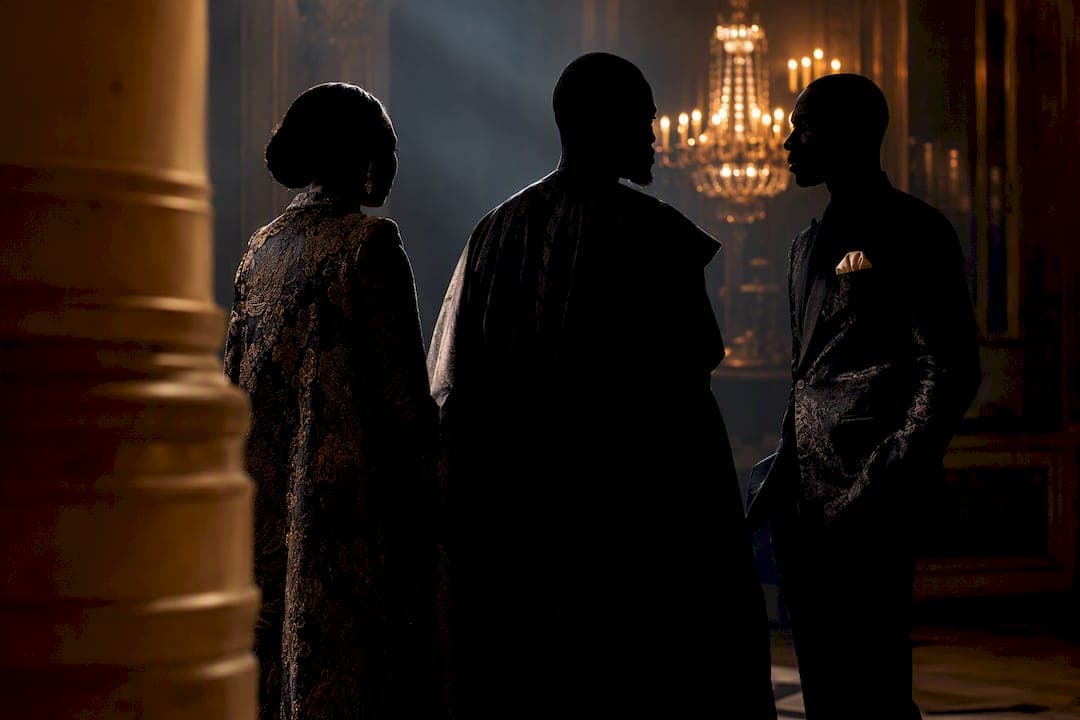
Yes, African-inspired attire can absolutely be black tie. The single rule that decides it: choose evening-weight fabric and refined construction over casual prints or loose, unlined cuts. A sculptural aso-oke gown, a tailored agbada with a luxe brocade finish, or a beaded Ankara mermaid gown all clear the bar the same way a silk tuxedo does.
TL;DR:
- Fabrics should have weight, sheen, and structure, with brocade, silk, and heavy aso-oke reading as formal, while lighter prints signal daytime wear.
- Garments must be lined, with external seams hidden, and follow floor-length or tailored silhouettes to meet black tie formality standards.
- For women, structured corsetry or fitted mermaid cuts with intentional embellishments are suitable, while men’s agbadas should feature dense fabric and structured linings.
- Accessories like metallic jewelry, structured gele styles, and minimal, elegant jewelry balance heritage elements while maintaining formality.
- Bespoke tailoring is recommended for precise fit, especially with corseted gowns and agbadas, while ready-to-wear can work for forgiving shapes with proper alterations.
Table of Contents
- What Does "Black Tie African Attire" Actually Mean?
- Women's Black Tie Looks: From Corsetry to Beaded Gowns
- Men's Formalwear: Agbada, Kaftan Suits, and Tailored Alternatives
- Which Accessories Make an Outfit Black Tie Ready?
- Bespoke or Ready-to-Wear? A Shopping and Tailoring Checklist
- What Colors Read Formal in African Eveningwear?
- Blending Heritage Pieces With Classic Black Tie Accessories
- A Note on Craft and What Formal Dressing Should Feel Like
- How Sena Nukunu Helps You Build a Black Tie Look
- Sources
- FAQ
What Does "Black Tie African Attire" Actually Mean?
Black tie has always been about formality signals, not a fixed dress code checklist. Weight, sheen, structure, and finish tell the eye whether a garment belongs in a ballroom or on a porch. West African heritage fabrics carry those same signals when they're handled with the right construction, which is exactly what recent editorial coverage of the Headies' "Heritage Noir" direction shows: sculptural agbadas, aso-oke corsetry, and beaded gowns walking the same red carpets as classic gowns and tuxedos.
Here's how to read a garment before you commit to it:
- Fabric weight and sheen matter more than pattern. Brocade, silk, and heavy aso-oke read formal; thin cotton or crinkled wax print reads daytime.
- Lining and seam structure separate a gown from a housedress. If you can see the seams from the outside, it's not evening ready.
- Length and silhouette should follow black tie norms: floor length for women's gowns, tailored and closed for men's robes.
- Embellishment should feel intentional. Metallic thread, beading, or embroidery reads formal; loud, busy prints without structure read casual.
Ankara can absolutely go black tie. It just needs a lining, a fitted seam, and a shape that behaves like satin instead of a beach cover-up.
Women's Black Tie Looks: From Corsetry to Beaded Gowns
Three directions cover most tastes, and each one earns its formality differently.
- The regal aso-oke corset gown. Structured boning under woven aso-oke gives the bodice a sculpted, sculptural line, while the skirt can flare into a dramatic silhouette or stay column-straight. This is the loudest, most ceremonial option, and it photographs beautifully under evening light.
- The lined Ankara mermaid gown with beadwork. A fitted mermaid cut demands a lining that holds its shape through movement, plus reinforced stitching anywhere beads or crystals attach. Skipping the reinforcement is the fastest way for embellishment to pull loose in the midevening.
- The neutral silk wrapper with statement jewelry. For readers who want quiet elegance, a solid jewel-tone silk wrapper paired with bold gold cuffs or a beaded neckpiece lets the accessories carry the drama, echoing the layered, artisanal texture work seen in luxury African evening design.
Gele styling should shift for evening, too. A tighter, more sculptural fold reads more formal than the wider, casual daytime gele, and pairing it with fine gold rather than beaded costume pieces keeps the whole look cohesive.
Pro Tip: If your gown carries heavy beadwork, ask your tailor to interline the bodice with a firm cotton or silk organza. It protects the outer fabric and keeps the embellishment from sagging by the end of the night.
For readers weighing this against a wedding guest look rather than a full black tie event, this West African wedding guest guide walks through the calibration.
Men's Formalwear: Agbada, Kaftan Suits, and Tailored Alternatives
A formal agbada earns its place at black tie through fabric density, not size. Dense brocade, hand embroidery, and a structured inner lining are what separate a ceremonial robe from an everyday one, and a well-cut agbada worn over a matching tailored inner suit reads every bit as formal as a tuxedo.
The Senegalese kaftan is the other major route. This ankle-length pullover robe, paired with matching drawstring trousers, is commonly treated in the U.S. diaspora as a formal men's suit equivalent to a tuxedo for some grooms and formal guests. When it's made in a heavier brocade with a fitted, tailored cut rather than a loose casual drape, it holds its own next to any Western black tie standard.
For a middle path, consider these tailored options:
- A classic black tuxedo blazer with an African-fabric lapel or pocket square for a subtler nod to heritage.
- A brocade waistcoat worn under a fitted jacket, letting texture do the talking instead of a full robe.
- Matching kaftan trousers paired with a tailored Nehru-collar jacket for a hybrid black tie silhouette.
Keep accessories minimal: a structured cap in a coordinating fabric, polished leather or velvet loafers, and one signature piece of jewelry, like a carved cufflink or ring, rather than several. Readers exploring a full kaftan wardrobe should look at modern ways to wear a Senegalese boubou for styling that respects tradition without looking costume-like.
Pro Tip: Ask your tailor to interline the agbada's shoulders and chest panel. That structure is what makes the drape hang like a formal robe instead of billowing like a caftan.
Which Accessories Make an Outfit Black Tie Ready?
Accessories decide the last 20 percent of formality, and they're where a lot of otherwise strong outfits lose the room. The instinct to add more beading, more color, more texture needs a counterweight of restraint somewhere else in the look.
- Statement beadwork works when the base is simple. A minimalist black gown or jumpsuit paired with a bold beaded necktie or beaded bangles, a pairing seen in contemporary African evening design, lets the jewelry carry the cultural statement while the silhouette stays formal.
- Fine metals suit already-embellished garments. If the fabric itself carries heavy beading or embroidery, switch to slim gold or silver pieces so the whole look doesn't compete with itself.
- Gele technique should tighten up for evening. A structured, closer fold reads more formal than a wide daytime wrap.
- Shoes and outerwear should match the season and venue. Closed-toe heels or velvet loafers work indoors; bring a tailored wrap or shawl in a coordinating fabric for outdoor cocktail hours.
Editorial coverage of recent black tie events points toward jewel tones, black, ivory, bronze, and gold as the palette doing the most work on red carpets right now, which is worth keeping in mind when you're picking accessory metals to match.
Bespoke or Ready-to-Wear? A Shopping and Tailoring Checklist
Start by deciding how much of the outfit's success depends on precise fit. Fit-heavy silhouettes, corseted gowns, structured agbadas with exact shoulder proportions, and anything with heavy beadwork usually need bespoke work or at minimum a serious tailoring pass on a ready-to-wear piece.
- Choose bespoke when fit is non-negotiable. Corset gowns, proportioned agbadas, and anything relying on precise draping belong with a tailor from the start.
- Choose ready-to-wear when the silhouette is forgiving. A-line gowns, wrapper sets, and looser kaftan cuts can go straight from rack to closet with minor hemming.
- Bring a checklist to your fitting. Ask specifically about lining, structured seams, reinforced hems, secure closures, and extra support anywhere heavy beading attaches.
Marketplace activity for Nigerian and African black tie dresses shows plenty of demand for both custom orders and off-the-rack pieces, so you're not choosing between two rare options. Budget several weeks for bespoke work with fittings built in, and a shorter but flexible timeline for altering ready-made pieces. If you're up against a tight timeline, prioritize the hem and the closures first. Those are the two fixes most likely to make or break how a garment moves on the night.
Pro Tip: If a last-minute alteration is unavoidable, ask your tailor to focus fitting time on the bodice and shoulders first. A loose hem is far less noticeable under evening light than a gaping neckline or a sagging shoulder seam.
For readers building a broader formal wardrobe rather than a single outfit, business casual African wear styling covers the tailoring principles that carry over into more formal territory too.
What Colors Read Formal in African Eveningwear?
Color does as much work as fabric when it comes to reading black tie. Jewel tones, deep emerald, sapphire, burgundy, and amethyst, carry the same evening gravity as classic black, and they photograph richly under low light without looking somber. Black itself remains the anchor color for a reason: it's the color the black tie dress code is built around, and a black base with African embellishment (embroidery, beading, metallic thread) is one of the most reliable ways to guarantee formality while still expressing heritage.
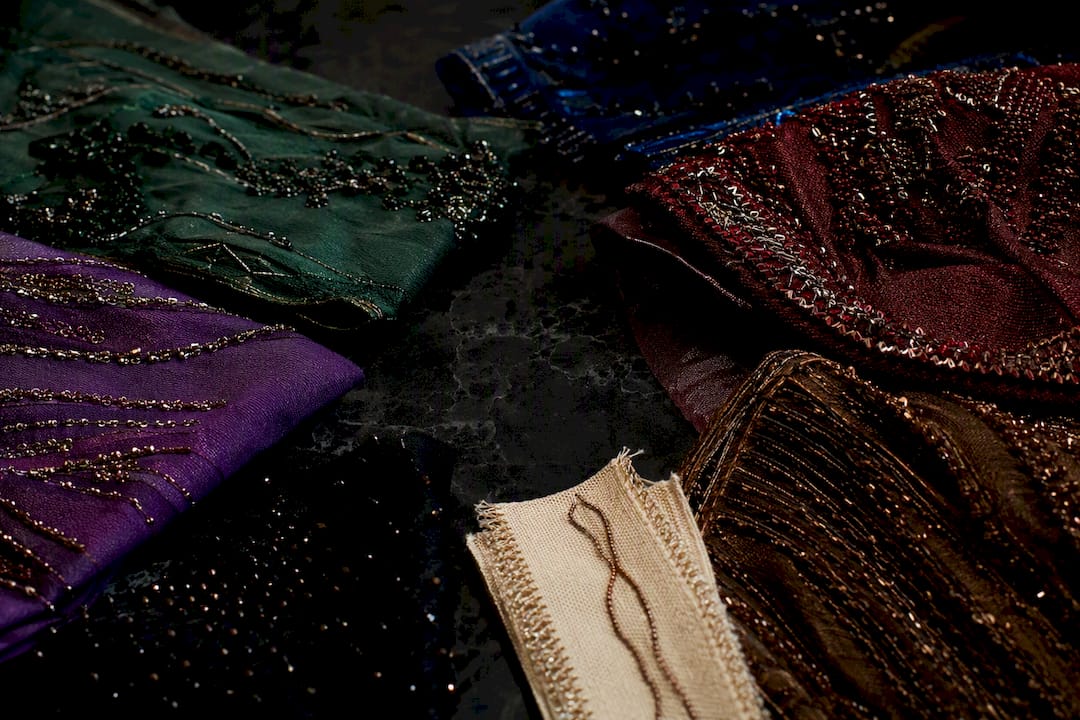
Ivory and bronze work almost as well, especially for daytime-into-evening events like engagement parties, where a slightly softer palette still reads formal without tipping into bridal territory. Gold, whether in fabric thread, jewelry, or trim, functions less as a standalone color and more as a unifier: it ties heritage prints, beadwork, and metal accessories into one cohesive look.
Where readers run into trouble is with bright, high-contrast prints, think saturated orange, Kelly green, or multicolor Ankara patterns, worn without any tonal grounding. These colors are gorgeous for daytime celebrations and engagement parties with a livelier dress code, but they read casual at black tie unless they're used sparingly, as an accent rather than the whole garment. A good test: if the color combination would look at home at a beach wedding, it probably needs to be dialed back or paired with a black or jewel-tone base for an evening event.
Blending Heritage Pieces With Classic Black Tie Accessories
You don't have to choose between cultural expression and dress code compliance. The two work best when one element carries the heritage statement and the rest of the outfit stays disciplined and classic.
For men, this often means pairing a brocade agbada or Senegalese kaftan with a traditional black bow tie instead of skipping neckwear altogether, or wearing a fitted cummerbund in a solid tone underneath an open kaftan jacket, The cummerbund does its usual job, cleaning up the waistline, while the kaftan's embroidery or weave pattern supplies the cultural signature. A structured cap can stand in for a formal hat where the dress code allows for it, but it should coordinate tonally with the rest of the outfit rather than compete with it.
For women, the equivalent move is choosing one heritage element, a gele, a beaded neckpiece, an aso-oke sash, and letting the rest of the outfit stay in classic black tie territory: fitted silhouette, simple jewelry beyond that one statement piece, closed-toe evening shoes. Trying to layer multiple loud cultural elements at once (a bold gele plus heavy beadwork plus a busy print) usually reads as costume rather than considered formalwear.
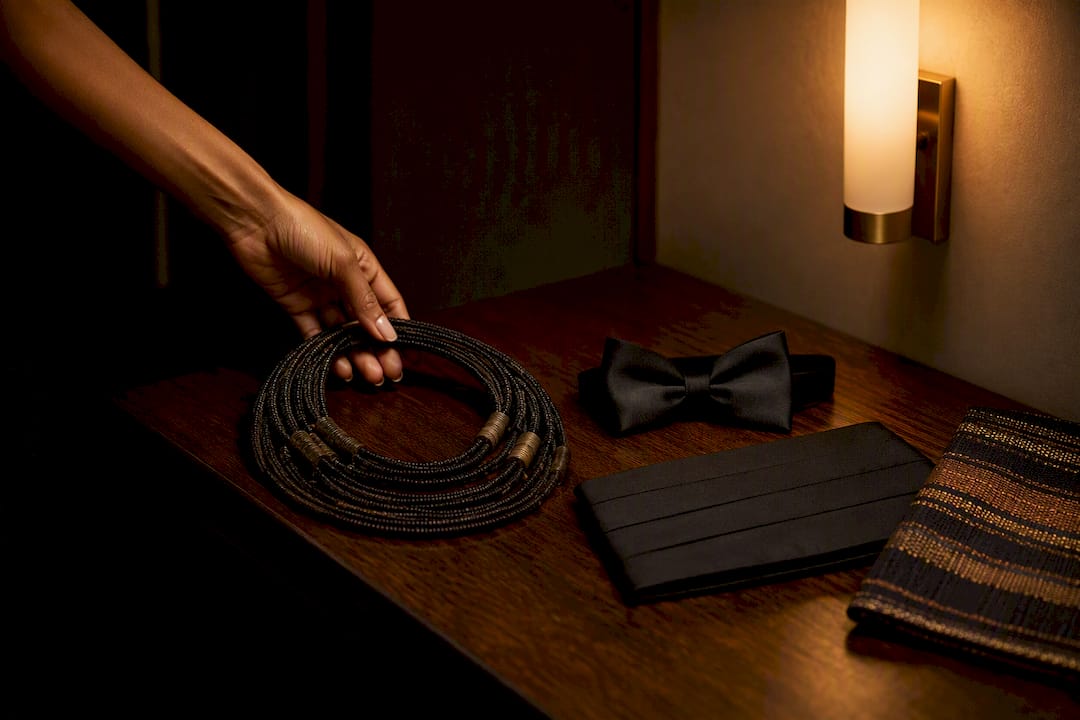
The goal isn't subtraction for its own sake. It's making sure the outfit reads instantly as black tie from across the room, with the heritage detail rewarding anyone who looks closer.
A Note on Craft and What Formal Dressing Should Feel Like
Heritage fabric only reads black tie when the hands behind it actually cared about the details, the lining, the finish, the way a seam sits against the body. That's not a small thing. Limited-quantity, artisan-made pieces carry both a cultural story and the construction quality formal events actually demand, which is rarer than it should be in ready-to-wear.
Dressing for black tie in African-inspired pieces should feel like claiming space, not compromising between two wardrobes. If you're weighing a specific gown or agbada and want a second opinion on fit or fabric, reach out. Styling guidance is part of getting this right.
— Sena
How Sena Nukunu Helps You Build a Black Tie Look
An alternative to generic formalwear racks for African-inspired black tie: pieces made in limited quantities by artisans in ethical production, with brocade, beadwork, and tailoring designed for evening wear from the outset. Men's Agbada Ensembles bring the structured lining and dense fabric this guide keeps pointing to, while Women's Collections cover everything from sculptural gowns to statement sets built around the same formality cues: weight, lining, and finish.
If you're deciding between a ready-to-wear piece and something built around your exact measurements, browse the current collections to see what's ready to ship now, including pieces like the Midnight Prestige kaftan three-piece set for men who want a formal robe without a custom timeline. Each collection ships in limited quantities, so the piece that fits your event might not be there next season.
Sources
- What Will African Black Tie Look Like At The Headies 18 In Toronto?
- African Formal Attire: Styles and Traditions – Kingsgate Lifestyle
- Senegalese kaftan — Wikipedia
FAQ
What Qualifies as Black Tie Attire?
Black tie traditionally means floor-length gowns for women and tuxedos for men, but the underlying requirement is formal fabric, structured tailoring, and polished finish. African-inspired pieces qualify when they meet those same formality cues rather than following the exact Western template.
What Is Considered African Attire?
African attire spans a wide range of traditional and contemporary garments, including agbadas, kaftans, and gowns made from fabrics like Kente, Ankara, and aso-oke. Formality within that range depends heavily on fabric weight, construction, and finish rather than the fabric type alone.
How Should I Dress for an African Party?
Formality depends on the event: an engagement party or daytime celebration allows for brighter Ankara prints and more relaxed gele styles, while an evening black tie event calls for jewel tones, lined silhouettes, and refined accessories. When unsure, lean toward structured, darker pieces over loud casual prints.
Does Black Tie Mean You Have to Wear Black?
No, black tie describes a formality level, not a mandatory color. Jewel tones, ivory, bronze, and gold all read as formal when paired with the right fabric weight and construction, and black remains just one strong option among several rather than a requirement.