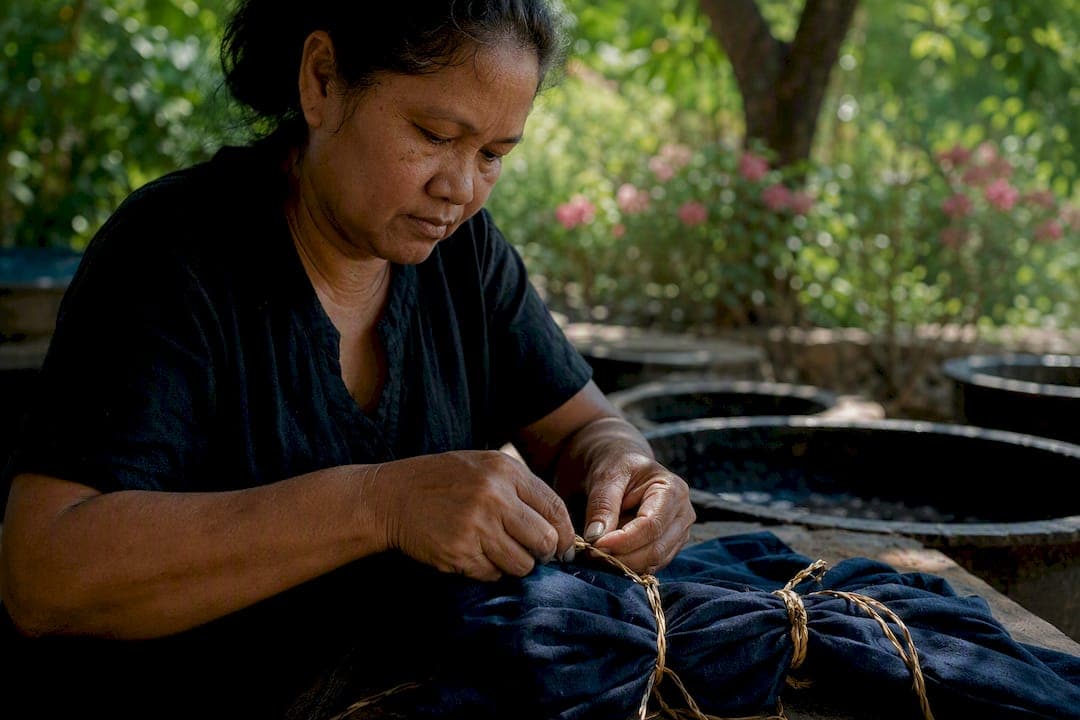
Adire is the Yoruba indigo-resist cloth made using artisan techniques like Oniko, Eleko, Alabere, and Batani, where cotton is tied, stitched, or painted before dyeing to create pattern. If you are buying, look for deep indigo saturation, uneven hand-worked lines, and a named motif. Those three signs separate an authentic piece from a factory imitation wearing the same name.
TL;DR:
- Authentic Adire features deep indigo saturation with subtle irregularities in tie, stitch, or paste patterns, indicating handcraft over machine production.
- Recognizable techniques include tying raffia for Oniko, starch paste for Eleko, stitching for Alabere, and wax or stenciling for Batani, often combining multiple dips in fermented indigo.
- Patterns like Ibadandun, Olokun, and Owo carry specific cultural meanings, and identifying these motifs confirms the piece’s authenticity and origin.
- Look for uneven dye absorption, irregular resist marks, and natural color variations to differentiate genuine hand-dyed Adire from multicolor printed imitations or Kampala textiles.
- Proper care involves cold washing, avoiding bleach, line drying in shade, and gentle ironing to preserve indigo color and textured resist details over time.
Table of Contents
- The History and Cultural Roots of Adire Cloth
- Core Adire Techniques: How to Recognize Oniko, Eleko, Alabere, and Batani
- Adire Patterns and Their Meanings
- Authentic Adire vs. Kampala: Spotting the Difference
- How to Buy Authentic Adire Fabric or Adire-Inspired Garments
- Caring for Indigo and Resist-Dyed Adire Fabric
- Why Ethical Sourcing Shapes How We Curate Adire-Inspired Pieces
- Shop Sena Nukunu's Adire-Inspired Collection
- Sources
The History and Cultural Roots of Adire Cloth
Adire traces its name to two Yoruba words meaning "to tie" and "to dye," a fitting origin for a craft built entirely around resist and immersion. The technique took shape in and around Abeokuta) and Ibadan during the 19th and 20th centuries, growing alongside imported shirting cloth that gave artisans a new, widely available canvas. Before then, dyers worked mostly with hand-spun local cotton.
Production followed a gendered division of labor that shaped the craft for generations. The alaro managed the indigo dye pits, fermentation, and sale of finished cloth, while the aladire handled the resist decoration itself, tying raffia, painting paste, or stitching thread into the fabric before it ever touched a dye vat. This structure, documented in the craft's own history, meant Adire was largely a women's economy, one where skill and reputation passed from mother to daughter inside specific compounds and towns.
Motifs did more than decorate. They recorded events, honored rulers, and marked social occasions. One design was reportedly created to mark the 1935 silver jubilee, a reminder that these cloths worked as a kind of textile newspaper. Today, Adire is having a visible second life, appearing on international runways and in diaspora fashion as designers reconnect with the technique's roots rather than treating it as a passing print trend.
Core Adire Techniques: How to Recognize Oniko, Eleko, Alabere, and Batani
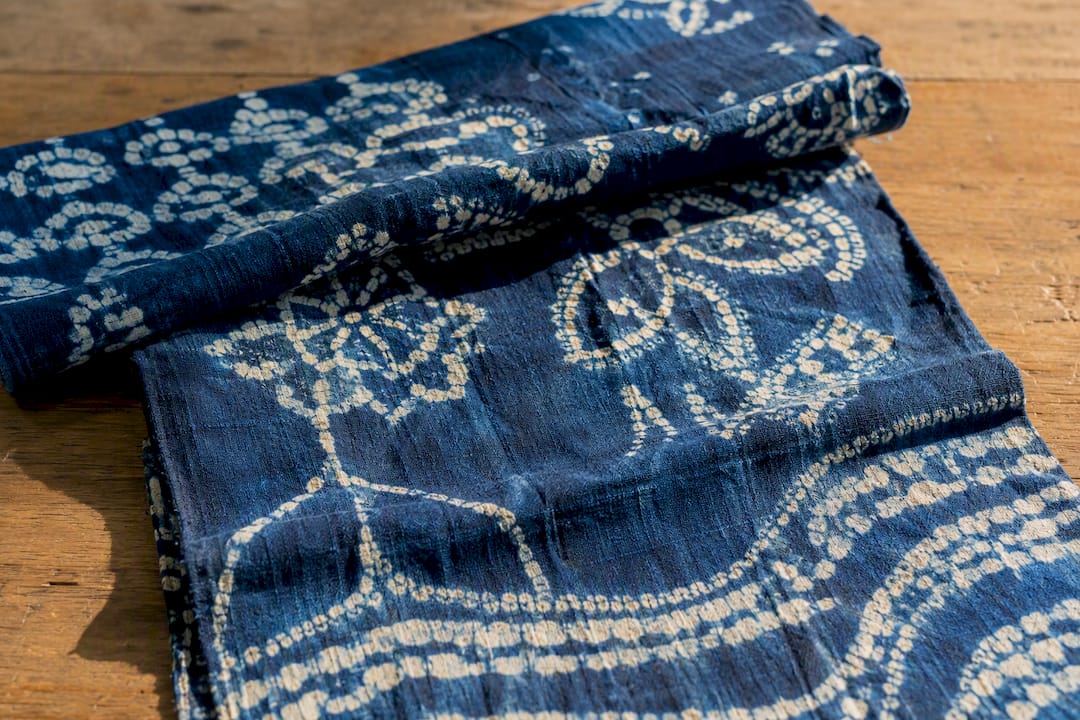
Learning to spot these four methods turns you from a casual shopper into someone who can actually evaluate a piece before buying it.
- Oniko relies on tying raffia, string, or small objects like seeds and stones into the cloth before dyeing. Look for small, slightly irregular circular resist marks, often clustered into rows or rosettes; the imperfection is part of the charm, since no two ties compress the cloth identically.
- Eleko uses a cassava starch paste, painted or stenciled directly onto the fabric to block dye from penetrating. This produces sharper, more deliberate motifs than tying alone, and you can sometimes spot dried paste residue or a faint outline on the reverse side of an unwashed piece.
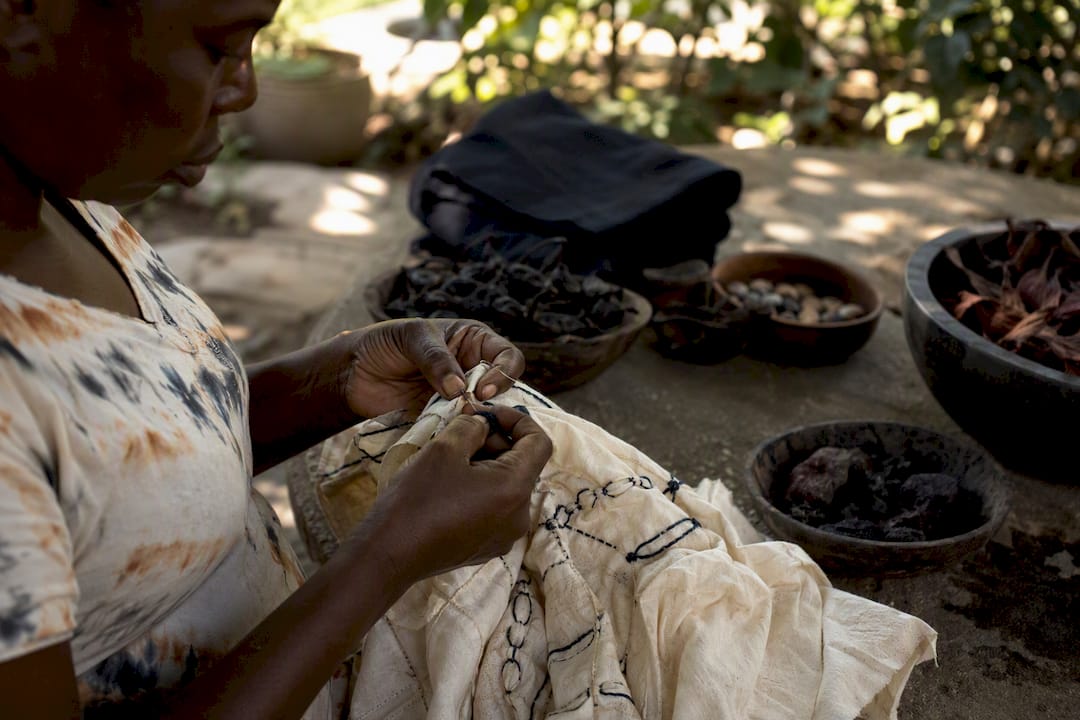
- Alabere involves stitching raffia or thread through folded or pleated cloth before dyeing. Once the stitches come out, they leave fine, linear patterns with visible needle marks along the resist lines, a texture that reads almost like embroidery in negative.
- Batani, sometimes described alongside metal-stencil or batik-influenced work, uses wax or stencils to block dye, occasionally opening the door to multicolor results.
Across all four methods, authentic indigo-resist cloth usually goes through many repeat dips in a fermented indigo bath, sometimes over 25 cycles, with oxidation time between each dip to build color depth. A final mallet-beating step compresses the fibers and gives the cloth its characteristic soft sheen, a finishing touch that machine printing cannot replicate.
Adire Patterns and Their Meanings
Reading Adire patterns is a little like reading a family crest. Certain motifs carry specific associations passed down through generations of artisan households, and recognizing them helps you understand what you are actually looking at.
- Ibadandun, roughly translated as "Ibadan is sweet," celebrates the city and often shows up in celebratory contexts.
- Olokun references the deity associated with the sea and wealth, appearing in motifs tied to prosperity and abundance.
- Owo relates to money or trade, a pattern choice that signals aspiration or commercial success.
These fall into broader categories: geometric grids and repeats, figural designs depicting people or animals, celestiomorphic patterns referencing sun, moon, and stars, and even lettered motifs incorporating names or phrases, a naming tradition documented in Adire's textile history. Because specific patterns were historically associated with particular artisan families or towns, motif knowledge becomes a genuine authentication tool. A seller who can name the pattern and explain its origin is a far more credible source than one offering a generic "tribal print" label. For a deeper breakdown of how West African motifs carry meaning across garments, it helps to study contemporary motif design more broadly.
Authentic Adire vs. Kampala: Spotting the Difference
The word "Adire" gets stretched to cover a lot of ground it was never meant to cover, and the biggest source of confusion is a variant called kampala. This is a modern, multicolor wax-resist textile that is often sold under the Adire label despite differing sharply from the original indigo tradition in both process and labor. Kampala uses wax-resist shortcuts and, frequently, automated or semi-automated printing that can produce a bolt of cloth in a fraction of the time hand-tied or hand-stitched Adire requires.
- Check the color base. Traditional Adire lives in the indigo family, deep blues built from repeat dipping. Kampala often arrives in bright, uniform multicolor patterns that a single indigo vat could never produce.
- Look for irregularity. Hand-tied or hand-painted resist leaves small inconsistencies, slightly wandering lines, uneven dot spacing. Machine printing produces patterns that repeat with mechanical precision.
- Ask about the process. A seller who cannot describe which technique, Oniko, Eleko, Alabere, or Batani, was used is likely selling a printed imitation.
- Consider the price. Cloth priced far below what hand-labor and repeat-dip dyeing would cost is a signal worth taking seriously.
Pro Tip: Rub a slightly damp cloth gently against the surface of a piece you suspect is factory-printed. Genuine dye penetrates the fiber; surface-printed color sometimes transfers faintly onto the test cloth.
The stakes go beyond aesthetics. Choosing genuine indigo-resist Adire supports the artisans whose labor-intensive tradition is increasingly squeezed out by faster, cheaper alternatives marketed under the same name.
How to Buy Authentic Adire Fabric or Adire-Inspired Garments
Before you buy, ask the seller a few direct questions: Where was this made? What resist technique was used? Can you name the motif? Is there a photo of the artisan or workshop? Sellers who answer specifically, rather than vaguely, are usually the ones worth trusting.
When you're evaluating listing photos, zoom in on the resist areas themselves. Genuine raffia-tie marks, stitch lines from Alabere work, or the faint texture left by cassava paste all show up under close inspection, while a flat, evenly repeating print pattern is a giveaway of machine work. Saturation matters too. Hand-dipped indigo tends to show subtle depth variation across the cloth rather than one flat, uniform blue.
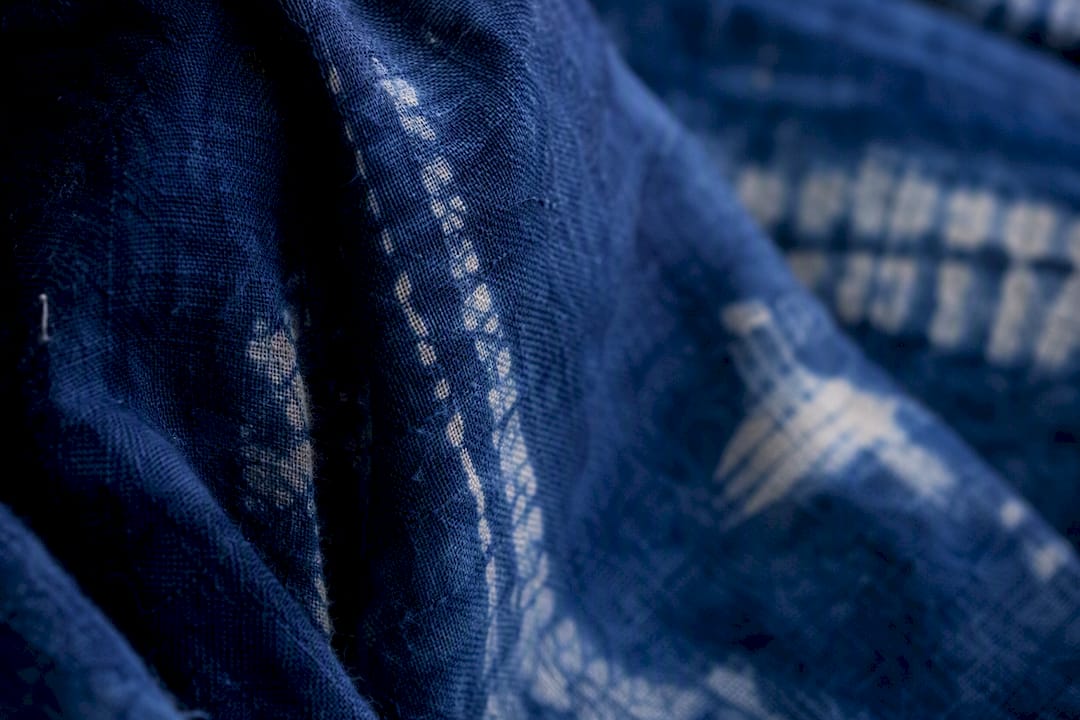
Museum shops, artisan collectives, and ethically minded boutiques remain the most reliable channels, since they typically maintain direct relationships with dyers and decorators rather than sourcing from anonymous bulk suppliers. Expect a real price gap between categories: hand-dyed, hand-resisted Adire commands a premium that reflects the dozens of dye cycles and hours of stitching or tying behind it, while printed kampala-style cloth sits at a noticeably lower price point. That gap is not markup; it's labor. For a longer checklist on spotting hand craftsmanship across West African fashion more broadly, see this guide to authentic craftsmanship.
Caring for Indigo and Resist-Dyed Adire Fabric
Indigo-dyed cloth rewards gentle handling, and a few habits will keep the color and handwork intact for years.
- Wash in cold water with a mild soap, and test colorfastness on a small hidden area before the first full wash.
- Skip bleach entirely; it strips indigo faster than almost anything else you could do to the cloth.
- Line dry in the shade rather than direct sun, which fades indigo over time.
- Iron inside out on a low setting, and handle areas with raffia remnants or visible stitching carefully to avoid snagging.
- Store folded in breathable fabric rather than plastic, away from prolonged light exposure.
These steps mirror standard preservation guidance for hand-dyed indigo textiles, and they apply whether you own a vintage piece or something new. For a more detailed routine covering multiple African textile types, this fabric care guide is worth bookmarking.
Why Ethical Sourcing Shapes How We Curate Adire-Inspired Pieces
Sena Nukunu was built on a simple belief: fashion rooted in West African heritage deserves to be made with the same care and respect the original artisans brought to it. When we curate pieces inspired by traditions like Adire, we look closely at who made the cloth, how it was dyed, and whether the people behind it were paid fairly for skills passed down over generations.
That means verifying production sources rather than accepting a vague "handmade" label at face value, and choosing limited runs over mass output so no single collection strips resources from the artisans who create the underlying technique. Wearing Adire-inspired pieces, in our view, should come from genuine appreciation, learning the history, naming the technique, crediting the makers, not from stripping a symbol of its context. Respect starts with knowing what you're actually wearing.
— Sena
Shop Sena Nukunu's Adire-Inspired Collection
If you love what indigo-resist Adire represents but want ready-to-wear pieces designed for everyday confidence, Senanukunu offers a route that respects the craft without requiring you to hunt down individual artisan sellers yourself. Our collection includes dresses, palazzo sets, and statement pieces that draw on Adire-style motifs and West African design language, produced in limited quantities through ethical manufacturing rather than mass factory runs.
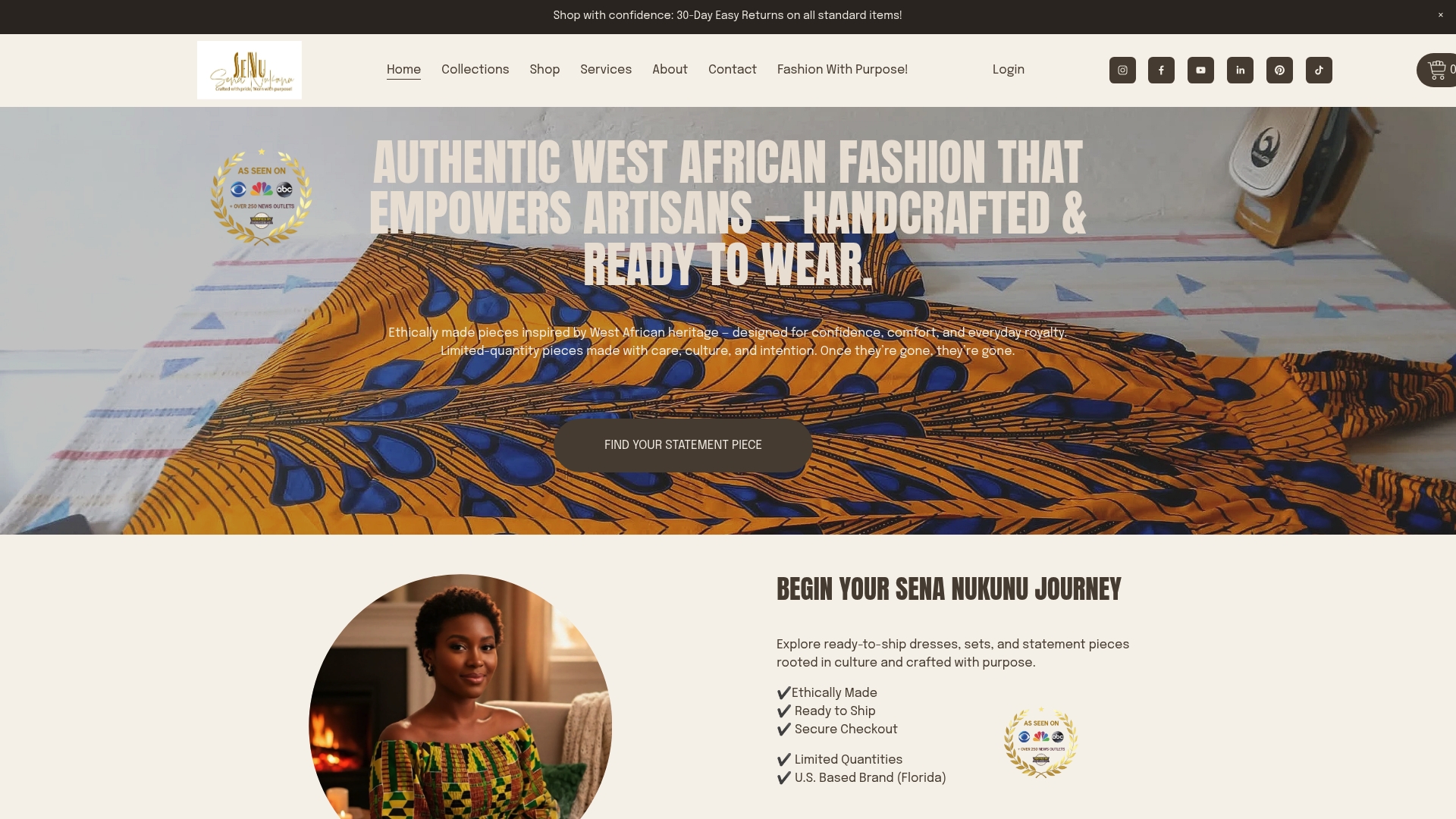
Every piece is built around the same principle guiding this entire guide: craftsmanship and cultural storytelling matter more than speed. When you choose a limited-run garment from Senanukunu, you're supporting a production model that values the artisans and traditions behind the design rather than a supply chain optimized purely for volume. Explore the current collection and find a piece that carries this heritage into your everyday wardrobe. For more on collecting with intention, this guide to preserving cultural fashion pairs well with your first purchase.
Sources
- Àdìrẹ – 'tied and dyed' indigo textiles · V&A
- Encyclopedia
- What Is Adire Fabric? (Indigo Dyed Textile) - MyNativeFashion