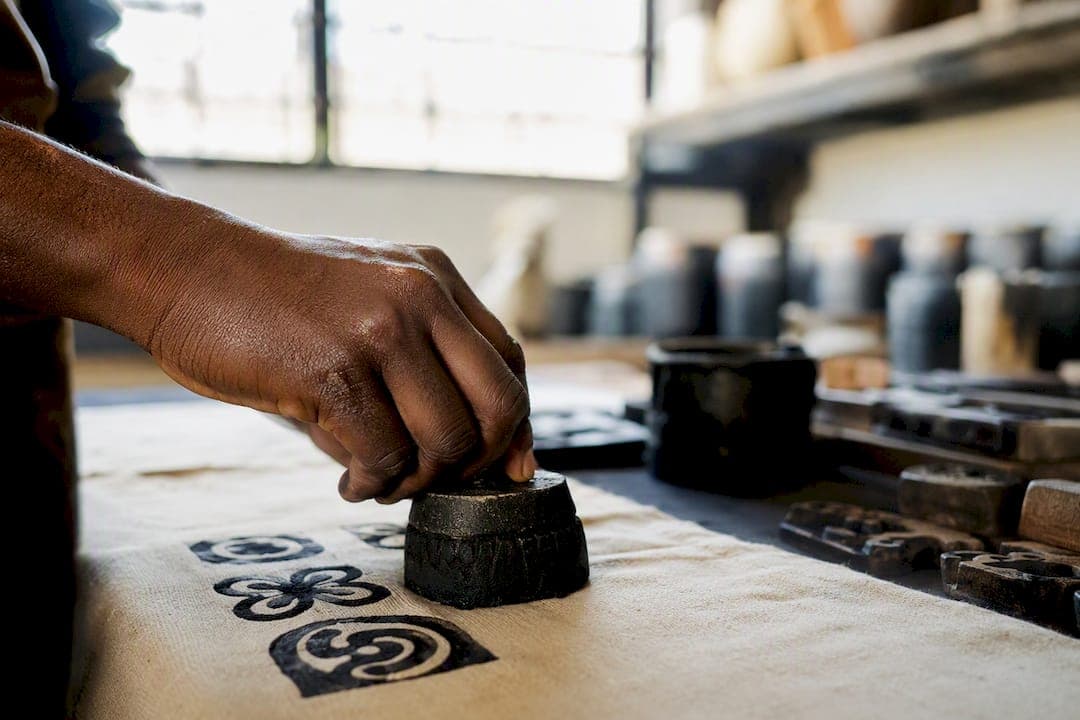
Adinkra symbols are visual emblems created by the Akan people of Ghana and Côte d'Ivoire, each one representing a proverb, a concept, or a piece of moral wisdom passed down through generations. Their story reaches back to the 1700s or earlier, rooted in the Gyaman kingdom, and they remain one of West Africa's most recognizable visual languages. If you've landed here searching for what these symbols mean, here's the short version before we go deeper:
- Gye Nyame: the supremacy of God
- Sankofa: reach back and learn from the past
- Dwennimmen: strength paired with humility
- Adinkrahene: leadership and greatness
- Nyansapo: wisdom, wit, and the intelligence to know when a knot is tied well enough
Scholars estimate the full catalog runs to roughly 129 documented symbols, each carrying its own proverb and social context. What follows walks through where they came from, how they're made, what the most searched symbols actually mean, and how to read them the way the Akan intended.
Key Takeaways
Adinkra symbols work because each shape is inseparable from its proverb, and reading them well means understanding combination, color, and occasion together, not memorizing definitions in isolation.
| Point | Details |
|---|---|
| Origin and timeframe | Adinkra traces to the Gyaman kingdom and dates to the 1700s or earlier. |
| Core symbols to know | Gye Nyame, Sankofa, Dwennimmen, Adinkrahene, and Nyansapo cover the most searched meanings. |
| Production matters | Traditional cloth uses carved stamps and badie dye, distinct from woven Kente. |
| Color signals occasion | Dark cloths mark mourning; white or bright cloths mark celebration, per museum documentation. |
| Read combinations, not shapes alone | Symbol pairings on a garment build a fuller statement than any single motif. |
Table of Contents
- The History Behind Adinkra Symbols
- Adinkra Cloth: Color Rules and How It's Made
- Popular Adinkra Symbols and What They Mean
- Reading an Adinkra Garment Like a Sentence
- Adinkra Symbols in Fashion, Design, and the Diaspora Today
- Why Sena Nukunu's Take on Adinkra Carries Weight
- Wear the Meaning, Not Just the Motif
- Editorial Take: What Most Guides Get Wrong About Adinkra
- Frequently Asked Questions About Adinkra Symbols
- Sources
The History Behind Adinkra Symbols
Oral tradition credits the name Adinkra to Nana Kwadwo Agyemang Adinkra, a Gyaman king whose cloth designs were said to carry messages meant to endure beyond his defeat by the Ashanti in the early 1800s. The word itself carries funerary weight in Akan languages, which explains why the earliest documented wrappers were tied so closely to mourning and remembrance rather than everyday wear.
Anthropologist R.S. Rattray's early 20th century fieldwork gave the outside world its first serious documentation of the symbols, recording how they functioned less as decoration and more as a coded social register. A chief's cloth signaled rank. A mourner's cloth signaled grief. A bride's cloth signaled hope for the future. The scholar Kwame Anthony Appiah has written about Adinkra as a system for transmitting complex social knowledge, arguing the symbols work as mnemonic devices that tie a simple visual form to an entire proverb.
That mnemonic function is why museum holdings matter so much to understanding Adinkra today:
- The Metropolitan Museum of Art holds prestige cloths that show how multiple motifs were arranged to signal rank
- The Art Institute of Chicago preserves wrapper garments demonstrating combined-symbol status statements
Together, these collections give researchers physical evidence of a tradition that was, for centuries, passed down more through practice than written record.
Adinkra Cloth: Color Rules and How It's Made
Traditional Adinkra cloth starts with a stamp, not a loom, which is the biggest thing that separates it from Kente. Artisans carve designs into pieces of calabash or gourd, dip the carved face into badie, a thick black dye made from tree bark, and press each motif by hand onto plain cotton in a grid pattern. That grid is deliberate. It turns a blank cloth into a sequence of small statements, one stamp at a time.
Color follows firm conventions, and museum records back this up in detail:
Dark cloths (black, deep brown, red, or purple) mark mourning and funerals White or brightly colored cloths mark naming ceremonies, weddings, and festivals 3. Combinations of both often appear on cloths meant to honor an ancestor while also celebrating their life
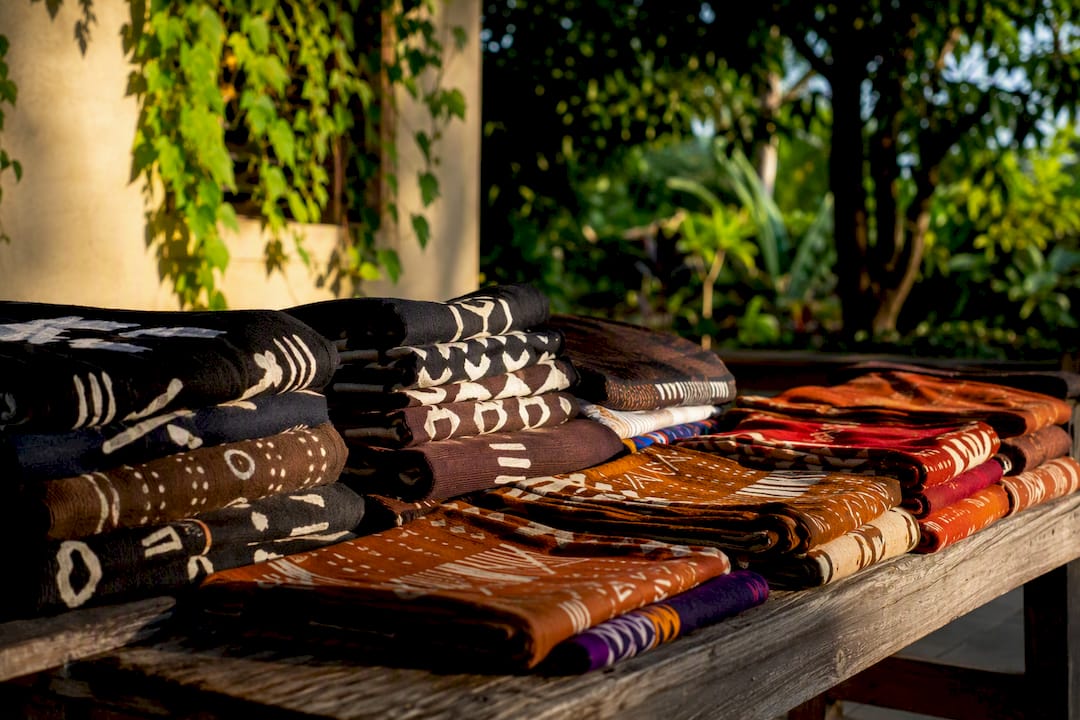
The Saint Louis Art Museum's collection notes confirm this dark-versus-bright division held across generations of production, and it still shapes how families choose garments for funerals today. Where Kente draws its patterns through interlocking woven threads on a loom, Adinkra relies on stamping and dyeing, a technique that limits how large or repeatable a single motif can be, which is part of why placement and combination matter so much on a finished garment. Modern factory printed versions replicate the look with screen printing, but they skip the hand carved stamp entirely, which strips out the slower process that once tied the maker's labor to the meaning of the cloth.
Pro Tip: If you're shopping for an Adinkra-inspired piece, ask whether the pattern was hand stamped or machine printed. The answer tells you a lot about how closely the item follows the original craft.
Popular Adinkra Symbols and What They Mean
Reference guides catalog close to 129 distinct Adinkra symbols, but a small handful account for most of what people search for. Here's a grounded look at the ones you'll encounter most often.
- Gye Nyame ("except for God") represents the supremacy of God over all things. It's arguably the most reproduced Adinkra symbol in existence, appearing on everything from architecture to jewelry.
- Sankofa ("go back and get it") shows up in two common forms: a bird twisting its neck to reach an egg on its back, and a heart-shaped spiral. Both point to the same idea, that moving forward requires understanding where you came from. It's become the single most resonant symbol across the African diaspora, adopted widely as a marker of heritage and reclamation.
- Dwennimmen ("ram's horns") shows two rams locked in horn to horn combat, representing strength held in check by humility and wisdom.
- Adinkrahene ("chief of the Adinkra symbols") is a set of concentric circles symbolizing leadership, greatness, and charisma. Some scholars consider it the root design from which other symbols evolved.
- Nyansapo ("wisdom knot") depicts an intricate knot representing wisdom, ingenuity, and the intelligence needed to draw on multiple sources of knowledge at once.
- Akoben ("war horn") is a curved horn symbol calling people to vigilance and readiness, historically used to summon warriors.
- Akofena ("sword of war") shows crossed swords representing courage and valor, often linked to the authority of leadership.
- Duafe ("wooden comb") symbolizes feminine qualities such as patience, care, and beauty.
- Nsoromma ("child of the heavens") represents dependence on a higher power, drawn from the belief that stars depend on the sky.
A common misinterpretation worth flagging: Gye Nyame is frequently paired visually with Adinkrahene and treated as interchangeable, but the two carry distinct meanings, supremacy versus leadership, even when they appear side by side on the same cloth.
Reading an Adinkra Garment Like a Sentence
A wrapper full of symbols isn't random decoration. It's closer to a written passage, where each stamp functions as a word and the arrangement across the grid builds toward a larger statement about the wearer.
- Read left to right, top to bottom, the way the stamps were originally applied
- Note which symbols repeat, since repetition often emphasizes a central theme of the garment
- Connect each symbol to its proverb, because the proverb, not the shape alone, carries the full meaning
- Consider the occasion the cloth was worn for, since the same symbol can read differently at a funeral versus a naming ceremony
A cloth combining Dwennimmen with Nyansapo, for instance, tells a different story than Dwennimmen paired with Akofena, one leans toward humble strength, the other toward strength backed by valor. Reading combinations respectfully means checking the proverb before assuming meaning, and never treating an unfamiliar symbol as purely decorative.
Pro Tip: Before using or gifting anything with Adinkra motifs, look up the specific proverb tied to each symbol. The shape alone is only half the message.
Adinkra Symbols in Fashion, Design, and the Diaspora Today
Adinkra motifs now show up on apparel, jewelry, corporate logos, and even public monuments, with Sankofa carrying particular weight across the diaspora as a symbol of reclaimed heritage. Museums and civic institutions have leaned into this responsibly, using Adinkra in public art to teach history rather than to decorate without context.
Designers who work seriously with these symbols tend to follow a few shared principles:
- Learn the proverb behind a symbol before using it, not just the shape
- Credit the Akan origin explicitly rather than presenting the motif as generic "African print"
- Collaborate with or source from artisans who carry the tradition forward
Practitioners in the space have warned that treating Adinkra as pure decoration erases the proverb based meaning that gives each symbol its weight. That warning matters most for anyone designing at scale.
Symbols like Sankofa carry centuries of meaning compressed into a single image. Stripped of the proverb, they become pattern. Kept intact, they become a way of speaking without words.
Why Sena Nukunu's Take on Adinkra Carries Weight
Senanukunu builds its collections around West African craftsmanship and cultural storytelling, which means respecting the difference between a motif borrowed for style and one used with its full meaning intact. Two resources worth your time if you want to go deeper:
- Color symbolism in African patterns: a cultural guide breaks down how color carries meaning across West African textiles, not just Adinkra
- Types of contemporary West African motifs: a design guide covers how designers today adapt traditional symbols responsibly
When shopping for Adinkra-inspired pieces, prioritize artisans and ethically sourced production, the same standard Senanukunu holds itself to. Partner insights on what genuine craftsmanship requires echo the same point: care in production is what keeps a tradition alive rather than flattened into pattern.
Wear the Meaning, Not Just the Motif
Senanukunu creates ready-to-wear and custom West African fashion built on the same respect for craftsmanship that has carried Adinkra symbolism for centuries. Every piece in our collections draws on West African heritage with intention, made in limited quantities alongside artisans who understand what these traditions carry.
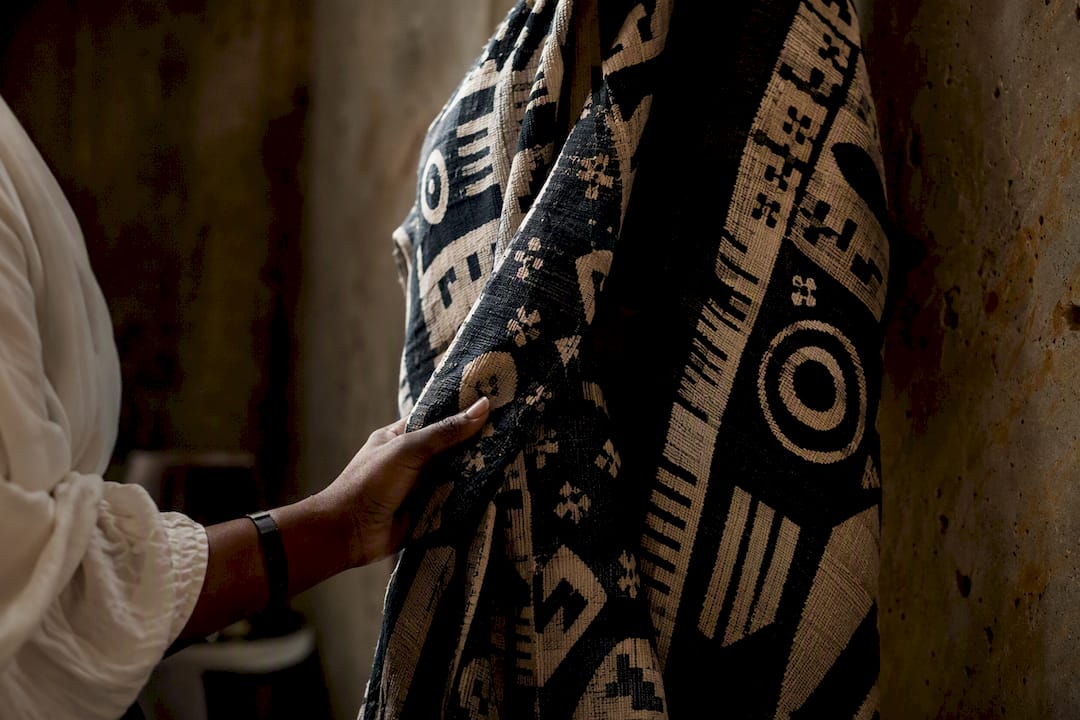
If you're looking for a statement piece that honors this legacy rather than flattens it, browse our dresses or explore the full range at Senanukunu. Each garment is designed to let you wear cultural pride with the same care that went into the original cloth traditions this guide has walked through.
Editorial Take: What Most Guides Get Wrong About Adinkra
Most articles on Adinkra symbols stop at "here's what the shape means," treating each one like a dictionary entry. That misses the point entirely. The Akan didn't design these symbols to be read in isolation. They designed them to be combined, stamped in sequence across a grid, so the real skill isn't memorizing Gye Nyame's definition. It's learning to read combinations the way you'd read a sentence, where placement and pairing change the message.
The conventional advice to "learn the meaning before you wear it" is right but incomplete. Learn the proverb, yes, but also learn the occasion it was traditionally tied to. A symbol appropriate for a funeral wrapper doesn't carry the same weight at a wedding, and that distinction gets lost in most quick reference lists.
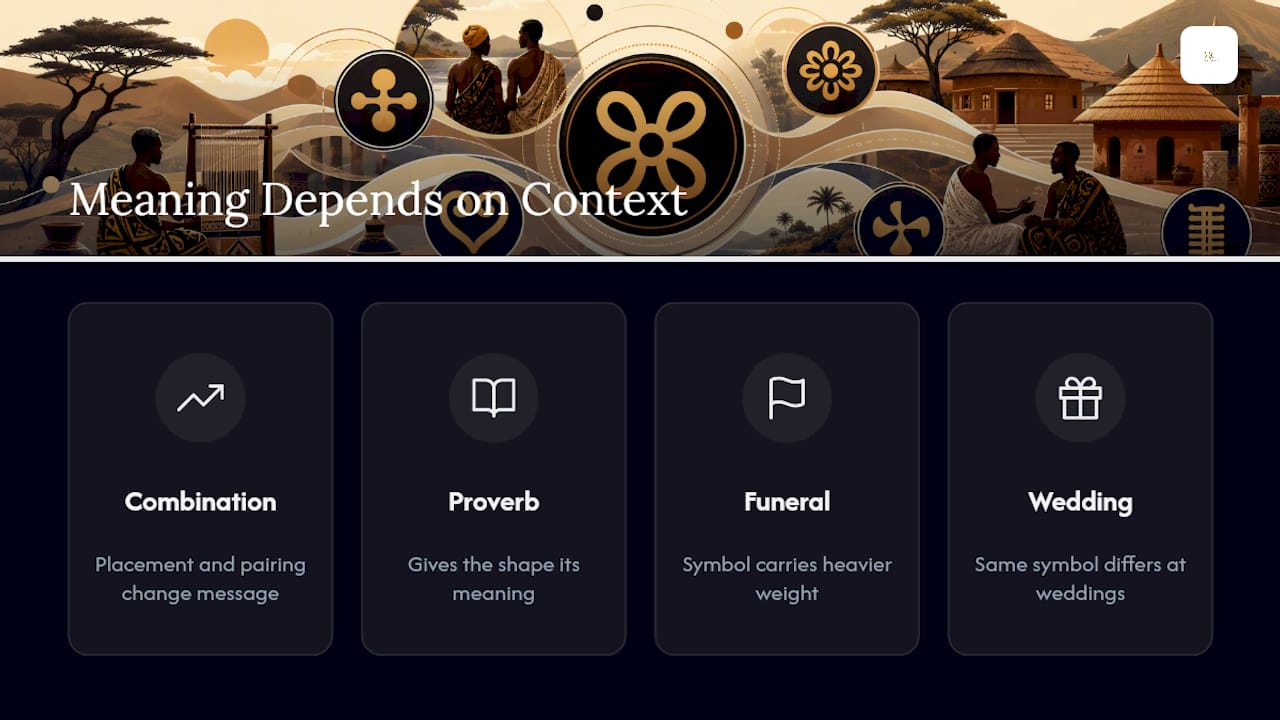
If you take one thing from this guide, prioritize context over catalog. A shape without its proverb is just a shape. A shape without its occasion is missing half its story too.
Frequently Asked Questions About Adinkra Symbols
What do Adinkra symbols mean? Each Adinkra symbol represents a proverb, concept, or piece of moral wisdom from Akan culture. Gye Nyame means the supremacy of God, Sankofa means learning from the past, and Dwennimmen represents strength balanced with humility.
How many Adinkra symbols are there? Reference catalogs document roughly 129 distinct symbols, though a smaller set of around a dozen accounts for most everyday and decorative use.
What is the most popular Adinkra symbol? Gye Nyame is widely considered the most reproduced Adinkra symbol, while Sankofa carries the strongest resonance across the African diaspora as a heritage marker.
How is Adinkra cloth different from Kente cloth? Adinkra is stamped using carved calabash stamps and black dye, while Kente is woven on a loom using interlocking threads. The two require entirely different production skills.
Can anyone wear Adinkra symbols? Yes, but designers and cultural practitioners advise learning the proverb and origin behind a symbol first, and crediting its Akan roots rather than treating it as generic pattern.
Sources
For deeper research or primary images, these collections offer scholarly context beyond a quick definition:
- Adinkra Symbols & Meanings: Guide to 129 African Symbols (PDF)
- Adinkra wrapper - Art Institute of Chicago