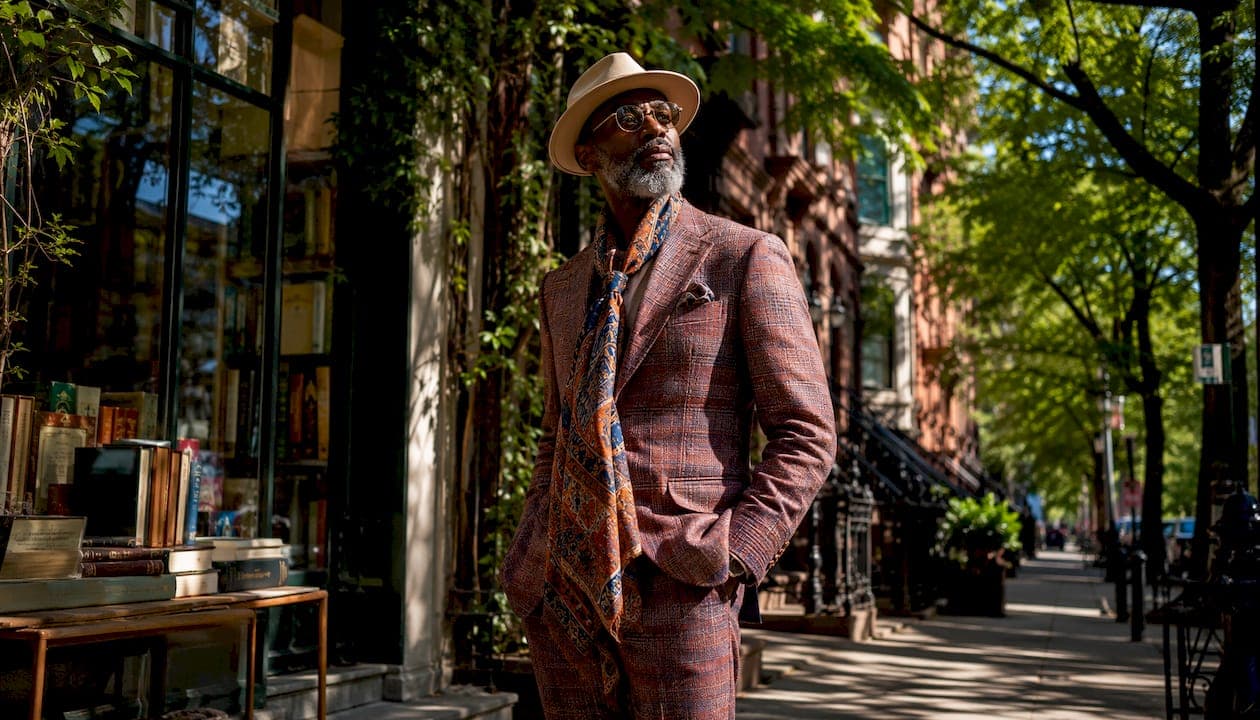
Black joy expressed through dress is a deliberate aesthetic and political language. It reframes Black identity away from trauma and toward celebration, creativity, and personal sovereignty. This is not a reactive posture. As scholar and writer Tanisha Ford puts it in Aperture, "fashion has never been trivial for people of African descent. It is an act of personal expression. A pleasure practice. A ritual. A political language. A tool of resistance."
What does that look like in practice? A few defining characteristics:
- Joy as resistance: Choosing pleasure and abundance over narratives of struggle is itself a political act.
- Creativity as sovereignty: Dress becomes a space where Black individuals author their own identity, free from imposed visual codes.
- Community as fabric: Style choices in Black culture are rarely solitary. They carry collective memory, shared pride, and communal celebration.
- Embodied expression: Joy radiates through movement, stance, and gaze, not just the garments themselves.
- Cultural storytelling: Every silhouette, color, and textile can carry the weight of heritage and the lightness of delight at once.
How dress becomes political resistance in Black culture
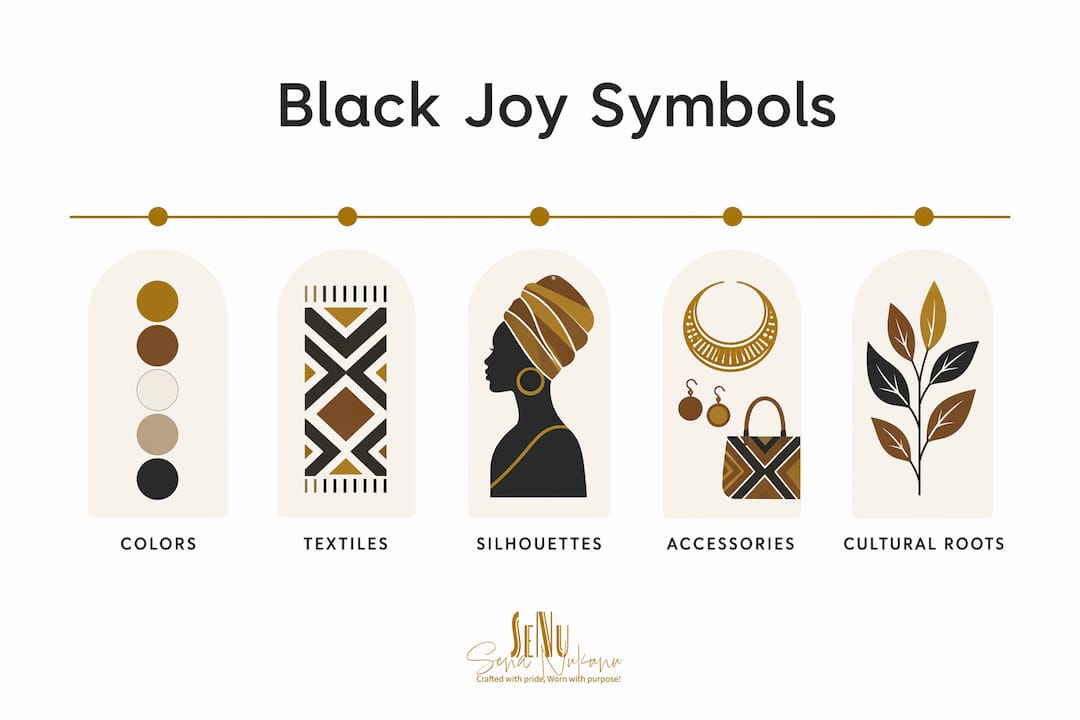
Black dandyism is one of the clearest examples of how dress functions as protest. Jonathan Michael Square, assistant professor of Black visual culture at Parsons Design School, defines it plainly: "Black dandyism is the strategic and often subversive use of style by people of African descent to assert individuality, challenge stereotypes, and reimagine Black identity. It's not just about aesthetics; it's a profoundly political act."
The Zoot suit is perhaps the most vivid historical proof. During World War II, when fabric rationing was law, Zoot suiters wore exaggerated proportions as a direct refusal of that constraint. Taking up space, physically and visually, was the point. The Los Angeles City Council debated banning the style after the Zoot Suit Riots, which only confirmed how threatening joyful Black self-presentation could be to existing power structures.
Fashion designer Dapper Dan captured this intentionality well: "No one gets dressed by accident. Getting dressed is always intentional. Everything one wears makes a statement."
Pro Tip: When you study Black fashion history, look past the garment itself. Ask what the wearer was refusing, claiming, or declaring with that specific silhouette, fabric, or color in that specific moment.
Why Black joy in fashion is also a healing and celebratory practice
Joy in Black dress is somatic. It lives in the body, not just the wardrobe. Photographer Adreinne Waheed, whose book Black Joy and Resistance documents this across the diaspora, describes it this way: "Resistance manifests itself in different ways, and so does joy. Both can be expressed through dress, through movement, your stance, your body language, your eyes, your gaze." Her images show people radiating joy from the inside out, not through a single outfit, but through the full presence of their bodies.
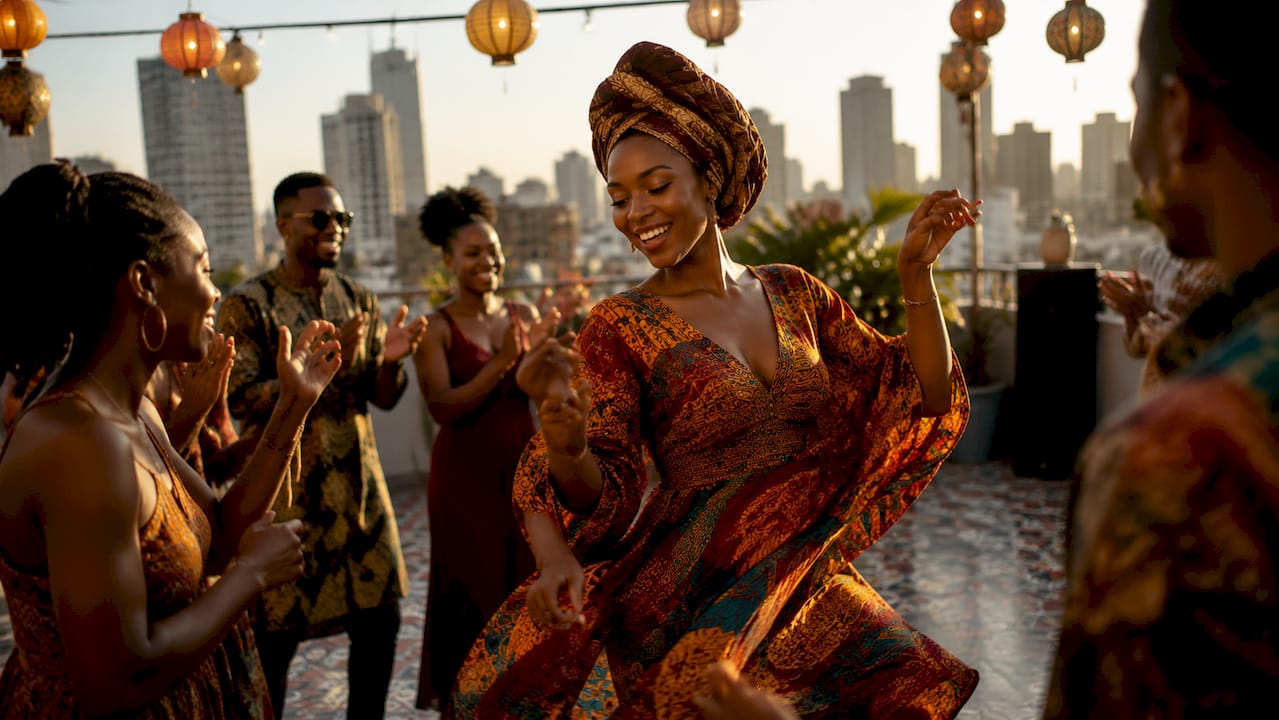
This healing dimension has deep theoretical roots. Audre Lorde described joy and pleasure as "energy for change," and that framing runs through Black fashion as revolution. Fabrics that allow physical freedom, silhouettes that invite movement, colors that feel alive on the skin: these are conscious choices that push back against the restrictive garments historically worn to survive non-Black spaces.
Designer Telfar Clemens embodies this communal healing in his campaigns. Rather than static editorial poses, his imagery shows friends dancing and laughing together, making the clothes feel collectively lived rather than individually owned. The result reshapes what aspiration looks like in fashion.
Key ways Black joy manifests as healing through dress:
- Choosing movement-friendly fabrics as a conscious act of physical liberation
- Wearing natural hair, head wraps, and cowrie shells as affirmations of African heritage
- Using bold color and pattern as emotional declaration rather than decoration
- Dressing for community gatherings as a ritual of collective affirmation
- Treating personal style as an archive of abundance, not just survival
The cultural and ritual significance of dress in Black communities
Dress in Black communities carries ceremonial weight that goes far beyond fashion trends. Church, family reunions, festivals, and rites of passage all involve deliberate costuming that communicates identity, belonging, and spiritual connection. The "Sunday best" tradition in Black American churches, for instance, is not vanity. It is a declaration of dignity that has roots in resisting the dehumanization of enslavement.
| Setting | Role of dress | Cultural significance |
|---|---|---|
| Church | Formal, expressive attire | Dignity, spiritual reverence, community pride |
| Family gatherings | Coordinated or celebratory dress | Kinship, generational continuity |
| Festivals and carnivals | Costume and performance wear | Cultural storytelling, communal joy |
| Rites of passage | Ceremonial garments | Identity, heritage, transition |
| Protest and activism | Symbolic clothing and accessories | Political solidarity, visual resistance |
Satirical dress also plays a role. La Sape, the Congolese movement of sapeurs who wear flamboyant European tailoring in working-class neighborhoods, transforms everyday streets into stages of joy. The performance is deliberate: style as cultural resilience, spectacle as sovereignty.
- Afrofuturism uses dress to imagine Black futures free from colonial constraints, blending ancestral aesthetics with speculative design.
- Pan-Africanism expresses solidarity through shared symbols: kente cloth, dashikis, and Pan-African colors of red, black, and green.
- Black hair as adornment carries its own political and celebratory language, from Afros to locs to elaborate braided crowns.
- Accessories as archive: cowrie shells, ankh pendants, and beaded jewelry connect wearers to African spiritual and cultural traditions.
- Carnival and festival dress across the diaspora, from Trinidad to New Orleans, uses costume as communal storytelling and collective euphoria.
How West African fashion embodies Black joy, through Senanukunu
West African fashion carries Black joy in its very construction. The cultural storytelling in West African dress is woven into every choice: the weight of hand-loomed kente, the geometry of Ankara print, the drape of hand-dyed fabric that moves with the body rather than against it. Senanukunu was built on exactly this understanding. The brand's limited, ethically made pieces are designed to carry cultural pride and artisan legacy forward, not as nostalgia, but as living expression.
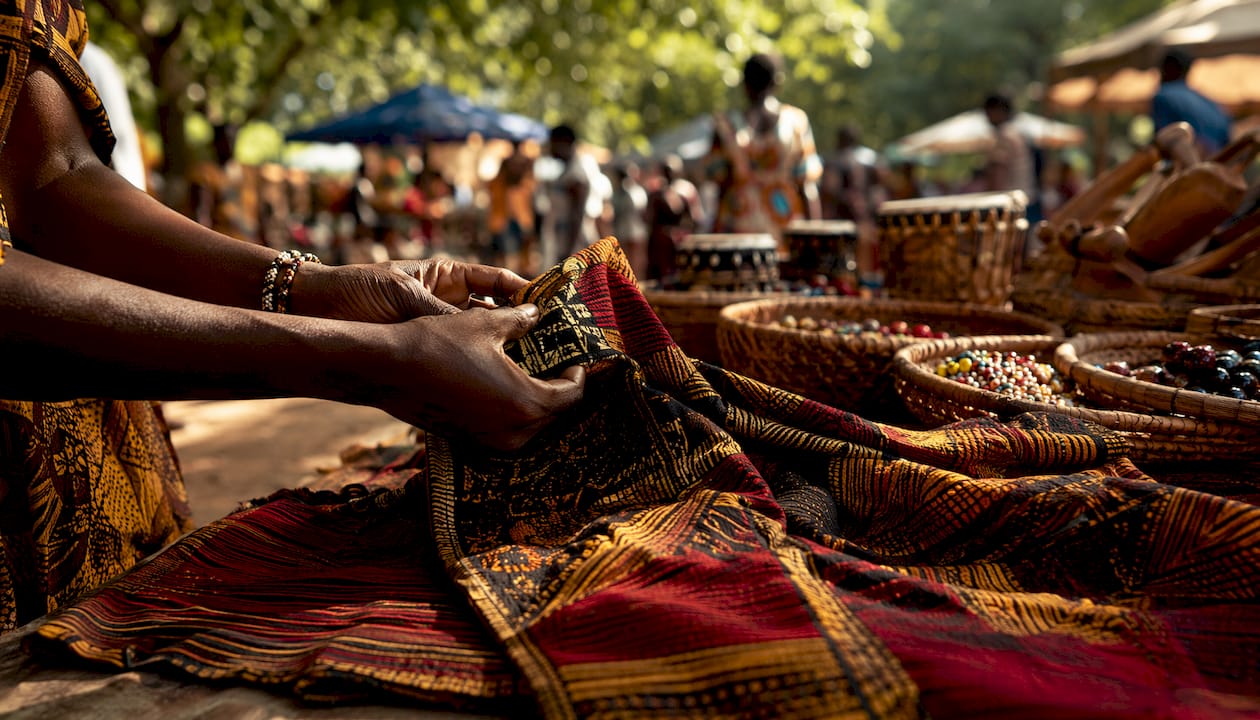
What makes West African dress a vehicle for joy is its insistence on intentionality. Nothing is accidental. The tradition fueling modern empowerment in West African fashion connects the wearer to something larger than a single outfit: a lineage of makers, a geography of meaning, a community of pride.
Styling principles that carry this joy forward:
- Choose fabrics that move: Kente, Ankara, and hand-dyed textiles invite the body to participate in the garment, not just wear it.
- Honor the silhouette: Wrap dresses, matching sets, and statement pieces rooted in West African tailoring celebrate the body's full range of motion.
- Layer meaning with accessories: A beaded necklace or woven bag is not an afterthought. It completes the cultural conversation the outfit begins.
- Wear with intention: Know the story behind what you put on. That knowledge transforms a garment into a declaration.
Pro Tip: When styling West African pieces for celebration, let the fabric lead. If the print is bold, keep accessories grounded in natural materials like wood or brass. The textile already carries the story.
How Black joy through dress evolved historically
The history of Black joy in dress stretches back to the earliest moments of the African diaspora. Enslaved Africans, stripped of their names and languages, used clothing as a process of remembrance and a mode of distinction, finding ways to assert identity even within brutal constraint. As scholar Monica Miller documents, some were "deliberately dressed in silks and turbans" and found ways to inhabit those garments on their own terms.
The Harlem Renaissance of the 1920s and 1930s marked a watershed. Black Americans dressed boldly and visibly, with women in furs and beaded dresses and men in tailored fabrics and pristine fedoras. This was living and dressing as declaration. The Civil Rights era of the 1960s and 1970s brought Afros, dashikis, and cowrie shells as uniforms of pride and solidarity. Hip-hop fashion in the 1990s and 2000s extended this lineage with its own visual vocabulary: hoodies, Jordans, box braids in rainbow colors. Each generation has added its own chapter to the same ongoing story of Black aesthetics and identity expressed through dress.
What symbols, colors, and styles carry Black joy in fashion
Certain visual elements recur across Black fashion's joyful expressions, each carrying layered meaning.
Colors: Red, black, and green, the Pan-African colors, signal solidarity and pride. Gold evokes African royalty and abundance. Earth tones connect the wearer to the continent. Bright, saturated hues, particularly in West African Ankara and kente, communicate vitality and celebration.
Textiles: Kente cloth from Ghana, originally woven for royalty, carries prestige and cultural continuity. Ankara prints, with their bold geometric patterns, are worn across West Africa and the diaspora as everyday declarations of heritage. Hand-dyed fabrics like adire and batik carry the mark of the maker's hands.
Silhouettes: Wrap styles that honor the body's natural form, voluminous skirts that invite movement, and tailored pieces that command space all communicate different registers of joy. The African diaspora's style trends consistently return to silhouettes that celebrate rather than constrain.
Accessories: Natural hair worn freely, head wraps, cowrie shells, beaded jewelry, and woven bags all function as cultural punctuation. They complete an outfit's meaning and connect the wearer to ancestral traditions.
Designers and cultural figures who embody Black joy through dress
Jonathan Michael Square brings scholarly authority to the conversation. His work at Parsons Design School frames Black dandyism as political resistance, giving cultural vocabulary to what wearers have always known intuitively.
Telfar Clemens has built a brand where community is the product. His campaigns, filled with dancing and laughter rather than posed stillness, insist that Black joy is the aspiration, not just the backdrop.
Thebe Magugu, the South African designer, grounds joy in place and history. His collections draw from South African narratives, making celebration specific and rooted rather than generic.
Kerby Jean-Raymond of Pyer Moss has used the runway to document Black American history, embedding celebration and grief together in collections that refuse to separate joy from its full context.
Dapper Dan transformed Harlem into a global fashion stage in the 1980s, remixing luxury logos for a community that luxury brands had long ignored. His work is a masterclass in meaningful over trendy fashion, where every garment carries a statement.
Adreinne Waheed documents Black joy through photography, capturing the full dimensionality of Black life in celebration. Her lens insists that joy deserves the same archival seriousness as struggle.
These figures, across design, scholarship, and image-making, share one conviction: that Black fashion icons who center joy are not making a soft choice. They are making the most radical one available.
Key Takeaways
Black joy expressed through dress is a political, healing, and communal practice that reframes Black identity as one of celebration, creativity, and sovereignty rather than trauma alone.
| Point | Details |
|---|---|
| Joy as political act | Black dandyism and dress choices like the Zoot suit have historically challenged racial hierarchy through style. |
| Embodied, not just visual | Joy radiates through movement, stance, and gaze, not clothing alone, as Adreinne Waheed's photography shows. |
| Healing through fabric | Choosing movement-friendly silhouettes and liberating textiles is a conscious act of somatic freedom. |
| West African roots | Kente, Ankara, and hand-dyed fabrics carry cultural pride, artisan legacy, and communal storytelling. |
| Curatorial decision | Foregrounding joy in fashion archives is a refusal to let Black identity be defined only by struggle. |
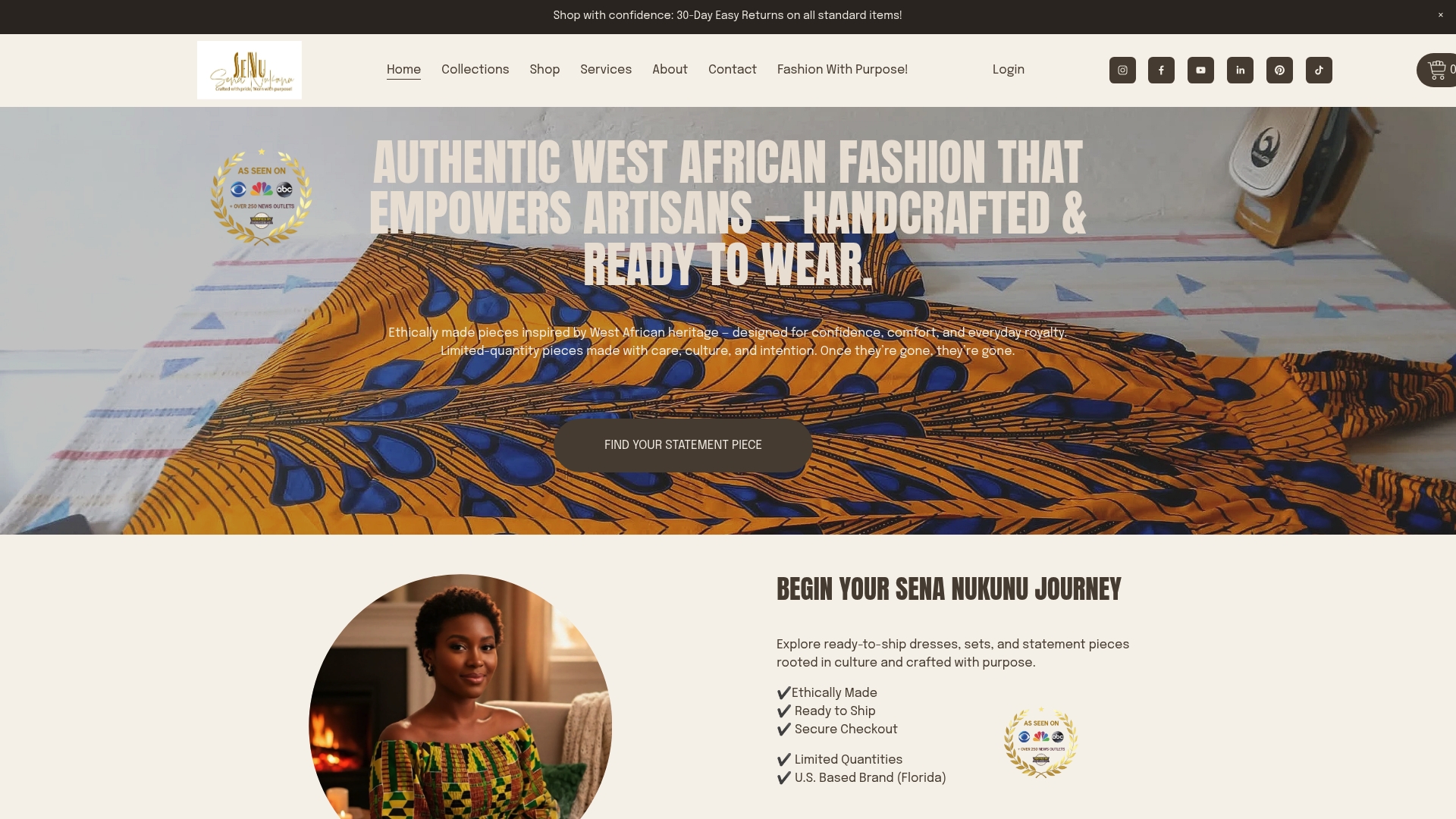
Senanukunu was created for exactly this conversation. Every piece in the collection carries the spirit of West African artisanship and the intention of cultural pride, designed to move with you, celebrate with you, and tell a story worth wearing. Explore vibrant styles that honor the full richness of Black joy through dress.