
TL;DR:
- Fashion activism uses clothing choices to promote social, political, and environmental change.
- Supporting indigenous textiles and ethical brands helps preserve culture and empower communities.
- Be vigilant of greenwashing and performative activism by demanding transparency and accountability.
Every garment you choose is a quiet decision, and sometimes it's a loud one. Fashion has always been more than fabric stitched together; it carries memory, identity, and the power to challenge entire systems. Yet for many women, the phrase fashion activism still feels abstract, reserved for runway protests or celebrity statements. In reality, it lives in the everyday choices you make: the brand you trust, the textile you choose to celebrate, the artisan whose craft you choose to honor. This guide breaks down what fashion activism truly means, how it works in real life, and how you can turn your wardrobe into a meaningful tool for change.
Table of Contents
- Defining fashion activism: What it is and why it matters
- How fashion activism works: Methods, campaigns, and impact
- West African heritage and fashion activism: Cultural resistance and empowerment
- Potential pitfalls: Greenwashing, performative activism, and cultural appropriation
- What most people miss about fashion activism
- Explore ethical style and vibrant statement pieces
- Frequently asked questions
Key Takeaways
| Point | Details |
|---|---|
| More than a trend | Fashion activism uses personal style to drive social and cultural change through ethical choices. |
| Power of heritage | Supporting and wearing West African textiles empowers communities and resists fast fashion waste. |
| Beware of greenwashing | Be vigilant about brands' activist claims and favor real transparency over statements. |
| Action starts with you | Small steps—like informed buying or supporting artisans—have a big impact on the industry. |
Defining fashion activism: What it is and why it matters
With a clear sense of fashion's unique influence, let's break down the core meaning and relevance of fashion activism.
At its heart, fashion activism uses fashion for social, political, environmental, and economic change. That definition is broad for a reason. It captures everything from a community of weavers preserving an indigenous textile tradition to a consumer boycotting a fast fashion giant. It is not a niche movement for the fashion industry's inner circle. It belongs to anyone who gets dressed in the morning.
"Fashion is one of the most powerful communication tools we have. What we wear sends a message before we say a single word."
This is why fashion activism matters so deeply. Clothing sits at the intersection of personal expression and public statement. When you choose a piece rooted in ethical production and cultural storytelling, you are pushing back against a system that profits from disposability and erasure. That push ripples outward, influencing brands, policies, and communities.
Here is who participates in fashion activism and how:
- Designers who champion ethical supply chains and center marginalized communities in their creative process
- Consumers who research brands, support artisans, and make deliberate purchasing decisions
- Communities who preserve and celebrate indigenous textile traditions as acts of cultural resistance
- Advocates and organizations who lobby for fair labor laws, environmental standards, and industry transparency
One common misconception is that fashion activism only happens on high-profile runways or through celebrity campaigns. In truth, fashion sector change examples show that systemic shifts often begin with consumers demanding accountability at every price point. Learning the sustainable fashion principles that guide ethical production is a powerful first step toward participating in that change yourself.
Fashion activism is personal, communal, and political all at once. That is precisely what makes it such a vibrant and resilient force.
How fashion activism works: Methods, campaigns, and impact
Now that you understand what fashion activism is, let's explore how it's practiced and what real impact it delivers.
Core methodologies include symbolic protest wear, boycotts, upcycling, social campaigns, and shareholder activism. Each approach reaches a different audience and applies pressure at a different point in the system.
Here is a breakdown of the most widely used methods:
- Symbolic protest wear: Garments, colors, or slogans chosen specifically to communicate a political or social message in public spaces
- Ethical shopping: Directing spending toward brands with verified fair labor practices, transparent supply chains, and sustainable materials
- Upcycling and slow fashion: Extending the life of existing garments to reduce waste and resist the overconsumption culture
- Social media campaigns: Amplifying causes, sharing information about harmful industry practices, and building communities of conscious consumers
- Shareholder activism: Investors and stakeholders pressuring fashion companies from within to adopt ethical standards
| Campaign | Key tactic | Outcome |
|---|---|---|
| Fashion Revolution | #WhoMadeMyClothes social campaign | Millions of consumers demanding supply chain transparency |
| Extinction Rebellion | Protest wear and runway disruptions | Global media coverage of fashion's environmental toll |
| PETA campaigns | Boycotts and visual activism | Several major brands dropping fur and exotic skins |
| Slow fashion movement | Consumer education and upcycling | Shift toward quality over quantity in purchasing habits |
The Rana Plaza disaster in 2013 remains one of the most galvanizing moments in fashion activism history, killing over 1,100 garment workers and sparking the global Fashion Revolution movement. It showed what happens when consumer demand for cheap clothing overrides basic human rights.
When you choose bold statement pieces rooted in artisan craft, you are adding your voice to this ongoing movement in a deeply personal way. You can also explore ethical fashion benchmarks to evaluate whether brands meet genuine standards.
Pro Tip: When assessing whether a brand's activism is real, look for specific commitments: named factories, audited labor practices, and environmental certifications. Vague language like "eco-conscious" or "sustainable-inspired" without data is a warning sign.
West African heritage and fashion activism: Cultural resistance and empowerment
To ground these methods in lived experience, let's look at a powerful example: the West African movement for vibrant, ethical, and heritage-centered fashion.
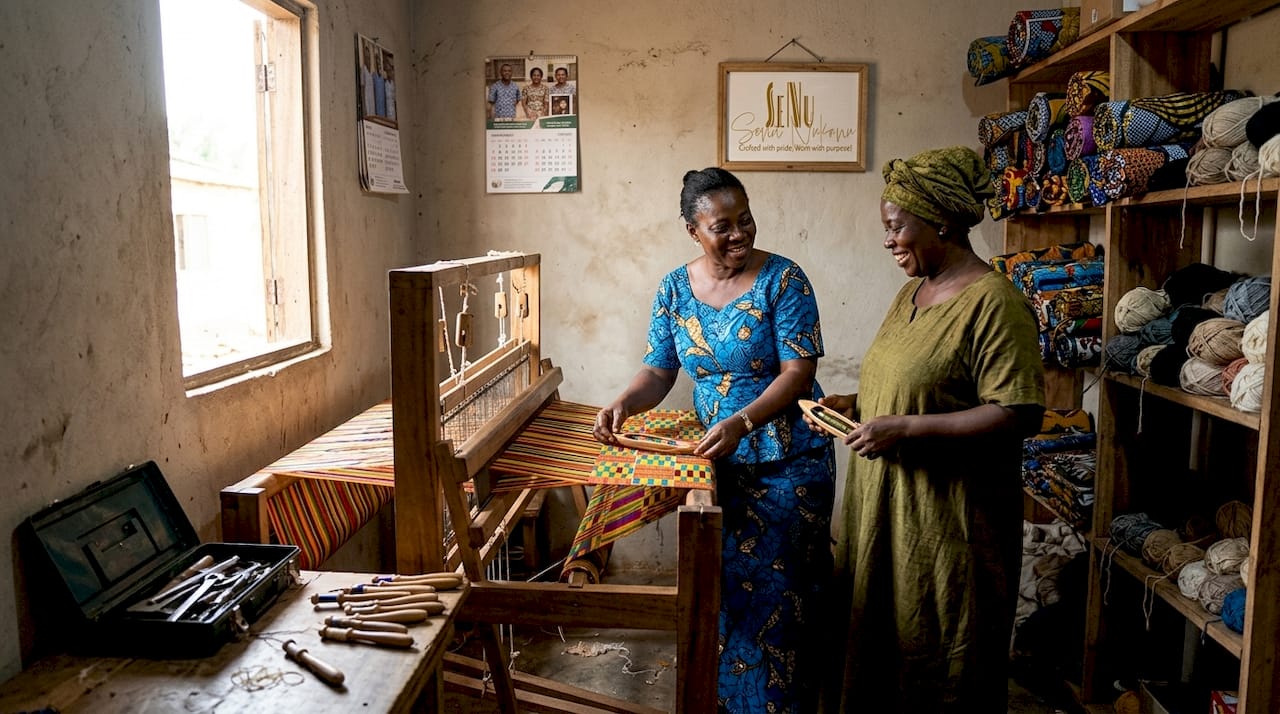
West Africa has a textile tradition that spans centuries. Fabrics like Kente, Ankara, Kaba, and Bogolan carry the cultural codes, histories, and identities of entire communities. Yet the rise of mass production has threatened these traditions, flooding markets with machine-made imitations and undercutting local artisans who have spent lifetimes mastering their craft.
The revival of indigenous textiles like Kente and Ankara in Ghana resists fast fashion and empowers communities by returning economic power and cultural pride to the people who originated these art forms. This is fashion activism in its most grounded and human form.
| Mass-produced garments | Heritage artisan pieces |
|---|---|
| Machine-replicated prints | Hand-woven or hand-printed by skilled artisans |
| Low cost, high environmental toll | Higher investment, lower environmental impact |
| Cultural significance stripped away | Every piece carries cultural meaning and story |
| Profits flow to corporations | Profits return to artisan communities |
| Disposable, trend-driven | Timeless and built to last |
When you wear a piece rooted in West African heritage, you are doing something far greater than expressing personal style. You are:
- Preserving living traditions that would otherwise be eroded by fast fashion's race to the bottom
- Supporting artisan livelihoods and keeping economic power within communities that created these art forms
- Decolonizing the fashion narrative by centering African creativity and craftsmanship as high art, not novelty
- Resisting overconsumption by investing in quality pieces made to last and mean something
Exploring empowering West African styles opens up a world where beauty and activism are not separate conversations. You can also discover how sustainable trends empower artisans and learn practical ways of supporting artisans and heritage through your everyday wardrobe choices.
Pro Tip: Authenticity matters deeply. Ask where a piece was made, who made it, and whether the artisan community was compensated fairly. Authentic cultural fashion tells you its own story without hesitation.
Potential pitfalls: Greenwashing, performative activism, and cultural appropriation
Even as fashion activism inspires change, not all that's labeled 'activist' is authentic. Here's how to spot the difference.
As fashion activism has grown in visibility, so has the temptation for brands to co-opt its language without committing to its values. This creates real dangers for consumers who want their choices to matter. The risk of commodification, performative activism, and cultural appropriation can dilute the movement's impact and mislead well-meaning shoppers.
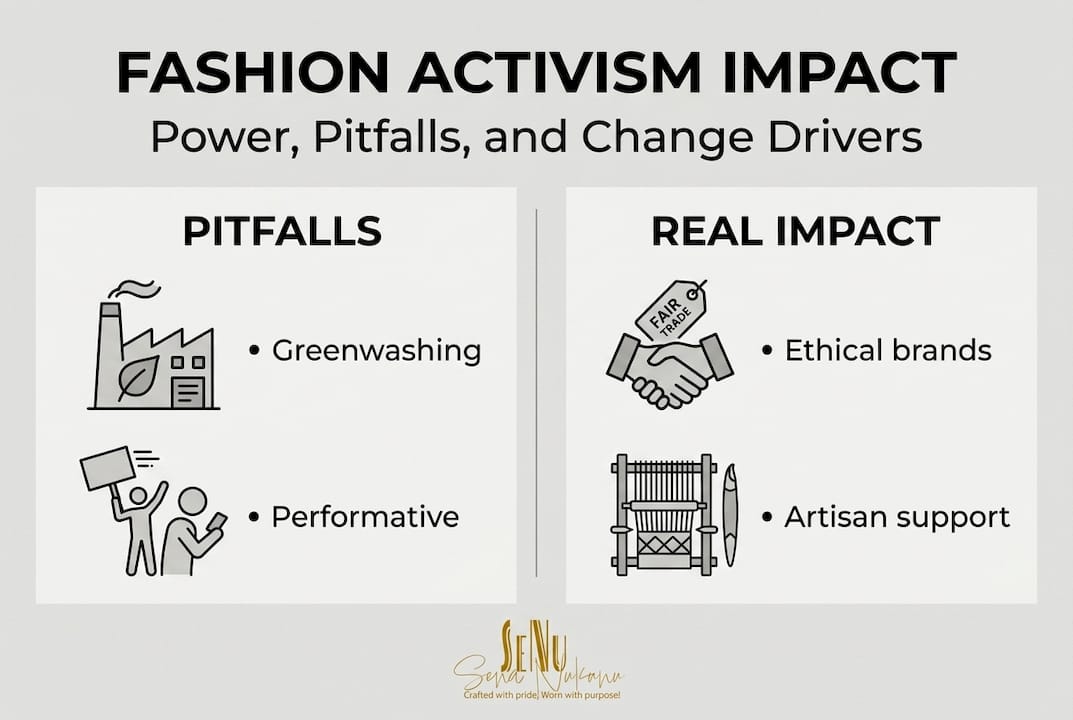
Greenwashing happens when a brand uses environmental or ethical language purely as a marketing tool, while its actual practices remain harmful. A brand might launch a single "conscious collection" while the rest of its supply chain exploits workers and pollutes waterways.
Cultural appropriation in fashion occurs when elements of a marginalized culture are adopted without credit, context, or compensation. There is a meaningful difference between honoring a culture by supporting its artisans and simply borrowing its aesthetics for profit.
"Fashion activism without accountability is just a costume. Real change requires transparency, commitment, and a willingness to be held responsible."
Here are red flags to watch for:
- Vague sustainability claims with no third-party verification or data
- Use of cultural imagery without attribution or community involvement
- Short-term activism tied to news cycles rather than sustained commitments
- No information about factory names, worker wages, or environmental audits
- Partnerships with activists or diverse models without addressing internal equity
Researching the ethics of ready-to-wear garments helps you navigate these complexities with confidence. You can also consult an authentic activism guide to deepen your understanding and protect your purchasing power.
Conscious style means asking harder questions before spending, not just reaching for the feel-good label.
What most people miss about fashion activism
With the challenges and nuances in mind, what does true fashion activism demand from us, and how can we move past surface solutions?
Most conversations about fashion activism focus on the big moments: protest marches, viral campaigns, celebrity endorsements. But the most transformative change often happens in the quieter, steadier choices. Supporting a West African artisan collective, upcycling a beloved piece instead of discarding it, demanding that a brand name its factories: these decisions build real, structural pressure over time.
Culture is where the deepest activism lives. Trends cycle rapidly, but a textile tradition rooted in centuries of meaning cannot be replaced by a trend report. When we invest in authentic cultural statements, we are choosing permanence over novelty and identity over imitation.
Experts stress authentic engagement over trends to avoid greenwashing, and that wisdom extends to consumers too. True fashion activism asks you to keep learning, keep questioning, and keep showing up for the communities whose stories your wardrobe tells. It is not a one-time purchase. It is a practice.
Explore ethical style and vibrant statement pieces
Ready to embrace fashion activism in your wardrobe? Here's where your journey can begin, with vibrant, meaningful pieces.
At Sena Nukunu, every piece we create carries the spirit of West African heritage, made with care, purpose, and a deep commitment to the artisans whose craft brings each design to life. We believe your wardrobe can be both beautiful and powerful.
Whether you are drawn to our unique statement dresses rooted in timeless cultural tradition or our vibrant colorful 2-piece sets crafted with intention, each choice you make supports ethical production and living artisan legacies. Browse our full collection and shop ethical fashion that does more than dress you. It tells a story, honors a community, and makes your activism visible.
Frequently asked questions
How can I start participating in fashion activism?
Practical entry points include making informed purchases, amplifying marginalized designers, joining supply chain transparency campaigns, and using social media to share causes you believe in.
What does fashion activism look like in practice?
Core methodologies include symbolic protest wear, ethical brand support, upcycling, and consumer boycotts of companies with poor labor or environmental practices.
Are artisan-made West African pieces considered fashion activism?
Yes. The revival of indigenous textiles like Kente and Ankara as resistance to fast fashion makes supporting West African artisans a clear act of cultural and environmental activism.
How can I spot performative activism or greenwashing in fashion?
Performative activism and woke-washing erode credibility. Look for brands making bold claims without supply chain transparency, named factories, or verified environmental data before you invest your support.