
TL;DR:
- Black professionals can confidently incorporate Afrocentric styles into workplace attire to express heritage and professionalism.
- Careful styling and cultural accents allow for a balance between cultural identity and workplace standards.
- Embracing natural hair and cultural fashion enhances confidence, performance, and workplace inclusion.
There is a quiet tension many Black professionals carry into the office every morning, a feeling of choosing between who you are and how you are expected to appear. Do you wear the bold Ankara print that fills you with pride, or reach for the safe navy blazer that blends into the background? You deserve both confidence and cultural truth, and the good news is you do not have to choose. This guide walks you through a clear framework for selecting workplace attire that honors your West African heritage, meets professional standards, and lets your full identity show up at work every single day.
Table of Contents
- What to look for in professional style: Setting your criteria
- Classic and contemporary attire: Pieces that stand out
- Empowering hairstyles: Navigating style and authenticity
- Side-by-side: Afrocentric vs. Western business attire
- Why embracing your heritage redefines professionalism
- Discover your power look with Sena Nukunu
- Frequently asked questions
Key Takeaways
| Point | Details |
|---|---|
| Set personal style criteria | Choose attire that balances cultural significance, professional fit, and self-confidence. |
| Mix classic and Afrocentric | Blend Western business staples with bold Afrocentric pieces for unique workplace looks. |
| Know your rights | The CROWN Act protects natural hairstyles, allowing authentic personal expression at work. |
| Confidence is key | Expressing your heritage in style can boost confidence and redefine professionalism. |
What to look for in professional style: Setting your criteria
Building a wardrobe that works for you starts with knowing your criteria. Not every stunning piece belongs in every room, and not every boardroom calls for the same look. The key is finding attire that speaks to who you are while reading correctly in your professional environment.
Here are the core elements worth evaluating when shopping or planning your outfits:
- Cut and silhouette: Look for structured cuts like A-line dresses, tailored blazers, and wrap styles that signal polish and move beautifully on your body.
- Color strategy: Rich jewel tones, warm earth shades, and crisp black or white are deeply flattering for Black skin tones. Professional outfits for Black women note that silk blouses, A-line dresses, and color blocking are standout choices that boost confidence in corporate settings.
- Cultural significance: Prioritize pieces where the fabric, pattern, or detail carries meaning. Kente-inspired woven textures, Adire-dyed indigo tones, or beadwork rooted in West African tradition all carry a story worth wearing.
- Workplace dress code alignment: Know your environment. Creative industries welcome bold prints and statement sets, while more formal offices may call for subtle accents layered over classic silhouettes.
- Fabric quality: Natural fibers like cotton, silk, and linen are breathable, travel well, and photograph beautifully, which matters in meetings and presentations alike.
You can also use fashion empowerment styles rooted in West African tradition as inspiration for pieces that carry both cultural weight and visual elegance. For a curated starting point, the must-have African-inspired pieces guide offers practical direction.
Pro Tip: Small cultural accents can do a lot of heavy lifting. A beaded bracelet, a patterned silk scarf draped over a blazer, or earrings in traditional geometric shapes add personality and cultural presence without disrupting even the most formal dress code.
Classic and contemporary attire: Pieces that stand out
With clear criteria in mind, let's explore the modern classics and cultural statements that work best. Think of your wardrobe in three tiers: the timeless foundation pieces, the Afrocentric showstoppers, and the versatile separates that connect the two.
Timeless foundation pieces include the well-fitted sheath dress, the structured blazer in a rich solid color, and the crisp silk blouse. These are your anchors. Professional outfits for Black women highlight that A-line and sheath silhouettes in black, white, and color-blocked patterns are consistently flattering and confidence-building across professional settings.
Afrocentric showstoppers are the pieces that make a room pause. Think Ankara print midi dresses, hand-woven Kente-accent jackets, and bold matching sets in West African-inspired textiles. These are ideal for presentations, networking events, industry panels, and any moment you want to own.

Versatile separates live in between. A solid wide-leg trouser paired with a printed blouse, or a classic pencil skirt worn with an Adire-dyed top, lets you move between cultural expression and conventional polish in a single look.
| Piece type | Comfort | Visual impact | Dress code fit | Cultural richness |
|---|---|---|---|---|
| Classic sheath dress | High | Moderate | Excellent | Low |
| Ankara print midi dress | High | Very high | Good | Very high |
| Tailored blazer (solid) | Moderate | High | Excellent | Low |
| Kente-accent jacket | Moderate | Very high | Good | Very high |
| Printed blouse with trousers | High | High | Excellent | Moderate |
You can browse professional dresses designed to move between cultural richness and boardroom polish, and explore elegant blouses that bring visual warmth to everyday professional settings. For a deeper look at styling Afrocentric pieces, the Afrocentric fashion guide is an excellent starting point.
Empowering hairstyles: Navigating style and authenticity
Wardrobe is just one part of your presence. Hair is equally powerful, and for far too long, Black professionals have been asked to minimize or change it. Let's be clear: your natural hair is not unprofessional.
The reality is striking. Black women's hair is 2.5 times more likely to be deemed unprofessional, and one in four Black women have been sent home or denied jobs because of their hair. The CROWN Act, now active in 27 or more U.S. states, protects your right to wear natural and protective hairstyles at work without discrimination.
The most widely accepted and celebrated natural styles in professional spaces include:
- Locs: Whether freeform or maintained, locs project gravitas, history, and personal strength.
- Braids and cornrows: Neat, intentional braid styles are both timeless and increasingly celebrated in corporate environments.
- Afros: A well-shaped afro is a powerful statement of identity and pride.
- Twists: Two-strand twists and flat twists offer a polished, low-maintenance look that reads beautifully in professional settings.
- Bantu knots: When styled intentionally, Bantu knots bring artistry and cultural meaning to your professional presence.
Maintaining a polished look with any of these styles is about care and intentionality. Use moisturizing products, keep edges clean, and style with purpose. Your hair tells a story, and it deserves to be told well.
Pro Tip: If you ever feel the need to address your hairstyle with an employer, lead with confidence rather than apology. A simple, matter-of-fact statement like, "My hairstyle reflects my heritage and is a meaningful part of who I am," positions your identity as an asset, not a negotiation.
For more on how West African fashion statements extend from clothing to full personal expression, that resource connects beautifully here.
Side-by-side: Afrocentric vs. Western business attire
To make your decision easier, here is a direct comparison of Afrocentric heritage pieces and Western business classics for professional situations.
| Attribute | Afrocentric attire | Western business attire |
|---|---|---|
| Visual impact | Very high, bold and memorable | Moderate, polished and familiar |
| Cultural richness | Deep, story-driven | Minimal |
| Dress code fit | Varies by workplace | Broadly accepted |
| Cost range | Moderate to premium | Moderate to premium |
| Comfort | High (natural fabrics) | Moderate (depends on cut) |
| Versatility | High with styling skill | Very high |
Afrocentric attire: Pros and cons
- Pros: Expresses identity, builds emotional confidence, creates memorable impressions, supports artisan communities
- Cons: May require more styling knowledge, perceived differently depending on workplace culture
Western business attire: Pros and cons
- Pros: Widely accepted, easy to source, straightforward to style
- Cons: Offers little room for self-expression, can feel like cultural erasure over time
The most empowering approach, as noted in professional outfits for Black women, is using color blocking and flattering silhouettes that complement your skin tone while expressing who you are. When your workplace culture feels open, lean fully into Afrocentric heritage. When navigating a more traditional environment, layer cultural elements through accessories and fabric choices. The African-inspired pieces guide can help you find that balance with intention.
Why embracing your heritage redefines professionalism
Here is a perspective worth sitting with: the idea that "neutral" or "standard" professional style is somehow objective is a myth. What we call neutral is simply the default of one cultural experience elevated above others. Showing up in an Ankara wrap dress or a Kente-accent blazer is not a distraction. It is a declaration that your entire self belongs in that room.
We have seen it happen in real workplaces. When one professional begins wearing culturally rich attire with confidence, it opens a door for others. Colleagues become curious. Conversations start. Inclusion deepens. Your fashion empowerment insights can shift a room's culture without a single meeting or memo.
Research consistently links authentic self-expression to higher confidence, stronger performance, and greater job satisfaction. Blending into a bland dress code is not the only path to career growth. In fact, it may cost you the very energy and confidence that makes you exceptional. Wear your heritage. Let it work for you.
Discover your power look with Sena Nukunu
You have the framework, the comparisons, and the confidence. Now let your wardrobe match your vision.
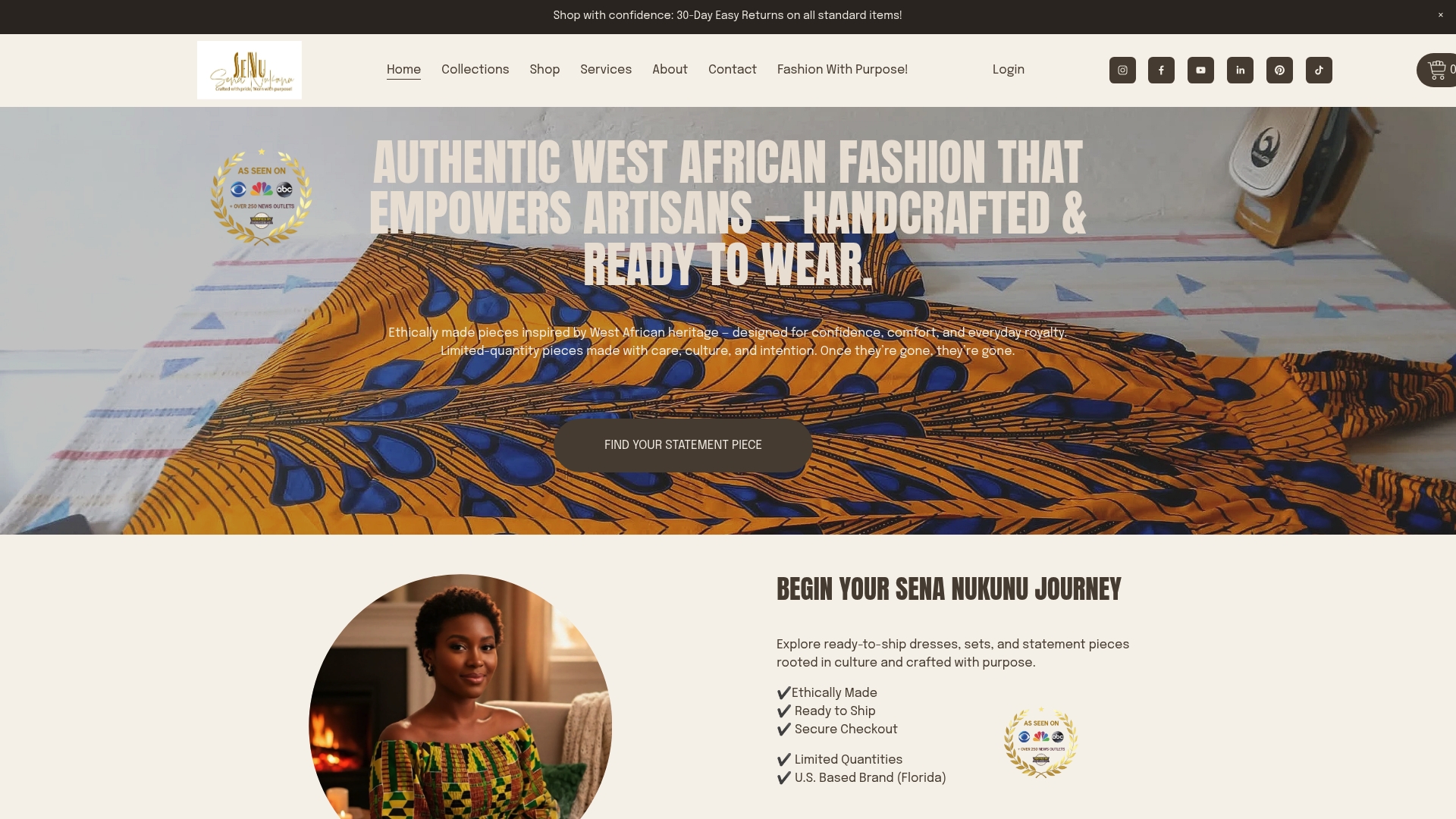
At Sena Nukunu, every piece is crafted to bridge West African heritage and modern professional elegance. From ready-to-wear dresses that move from desk to event without missing a beat, to statement pieces like the heritage prism jacket that anchors any look with cultural power, the collections are designed for Black professionals who refuse to leave any part of themselves at the door. Browse collections and find the pieces that tell your story beautifully.
Frequently asked questions
What colors are most flattering for Black skin tones in the workplace?
Rich jewel tones, warm earth shades, and crisp black or white are especially flattering for Black skin tones in professional settings. Color blocking and bold hues are also noted as standout choices that complement deeper complexions beautifully.
Are protective hairstyles like braids and locs allowed in most U.S. workplaces?
Yes, in 27 or more U.S. states, the CROWN Act now legally protects Black professionals from discrimination based on natural and protective hairstyles, including braids, locs, twists, and afros.
How can I combine Afrocentric elements with Western business clothing?
Start with statement accessories like a patterned silk scarf, geometric earrings, or a beaded bracelet layered over a classic blazer or sheath dress to introduce cultural flair without overpowering a formal look.
Does wearing Afrocentric style impact perceptions of professionalism?
Some bias still exists, as Black women's hair is 2.5 times more likely to be deemed unprofessional, but growing legal protections and cultural awareness are steadily shifting workplace norms toward greater acceptance and celebration of authentic expression.