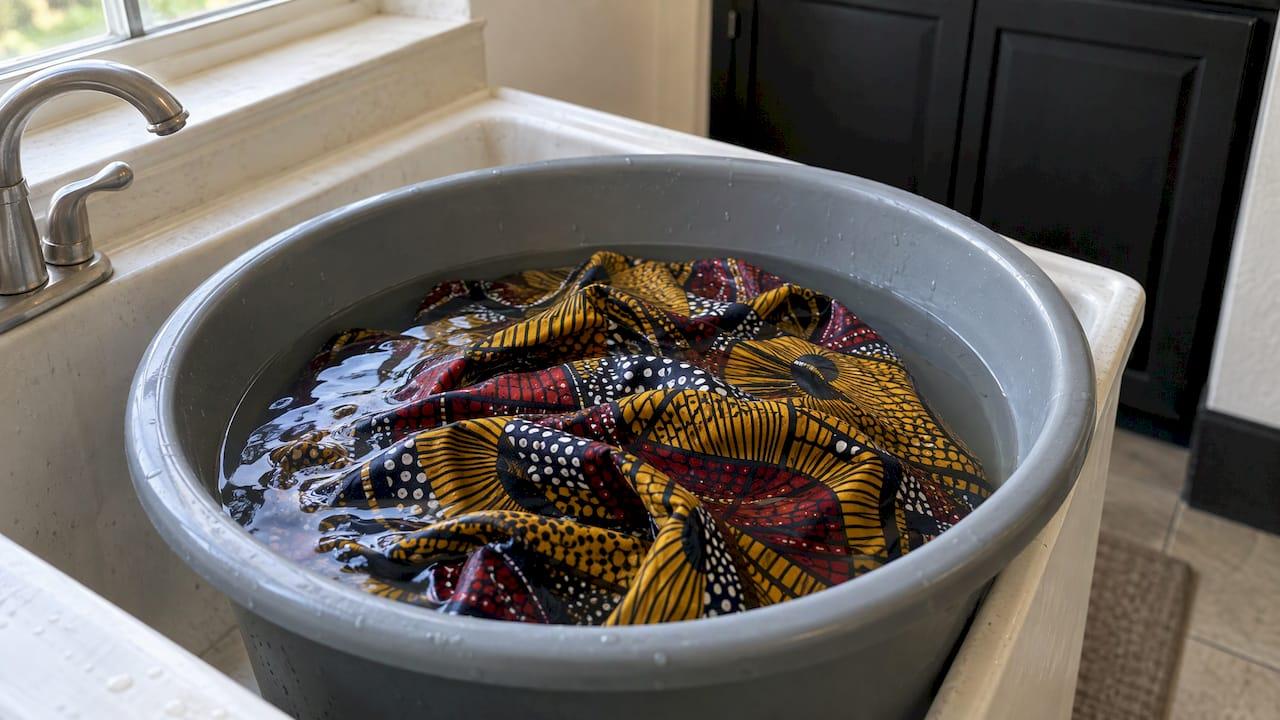
The safest way to wash Ankara is by hand or on a gentle cycle, in cold water, with a mild detergent, and separately from your other laundry for the first few washes. Then dry it in the shade and iron it inside out. Those few habits keep the dye bonded and the print vivid, and they protect what makes the cloth worth wearing: the color, the pattern and the hours of craft behind both.
Ankara, also called African wax print, is cotton cloth printed with bold, saturated dyes. Dye is the whole point of it, so washing is really about keeping dye where it belongs. This guide walks you through each step, explains why it matters, and gives you a simple test for new pieces. Whether you are caring for a kaftan, a dress or an agbada set, the routine is the same.
TL;DR
- Wash in cold or lukewarm water, by hand or on a gentle cycle with the spin turned down or off, using a mild detergent without bleach.
- Wash new Ankara separately for the first two or three washes, because loose dye is flushed out then.
- Run a quick bleed test on a hidden spot before the first wash.
- Skip long soaks, bleach and direct sun. Dry in the shade and iron on the reverse side at medium heat.
- For stains, shrinkage or dry cleaning questions, follow the linked care guides below.
Table of Contents
- Why Ankara needs gentler washing than everyday cotton
- Before the first wash: test for bleeding
- How to wash Ankara step by step
- Hand wash or machine wash?
- Can you use salt, vinegar or dye fixatives?
- What to avoid
- Drying and ironing
- Removing stains without harming the print
- A simple routine you can keep
- Our perspective
- Wear Ankara designed to be loved for years
- FAQ
- Sources
Why Ankara needs gentler washing than everyday cotton
New, richly dyed cloth carries excess dye that has not fully bonded to the fibers. Shaffer Dry Cleaning explains that this loose dye has to go somewhere during the first wash, and that after two to three washes it has largely been flushed out and the risk of bleeding drops sharply. That is why the first washes matter most.
Iowa State University Extension adds the other half of the story: the chemical fixers that hold dye in fibers can wear off after repeated washing. Hot water, harsh agents and rough agitation all speed that wear. Cold water, mild soap and a light touch slow it down.
Quality matters too. Reporting from Ghana notes that some cheap imitation prints on inferior cotton or polyester blends stay stiff, crumple, and fade when washed. Well-made cloth rewards careful washing, and our guide to what Ankara fabric is explains what to look for.
Before the first wash: test for bleeding
A two-minute test tells you how carefully a piece needs to be handled. Pick the method that suits what you are testing.
Test a finished garment
Dampen a white cloth and rub it gently on a hidden spot, such as an inside seam or hem. Shaffer Dry Cleaning advises that if color transfers, you keep washing the item separately and retest after each wash until the cloth comes out clean.

Test a loose piece of fabric
If you have yardage or a scrap, the fabric bleed test from The Spruce Crafts works well. Submerge a two-inch square in soapy water at the temperature you normally wash at for about 30 minutes. Check the water for discoloration, then blot the un-rinsed square on a white paper towel. If dye transfers, pre-wash the fabric a couple of times before using it.

What a positive result means
Bleeding in a new piece is common and not a sign that something is wrong. It simply means the item goes into the wash alone, and in cold water, until the water and the white cloth stay clean.
How to wash Ankara step by step
- Check the care label. Tide's laundry guidance says delicates should be washed on a delicate cycle or by hand according to the care label. Lined, embellished or structured pieces such as jackets and agbada sets may have their own instructions.
- Separate it. Wash new Ankara on its own for its first two or three washes. Tide notes that new and darkly colored items may bleed, so they go in separately and turned inside out.
- Turn it inside out. The outside of the print takes less friction, which helps protect the surface color.
- Choose cold or lukewarm water. Hot water is the quickest way to dull a vivid print. Cold water is the safe default.
- Use a mild detergent without bleach. Tide recommends a detergent without bleach for bright colors. A small amount is enough, so rinse until the water runs clear.
- Wash gently. Hand washing is the gentlest option: press and swirl the garment, and do not scrub or wring it hard. If you use a machine, choose the delicate or gentle cycle and keep the spin low or off.
- Rinse in cool water, then press out the water with your hands or roll the piece in a clean towel.
- Dry in the shade (more on this below).
Hand wash or machine wash?
Hand washing is the better choice for new pieces, intricate prints and anything you wear to weddings and celebrations. It gives you full control over water temperature and agitation, and you can watch the rinse water for signs of dye.
A machine is workable once a piece has settled. Use a gentle cycle, cold water, a mesh laundry bag for smaller items, and a light load so garments are not rubbing against zippers and hooks. Wash dark and bright Ankara with similar colors only.
| Hand wash | Gentle machine cycle | |
|---|---|---|
| Best for | New pieces, special occasion outfits, delicate trims | Settled, everyday pieces |
| Water | Cold or lukewarm | Cold |
| Detergent | Mild, no bleach | Mild, no bleach |
| Agitation | Light pressing and swirling | Gentle cycle, low or no spin |
| Time | About 10 to 15 minutes | Cycle length |
Can you use salt, vinegar or dye fixatives?
You will see a lot of home advice about adding salt to the water to hold the color. It is a long-standing tradition, and some people swear by it, but we cannot point to a lab-tested source for it, so we treat it as optional rather than as a guarantee.
What does have an academic source is Iowa State University Extension's list of products. It names Retayne and Rit ColorStay Dye Fixative as hot-water treatments used before first use, and says Retayne needs 140°F water and does not work in energy-efficient front-loading machines. It also says color-catcher sheets help, but that washing with like colors is the only reliable prevention. Because those treatments involve hot water, check them against the garment's care label before you use them on a finished piece.
What to avoid
- Long soaks. Soaking gives loose dye time to leach out and settle on other areas of the cloth. Wash promptly instead.
- Bleach. Even oxygen-based or color-safe bleaches are better avoided on richly dyed cloth. Choose a detergent without bleach.
- Hot water. Heat dulls color quickly.
- Mixed loads. Do not wash new Ankara with whites or light colors.
- Wringing and twisting. Press the water out instead, so seams and fibers keep their shape.
- Direct sun and the dryer on high. Both fade color and can shrink cotton. Our guide on whether Ankara shrinks covers what to expect and how to prevent it.
Drying and ironing
Lay the garment flat on a clean towel or hang it on a padded hanger in a shaded, airy spot. Direct sunlight fades colors over time, so keep wax print away from a sunny window while it dries. Reshape the garment gently while it is damp so seams lie flat.
Iron while the cloth is still slightly damp, with the garment turned inside out, on a medium heat suited to cotton. Ironing on the reverse protects the surface of the print and avoids a shine. For lined pieces or those with beading and embroidery, place a clean cotton cloth between the iron and the garment.
Store the clean, fully dry piece folded or on a hanger in a cool, dry place. Avoid sealed plastic bags, which can hold moisture.
Removing stains without harming the print
Act quickly and keep treatment gentle: blot, never rub, and rinse in cold water. Do not apply strong stain removers directly to the print. Our guide to wax print stain care goes through common stains in detail.
If a piece is structured, lined or very special, you may wonder about professional cleaning. Our article on whether you can dry clean Ankara answers that, and our broader guide to caring for African fabrics covers storage and long-term care.
A simple routine you can keep
| When | What to do |
|---|---|
| New piece | Bleed test on a hidden spot, then wash alone, in cold water |
| First 2 to 3 washes | Hand wash or gentle cycle, separate from other clothes |
| Every wash | Inside out, cold water, mild detergent without bleach |
| After washing | Dry in the shade, iron on the reverse at medium heat |
| Between wears | Air the garment out and spot clean, instead of washing every time |
Washing less often is one of the easiest ways to extend a garment's life. Airing a piece after a wear and spot cleaning small marks means fewer full washes overall.
Our perspective
We design and sell West African ready-to-wear in limited quantities, and our approach is simple: a garment made with care deserves to be cared for the same way. Every stitch, every print and every hem carries the work of the artisans behind it, and a gentle wash is the way you keep that story alive.
What we want you to take from this guide is that Ankara is not fragile, it is expressive. Its dyes are rich, so it asks for cold water, patience and a little attention in the first few washes. Do that, and the color settles in and stays with you through celebrations, workdays and family gatherings.
That is also why we make limited-quantity pieces: fewer garments, made thoughtfully, that you will reach for again and again. Treating them well is part of wearing them proudly.
Sena
Wear Ankara designed to be loved for years
If you are ready to build a wardrobe that rewards this kind of care, explore our women's collections, our dresses and our men's agbada ensembles. Each piece is West African fashion made with ethical manufacturing and artisanal craftsmanship, in limited quantities.
You can also see every line on our collections page, from Woven Nobility: Kings' Robe to Woven Crowns: Radiant Rise. For more on keeping handmade pieces looking their best, read our guide to caring for handmade garments and our cultural fashion preservation tips.
FAQ
Can I wash Ankara in a washing machine?
Yes, if you keep it gentle. Use a delicate cycle, cold water, a mild detergent without bleach and a low or no spin, and turn the garment inside out. For new pieces, hand washing is the safer first choice, and a separate load matters either way for the first two or three washes.
Will Ankara bleed in the first wash?
It can. New, richly dyed fabric holds excess dye that has not fully bonded, and that dye is flushed out in the first washes. Wash the piece alone and keep going until the rinse water and a damp white cloth stay clean.
What temperature should I use for Ankara?
Cold or lukewarm water is the safe choice. Hot water dulls bright color, and the fixers that help hold dye in cotton can wear off with repeated washing, so cooler water is kinder to the print over time.
How should I dry Ankara so it does not fade?
Dry it in the shade, flat or on a padded hanger, away from direct sun. Avoid a hot dryer, which can fade the color and shrink cotton. Iron it inside out on medium heat while it is still slightly damp.
Sources
- Iowa State University Extension: Preventing Color Transfer by Bleeding or Crocking
- The Spruce Crafts: Do a Fabric Bleed Test to Check Dye Stability
- Shaffer Dry Cleaning: How to Prevent Color Bleeding in Mixed Loads
- Tide: How to separate laundry and sort clothes
- Al Jazeera: Fabric wars, Ghana's colourful prints face renewed Chinese competition